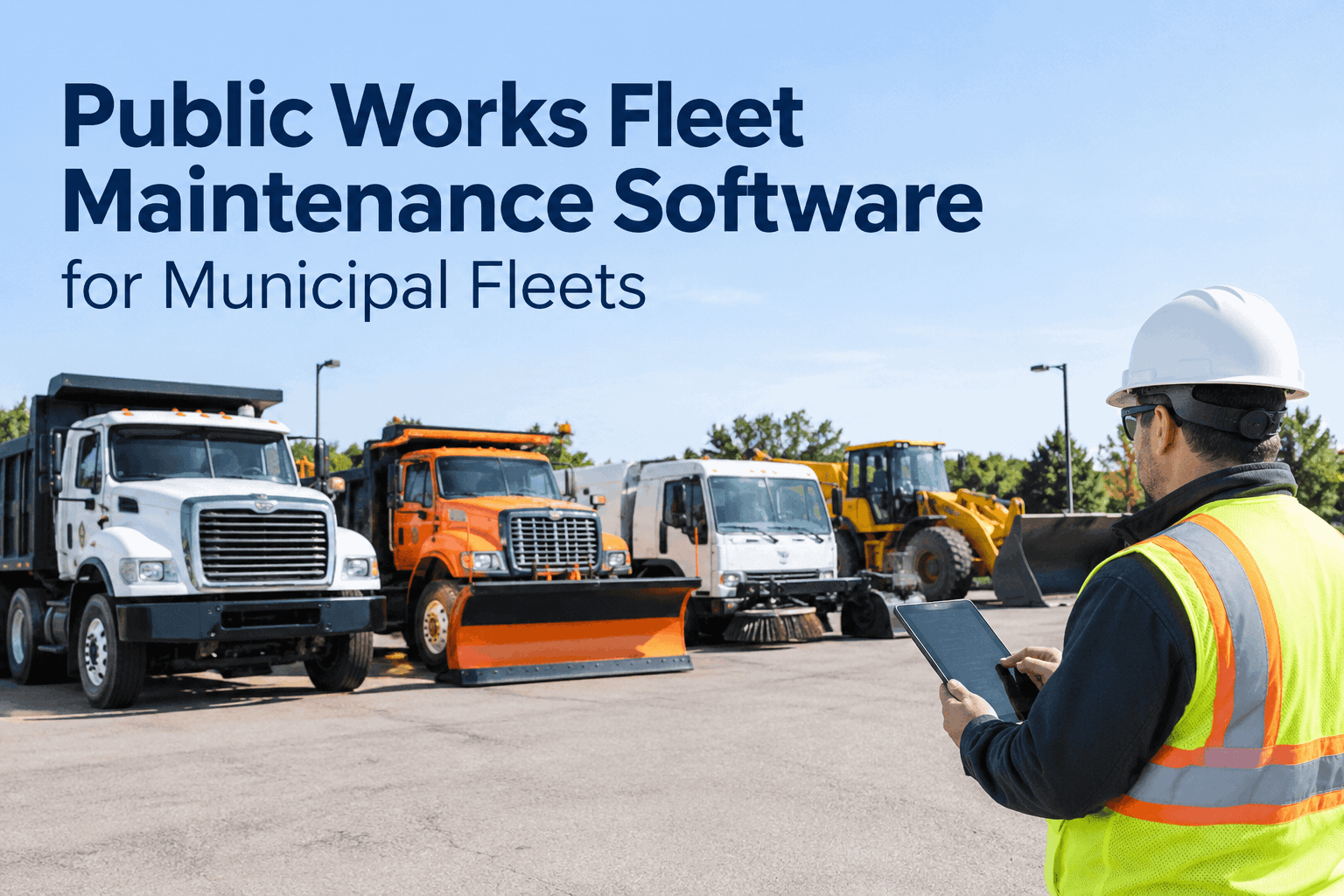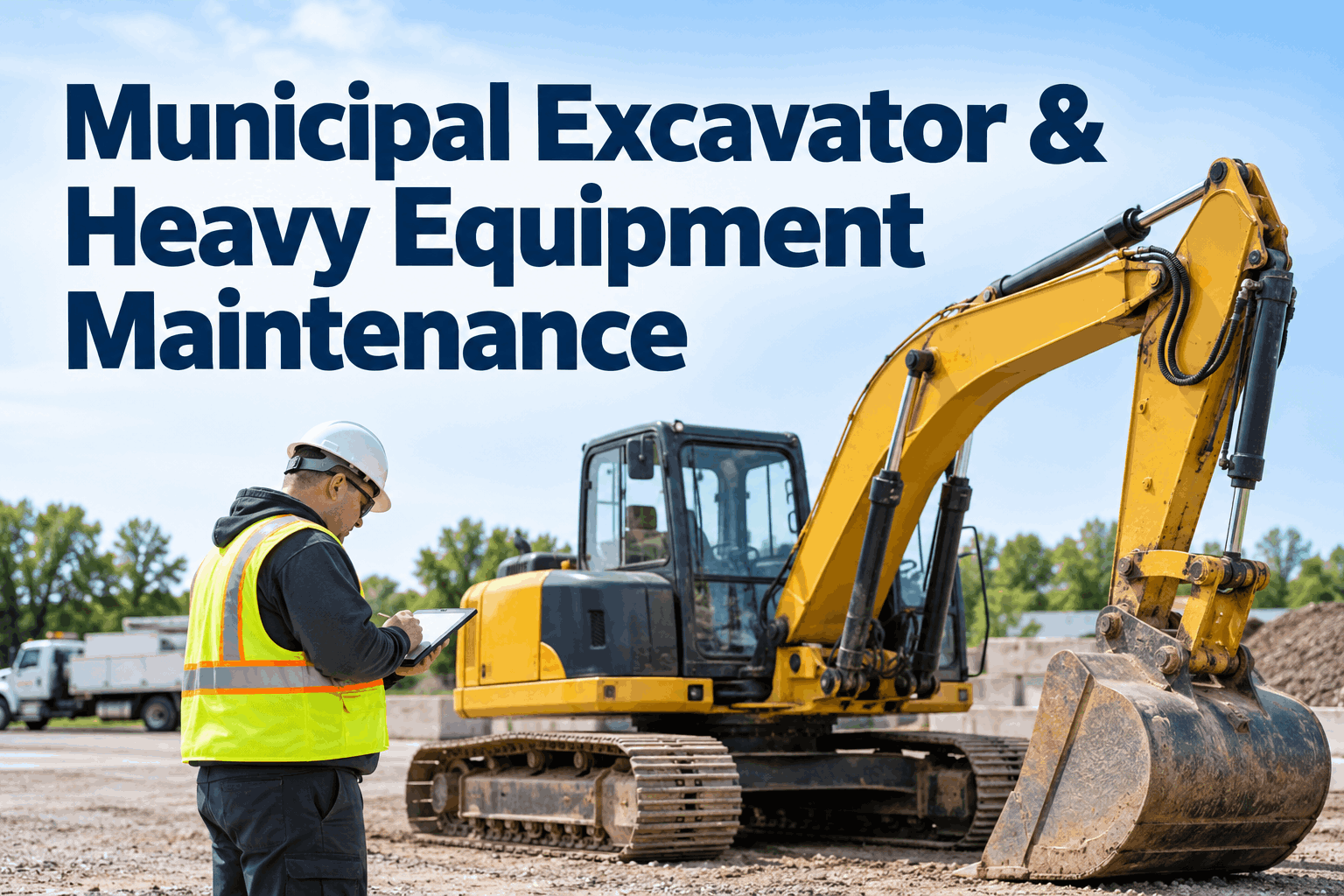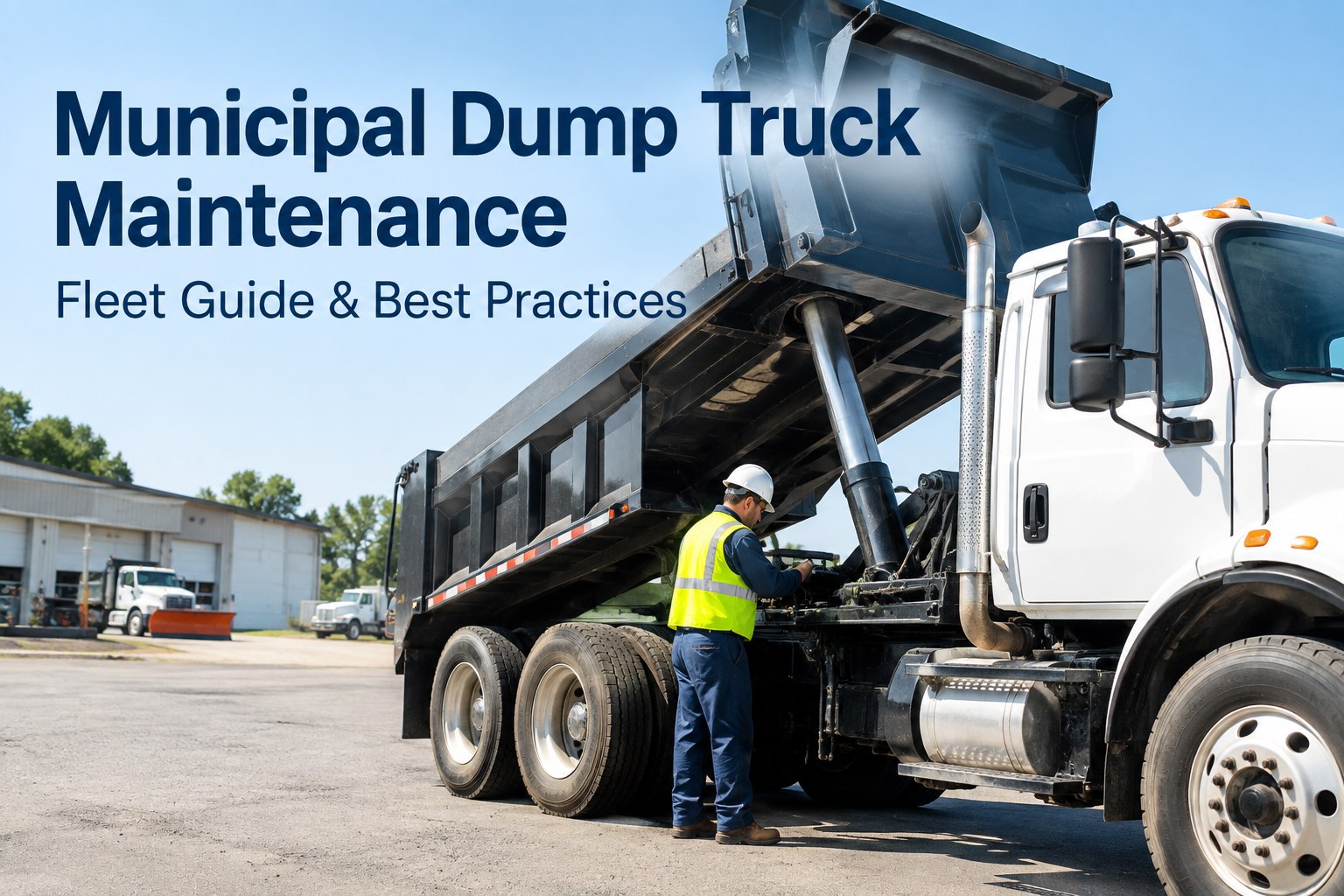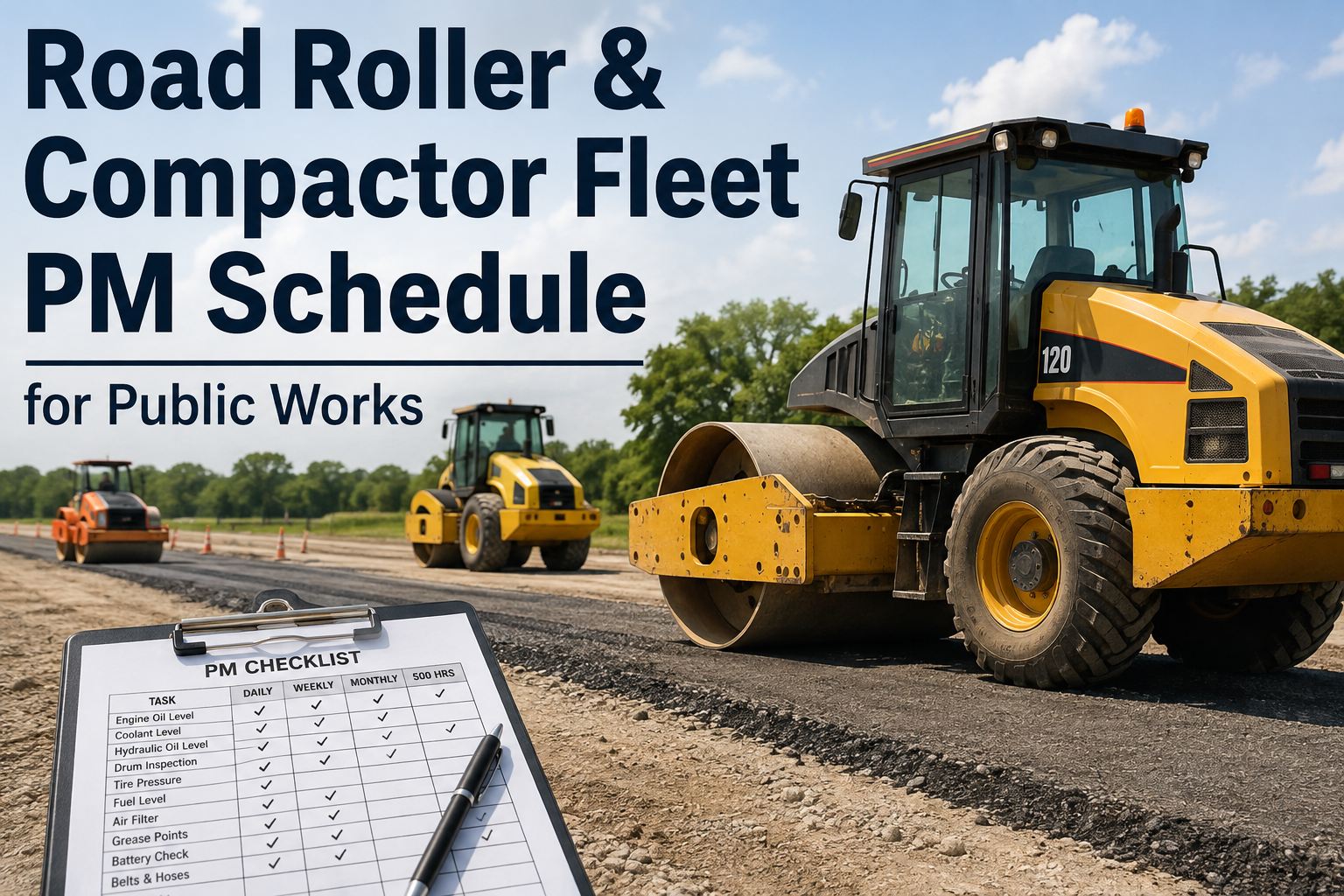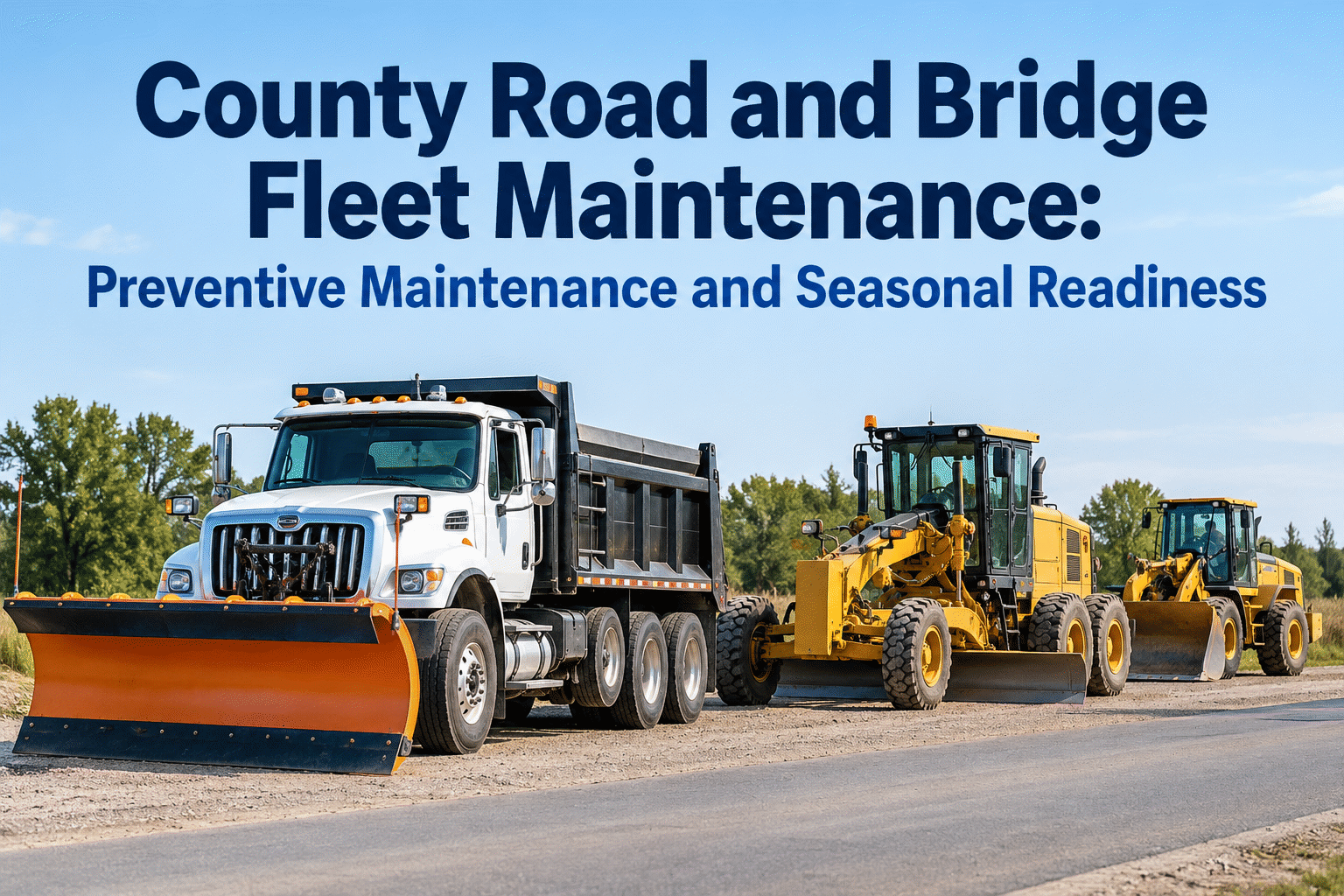
Your road and bridge department runs two fleets that share a yard: loaders, excavators and rollers building roads most of the year, plow trucks and spreaders fighting snow the rest. County road and bridge fleet maintenance lives or dies on one thing the calendar won't let you fudge — having each fleet ready before its season, not scrambling the week a storm is forecast. Miss the window and you're thawing a plow truck in a blizzard or holding a paving crew waiting on a grader. Book a demo to keep a county fleet season-ready.
County Road and Bridge Fleet Maintenance: Built Around the Seasons
The same department swings between a winter snow fleet and a summer build fleet. The whole game is getting each one ready before its season — not the week it starts.
- Plow trucks
- Spreaders
- Graders
- Loaders & excavators
- Rollers & pavers
- Dump trucks
That swing is the organizing principle of a county fleet. Everything else — which trigger schedules which machine, what a pre-season inspection must catch, how records hold up at audit — hangs off getting the right fleet ready at the right time. Below: the readiness calendar, the PM triggers for heavy equipment, the pre-season inspection, and how one system keeps both fleets ahead of their seasons.
The readiness calendarwhen each fleet has to be prepped — and when it's too late
The single most expensive mistake in county road and bridge fleet maintenance is prepping reactively. Winter equipment gets serviced in late summer or early fall; warm-season equipment in late winter or early spring. The window closes before the season, not when it arrives.
The plow truck you ignore in August is the one that won't start in December. Scheduling pre-season PM as a fixed calendar trigger — months ahead — is what separates a county that's ready from one that's scrambling. HVI's preventive maintenance sets those seasonal windows once and reminds you every year. Book a demo to put your readiness calendar on autopilot.
Each machine, its own clockPM triggers across the county's heavy equipment
A county yard holds a dozen machine types that wear completely differently. A dump truck runs up miles; a grader runs up engine hours; a standby roller runs up neither and ages on the calendar. Schedule each on the trigger that actually reflects its use.
| Equipment | Primary trigger | Seasonal note |
|---|---|---|
| Dump & plow trucks | Miles (+ PTO hours) | Winter-critical — prep by late summer |
| Motor graders | Engine hours | Both seasons — grading & snow |
| Wheel loaders | Engine hours | Year-round — loading & snow stacking |
| Excavators | Engine hours | Build season — prep by late winter |
| Rollers & pavers | Engine hours / calendar | Build season only — store properly off-season |
| Spreaders & attachments | Calendar / season | Winter-critical — inspect before mounting |
| Roadside mowers | Engine hours | Growing season — prep spring |
Mix these triggers up — run everything on a single calendar interval — and your high-hour loaders get under-serviced while your low-use rollers get over-serviced. Matching trigger to machine is basic, but on a mixed heavy fleet it's where most of the savings and most of the breakdowns hide. Sign up free and set the right trigger per machine.
Pre-season readiness inspection: winter plow truck
Before the first snow, every plow truck should clear this check — done weeks ahead so there's time to fix what fails, not the night of the storm. Run the parallel version for the build fleet before spring.
- Hydraulics & cylinders leak-free
- Cutting edge & blade wear within spec
- Plow lift & angle function tested
- Spreader chain, auger & controls working
- Mount pins & hitch secure
- Coolant & antifreeze rated for low temp
- Battery load-tested, terminals clean
- Block heater & glow plugs working
- Tires / chains rated for winter traction
- Lights, wipers, defrost & beacons go
The point of doing it weeks early is simple: a failed check in September is a repair order; a failed plow at 3 a.m. in December is a road that doesn't get cleared. HVI's digital inspection forms turn this into a repeatable pre-season checklist the whole crew runs the same way. Book a demo to run pre-season readiness as a digital check.
Readiness at a glanceknowing the fleet is go before the season starts
The question a road and bridge supervisor dreads from the commissioner — "are we ready for winter?" — should have a one-screen answer, not a round of phone calls to the shop. When every machine's PM and pre-season check live in one place, readiness is a number.
Schedule by miles, hours, calendar or season and set pre-season windows in preventive maintenance — reminders fire months ahead.
Standardized readiness checklists per equipment type through digital inspections, with photos and defect flags.
Every work order, part and cost attaches to the machine, so reporting and audits are answered in minutes.
Cutting edges, filters and winter parts flagged before the rush, so prep isn't held up waiting on a back-ordered component.
Hand the commissioner a readiness percentage with the open items listed and the "are we ready?" conversation is over in thirty seconds. This is the heavy-equipment, seasonal scale of public fleet — for city street operations see the municipal DPW fleet maintenance guide. Book a demo to see the readiness board on your fleet.
From a road and bridge supervisor
Every November the commissioner asks if we're ready for winter, and for years my honest answer was "mostly, I think." We'd always find two or three plow trucks that needed work once the snow was already falling. Now I schedule the whole snow fleet for prep in August and track it on one board. Last year when he asked, I turned the screen around — 16 of 18 ready, two with parts on order and a date. That's a very different meeting than "I think so."
County road and bridge fleet maintenance — FAQs
When should county fleets do seasonal maintenance prep?
Ahead of each season, not at its start. Service winter equipment — plow trucks, spreaders, graders — in late summer or early fall, and warm-season equipment like excavators, rollers and pavers in late winter or early spring. Scheduling prep months ahead leaves time to fix what fails before you need the machine.
Should county heavy equipment be scheduled by hours or miles?
It depends on the machine. Dump and plow trucks run on miles (plus PTO hours for the plow/spreader work); graders, loaders and excavators run on engine hours; and low-use or standby units like some rollers go by calendar. Matching the trigger to how each machine actually accumulates wear is the core of mixed-fleet PM.
What should a pre-winter plow truck inspection cover?
Two areas: the plow and spreader (hydraulics, cutting-edge wear, lift/angle function, spreader chain and controls, secure mounts) and the truck's cold-start readiness (low-temp coolant, load-tested battery, block heater and glow plugs, winter tires or chains, lights, wipers and beacons). Run it weeks before the first snow so failures become repair orders, not stuck trucks.
How do I prove winter readiness to county leadership?
Track every snow-fleet unit's PM and pre-season inspection in one system, so readiness is a live percentage with the open items listed. Instead of "mostly ready, I think," you can show how many trucks are cleared, which aren't, and the date each will be — exportable for the commissioner or board.
How does HVI help county road and bridge departments?
HVI schedules each machine by miles, hours, calendar or season, fires pre-season prep reminders months ahead, runs standardized digital inspections per equipment type, and shows fleet readiness on one board. Every work order and cost attaches to the asset, so both seasons stay ahead of schedule and audit-ready.
Keep both county fleets ahead of their seasons
HVI puts every truck, grader, loader and plow on the right maintenance trigger, fires pre-season prep reminders months ahead, and turns "are we ready?" into a number you can show — so the snow fleet's go before the storm and the build fleet before the job. Live in under two weeks.
No credit card · No hardware · Seasonal scheduling ready on day one