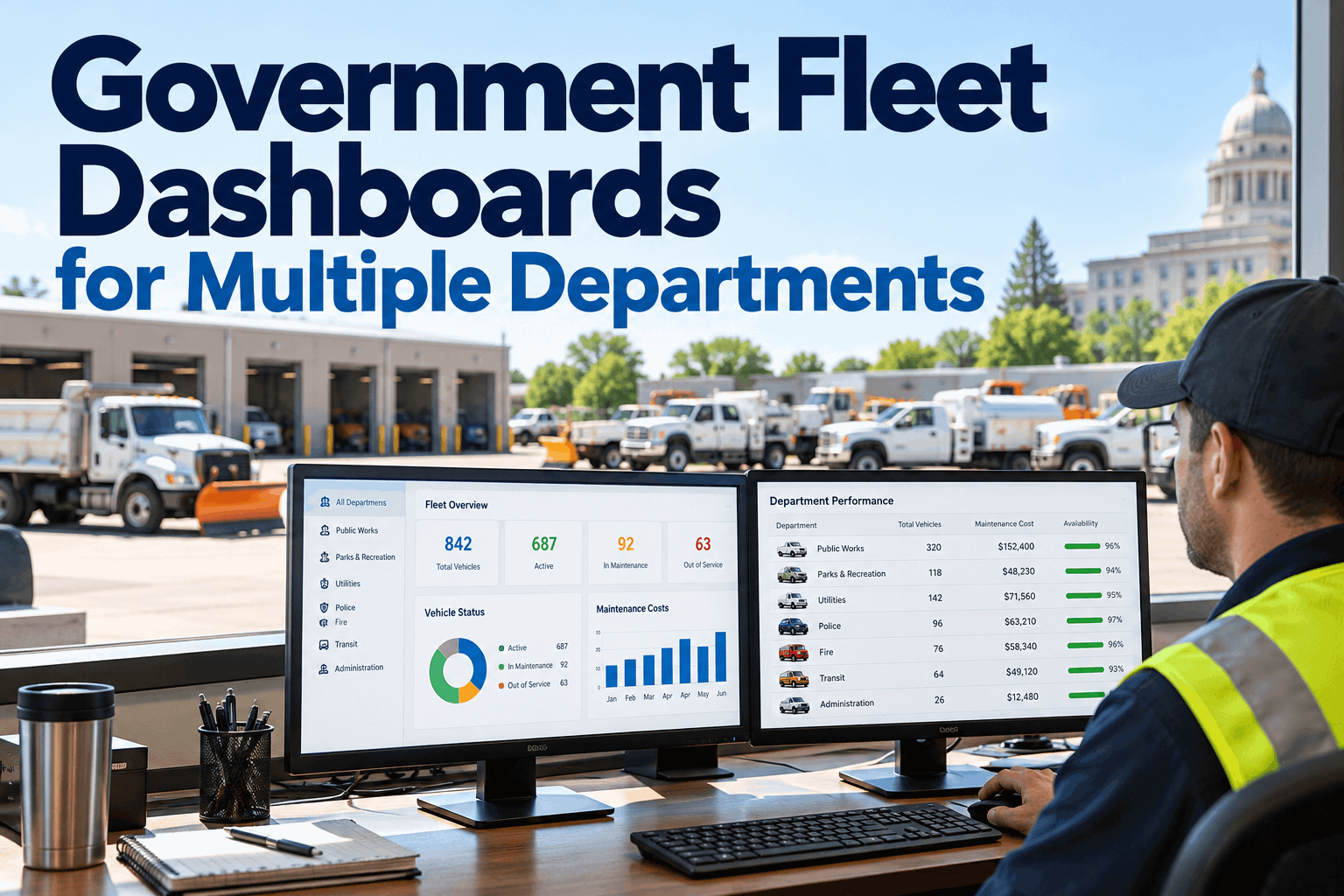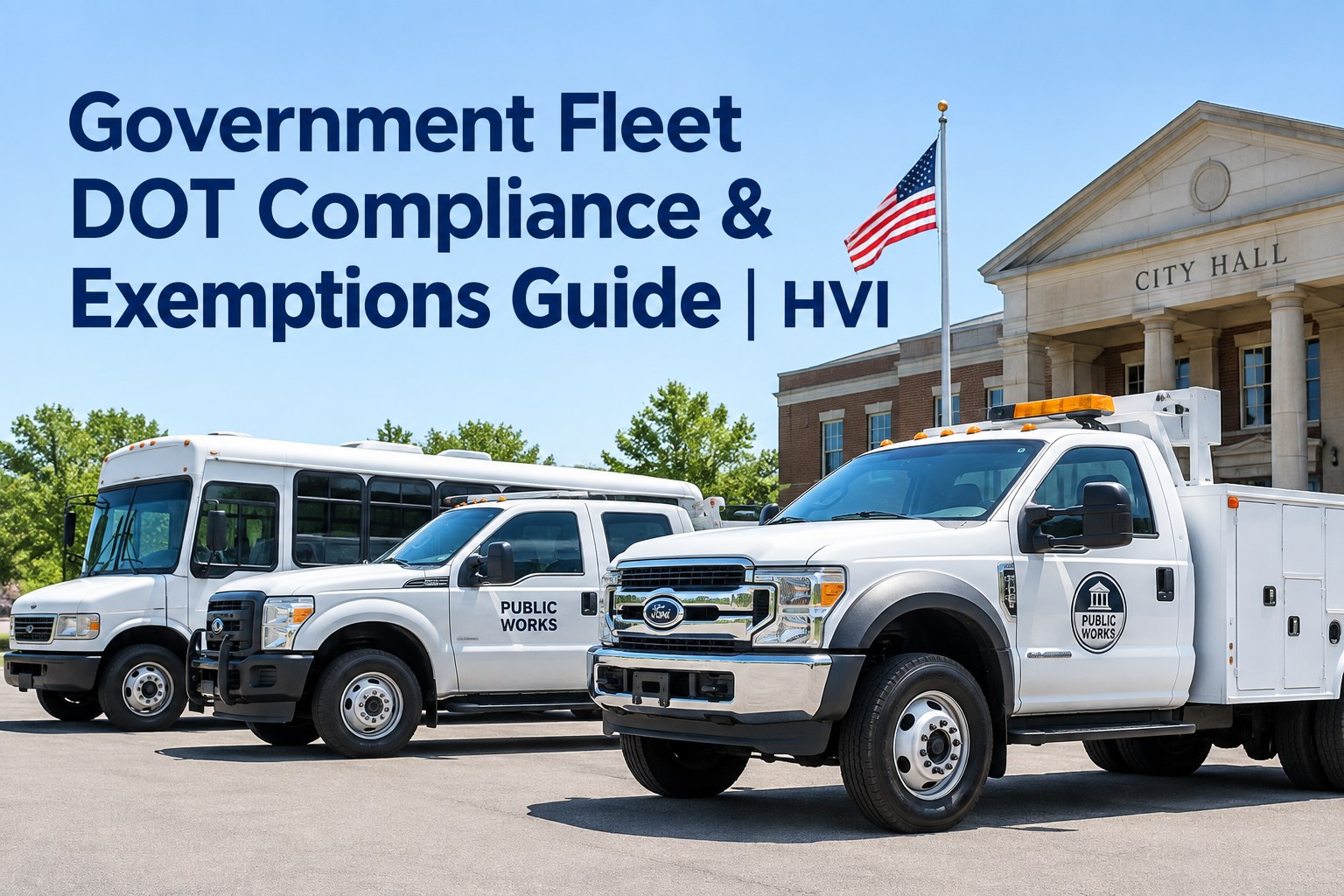
Municipal fleet coordination gets difficult when public works, utilities, parks, sanitation and other departments depend on the same maintenance operation but work to different schedules and service priorities. A practical coordination model gives every department visibility into vehicle availability, maintenance status and expected return-to-service while helping the fleet team protect preventive maintenance, safety and repair priorities. Book an HVI demo to see how one shared fleet record can support multiple municipal departments.
Different departments.
One fleet operating picture.
Coordinate maintenance priorities, vehicle availability and service expectations without relying on calls, spreadsheets and disconnected department updates.
The problem is rarely that municipal departments do not communicate at all. The problem is that each team sees the fleet from its own operating window. Public works may need a dump truck before a storm, utilities may need a service vehicle restored for an emergency response, and parks may have equipment approaching scheduled maintenance during peak season. Fleet coordination improves when those demands enter one visible process instead of competing through separate phone calls, emails and spreadsheets.
Five handoffs create most of the friction
Cross-department fleet coordination is less about holding more meetings and more about making these handoffs visible and predictable.
A vehicle is needed for a route, project, emergency response or seasonal operation.
The shop has to compare the request with open defects, PM and existing repair work.
Safety, operational impact and service commitments determine what moves first.
Parts, technician capacity or added repair findings can change the expected release.
The department needs a clear release status rather than chasing the shop for an update.
The coordination gap: if any handoff lives only in a call, text message or separate spreadsheet, another department may be making plans from outdated information.
Give every department the same answer to four questions
A centralized fleet view does not mean every department controls maintenance. It means the fleet team remains responsible for maintenance decisions while stakeholders can see the operational information they need.
Is the vehicle available?
Departments need a current operational status before assigning vehicles to work.
Why is it unavailable?
A visible defect, PM or repair status removes ambiguity around why an asset is in the shop.
When is it expected back?
A realistic estimated return-to-service helps supervisors adjust work before downtime becomes a surprise.
What is taking priority?
A shared priority framework explains why safety or critical-service repairs may move ahead of routine requests.
HVI can keep inspections, defects, work orders, preventive maintenance and asset history connected to the same vehicle record. That gives fleet managers a consistent source for maintenance decisions while reducing the need to rebuild status updates manually for every department. Explore maintenance management in HVI or see the workflow in a demo.
Use one maintenance priority language across departments
The loudest request should not automatically become the highest-priority repair. Define priority by safety, service impact and operational consequence so supervisors understand how the shop is sequencing work.
Unsafe asset, emergency-response requirement or defect that prevents safe operation.
Vehicle unavailable and directly affecting an essential municipal operation.
PM, inspection findings and planned repairs that protect reliability and compliance.
Minor work that can be scheduled without materially affecting department service.
Turn informal expectations into a simple fleet service agreement
A municipal fleet service level does not have to become a complicated contract. Start with a shared understanding of what the fleet team will communicate and what operating departments must provide.
- 01 Publish current vehicle status.
- 02 Apply consistent repair priorities.
- 03 Communicate material ETA changes.
- 04 Protect scheduled preventive maintenance.
- 05 Maintain complete work and asset history.
EXPECTATION One process
- 01 Report defects promptly and accurately.
- 02 Release vehicles for scheduled PM.
- 03 Identify genuine service-critical needs.
- 04 Use the shared status before escalating.
- 05 Keep vehicle assignment information current.
This agreement helps protect preventive maintenance from being repeatedly displaced by short-term operational pressure. It also makes escalation more useful because everyone understands what normal service looks like before an exception occurs.
Make status simple enough that everyone interprets it the same way
A status board becomes useful only when each label has an operational meaning. Avoid dozens of vague states. A small set of clearly defined statuses is easier for fleet and department supervisors to use consistently.
Cleared for assignment and normal operation.
Department can scheduleOperational now, but reserved for planned maintenance.
Protect release windowActive maintenance work is being performed.
ETA should be visibleAsset cannot be assigned until the defect is resolved.
Replacement may be neededMeasure coordination with operational metrics, not meeting volume
Once departments share the same asset and maintenance records, reporting can focus on whether the fleet is supporting service delivery rather than how many updates the maintenance team sent.
How much of the fleet is ready for department service.
Whether planned maintenance is completed before it becomes overdue.
How long assets remain unavailable and where delays occur.
Backlog by department, asset type, priority and repair stage.
The goal is not to expose every maintenance detail to every employee. It is to provide the right level of visibility from a consistent underlying record. HVI's fleet analytics and reporting can help turn maintenance and asset activity into a clearer operating view for fleet leadership.
A practical rollout does not need to start with every department
Start with one shared status language and one or two departments that generate frequent maintenance coordination. Prove the process, then extend it across the municipal fleet.
Agree on vehicle statuses, priority levels, department contacts and escalation rules.
Bring asset details, open work, PM schedules and current status into one operational view.
Give supervisors a repeatable way to check status before calling or escalating.
Use availability, PM compliance, downtime and backlog to improve the coordination model.
The useful change is not giving every department more maintenance data. It is giving everyone the same status, priority language and expected next step. That removes much of the uncertainty that creates repeated calls and conflicting requests.
Illustrative municipal fleet operating perspectiveConnect the coordination process to the vehicle record
Cross-department coordination becomes easier when the status being communicated is generated from actual fleet activity instead of maintained in a separate update sheet.
A defect or maintenance need enters the asset record.
Maintenance work, priority and progress stay connected.
Availability reflects what is happening in maintenance.
Fleet leaders can review availability, backlog and PM performance.
Instead of maintaining a fleet system and then recreating its information in separate department spreadsheets, the coordination process can follow the same asset record from inspection through repair and return-to-service. Book a demo to see HVI for municipal fleet operations.
Municipal fleet coordination FAQs
What is municipal fleet coordination?
Municipal fleet coordination is the process used to align vehicle availability, maintenance priorities, preventive maintenance, repair status and service expectations across departments that share a centralized fleet operation. The goal is to give public works, utilities, parks, sanitation and other teams a consistent view of fleet status while allowing the fleet team to manage maintenance decisions centrally.
How can municipal departments improve fleet communication?
Start with shared vehicle-status definitions, a common maintenance-priority framework and clear rules for reporting defects, scheduled PM and return-to-service updates. Departments should be able to see whether an asset is available, in repair, scheduled for maintenance or out of service without relying on repeated calls to the maintenance shop.
What should a municipal fleet service level agreement include?
A practical fleet service agreement can define repair priority levels, communication expectations, preventive maintenance release requirements, department responsibilities, escalation procedures and how estimated return-to-service changes are communicated. The agreement should make normal service expectations clear without preventing the fleet team from responding to genuine emergencies.
Which metrics help measure cross-department fleet performance?
Useful measures include vehicle availability, preventive maintenance compliance, downtime, open work-order backlog, repair turnaround time and repeated defects. These metrics help fleet leaders see whether maintenance activity is supporting department operations and where service delays or capacity constraints are developing.
How does HVI support cross-department municipal fleet coordination?
HVI brings asset records, inspections, work orders, preventive maintenance, maintenance history and fleet reporting into one system. This helps fleet teams maintain a consistent vehicle record and makes it easier to communicate current maintenance status, availability and service priorities across departments.
Coordinate municipal fleet service without another status spreadsheet
Connect inspections, maintenance work, PM schedules, vehicle status and reporting so departments can plan from a common fleet record and the maintenance team can stay focused on keeping assets available.