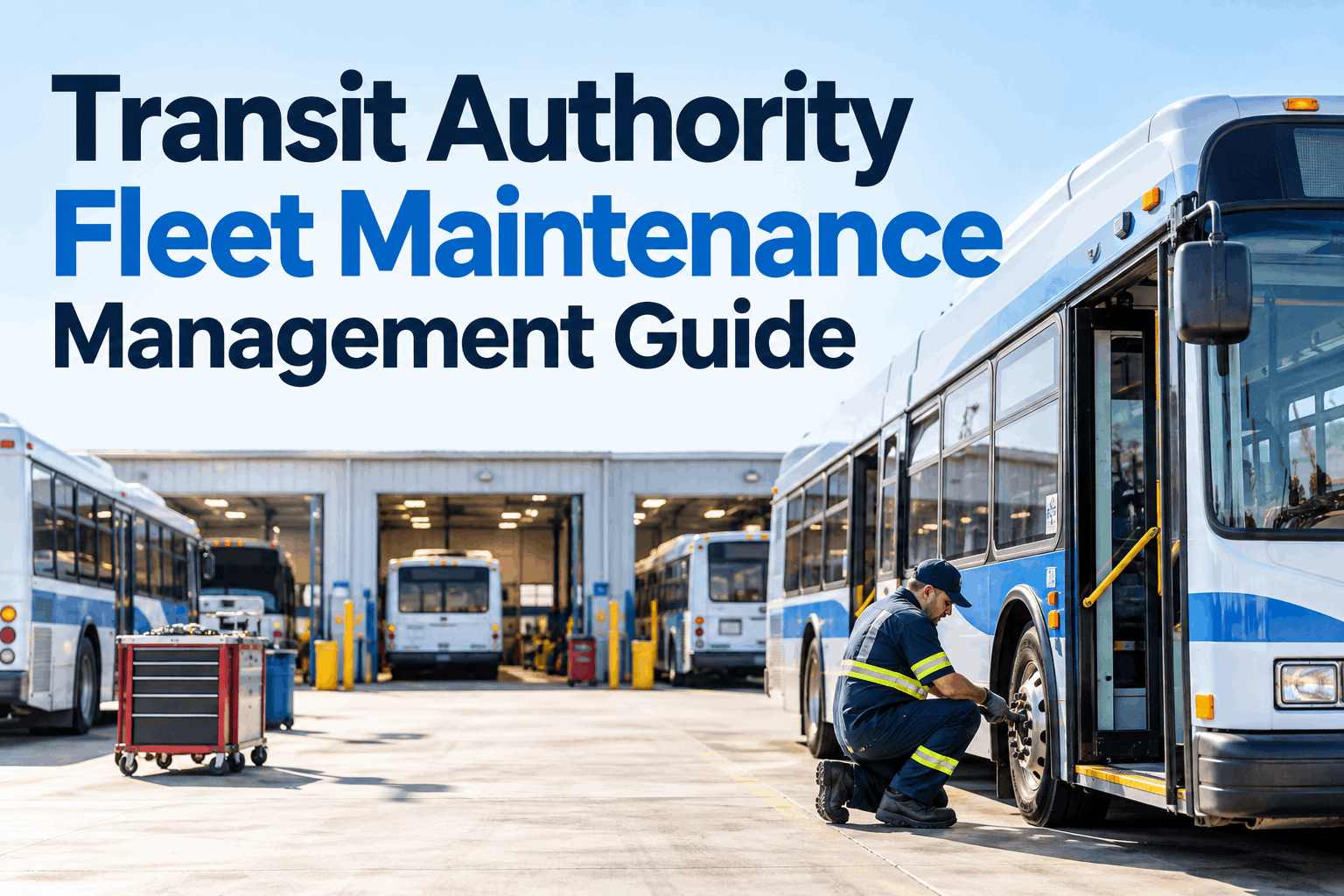
Every morning a transit agency makes the same promise: the right number of buses, roadworthy and clean, rolling out of the garage in time to hit their routes. Transit authority fleet maintenance keeps that promise — against a nightly deadline, because a bus that isn't ready by pull-out isn't a maintenance problem, it's a missed run and a stranded rider. This guide covers how to manage maintenance across the whole garage so pull-out holds night after night — book a demo to see it on your fleet.
Every bus ready by pull-out, every night.
Buses on a tiered PM schedule, support vehicles, facility gear — one garage, one system. HVI keeps inspections, preventive maintenance and defects in one place so the right buses roll out on time and the records hold up for FTA.
Transit maintenance is different from ordinary fleet upkeep in one decisive way: the schedule isn't set by the shop, it's set by the service board. The buses have to be ready when the routes say so, maintenance gets the overnight window to make it happen, and the whole thing has to be documented for the FTA. A transit authority fleet maintenance program has to serve all three at once. Here's how the pieces fit.
Why the pull-out drives everythingtransit fleet maintenance is a nightly deadline, not a queue
In most fleets a down unit waits its turn in the shop. In transit, every bus is committed to a run, so maintenance works backward from pull-out — the overnight window is the whole game, and three pressures collide inside it.
The clock
Buses pull out before dawn on a fixed timetable. Whatever isn't fixed by then either runs on a spare or leaves a hole in the service — there's no "tomorrow" slot.
The spare ratio
Agencies carry a limited pool of spare buses. Too many units down for maintenance at once and there aren't enough spares to cover every route — the ratio is a hard constraint.
The record
Transit agencies have to document their maintenance for the FTA and for safety audits. The work isn't finished when the bus rolls — it's finished when the record proves it was done right.
Serve the clock but skip the record and you fail the audit; protect the record but blow the window and you miss runs. A transit program has to hold all three, which is why scattered paper and spreadsheets break down at scale. That's the job maintenance management is built for. Book a demo to see pull-out readiness at a glance →
The PM-A/B/C ladderhow transit bus preventive maintenance is really scheduled
Transit doesn't service every bus the same way every time. Preventive maintenance climbs a ladder of tiers — commonly called PM-A, B and C — where each level includes everything below it plus deeper work, triggered by mileage or time. Getting the right bus to the right tier on schedule is the core of transit bus preventive maintenance.
Oil and filter, fluid levels, lights, brakes check, safety items and a quick walkaround — the backbone interval every bus hits most often.
Everything in PM-A, plus deeper driveline, suspension, HVAC, wheelchair lift and door-system checks on a longer interval.
Everything in PM-B, plus a comprehensive inspection — major systems, structural and emissions items — the deepest scheduled service in the cycle.
The failure mode isn't skipping PM entirely — it's a bus drifting past its tier because the mileage trigger wasn't tracked. HVI schedules each tier by meter or date and raises the work order automatically when a bus is due, so no unit climbs past its next rung unnoticed. Preventive maintenance scheduling handles the A/B/C cadence per bus.
What a transit garage maintainsbus fleet maintenance is only part of the job
A transit authority doesn't just maintain buses. The garage carries three distinct worlds of assets, and a program that only tracks the revenue fleet leaves two of them running on memory.
Revenue buses
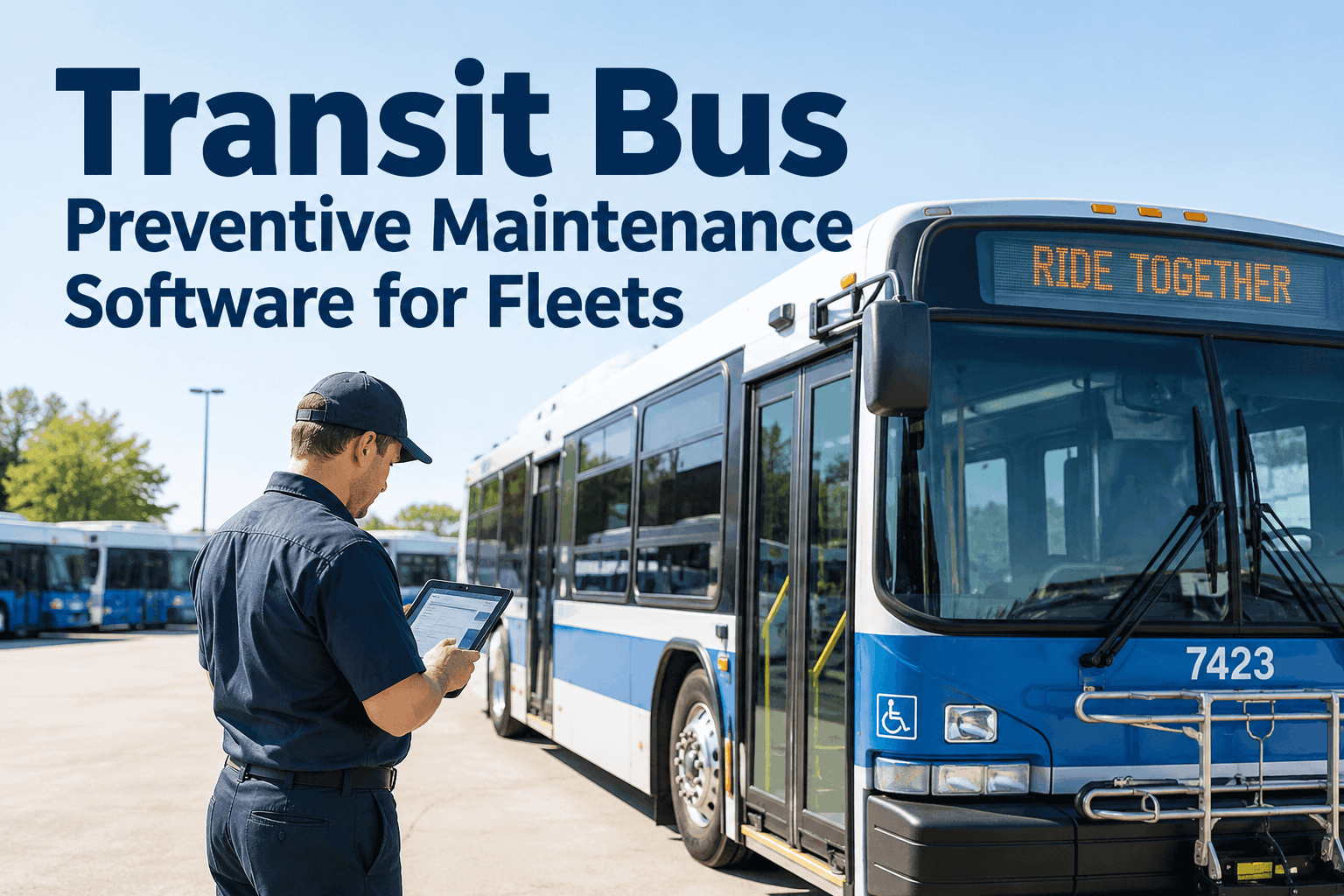
The fleet that earns — standard, articulated, cutaway and electric buses, each on its own PM tier, inspection form and pull-out check.
Support vehicles
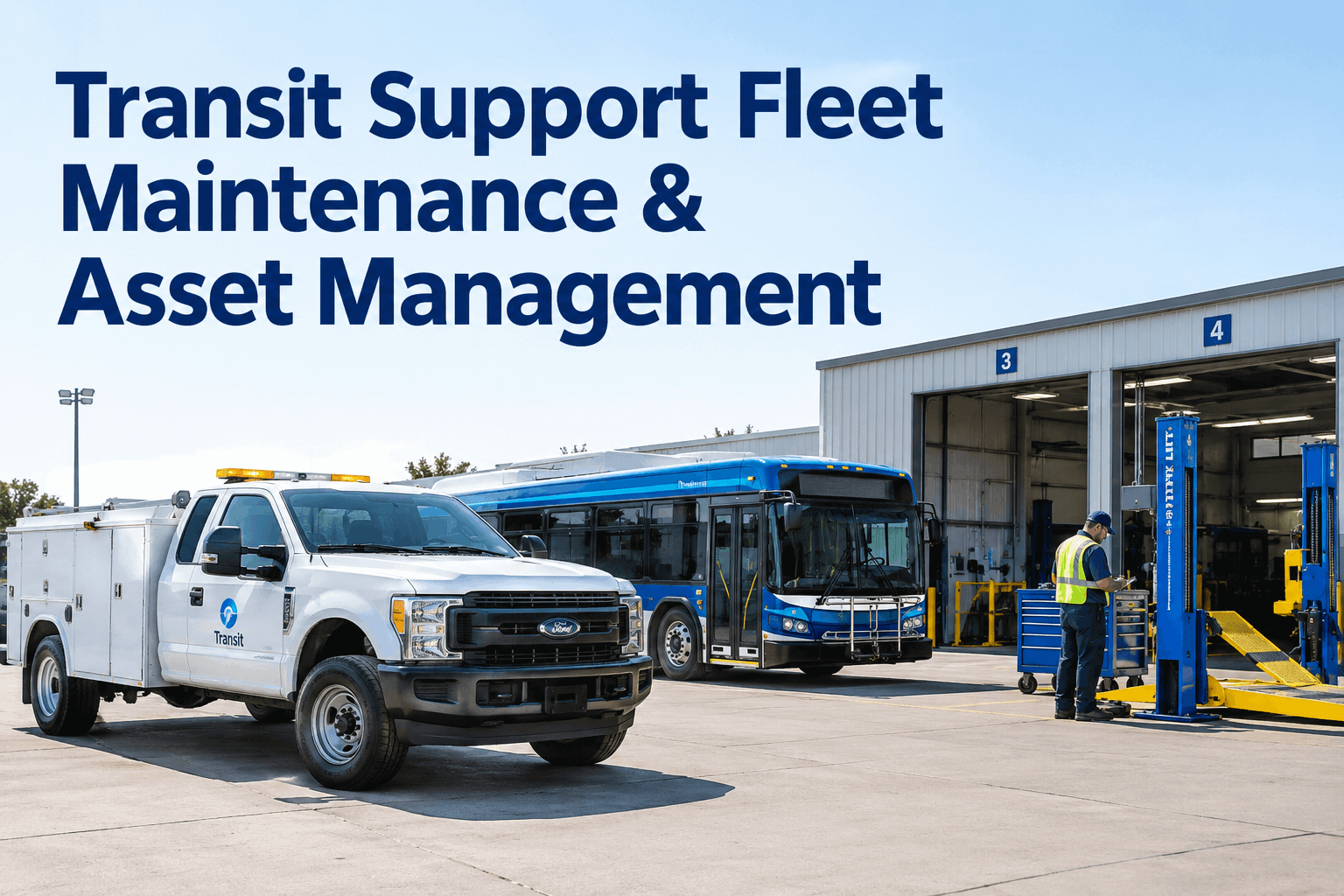
Service trucks, road-supervisor cars, tow and fuel vehicles — the non-revenue fleet that keeps the revenue fleet moving, easy to forget until one fails.
Facility & shop equipment
Bus washes, lifts, fuel islands, fare equipment and shop tools — fixed assets that stop the whole operation when they go down, yet rarely get a PM schedule.
One register for all three means the bus wash and the tow truck get the same scheduled care as the buses — and nothing critical to pull-out runs untracked. HVI holds every asset class in one place, with inspections and PM tied to each. Book a demo to bring your whole garage into one system →
The pull-out defect loophow a flagged bus becomes a fixed bus before service
The daily pre-trip and pull-out inspection is transit's earliest warning. Its value is the loop behind it — a defect that moves from the operator's report to the shop to a tracked fix, fast enough to beat the next pull-out.
The critical rule transit can't bend: a safety-critical defect holds the bus out of service until it's cleared, no exceptions. When the flag opens a work order automatically and can lock the bus from pull-out, a bad brake or an inoperative wheelchair lift never slips onto a route. That's the gap daily operator reporting closes between the yard and the shop.
Transit fleet maintenance in HVIthe board a maintenance manager opens before pull-out
This is what keeps pull-out honest: every bus, its next PM tier, its pull-out status, and the defects that became work orders overnight — the view a transit maintenance manager scans before the first run leaves.
Before the first run, the manager knows exactly which buses are ready, which are held, and whether spares cover the gap — the readiness picture a clipboard can't give at 4am. That live view is what analytics and reporting builds from, and you can book a demo to see this board on your own depot.
Bus pull-out inspection checklistthe pre-trip items that decide if a bus rolls
Before a bus leaves the depot, the operator runs a pull-out inspection covering safety, the passenger cabin and accessibility. Here's a baseline transit bus inspection checklist, grouped the way HVI loads it on the operator's device — each item observable, each flaggable with a photo.
- Brakes & air — pressure builds, holds, no warnings
- Steering, horn & mirrors — responsive, adjusted
- Lights & signals — headlights, stop, destination sign
- Tyres — tread, pressure, no damage, lugs tight
- Doors — open, close and interlock correctly
- HVAC — heat and A/C reaching the cabin
- Seats, stanchions & floor — secure, clean, no hazards
- Stop request & PA — working
- Wheelchair lift / ramp — deploys and stows
- Securement straps & kneeling — functional
- Fire extinguisher & first-aid — present, charged
- Mileage logged — toward next PM tier
On paper these get rushed at a 4am pull-out; in HVI each is a tap, a safety-critical fail can hold the bus, and anything flagged carries a photo into a work order. Start free and load your pull-out checklists →
From a transit maintenance manager
At 4am I don't need a report, I need to know how many buses I'm short and which ones. For years that was a whiteboard and a lot of phone calls, and we'd find out about a held bus when the operator was already standing at the gate.
Now the board tells me before I walk in — what's ready, what's held, what PM is coming due this week so I can plan the window instead of reacting to it. Missed pull-outs dropped, and when the FTA review came, the records were just there. No scramble.
Transit authority fleet maintenance — FAQs
What makes transit fleet maintenance different from other fleets?
The pull-out deadline. Every bus is committed to a route, so maintenance works backward from a fixed departure time with a limited spare pool, and the work has to be documented for the FTA. It's a nightly deadline with a records requirement, not a shop queue — which is why transit needs tight scheduling and visibility.
What is a PM-A/B/C schedule for transit buses?
It's a tiered preventive maintenance cycle. PM-A is the frequent light service (oil, filters, safety checks), PM-B adds deeper driveline and systems work on a longer interval, and PM-C is the comprehensive inspection. Each tier includes everything below it, triggered by mileage or time.
How should transit buses be scheduled for PM — miles or time?
Usually mileage, with a time backstop for low-mileage units. Buses accumulate miles fast on route, so PM tiers trigger on odometer thresholds; HVI tracks each bus's mileage and raises the work order when it hits the next tier, so no bus drifts past its service interval.
How does a digital system help with FTA maintenance records?
It keeps every inspection, PM and defect on the bus's record with timestamps, mechanic sign-off and photos. When the FTA or a safety audit asks for maintenance history, it's one search instead of digging through paper — and the completeness of the record is itself the proof.
Can one system cover buses, support vehicles and facility equipment?
Yes. HVI runs the whole garage in one register — revenue buses on their PM tiers, non-revenue support vehicles, and facility assets like bus washes and lifts. Each gets its own inspection and schedule, so nothing critical to pull-out runs untracked.
Make every pull-out a planned event, not a 4am scramble
HVI schedules every bus's PM tier, catches defects at pull-out, routes them to the shop, and keeps the FTA-ready record — across buses, support vehicles and facility gear. Live on your garage in under two weeks.
No credit card · Works offline in the yard · Buses, support fleet and facility on day one