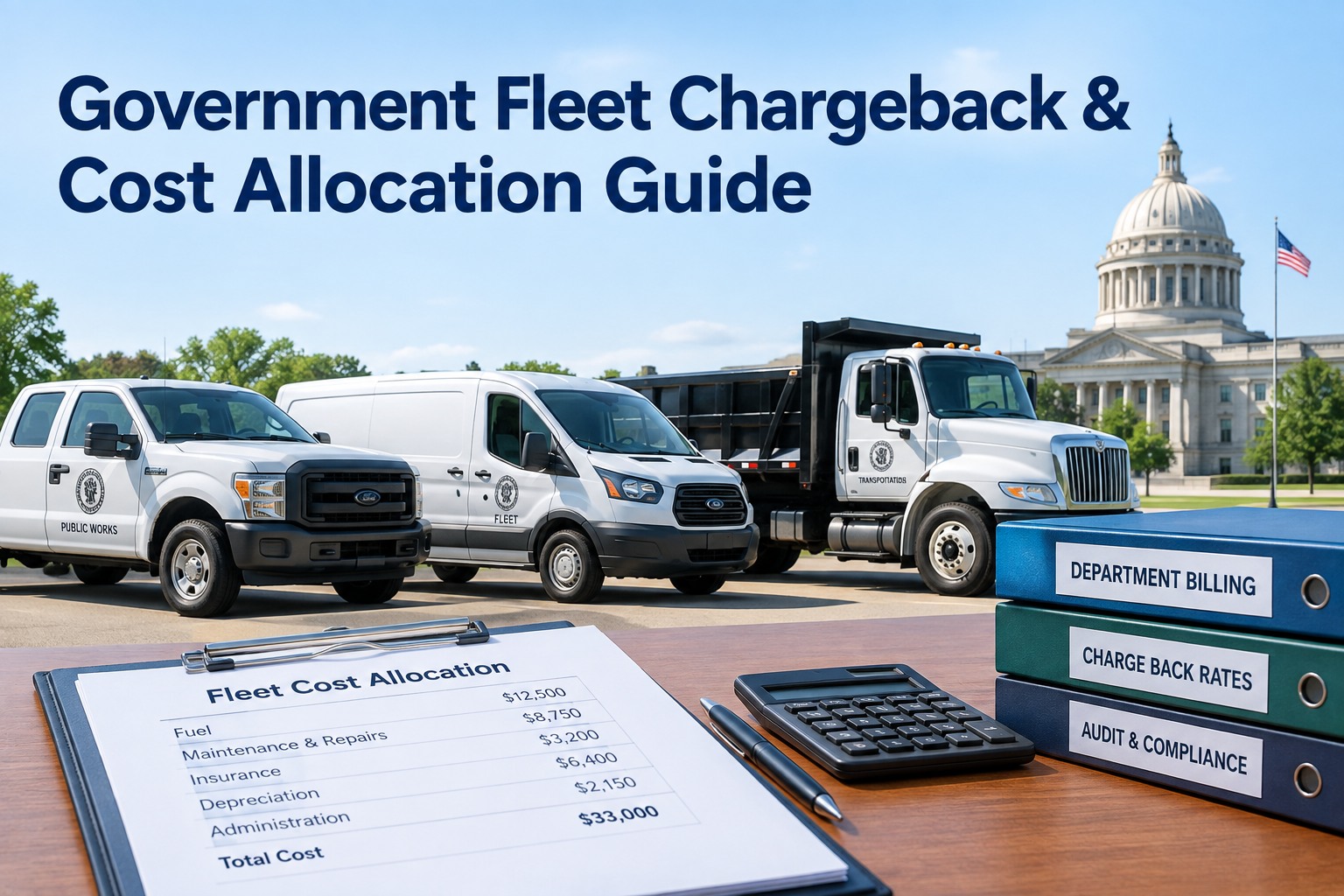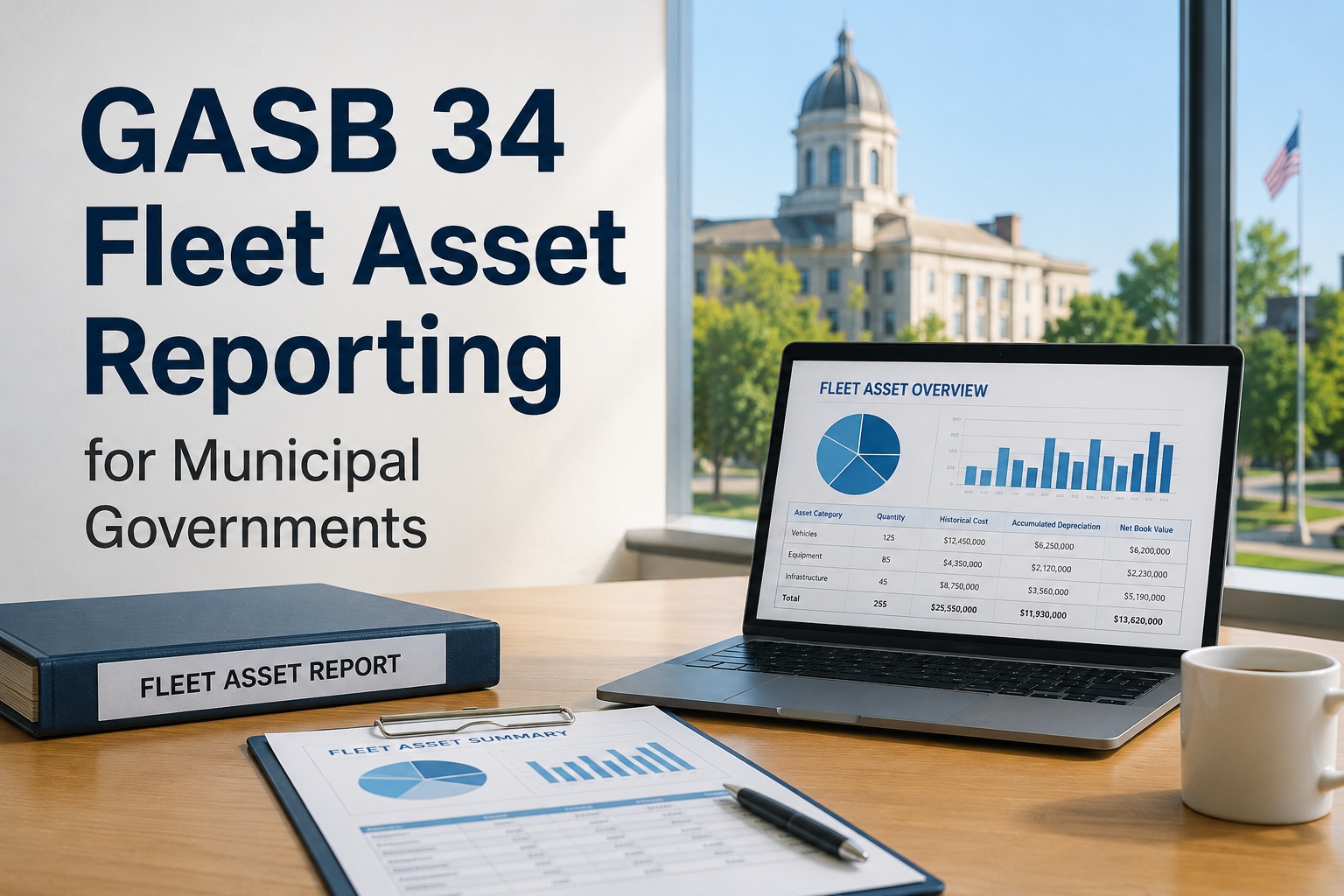
It is the third week of the month, your shop has closed 214 work orders, and someone in finance is staring at a spreadsheet trying to guess which department pays for the ladder truck's new turbo. If that scene is familiar, a Tyler Munis fleet integration is the missing link: Tyler Munis runs your general ledger, accounts payable, HR and procurement for more than 40,000 government customers, and HVI's Tyler connector routes every fleet work order cost to the correct department GL account and cost center automatically, so chargebacks post themselves and the audit trail builds itself. Instead of re-keying repair costs from a shop system into Munis at month end, the numbers flow from the technician's phone to the ledger. If you want to see that handoff on your own chart of accounts, you can book a 30-minute walkthrough of the Munis connector and bring your messiest cost center with you.
Your ERP knows budgets. Your shop knows trucks. Why are you the bridge?
Tyler Munis is the number one municipal ERP for GL, AP, HR and procurement. HVI is the CMMS your technicians actually use in the bay. The connector between them ends the month-end re-keying marathon for good.
Without the connector
- WO costs exported to spreadsheets, re-keyed into Munis
- Chargebacks guessed by department, disputed for weeks
- AP invoices matched to POs by hand, line by line
- Audit trail split across paper, email and memory
With HVI + Tyler Munis
- WO cost auto-posted to the right dept GL + cost center
- Auto-chargeback per unit, per department, per fund
- AP invoice match against received parts and POs
- One timestamped, photo-backed audit trail end to end
Four numbers every public fleet manager should know
These are the figures that decide whether your fleet budget survives the next council meeting or audit.
From wrench turn to GL posting in five steps
The whole point of a Munis ERP fleet integration is that nobody touches the numbers twice. Here is the path a single repair takes.
Technician closes the work order in HVI
Labor hours, parts from inventory, outside vendor charges and shop supplies are captured on the WO from any phone or tablet in the bay. The unit, the meter reading and photos of the failed part are attached automatically.
HVI maps the unit to its department and cost center
Every asset in HVI carries its owning department, fund and cost center. A streets division plow truck can never post to the parks budget, because the mapping lives on the asset, not in someone's memory.
Costs roll up by GL account
Labor, parts, commercial vendor work and sublet each map to their own GL account lines, so the ledger receives the same breakdown your finance team would have keyed by hand, without the keying.
Nightly sync posts to Munis via the 2024.2 API
Every night, HVI pushes the day's closed WO costs into Tyler Munis through the 2024.2 API. Chargebacks hit each department's budget automatically, and AP invoices are matched against received parts and purchase orders.
HVI tracks every transaction
Each sync is logged inside HVI: what posted, when, and to which account. When an auditor or a department head questions a charge, you pull the WO, the photos and the GL reference in seconds instead of digging through email.
What posts where: the chargeback mapping table
This is the heart of gov fleet chargeback ERP done properly. Every cost type has a defined destination before the first wrench turns.
| Cost captured in HVI | Mapped by | Posts to in Tyler Munis | Who sees it |
|---|---|---|---|
| Technician labor hours on WO | Unit's owning department | Dept GL labor account + cost center | Finance, dept head |
| Parts issued from shop inventory | Part category + unit | Dept GL parts account, inventory relieved | Finance, parts manager |
| Outside vendor / sublet repair | PO + vendor invoice | AP invoice match, dept GL vendor line | AP clerk, fleet manager |
| Fuel and fluids | Unit + fuel card feed | Dept GL fuel account by cost center | Finance, fleet manager |
| Tires, PM kits, shop supplies | Unit + cost type | Dept GL operating supplies line | Dept head, auditor |
A worked example: a sanitation department rear-loader needs a $4,800 hydraulic pump. In HVI the WO closes with 6.5 labor hours, the pump from inventory, and a $320 hose from a local vendor. That night, sanitation's GL absorbs exactly $4,800 plus labor, split across the right accounts, and AP matches the hose invoice to its PO. Public works never sees the charge, and nobody in finance touches a keyboard. If your month-end looks different today, walk through this exact scenario in a demo with your own departments.
Month-end close, with and without the connector
The work does not disappear on its own. It either happens in your busiest week, by hand, or it happens every night while nobody is watching.
The pattern is the same across municipal, county, utility and school district fleets: once the muni fleet GL posting is automatic, the arguments stop. Departments trust the numbers because each one traces back to a work order with photos, a technician name and a timestamp. You can start mapping your units free and have the asset-to-department structure ready before your next budget cycle.
See your own chart of accounts in the demo
Bring one department, one cost center and one ugly invoice. We will show you the full path from work order to Munis GL posting in 30 minutes.
What the HVI Tyler Munis integration actually does for your shop
Four capabilities, each tied to an outcome you can measure in hours, dollars or audit findings.
Automatic GL routing by department
Every work order cost inherits the unit's department, fund and cost center, then posts to the correct GL account lines in Munis. Outcome: auto-chargeback that finance trusts, and a fleet budget conversation based on facts instead of estimates.
AP invoice match
Vendor invoices are matched against purchase orders and parts actually received on the work order. Outcome: AP stops paying for parts that never landed on a truck, and the gov fleet AP integration kills the three-way-match paper chase.
Nightly sync on the Munis 2024.2 API
HVI pushes closed WO costs to Tyler Munis every night and logs every transaction. Outcome: the ledger is never more than a day behind the shop floor, and you always know what posted, when, and where.
Audit-ready records end to end
Every charge links back to a timestamped, photo-backed work order: who did the work, what part failed, what it cost and which GL line absorbed it. Outcome: internal and external audits go from days of digging to a filtered report.
Because HVI also runs your digital inspections and DVIR, preventive maintenance scheduling, parts inventory and fuel tracking, the costs flowing into Munis are complete, not just the ones someone remembered to write down. Fleets that see the full loop in a demo usually spot the gap in their current process within the first ten minutes.
Built for government and municipal fleets on Tyler Munis
If your organization runs Munis and maintains iron, this connector was designed for your exact situation.
City and county public works
Plow trucks, graders, sweepers and mowers charged back to streets, parks, water and stormwater budgets without a single spreadsheet.
Utilities and energy
Bucket trucks, digger derricks and service vans split across electric, water and gas divisions, each posting to its own fund.
Solid waste and sanitation
High-cost hydraulic and packer repairs land on the right route and department the night the work order closes, not at quarter end.
Transit and school districts
Bus fleets where every dollar must trace to a grant, a route or a program code, with the audit trail to prove it.
Police, fire and EMS fleets
Upfit costs, pursuit repairs and apparatus maintenance separated from general fleet spend and charged to the right public safety budget.
Mixed municipal yards
One platform across trucks, trailers, off-road plant and shop equipment, all feeding one clean nightly posting into Munis.
The bottom line on Tyler Munis fleet integration
Tyler Munis already runs your general ledger, accounts payable, HR and procurement. The only reason fleet costs arrive late, wrong or disputed is that they start life somewhere else, on paper or in a system that cannot talk to your ERP. The HVI Tyler connector closes that gap: work order costs map to the right department GL account and cost center, chargebacks post automatically, AP invoices match themselves, and the nightly sync on the Munis 2024.2 API keeps the ledger one day behind the shop floor at most. HVI tracks every posting, so your audit trail is a report, not a scavenger hunt.
The practical next step is small. Pick your highest-spend department, map its units to cost centers, and watch one week of work orders post themselves. Most fleet managers who book a working session with our integration team start exactly there, and most never go back to the spreadsheet. If you would rather explore on your own first, you can create a free HVI account and load your first units today.
"I used to lose the last week of every month to chargebacks. Parks would swear they never approved a repair, finance would hold the invoice, and I would be in the middle printing work orders. Now the charge hits their GL the night we close the WO, with photos attached, and the arguments just stopped. My personal metric is dispute emails: I had fourteen last spring. This quarter I have had one, and it was a typo in a cost center we fixed in five minutes."
Marcus Delaney, Fleet Services Manager, mid-size county public works fleet running 340 units on Tyler Munis
Tyler Munis fleet integration: your questions answered
Does HVI integrate directly with Tyler Munis?
Yes. HVI connects to Tyler Munis through the Munis 2024.2 API. Work order costs flow from HVI into the correct department GL accounts and cost centers on a nightly sync, and every transaction is logged so you can see exactly what posted and when.
How does the auto-chargeback to departments actually work?
Each asset in HVI carries its owning department, fund and cost center. When a technician closes a work order, labor, parts and vendor costs inherit that mapping and post to the matching GL lines in Munis. Departments are charged for their own units automatically, with the work order and photos as backup.
Can HVI match AP invoices to purchase orders in Munis?
Yes. Vendor invoices tied to a work order are matched against the purchase order and the parts actually received, so AP clerks are not chasing paper for the three-way match. You can see the AP match flow in a live demo using one of your own recent vendor invoices as the example.
How long does it take to set up the Tyler Munis connector?
Most fleets are mapping units to departments and cost centers within the first week. The heavy lift is agreeing the GL mapping table with finance, which HVI's team helps you build. Once the mapping is set, the nightly sync runs on its own. Many teams sign up free and load their asset list before the first integration call.
What happens if a cost posts to the wrong GL account?
HVI logs every synced transaction, so a mis-post is traceable to the exact work order and mapping rule that caused it. You correct the cost center on the asset or the mapping table, and the next sync posts correctly. Because the audit trail is complete, finance can reverse and repost with full documentation instead of guesswork.
Stop re-keying fleet costs into Munis
Join the government fleets whose work orders post themselves to the right GL account every night. Book a demo and watch it run on your own departments, or start free and build your asset map today.
Free to start - Works on any phone - No card needed