There's a line in a real fatality report that should change how every fleet thinks about wood chipper maintenance. A tree trimmer was pulled into a chipper while feeding branches; the machine had a feed control bar — the safety device meant to stop and reverse the feed the instant a worker is caught — but, in the investigator's words, "it is not known if it was working at the time." That's the whole problem in one sentence. On a chipper, the safety devices are mechanical and hydraulic components that wear, stick, and fail like any other, and a safety bar that isn't tested is just a decoration. This is the machine where maintenance and safety aren't two programs — they're the same task, done before every single use. This guide treats them that way. Book a demo to see chipper safety-function tests logged on every pre-use check.
The safety devices that only count if they're tested
Pick a device. See what it does, how it's tested, and why "it's installed" is a dangerous answer to "does it work?"
Every one of these is a component that can wear, stick, or come out of adjustment. The only way to know a chipper's safety devices work is to test them — before every use, and to record that you did. Book a demo to see each safety device tested and logged as a required check
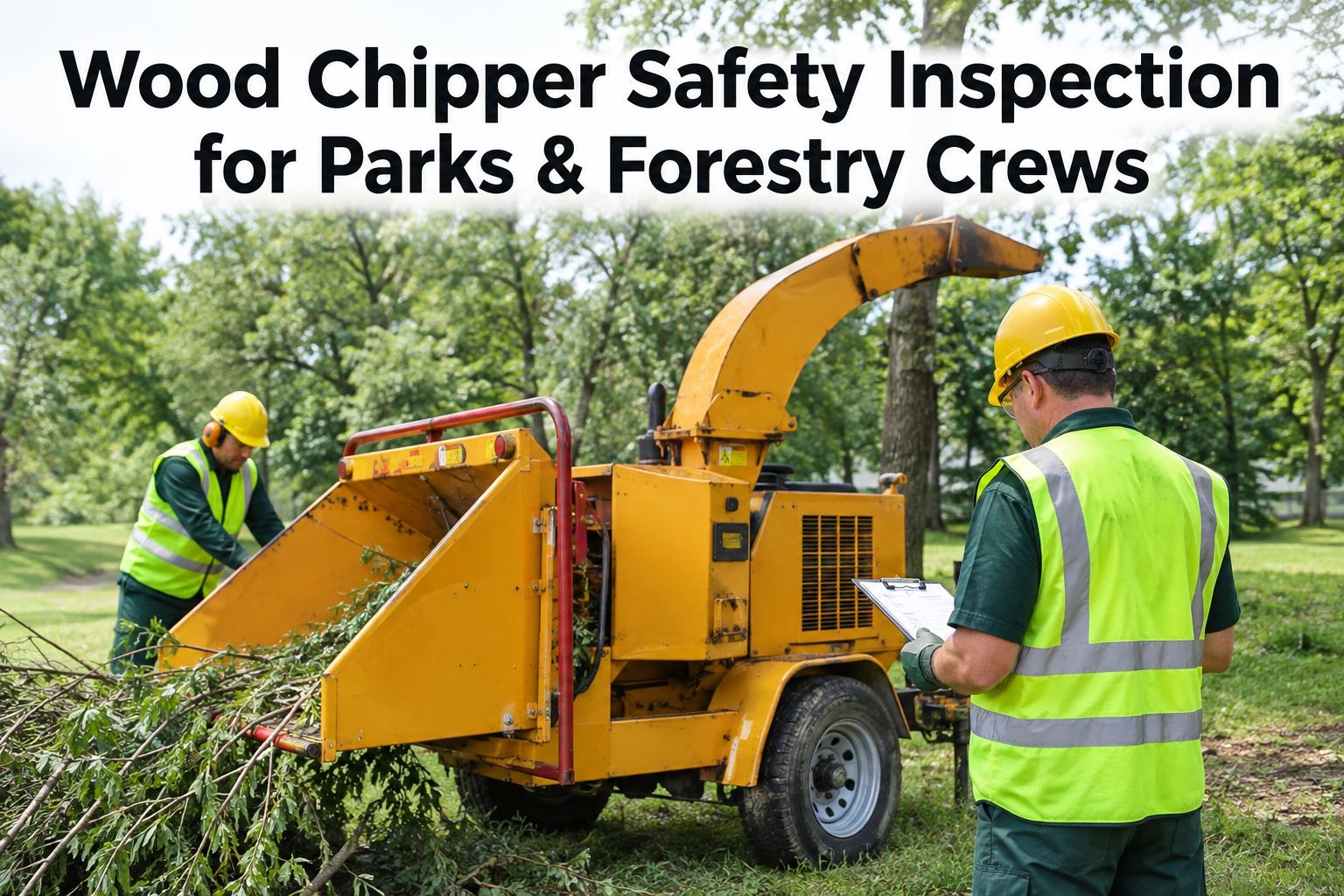
A wood chipper is the most dangerous machine in most municipal yards — a set of knives spinning fast enough to pull a person through faster than they can react, fed by hydraulic rollers that don't know the difference between a branch and an arm. That reality reshapes what "maintenance" means here. On most equipment, poor maintenance costs money and uptime; on a chipper, it costs safety, because the safety devices are maintained components and because a maintenance lapse in the wrong place turns the machine itself into the hazard. The rest of this guide covers both halves of that single problem: keeping the safety systems verified, and keeping the knives and feed system in the condition that keeps the machine from becoming dangerous on its own.
When dull knives become a safety problem, not just a quality one
Here's the connection most people miss: on a chipper, letting the knives go dull isn't just a productivity issue — it's a safety one. Sharp knives cut cleanly and pull material through smoothly. Worn or damaged knives make the feed clog and bog down, and a clogged chipper can kick debris back out through the infeed chute toward the operator. The maintenance task and the safety hazard are the same event seen from two ends.
That's why knife service is the heart of chipper maintenance. Knives dull faster than most operators expect — the first signs are poor chip quality, slower feeding, and the engine working harder — and they need sharpening, rotating, or replacing on a regular cycle, more often when chipping dirty or gritty wood that wears an edge fast. Two things around the knives are safety-critical in their own right: the knife bolts must be torqued to the manufacturer's exact specification, because a knife thrown from a spinning drum is a catastrophic failure, and the anvil (the fixed bed knife the rotating knives shear against) needs its clearance checked and adjusted, since a worn or misadjusted anvil ruins the cut and strains the machine. And the rule that protects the hands doing this work: the disc or drum must be immobilized and the machine locked out before anyone reaches in to change knives or clear a chute. Start a free trial and put knife service, bolt torque, and anvil clearance on a tracked schedule per machine.
The feed system and the rest of the machine
Beyond the knives and the safety devices, a chipper has a handful of systems that keep it working and towing safely. None are exotic, but each has a failure mode that either stops the job or creates a hazard.
Feed rollers & drive
The hydraulic rollers that grab and pull material in. Check roller condition and wear, the hydraulic drive and its pressure, and that the feed direction control (feed, neutral, reverse) works crisply — the same control that doubles as an emergency function.
Hydraulics
The feed rollers and, on many machines, the safety-bar reverse function run on hydraulics — so hydraulic health is directly tied to whether the safety system works. Check fluid level and condition, hoses and fittings for leaks, and cylinder or motor operation.
Engine & belts
The diesel or petrol powerplant runs on engine hours like any off-highway machine — oil, filters, coolant, belts, and the clutch or drive that engages the disc. A slipping drive belt robs chipping power and strains the feed.
Trailer, tyres & coupler
Most municipal chippers are towed, so they carry all the trailer failure modes too — wheel bearings, tyre pressure and age, the coupler, safety chains, and lights. A chipper that can't tow safely to the job is as down as one that won't chip.
Guards, hood latches & discharge
Machine guarding is both a legal requirement and a recurring factor in accident reports — missing or malfunctioning guards and safety devices come up again and again. Confirm all guards are present and secure, the disc hood is closed and latched (workers have been killed by hoods coming off a spinning disc), and the discharge chute is clear and can be aimed away from people and traffic. This is a look-at-every-one check, not a glance.
The thread running through all of these is that a chipper's "maintenance" list is unusually full of items that are also safety items — the feed control that's also the emergency stop, the hydraulics that power the safety reverse, the guards and latches that keep the spinning parts contained. That overlap is exactly why the pre-use inspection has to be thorough and consistent, and why a configurable template that carries every safety and mechanical checkpoint for the specific machine beats a mental once-over. Book a demo to see a full chipper pre-use template with safety checks built in
The pre-use check: the ritual that has to happen every time
Because a chipper's dangers are immediate and severe, the pre-use inspection isn't a nicety layered on top of scheduled maintenance — it's the frontline control that decides whether the machine runs at all that day. Regulators and manufacturers are consistent on the point: all safety devices and controls must be tested and verified functioning before the chipper is used, every time. The chilling ambiguity in that fatality report — "not known if it was working" — is exactly what a logged pre-use test eliminates.
The value of recording the test is twofold. It changes behaviour — a check that has to be logged and signed is far more likely to be genuinely performed than a mental note — and it creates the evidence that matters after the fact. When an incident or an audit asks whether the safety devices were verified working, "we always check" is the answer that failed the worker in that report. A dated, signed pre-use record per machine is the answer that holds. Alongside the machine checks, the operating rules matter too: many jurisdictions and safe-work guides call for never operating a chipper alone, so a second worker can reach the emergency stop — confirm the two-operator and other requirements that apply in your area. Book a demo to see pre-use safety tests captured and signed offline
Hours for the machine, every-use for the safeties
Putting it together, a chipper runs on two overlapping schedules. The mechanical PM — knife sharpening and replacement, hydraulic service, engine oil and filters, belt and drive checks — is hour-based, triggered off the engine meter like any off-highway machine, because a chipper does almost no road mileage but real running hours. Knife service in particular often comes due faster than the hour clock suggests when chipping abrasive or dirty material, so the schedule should flex with the work.
The safety-function test, by contrast, is every-use, not interval-based — the feed bar, E-stop, and pull ropes get verified before each shift regardless of hours, because a device that worked yesterday can stick or fail today, and the cost of assuming is measured in limbs and lives. Tracking both on one system per machine — the hour-based PM firing off the meter, the safety test required and logged on every pre-use check — is how a municipal fleet keeps its most dangerous asset both reliable and genuinely safe, rather than safe-on-paper. Confirm the specific PM intervals, torque specs, and safety-testing requirements against the manufacturer's manual and the standards that apply to your operation. Start a free trial and run hour-based PM and every-use safety tests on the same chipper record.
From a tree-crew supervisor who tests the bar every morning
I read the report about the trimmer who got pulled in — the one where they couldn't say whether the feed bar was working — and it changed how I run our crew. That could have been any of my guys, and "we probably checked it" is not something I ever want to be saying to an investigator or a family. The bar, the pull ropes, the e-stop — those are the only things standing between a normal day and the worst one.
Now the safety test is the first thing, every morning, before a single branch goes in: run it up, push the bar, confirm the rollers stop and reverse, pull the ropes, hit the e-stop. It's logged and signed on the phone right there at the truck, offline. Takes two minutes. If anything fails, the chipper doesn't run — it goes on a work order and we grab another. The knives and the engine matter, but the safety test is the one I will never let become a "we usually do it." On this machine, usually isn't good enough.
Wood chipper maintenance & safety FAQs
What safety devices must be tested before using a wood chipper?
Before every use, all of a wood chipper's emergency safety devices should be tested and verified functioning, because they are mechanical and hydraulic components that can wear, stick, or fall out of adjustment. The main devices are: the feed control bar, mounted across the top and sides of the infeed chute, which stops the feed rollers when pushed to the neutral/center position and reverses them when pushed toward the discharge; the emergency stop or shut-off device, which must both stop the feed rollers and cut power to the cutting disc or drum (which then coasts through a run-down time); the bottom or side feed-stop bar, activated by body or limb pressure to stop the rollers if a worker is drawn toward them; and emergency pull ropes or cables, sometimes called last-chance cables, which stop and reverse the feed when pulled. Testing means confirming each device actually performs its function with the machine running and no material in the chute, that it is accessible from where the operator feeds, and that it moves freely and returns properly rather than sticking. Regulators and manufacturers are consistent that this verification must happen before the chipper is used, every time, and it should be documented. A safety device that is installed but never tested provides a false sense of protection, which has been a factor in fatal incidents.
How do dull chipper knives create a safety hazard?
Dull or damaged chipper knives are a safety hazard, not just a productivity problem, because of how they change the way the machine feeds material. Sharp knives cut cleanly and pull branches through the feed rollers smoothly. Worn or damaged knives cut poorly, which causes the feed to clog and the material to bog down in the infeed, and a clogged chipper can kick debris back out through the infeed chute toward the operator standing at the feed tray. So a maintenance lapse — letting the knives go too long between sharpening or replacement — directly produces a striking hazard for the person feeding the machine. There is a second safety dimension around the knives: the knife bolts must be torqued to the manufacturer's exact specification, because a knife thrown from a drum or disc spinning at high speed is a catastrophic and potentially fatal failure, and the anvil or bed knife the rotating knives shear against must be kept at proper clearance for a clean cut. Knives dull faster than many operators expect, especially when chipping dirty, gritty, or abrasive wood, and the early signs are poor chip quality, slower feeding, and the engine working harder. Keeping knives sharp, correctly torqued, and properly set is therefore simultaneously a maintenance task and a safety control, which is why it sits at the center of chipper upkeep.
How often should wood chipper knives be sharpened or replaced?
Chipper knife service frequency depends heavily on what is being chipped rather than a fixed hour figure, because abrasive material dulls edges far faster than clean wood. The practical trigger is condition and performance: knives should be sharpened, rotated, or replaced when chip quality declines, feeding slows, or the engine is working noticeably harder to chip, which are the early signs of a dull edge. Chipping dirty, sandy, or gritty material — common in storm cleanup and roadside work where branches have been dragged on the ground — wears knives dramatically faster than clean, freshly cut wood, so a municipal chipper doing that kind of work needs knife attention more often than its running hours alone would indicate. Many crews inspect the knives as part of the daily pre-use check and sharpen or rotate on a regular cycle, replacing them when they can no longer hold an edge or show damage such as nicks or cracks. Whenever knives are serviced, two things are essential: the disc or drum must be immobilized and the machine locked out before anyone reaches in, and the knife bolts must be re-torqued to the manufacturer's exact specification on reinstallation. Because the right interval varies so much with the work, the best approach is to track knife condition and service per machine and adjust the cadence to the actual material being chipped, confirming specifics against the manufacturer's guidance.
Why is documenting chipper safety checks so important?
Documenting chipper safety checks matters for two connected reasons: it makes the check more likely to genuinely happen, and it creates the evidence that answers the one question that follows any serious incident. A safety test that has to be logged and signed is far more likely to be actually performed than an informal mental note, because the act of recording it builds accountability into the routine and resists the complacency that creeps in on a task done many times. The second reason is starker. In a documented fatality investigation, a tree trimmer was pulled into a chipper that had a feed control bar installed, but the investigator's report stated it was not known whether the device was working at the time of the incident. That ambiguity — the inability to say whether the life-saving device functioned — is exactly what a dated, signed pre-use safety-test record eliminates. When an incident review, an insurer, or a regulator asks whether the emergency devices were verified working, a program that can produce a per-machine, per-shift record of the safety test performed and passed is in a completely different position than one relying on "we always check it." Beyond liability, that record supports the duty of care a public employer owes its crews, and it turns the most important routine on the most dangerous machine from an assumption into a proven fact.
Should wood chipper maintenance be scheduled by hours or every use?
A wood chipper actually needs both, on two overlapping schedules serving different purposes. The mechanical preventive maintenance — knife sharpening and replacement, hydraulic service, engine oil and filters, belt and drive inspection, and trailer service — should be scheduled by engine hours, because a chipper accumulates real running hours while doing almost no road mileage, making hours the meaningful measure of use just as on other off-highway equipment. Knife service in particular often needs to flex tighter than the hour clock when chipping abrasive material. The safety-function test, however, is not interval-based at all — it must be performed before every single use, regardless of hours, because the emergency devices can stick or fail between one shift and the next, and on a machine this dangerous the cost of assuming a device still works is measured in serious injury or death. So the correct model is hour-based PM for the mechanical condition of the machine layered with an every-use, documented safety-device test for the emergency controls. Tracking both against the same asset record — the PM firing off the hour meter and the safety test required and logged on each pre-use inspection — is what keeps a municipal chipper both reliable and genuinely safe. Confirm the specific intervals and safety-testing requirements against the manufacturer's manual and applicable standards for your operation.
Make the safety test something you can prove, not something you assume
HVI runs each wood chipper on hour-based PM for knives, hydraulics, engine, and trailer, and makes the every-use safety-function test a required, logged check — feed bar, emergency stop, feed-stop bar, and pull ropes each verified before the machine runs, captured offline at the job, with any failure grounding the chipper on a work order. A dated, signed record per machine that answers "did the safety device work?" with evidence, not a guess. See it on your own tree-crew fleet.
No credit card · Hour-based PM & every-use safety tests from day one · Works offline at the job