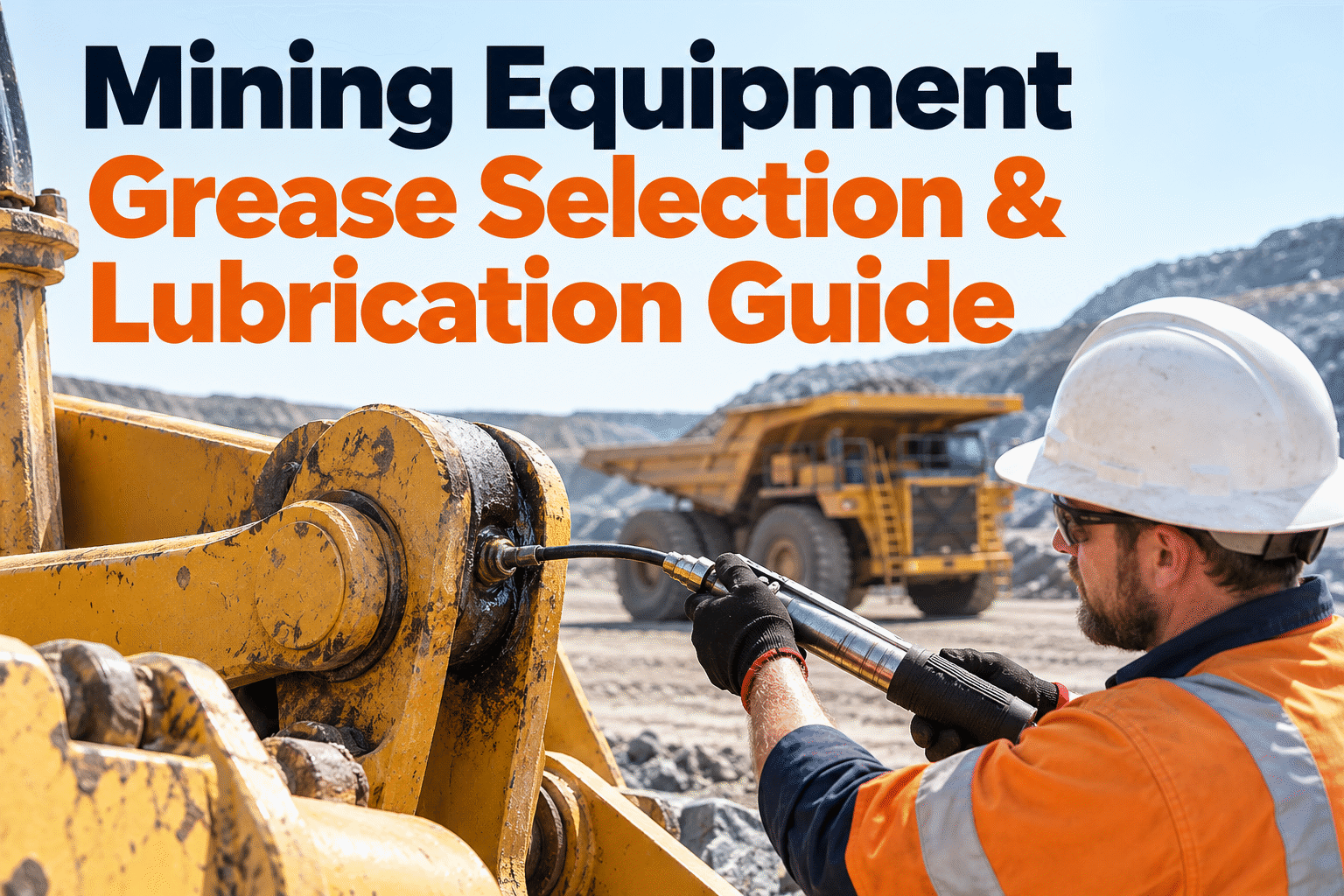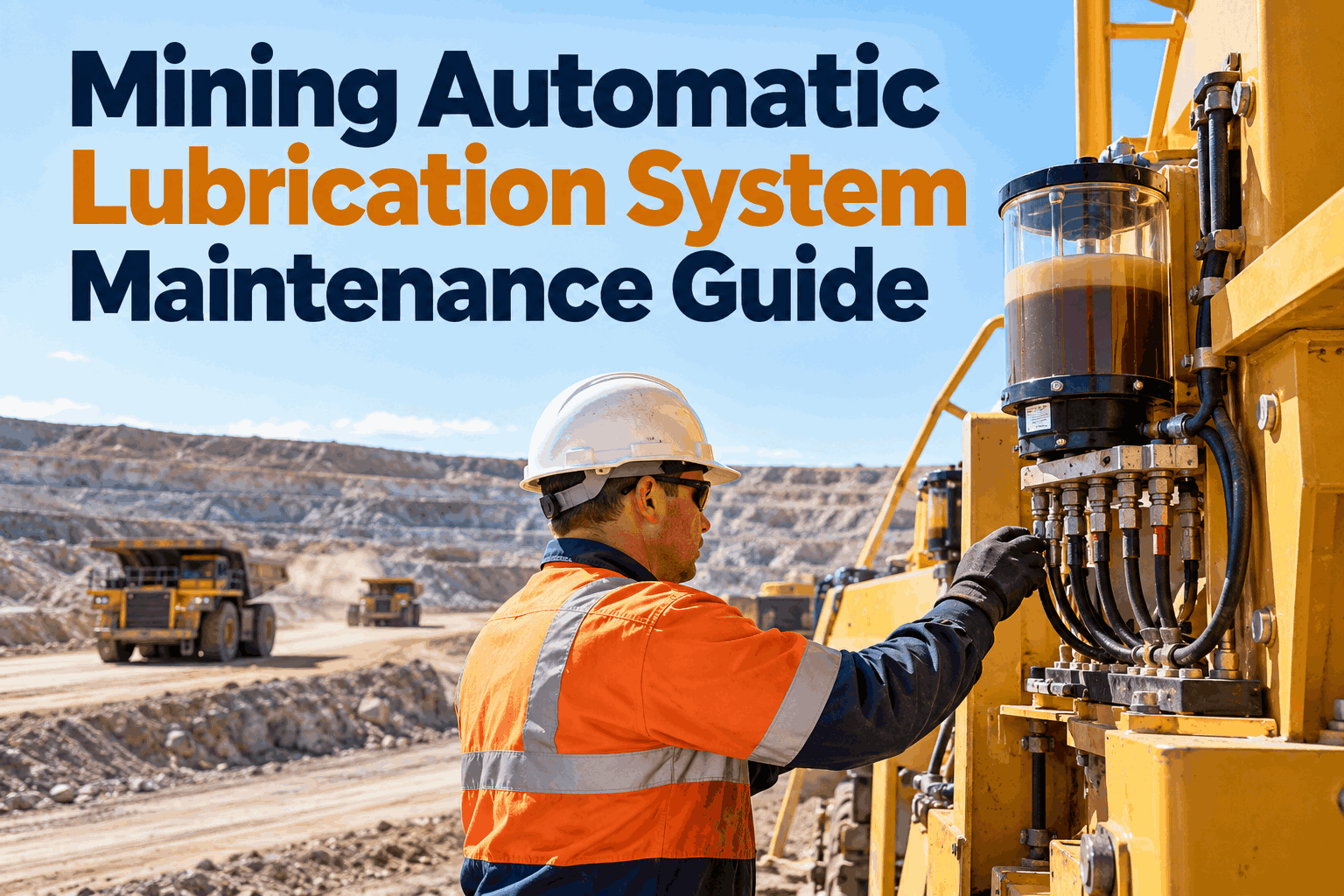
An automatic lubrication system is supposed to be the one job you never have to think about — grease flows from a central pump through the lines to every bearing and pin, metered and on time, while the operator drives. The danger is exactly that: when it quietly fails, nobody greases the machine manually, because everyone assumes the system is doing it. A haul truck pin runs dry for a week before anyone notices the squeal, and by then the damage is done. Maintaining the auto-lube system itself — not just trusting it — is what this page is about. Book a demo to see how HVI keeps the system honest.
When the grease stops, nobody hears it.
An automatic lubrication system fails silently — a blocked line or a dead pump, and a bearing runs dry while everyone assumes it's handled. HVI puts the auto-lube system on its own inspection and PM schedule, so a failure is caught at the walkaround, not at the teardown.
A centralized automatic lubrication system is one of the best reliability investments a mine fleet makes — metered grease, no missed points, no operator climbing over a hot machine. But it quietly shifts the risk: the failure mode is no longer a forgotten grease gun, it's an unnoticed system fault. The whole value of the system depends on knowing it's actually working. Here's how it's built, how it fails, and how to catch it before a dry bearing does.
The set-and-forget trapwhy an automatic lubrication system fails without warning
The very thing that makes auto-lube valuable — it runs without anyone touching it — is what makes its failures dangerous. Three kinds of false confidence let a dead system keep looking alive.
Each of these is why "we have auto-lube" isn't the same as "our machines are greased." The fix isn't distrust of the system — it's a scheduled check that the system is delivering, which is exactly what a digital equipment inspection adds. This is the auto-lube counterpart to our heavy equipment greasing schedule, which covers manual interval greasing. Book a demo to see an auto-lube check on the walkaround →
Anatomy of the systemthe four parts of an automatic lubrication system that fail
To inspect an auto-lube system you have to know where it breaks. From the central pump to the last grease point, each stage has its own failure mode — and checking the pump alone misses most of them.
Reservoir & pump
The source. Fails from an empty reservoir, a worn pump, low battery or air in the system — no pressure, no delivery.
Watch: level, cycling, pressureInjectors & dividers
The metering. A stuck injector or blocked divider valve starves the points downstream of it while the rest keep flowing.
Watch: indicator pins, blockageSupply lines
The delivery. Lines crack, chafe, get crushed on a mine site or clog with hardened grease — the point goes dry with no obvious sign.
Watch: leaks, chafing, kinksGrease points
The destination. A seized zerk or a point that never shows fresh grease purge is the real test — this is what the whole system exists to serve.
Watch: fresh purge at the pointThe only check that proves the whole chain worked is fresh grease at the point — everything upstream can look fine while the last link fails. HVI builds the stage-by-stage check into the preventive maintenance schedule so no stage gets skipped. Start free and build your auto-lube inspection →
Auto-lube didn't replace inspectioncentralized lubrication system maintenance is a trade, not a removal
Fitting an automatic lubrication system doesn't delete the maintenance task — it swaps a frequent manual job for a different, less frequent, higher-consequence one. Understanding the trade is the whole point.
- Operator greases every point on a cycle
- A missed point is visible — it's a skipped task
- Labour-heavy, points get missed under pressure
- Failure is a forgotten zerk — one point
- System greases every point continuously
- A failure is hidden — you have to go check it
- Low labour, but silent when it quits
- Failure can starve many points at once
Auto-lube trades frequent-but-visible work for rare-but-invisible risk — which is a great trade only if you add the one thing it removed: eyes on the result. A scheduled system check is what closes that gap, and it lives on the same platform as the rest of your mining equipment maintenance. Book a demo to see auto-lube checks across the fleet →
Auto-lube inspection in HVIthe lube-status view a reliability team checks per machine
This is what turns "set and forget" into "set and verify": every machine's auto-lube system, its last verified check, and any point flagged dry — the view a reliability engineer scans before a small fault becomes a bearing replacement.
Instead of trusting the system blindly, the team sees which machines have a verified lube delivery and which have a fault — down to the dry point and the blocked divider behind it. That visibility is what analytics and reporting builds from, and you can book a demo to see this status on your own fleet.
Auto-lube system inspection checklistthe grease-point checks that confirm the system is delivering
A good auto-lube inspection walks the system end to end — source, metering, delivery, destination — and ends at the only proof that matters. Here's a baseline checklist, grouped the way HVI loads it, each item observable at the machine.
- Reservoir level above minimum, right grease
- Pump cycles & builds pressure on test
- No fault light / controller alarm
- No air in the reservoir or pump
- Injector / divider indicator pins moving
- No blocked or seized divider valves
- Supply lines — no leaks, chafe or crush
- Fittings tight, no grease weeping
- Fresh grease purge at each critical point
- No seized zerks or dry, discoloured joints
- No bearing heat or noise on start-up
- Result logged; any flag becomes a work order
On paper this check gets skipped because "the system does it"; in HVI it's a scheduled tap-through where a dry point can't be closed without a work order, and the whole result is logged to the machine. Start free and load your auto-lube checklist →
From a mine reliability engineer
We put auto-lube on the whole haul fleet and congratulated ourselves — no more missed grease rounds. Then we lost a front spindle bearing and found a supply line had been crushed for who knows how long. The pump was cycling fine the whole time. That's the thing nobody tells you: a running system isn't a greased machine.
Now the auto-lube check is a line on the pre-shift, and it ends at the point, not the pump — fresh grease or it's a work order. We haven't lost a bearing to a dry point since. The system is great; trusting it blindly was the mistake.
Automatic lubrication system — FAQs
Do machines with an automatic lubrication system still need inspection?
Yes — more than people think. Auto-lube removes the manual greasing task but adds a silent failure risk: a blocked line or stuck injector starves a point while the pump runs normally. The system has to be inspected on a schedule to confirm grease is actually reaching the points.
How do you tell if an auto-lube system has failed?
A running pump proves nothing — check the whole chain. Confirm reservoir level and pump cycling, that injector or divider indicator pins are moving, that supply lines are intact, and crucially that there's fresh grease purging at each critical point. No purge at the point means a failure upstream.
What are the most common auto-lube failure points?
An empty reservoir or worn pump, a stuck injector or blocked divider valve, and damaged supply lines — cracked, chafed or crushed on a mine site. Any one can leave a point dry while the rest of the system works, which is why the check has to cover every stage, not just the pump.
How often should an automatic lubrication system be checked?
A quick system check belongs on the daily or pre-shift walkaround — reservoir, pump, fault light — with a deeper point-by-point verification on a regular PM interval. HVI schedules both and flags a dry point as a work order, so no machine runs long on a failed system.
How does HVI help manage auto-lube systems?
HVI gives the auto-lube system its own inspection template and PM schedule, captures a photo on any dry point or damaged line, turns a flag into a work order, and keeps the verification history per machine. It's the inspection and records layer that proves the system is delivering, not a lube controller itself.
Stop trusting the system — start verifying it
HVI puts every machine's automatic lubrication system on its own inspection and PM schedule, confirms grease at the point, turns a dry-point flag into a work order, and keeps the record — so a silent failure is caught at the walkaround, not the teardown. Live on your fleet in under two weeks.
No credit card · Works offline in the pit · Auto-lube inspection ready on day one