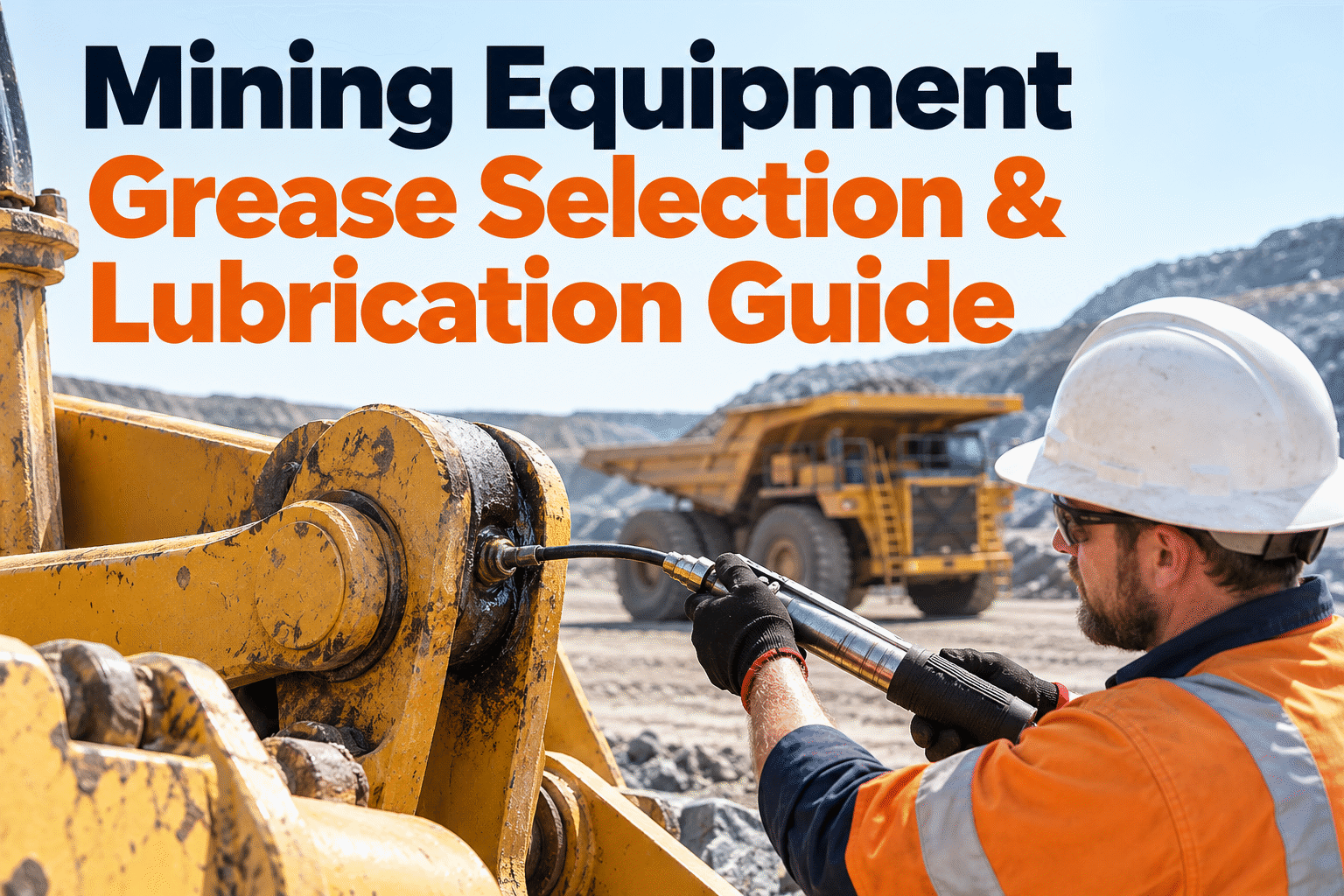
A loader returns from a dusty haul road with a dry bucket pivot, while the next shift discovers a grease cartridge that does not match the site lubricant register. That small handover gap can become a costly pin-and-bushing repair. Effective grease selection mining practices begin with the right lubricant for each component, clean application methods, and a reliable record of when the work was completed. This guide explains how to make those decisions practical across busy mine fleets.
Mining Equipment Grease Selection & Lubrication Guide
Choose the correct grease, protect critical joints and build lubrication routines that survive dust, water, heavy loads and rotating shifts.
What determines the right grease for mining equipment?
There is no universal mining grease. Product selection depends on the component design, approved lubricant specification and the environment in which the machine works.
Load & movement
Slow, heavily loaded pins may require a different grease performance profile from high-speed rolling-element bearings. Confirm the component maker's requirements before selecting extreme-pressure additives.
Temperature range
Cold starts, hot housings and seasonal exposure affect base-oil viscosity, pumpability and the ability of a grease to remain in the contact zone.
Water & contamination
Washdown, mud, fine dust and abrasive material influence water resistance, corrosion protection, sealing and relubrication needs.
Delivery system
Manual grease guns, centralized lines and automatic lubrication systems have different flow and pressure constraints. Verify that the selected grease is suitable for the system.
A well-managed lubrication program also needs traceable work. Book a demo to see how HVI organizes mining preventive maintenance alongside inspection findings and service records.
Read the grease specification before choosing a cartridge
Grease labels describe different properties. None of the following terms alone proves that a product is suitable for a specific excavator, haul truck or loader.
| Specification item | What it describes | Practical selection check |
|---|---|---|
| NLGI consistency grade | How firm or soft a grease is under standardized testing. | Match OEM and dispensing-system requirements; NLGI grade is not a measure of grease quality. |
| Base-oil viscosity | Oil-film behavior under load, speed and temperature. | Review bearing or joint design and actual operating temperatures. |
| Thickener type | The structure that holds oil within the grease. | Check stability, water exposure and mixing compatibility. |
| EP / antiwear additives | Performance under boundary or heavily loaded contact. | Use the specified performance class; additive claims are not interchangeable. |
| Water resistance & corrosion protection | Behavior during wet, muddy or washdown operation. | Compare approved test results and field conditions. |
| Low-temperature pumpability | Ability to move through lines and dispensers in cold conditions. | Verify the actual temperature range and delivery-line design. |
Build a lubrication map around actual wear points
Different mining machines expose different joints to abrasive material, oscillating loads and water. A component register makes these differences visible before a technician begins greasing.
Boom, stick and bucket joints
Track bucket pins, linkage bushings and other specified pivots. Look for seal damage, grease leakage, unusual play and abrasive contamination. Lubricate according to the machine-specific chart and attachment requirements.
Lift arms and steering pivots
Frequent steering and loading cycles can make joint condition a high-priority inspection item. Check for abnormal movement, blocked fittings and visible dirt at seals; do not force grease into a suspected damaged component.
Approved chassis lubrication points
Lubrication requirements vary widely by truck model and component. Follow the manufacturer point map for steering, suspension or other specified fittings; sealed-for-life components must not be treated as greaseable.
When different crews share equipment, sign up to organize equipment lubrication inspections so missed or disputed service tasks are easier to investigate.
Make every lubrication service easier to verify
Link machine hours, technician notes, inspection findings and follow-up repairs in a consistent maintenance workflow.
Set mining equipment lubrication intervals without guessing
A lubrication schedule should start with manufacturer instructions, then account for actual duty cycles and documented inspection findings. A generic hourly rule is not a substitute for the OEM lubrication chart.
Start with OEM guidance
Record the approved grease, quantity or application method, interval and relevant operating-hour meter for each point.
Identify severe duty
Flag high dust, wet conditions, washdown, extreme temperature and unusually frequent articulation.
Check condition evidence
Review wear findings, seal condition, grease delivery failures, repeat defects and lubricant analysis where appropriate.
Approve & verify changes
Obtain technical authorization for changes, document the rationale and monitor the result before wider rollout.
What a usable lubrication schedule records
- Asset, model, component and grease-point identifier
- Approved product and application method
- OEM interval or authorized severe-duty adjustment
- Hour-meter reading and next service due
- Technician, date, observations and exceptions
- Escalation path for blocked fittings or unusual wear
For busy workshops, book a demo to explore hour-based preventive maintenance scheduling and discuss how your equipment service intervals can be represented.
A clean, repeatable grease application procedure
Correct grease can still fail to protect a joint when dirt enters through a fitting, the wrong point is serviced or an automatic lubrication fault goes unnoticed.
Prepare safely
Park, isolate and secure equipment according to site and manufacturer procedures. Address stored energy, raised attachments and access hazards before work starts.
Verify the lubricant
Match the cartridge or bulk supply against the equipment lubrication chart, approved product list and any documented compatibility controls.
Clean the interface
Remove visible dirt from the fitting and dispensing nozzle. Use clean, labeled tools and prevent grit or water entering the grease system.
Apply the specified method
Follow the approved amount and technique. Overgreasing can damage seals or bearings; insufficient greasing leaves contact surfaces unprotected.
Inspect and record
Document abnormal resistance, blocked lines, leakage, contaminated grease, unexpected play or noises and create a defect follow-up when necessary.
Control the two common sources of lubrication mistakes
Mixing unverified greases and allowing contamination into clean lubricant can undermine even a well-designed lubrication schedule.
Before switching grease
- Confirm the OEM or engineering approval for the substitute product.
- Review supplier compatibility guidance and technical data.
- Define a documented changeover or purge method where required.
- Label containers and update lubrication-point instructions.
- Observe temperatures, leakage and component behavior after changeover.
Before and during application
- Keep drums sealed and protected from rain, dust and heat.
- Use dedicated, clean dispensing tools where appropriate.
- Wipe fittings before connecting the nozzle.
- Check storage dates and product identification.
- Investigate unusual grease color, texture or water content.
If your team needs a single history of lubrication-related defects and repairs, book a demo to review HVI maintenance work orders and inspection documentation.
Automatic lubrication still needs human verification
Centralized and automatic systems can deliver grease consistently to multiple points, but an operating pump does not prove that every bearing or pin is receiving the correct amount.
Four checks for automatic greasing
Reservoir: confirm approved grease, cleanliness, sufficient supply and correct filling practice. Controller: inspect alarms, operating settings and cycle evidence. Lines: look for crushed tubing, leaks or blocked distributors. Endpoints: verify delivery at critical points using approved inspection methods.
When a fault occurs, capture the affected points, duration, equipment hours and corrective action. A controller reset alone is not proof of lubrication recovery. Use the machine and lubrication-system manufacturer's troubleshooting procedure.
Sign up to start tracking lubrication inspection findings alongside other equipment maintenance tasks.
Case example: recurring wear at a loader articulation joint
This illustrative scenario shows how a mining maintenance team can connect lubrication evidence to a repair decision without inventing an equipment performance claim.
Repeated play and seal contamination
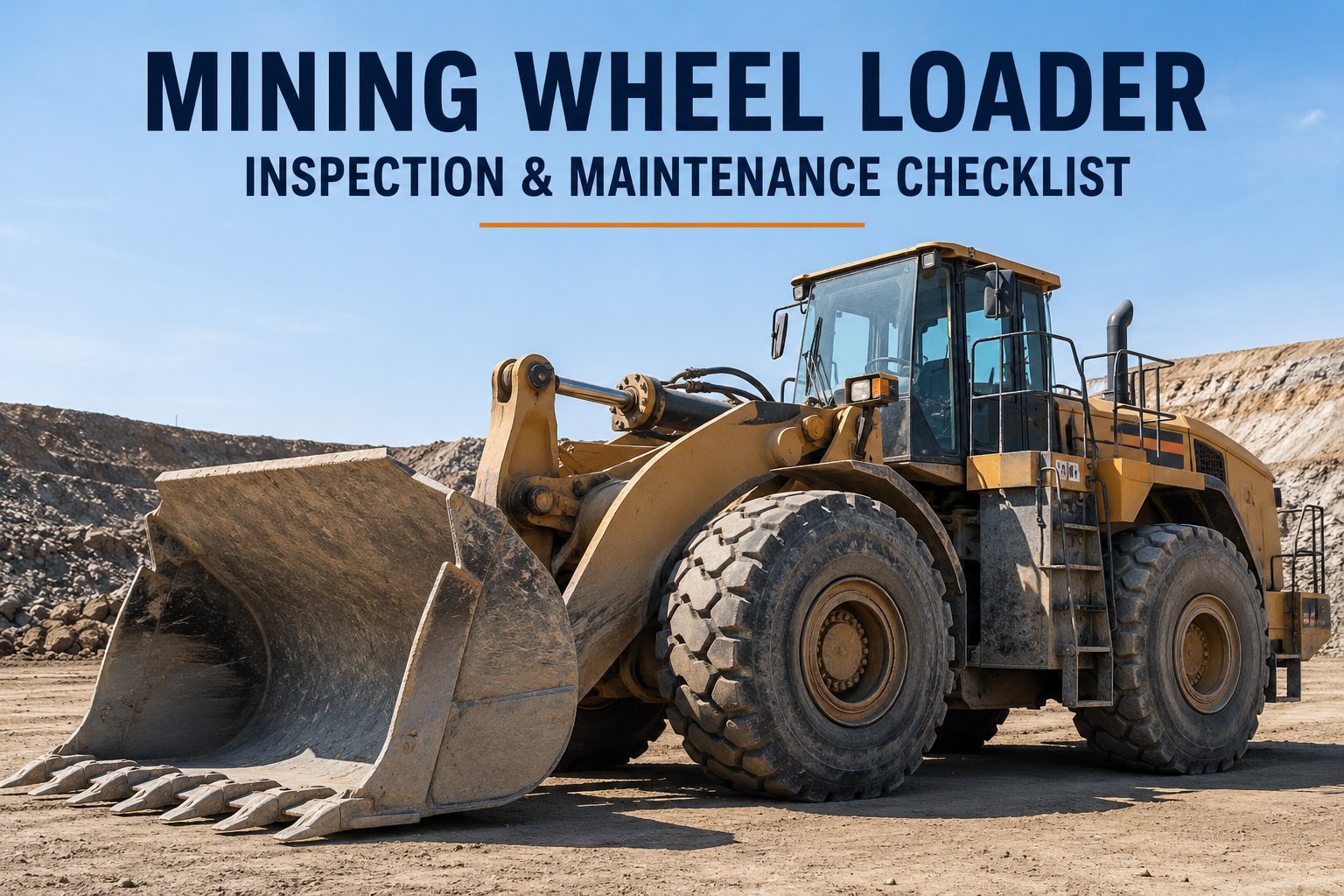
A wheel loader has a recurring articulation-joint observation. Greasing tasks appear complete, but one shift reports abnormal resistance at a fitting and another notes dirty grease around the seal.
The team removes the equipment from service when required by site rules and has qualified personnel assess the joint, rather than treating another grease application as proof the machine is safe.
- Compare the specified grease with the product actually issued.
- Review completed tasks, hour readings and shift notes.
- Inspect fitting access, seal condition and delivery method.
- Determine repair and return-to-service requirements.
- Update the task instructions and verify recurrence trends.
With a connected service record, teams can book a demo to see equipment inspection and repair history in HVI rather than reconstructing a problem from separate paper forms.
Measure lubrication performance without relying on a single KPI
Completed greasing tasks matter, but a high completion rate alone does not prove grease selection, delivery or joint health is adequate.
Completed ÷ scheduled
Track on-time completion separately from late or missed lubrication tasks.
Recurring joint issues
Review repeat contamination, blocked fittings, leakage and premature wear.
Labor + parts + downtime
Compare documented service and repair costs by asset and component.
Records with full details
Check whether hours, product, technician and exception notes are complete.
Review questions for maintenance leaders
Are high-risk points included in the asset's lubrication map? Do technicians have the correct approved product at the job site? Are exceptions converted into work orders? Are severe-duty changes authorized and reviewed? Can the team explain why a component failed despite a completed grease task?
Trend these questions alongside component failures and inspections. A sustained improvement program needs both field evidence and workshop follow-through.
A 30-day plan for improving mining lubrication control
Begin with one equipment group and validate the process before expanding across the mine. The goal is a repeatable maintenance system, not an immediate change to approved grease or service intervals.
Audit the register
List assets, lubrication points, approved products, OEM instructions and existing task schedules. Identify missing or conflicting records.
Standardize field tasks
Check labeling, clean handling, safe access, technician instructions and exception reporting. Train crews on the approved procedure.
Connect maintenance records
Associate tasks with operating hours, inspection observations and defect work orders. Review automatic system faults where installed.
Review and improve
Evaluate missed tasks, repeat joint defects and documentation gaps. Escalate proposed product or interval changes for technical approval.
Ready to standardize the process? Start free to organize mining lubrication maintenance records and evaluate the workflow against your site requirements.
Mining grease selection and lubrication FAQs
What is the best grease for mining equipment?
There is no single best grease for every machine. Use the equipment manufacturer's specified grease performance requirements, considering component type, operating temperature, load, water exposure and delivery method. Verify substitutes with an authorized technical source.
What does NLGI 2 mean for heavy equipment grease?
NLGI 2 describes grease consistency, not its overall suitability or wear protection. Many products have this grade, but their base oils, additives, thickeners and performance properties differ. Match the full specification to the component and lubrication system.
How often should excavators and loaders be greased?
Intervals vary by manufacturer, model, component, attachment and operating conditions. Start with the OEM lubrication chart and record actual machine hours. Any severe-duty adjustment should follow the applicable instructions and an authorized review.
Can different grease types be mixed?
Not without verifying compatibility for the specific products and application. Mixing may alter consistency or performance. Check manufacturer guidance and use an approved changeover procedure when switching grease.
How can maintenance software improve lubrication tracking?
Maintenance software can help organize recurring tasks, asset service history, digital inspections, defect follow-up and repair costs. Teams should verify that the platform supports their required asset identifiers, hour-meter practices and reporting workflow.
Start Free — Improve Mining Equipment Lubrication Tracking
Turn approved lubrication schedules, field observations and follow-up maintenance into a clearer equipment record with HVI.