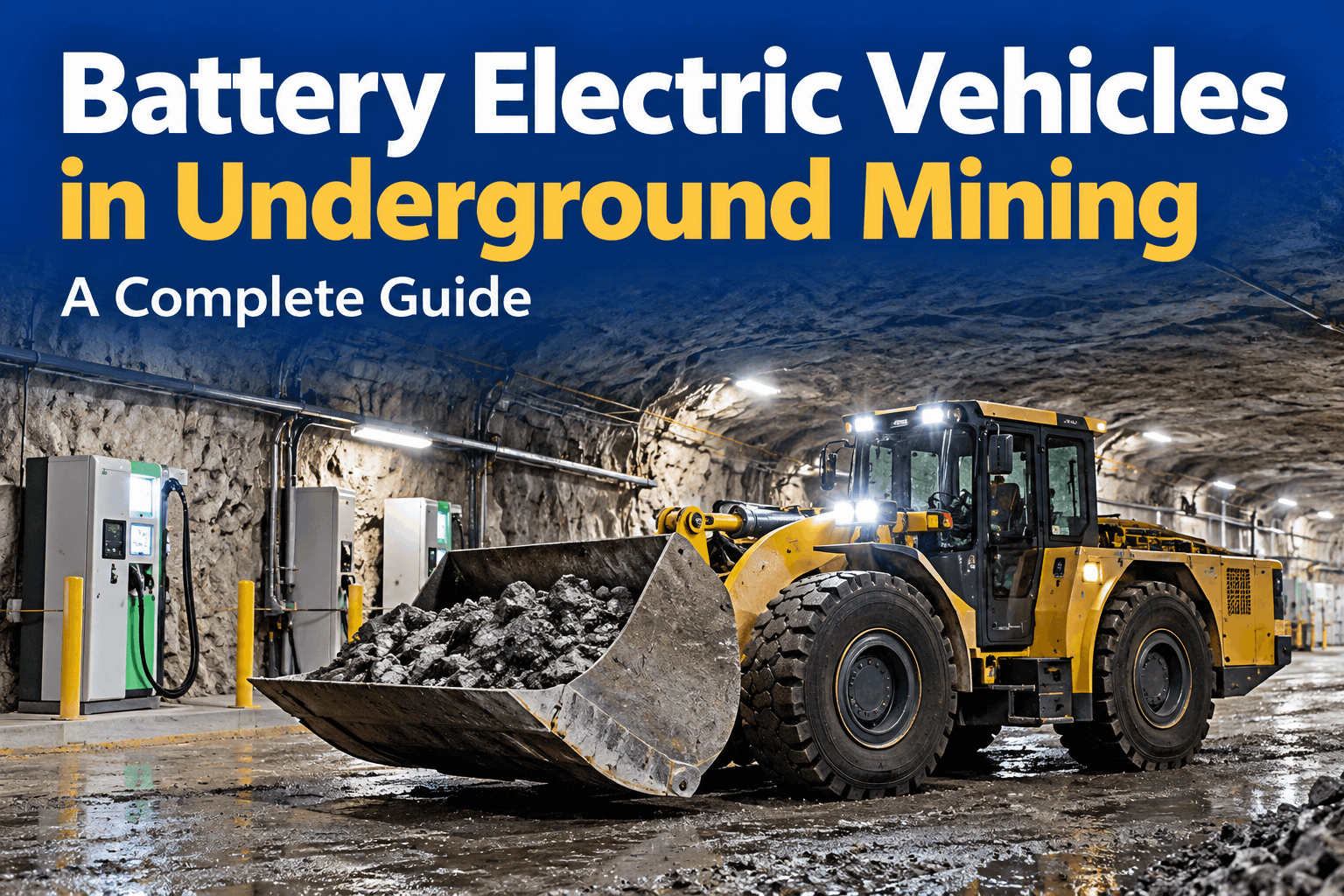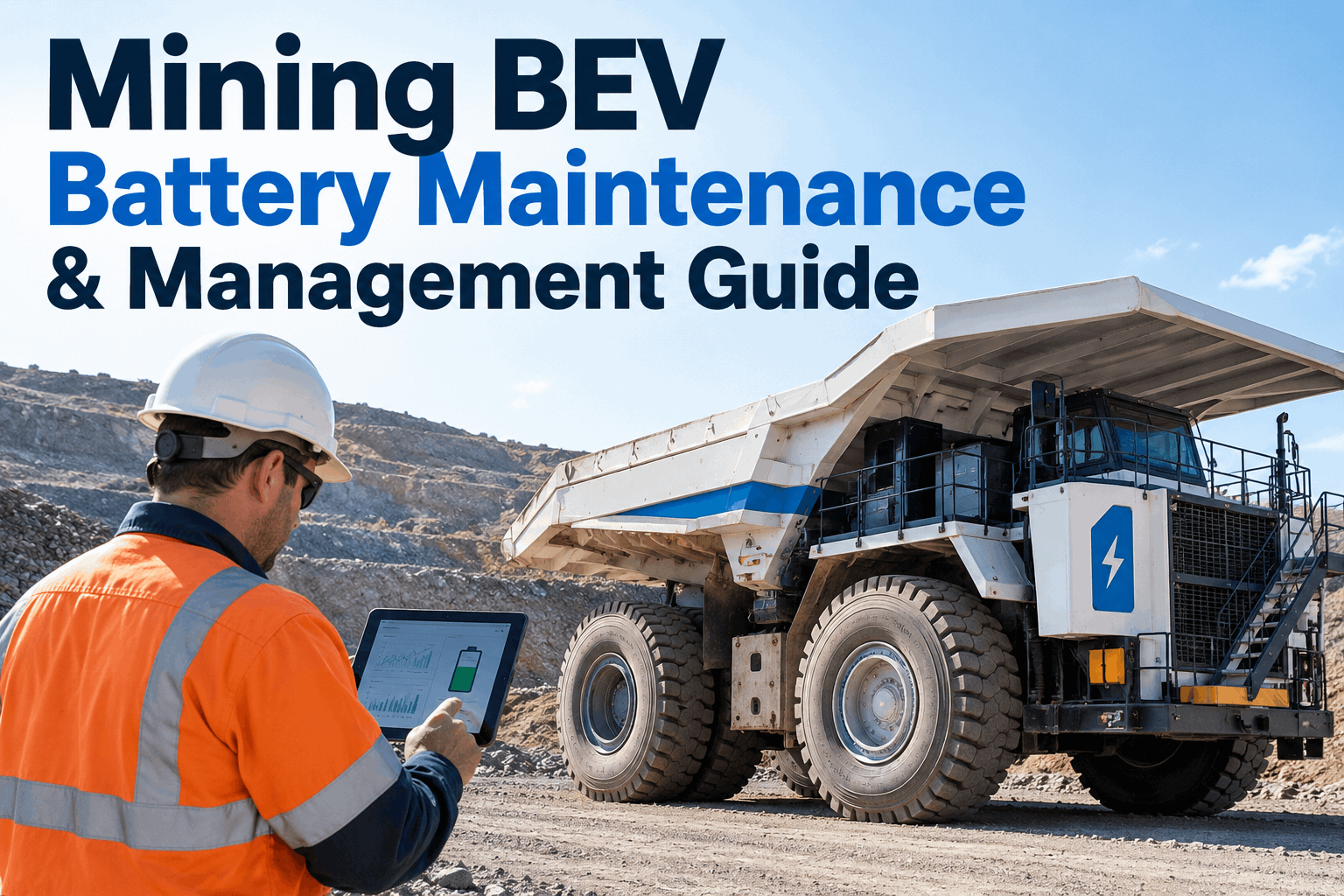
Mining BEV battery maintenance is more than checking a battery percentage before a shift. On an electric haul truck, loader or underground support vehicle, battery condition affects production availability, charging decisions, thermal safety and long-term replacement cost. Maintenance teams need a practical way to turn manufacturer instructions, inspection findings and fault history into scheduled work. Book a demo to explore mining BEV maintenance tracking with HVI.
Mining BEV Battery Maintenance: Protect Battery Health, Safety and Fleet Availability
Build a repeatable inspection and preventive-maintenance program for battery-electric mining equipment—without confusing a maintenance record system with the vehicle's battery management system.
Use inspection results and service history to decide what needs attention before the next operating window.
Onboard BMS: supervises battery conditions and protection logic.
Maintenance workflow: schedules approved inspections, assigns work and preserves evidence of what was done.
What Changes When a Mine Adds Battery-Electric Equipment?Battery condition becomes a production-planning and maintenance concern
Diesel fleets concentrate many service tasks around engine oil, fuel systems, exhaust aftertreatment and mechanical powertrains. Battery-electric vehicles remove some of those tasks, but introduce different inspection and qualification requirements. High-voltage components, thermal management, charging interfaces and OEM battery diagnostics become important parts of the reliability plan. Brakes, tires, structures, suspension, steering, hydraulics and other conventional equipment still require attention.
In mining, duty cycles are especially demanding. Long climbs, heavy payloads, regenerative braking, dust, water exposure, vibration and variable ambient temperatures can influence how a battery-electric machine is operated and serviced. Maintenance requirements differ by vehicle model, chemistry, cooling design and site conditions; the OEM manual and site electrical-safety procedures must remain the authority.
Protect personnel
Identify electrical hazards, enforce restricted work boundaries and route high-voltage tasks to trained, authorized workers.
Protect availability
Schedule inspections around production windows and resolve recurring defects before they become extended downtime.
Protect battery value
Preserve reliable service history and review degradation indicators supplied by the OEM or approved diagnostic tools.
Battery Pack Maintenance: Know the Inspection BoundariesA practical component map for maintenance planning—not a disassembly instruction
Most mining BEV battery assemblies contain modules or cells, high-voltage connections, sensing and protection equipment, cooling circuits, a structural enclosure and interfaces to the charger and vehicle controller. The service boundary is not the same for every component. A visual inspection of an accessible external enclosure is fundamentally different from opening an energized high-voltage pack.
Check visible damage, fasteners and approved external inspection points.
Check accessible coolant levels, leaks and service indicators per OEM procedure.
Inspect approved accessible connections, covers and signs of wear or contamination.
Illustrative architecture. Internal battery inspection, isolation, testing and repair require OEM procedures and qualified high-voltage personnel.
Turn these boundaries into distinct checklist items. Operators may be allowed to report visible damage or a displayed warning. Maintenance staff may conduct defined external checks. Battery enclosure opening, energized testing and internal repairs must never be implied by a generic checklist. Book a demo of equipment inspection records to see how a consistent inspection trail can support escalation.
State of Health, State of Charge and Battery DegradationThree related concepts that should not be treated as interchangeable
State of charge (SOC) describes the estimated energy remaining at a point in time. State of health (SOH) generally describes battery condition relative to a defined reference, but its exact calculation varies by manufacturer and diagnostic method. Degradation is the gradual change in capacity, resistance or other performance characteristics over time. A low SOC is not evidence of a damaged battery, and one SOH reading should not automatically trigger replacement.
SOC — charge available
Useful for shift and charging planning. It changes as the machine works and charges.
SOH — condition estimate
Use the OEM's definition, measurement method and trend before making maintenance decisions.
Trend — change over time
Compare like-for-like operating conditions, fault history and diagnostic reports.
For reliability engineers, the most useful question is often not “what is today's percentage?” but “has the available performance changed enough to affect this route, shift or charging plan?” Review approved diagnostic exports alongside operating hours, temperature-related events, repairs and charger issues. The example bars above are visual aids only, not real measurements or replacement thresholds.
Document which tool produced the SOH value, when it was measured, and whether the same method was used previously. Without that context, apparent degradation may reflect a software update, different measurement conditions or inconsistent data rather than a confirmed battery defect.
Thermal Management: From Warning to Verified RepairA clear maintenance workflow for heat, coolant and cooling-system faults
Battery performance and service life depend partly on staying within manufacturer-defined temperature limits. Mines can expose equipment to hot weather, steep high-power climbs, repeated charging and abrasive dust. Liquid-cooled systems may include pumps, hoses, heat exchangers, filters, sensors and coolant reservoirs. Air-cooled designs have different checks. Never assume a single inspection procedure applies to all equipment.
Operator records a displayed warning, reduced-power event, leak or unusual cooling-system behavior.
Supervisor follows site rules and OEM guidance to determine whether equipment must be removed from service.
Authorized technicians perform the applicable cooling-system or high-voltage diagnostics under approved procedures.
Record parts, work performed, tests specified by the OEM and return-to-service authorization.
A digital maintenance record should capture the symptom and repair evidence without pretending to replace the battery controller's protection functions. Track repeat faults by machine, component and operating context. If several machines show similar warnings on the same charging route, investigate shared operating or infrastructure factors rather than treating every event as an isolated battery failure.
Build an EV Preventive Maintenance Schedule That Fits the MineUse OEM intervals as the baseline and operating conditions as the review trigger
A reliable mining BEV preventive-maintenance program combines shift-level observations, planned shop inspections and specialist service. Some checks are time-based, others follow operating hours, charging cycles, fault events or OEM condition indicators. The matrix below is a planning example, not a substitute for model-specific service instructions.
Where possible, plan maintenance during existing charging or shift-change windows, but do not combine work that requires incompatible safety conditions. Use separate tasks for operator observations, routine mechanical work and restricted electrical service. The work order should identify required qualifications, relevant OEM instructions and the criteria for closing the job.
When a recurring inspection fails, it should lead to a traceable repair action rather than an unstructured message. Book a demo to review HVI preventive maintenance scheduling for mixed diesel and battery-electric mining equipment.
High-Voltage Battery Safety: Define Who Can Do WhatMaintenance planning must respect electrical isolation and authorization boundaries
Battery-electric mining vehicles can retain hazardous electrical energy even when the machine is parked or switched off. Damaged packs may present electrical, thermal or chemical hazards. A work order is not an authorization to open a battery enclosure, disconnect high-voltage cables or conduct energized tests. Site-specific safe systems of work and the manufacturer's instructions govern those activities.
Observe and report
Record displayed warnings, unusual odor, visible damage, coolant leaks and charging abnormalities. Stop or secure equipment according to site procedures.
Control the job
Assess the report, establish work boundaries, verify personnel authorization and coordinate isolation and return-to-service steps.
Perform approved service
Follow model-specific high-voltage procedures, use specified protective equipment and test methods, and document completion.
Emergency response plans should address damaged battery vehicles, thermal events, restricted access, incident escalation and coordination with site emergency teams. Do not apply a generic cooling, extinguishing or battery-handling method to every chemistry or incident. Battery safety procedures should be reviewed with the OEM and competent site electrical-safety specialists.
Battery Maintenance Records: What to Capture and WhyConnect operating symptoms with inspections, repairs and repeat failures
Battery problems are difficult to investigate when information is scattered across operator notes, charger alarms, specialist diagnostic reports and invoices. A consistent record makes it easier to reconstruct the sequence. Start with a stable equipment identifier and the installed battery's relevant serial or configuration details, where available. Link each observation to a date, operating-hour reading, location and reported symptom.
Record what was observed, not what has not yet been confirmed. For example, “temperature warning displayed during loaded climb” is a better initial defect statement than “battery is failing.” After diagnosis, technicians can add the verified cause and action taken. This distinction improves repeat-failure analysis and prevents unverified assumptions from spreading through the service history.
Fleet managers should also record downtime start and end times consistently, along with labor, parts and outside-service costs. Those records can support decisions about spare cooling components, training priorities and whether maintenance access is becoming a constraint on vehicle availability.
Measure Reliability Without Inventing a Battery Health ScoreOperational KPIs that a fleet maintenance team can actually defend
Maintenance reporting should distinguish vehicle availability from battery condition. A truck may be unavailable because of tires, charging infrastructure, a cooling-system fault or scheduled work; none of those automatically means the battery cells are degraded. Similarly, a battery SOH figure from an OEM tool does not explain every minute of downtime.
Planned BEV services completed within the approved maintenance window.
Recurrence of the same verified symptom or failure within a defined review period.
Hours out of service attributable to inspection, diagnosis and repair.
Labor, parts and external service cost compared across similar machines and duty cycles.
Define every KPI before using it in management reports. Specify whether charging time counts as downtime, whether planned inspections are included, and how production-related waiting is treated. Compare similar machine models and routes; otherwise a truck on a demanding haul profile may look unreliable simply because its work is different.
Where the OEM provides approved battery condition reports, preserve the original units and method rather than inventing a composite health score. Book a demo of mining equipment maintenance reporting to explore how service records can inform those reviews.
A 90-Day Rollout for Mining BEV Battery MaintenanceStart with asset data, then prove the workflow on a small group
Define the fleet and safety boundaries
Inventory battery-electric assets, approved service documents, relevant technicians, existing inspection forms and escalation contacts. Identify which activities require specialist authorization.
Build and pilot the schedules
Create model-specific PM tasks and operator reporting categories. Pilot the workflow on a small group of machines; verify that findings become assigned work and that closure evidence is usable.
Review defects and refine intervals
Audit overdue work, repeat warnings, repair documentation and availability impact. Adjust administrative workflows without overriding manufacturer maintenance intervals or safety instructions.
For a mixed fleet, keep diesel and BEV records in a common asset-management structure while using different service templates. The aim is not to make every machine follow the same checklist. It is to make each machine's appropriate inspection and repair history easy to find, review and act on.
Mining BEV Battery Maintenance ChecklistA practical review list for supervisors and maintenance planners
- Confirm the operator has the correct model-specific walkaround checklist.
- Record displayed warnings and visible external damage.
- Check approved visible cooling and charging interface points.
- Escalate safety-related defects before release to service.
- Review OEM PM tasks, operating hours and fault history.
- Verify technician qualifications and required work controls.
- Inspect cooling and mechanical systems as instructed.
- Attach relevant diagnostic and service evidence.
- Confirm authorized return-to-service approval.
- Record parts, labor, cause and corrective action.
- Update outstanding defects and next PM dates.
- Review repeat warnings and downtime trends.
These are program-management checkpoints, not a high-voltage service procedure. Adapt each item to the equipment manufacturer's instructions and site rules. A strong checklist makes it clear when to stop and call a qualified specialist instead of encouraging a technician to proceed beyond their authorization.
Mining BEV Battery Maintenance: Frequently Asked QuestionsFive answers for mine fleet and maintenance teams
What is mining BEV battery maintenance?
Mining BEV battery maintenance is the inspection, preventive service, diagnosis and recordkeeping required to keep battery-electric mining equipment safe and available. It includes approved checks of external battery components, thermal systems, charging interfaces and relevant vehicle systems, with high-voltage work reserved for qualified personnel.
How is battery state of health different from state of charge?
State of charge estimates how much energy is available now; state of health estimates battery condition against an OEM-defined reference. The SOH method varies, so trend comparisons should use consistent diagnostic methods and operating context.
What should be on a mining EV battery inspection checklist?
Include model-approved checks for visible damage, warnings, accessible cooling-system points, charging connections, relevant service intervals and defect escalation. Do not turn a routine checklist into an instruction to open or test high-voltage components.
Can HVI monitor battery temperature or control a battery management system?
HVI is positioned here for inspection records, preventive maintenance scheduling, equipment service history and maintenance reporting. Onboard BMS functions and specialist battery diagnostics remain with the vehicle and its approved systems; do not assume live battery telemetry or control integration.
How often should a mining BEV battery be serviced?
Use the manufacturer’s schedule and site-approved maintenance program. Frequency may depend on machine model, operating hours, calendar time, duty cycle and condition alerts. Do not apply a universal battery service interval to every mining BEV.