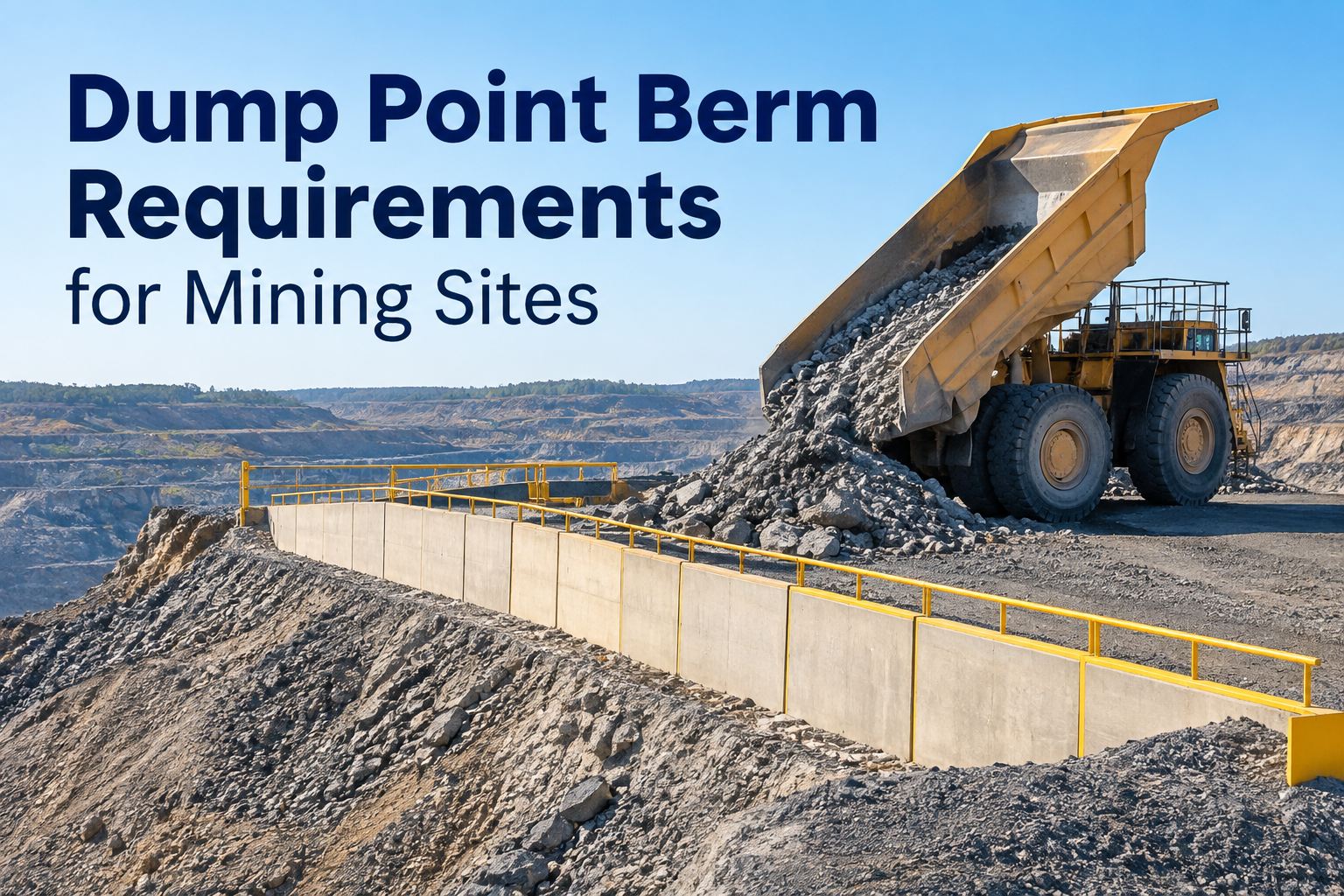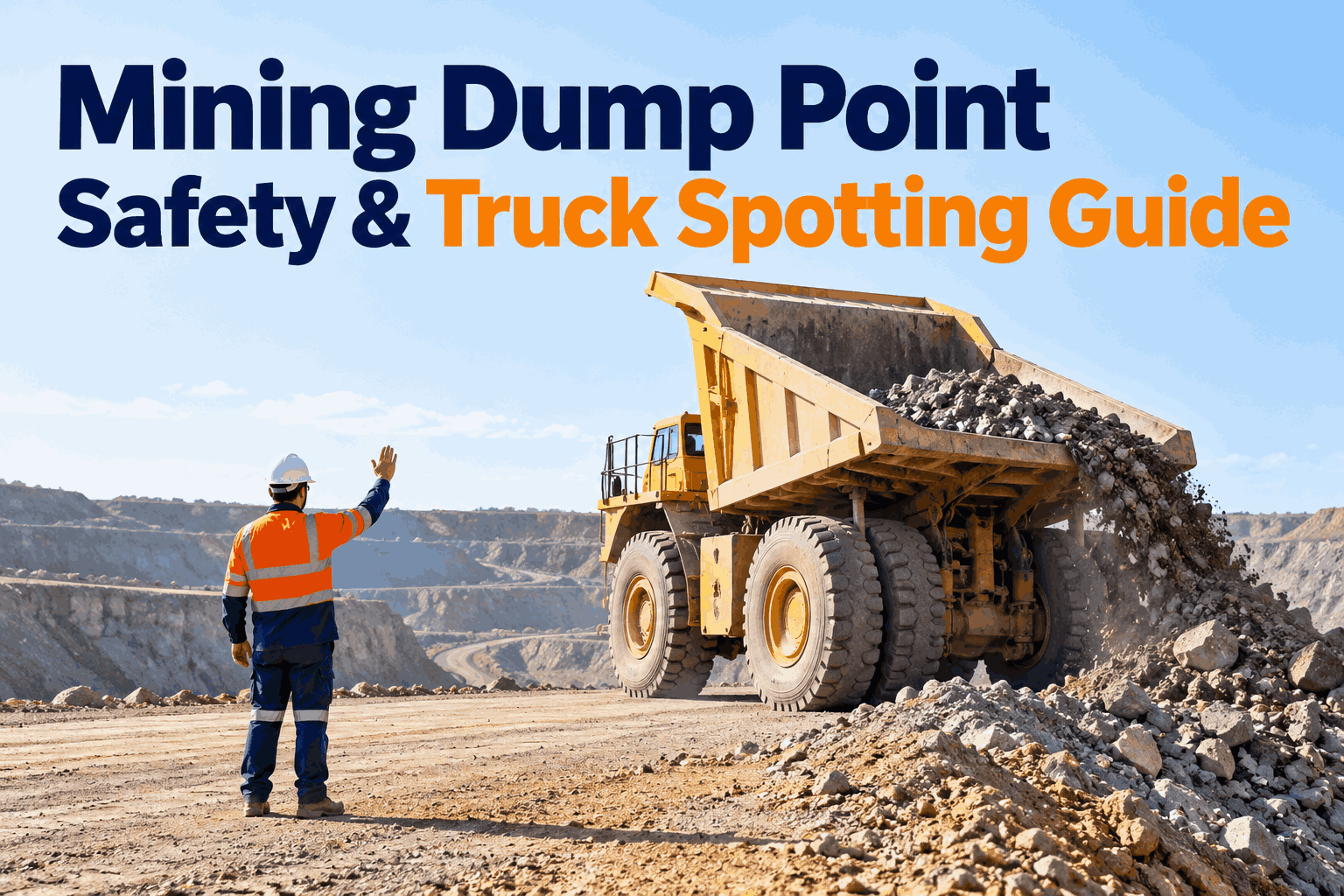
Dump point management is one of the most dynamic jobs in surface mine haulage, because the working edge changes all shift as material is placed, pushed, loaded out and worked by weather. Safe dumping takes more than a berm: it needs clear approach and spotting procedures, routine checks of ground and edge conditions, reliable communication, and haul trucks that arrive without unresolved safety-critical defects. That last piece is where a system helps — see how HVI standardizes haul-truck inspections as you read.
Control the approach before the truck reaches the edge.
Build dump-point procedures around changing ground, controlled truck movement and clear spotting — and back them with consistent haul-truck inspections so a unit never arrives at the edge with a hidden defect.
Dump sites and stockpiles develop changing conditions all shift — instability, cracks, soft spots, drainage problems, poor visibility, damaged edge protection. Those controls belong to the mine's operating procedures and its qualified people, and no software changes that. Where HVI fits is the mobile-equipment side: helping mines standardize haul-truck inspections, keep inspection evidence against each asset, and move equipment defects into documented maintenance follow-up. Two different problems, two different owners — this guide walks the dump-point procedure and shows exactly where the equipment layer connects without blurring that line.
Read the dump point before committingdump point management starts with conditions, not the backing maneuver
A dumping location is not a fixed loading dock. Material placement, dozer work, truck traffic, rain, drainage and activity at the toe all change the working environment. A spot that was fine earlier in the shift should never be assumed fine later. Before any truck movement, the crew reads the working edge — has anything changed?
Edge & slope
Cracking, settlement or instability near the edge before loaded equipment approaches.
Surface
Soft, wet or uneven ground; drainage that can affect truck stability on approach.
Traffic
Conflicting vehicle movements that make a familiar dump point harder to manage.
Visibility
Lighting, dust, weather and blind areas that change the risk during positioning.
Edge protection
Required berms or restraint features, evaluated under the mine's own procedure.
Overhead
Power lines, structures and obstructions — raised-body clearance before dumping.
The mine's procedure defines who evaluates the condition, how the area is controlled, and where trucks are directed while the concern is addressed.
Site-condition exams and mobile-equipment inspections solve different problems, but both have to be consistent. HVI's digital equipment inspections keep the haul-truck side standardized across operators and shifts, so you can see how truck inspections stay consistent before units enter active haulage.
Make the final approach predictabletruck spotting procedures that remove ambiguity near the dump edge
Spotting matters most when an operator is reversing toward a changing edge with restricted visibility. The procedure should define the route, the communication method, the stopping criteria, and who controls movement — so nobody improvises signals at the most critical point of the approach.
Approach
Enter the designated route; observe traffic, surface and dump-point status before positioning.
Confirm
Establish the agreed radio or visual communication before backing continues.
Position
Move slowly and predictably per the site procedure — not relying on the berm to stop the truck.
Stop
Lost communication or an unexpected condition triggers the site's stop procedure.
If the operator can no longer reliably receive the signal, movement follows the stop procedure rather than continuing on assumption.
Backing stays deliberate and predictable. Edge protection is never a substitute for controlled positioning and braking.
Crews know who controls the area and what happens when the normal dumping sequence can't be used.
Predictable spotting assumes a truck that responds predictably — brakes, steering and visibility all working. That's the equipment layer, and it's worth getting on a consistent footing: start a free haul-truck inspection log so every unit is checked the same way before it backs to an edge.
Haul-truck condition before the edge comes into viewhaul truck inspections that connect to dumping risk
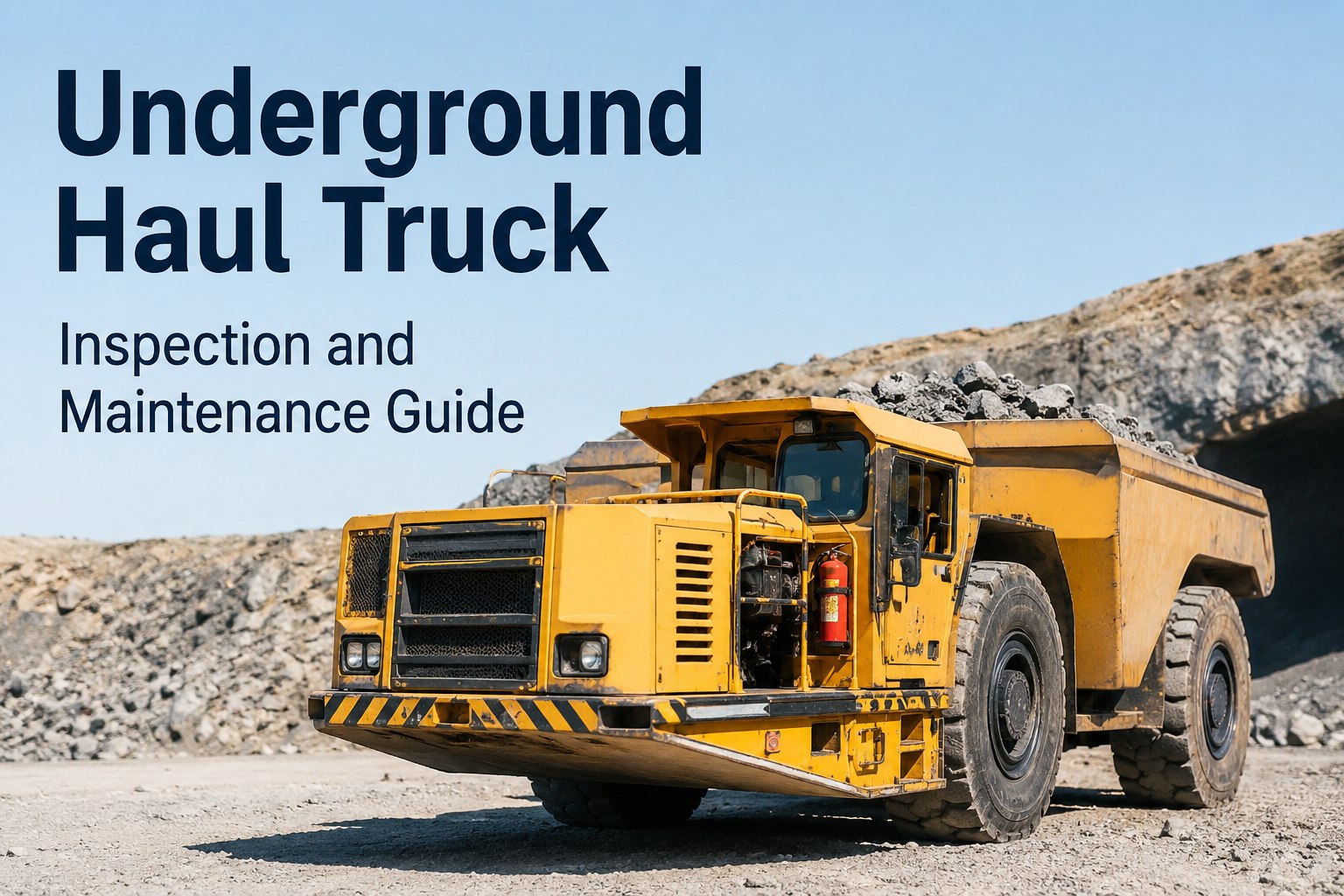
A dump-point procedure can't compensate for a truck with unresolved defects affecting control, visibility or dumping systems. Pre-use inspections follow the mine's requirements and the OEM's guidance, with findings evaluated before the unit goes to work. These are the systems that matter most on the approach to an edge.
Anything affecting predictable vehicle control gets evaluated before haulage.
Visibility systems that support operator awareness around active dump areas.
Visible damage or abnormal conditions belong in the inspection and defect process.
Systems involved in raising, supporting and lowering the dump body, checked as required.
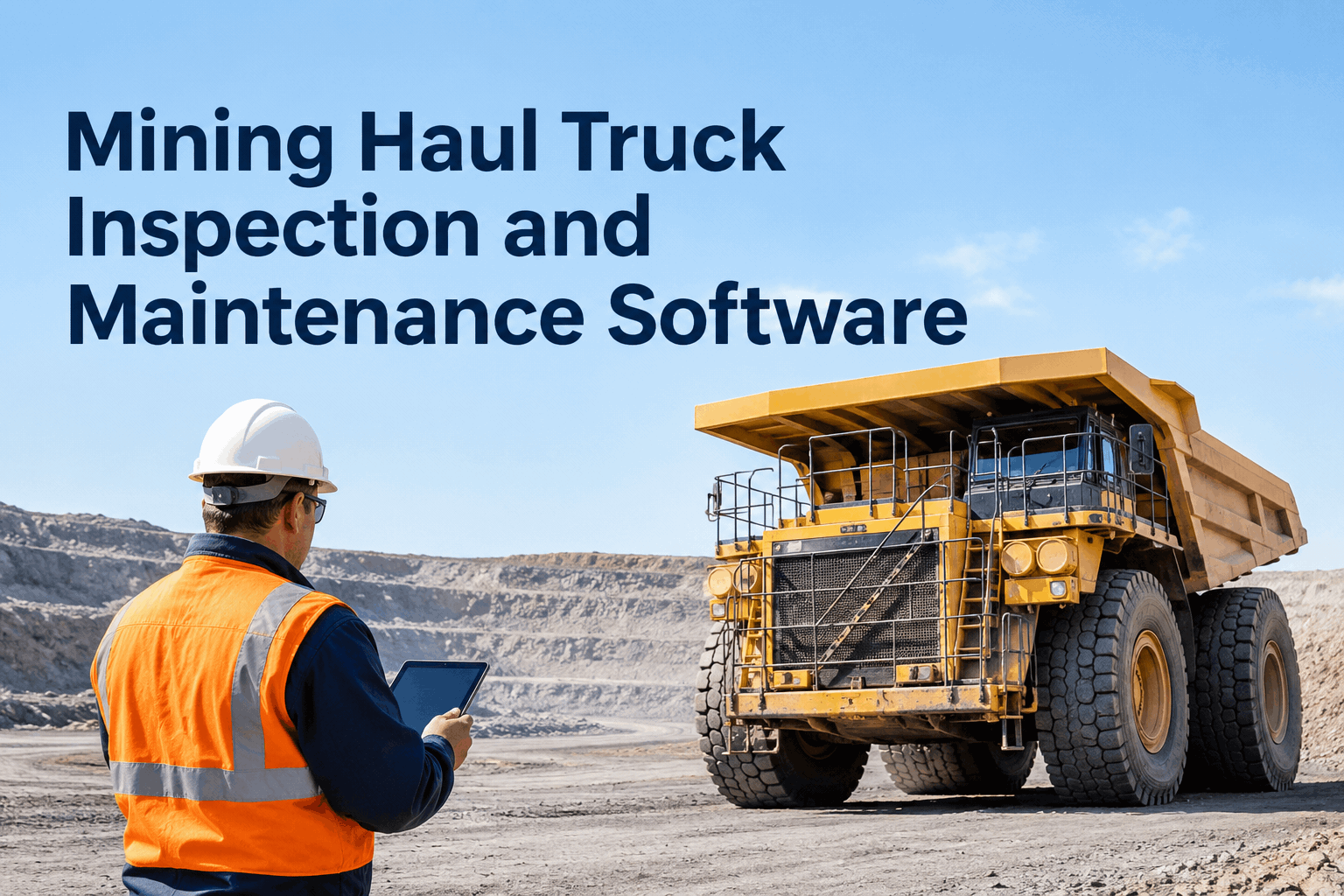
HVI gives operators a consistent mobile checklist for the applicable haul-truck points and keeps findings against the individual asset. When an issue needs action, the record moves into the maintenance management workflow instead of staying stranded on paper. See how inspection findings connect to maintenance history.
Two layers of control — and why they're not interchangeablewhere HVI fits in mining dump point safety, and where it doesn't
The clearest dump-point programs keep two responsibilities distinct. A mechanically sound truck doesn't make an unstable edge safe, and a well-managed dump point doesn't make a defective truck fit for service. Both layers need control; neither substitutes for the other.
- Ground, edge and slope stability
- Traffic routing and visibility
- Edge protection and spotting decisions
- Stop / reassess when conditions change
- Consistent haul-truck inspections
- Defects documented with evidence
- Work orders and repair follow-up
- Inspection & service history per asset
Keeping these distinct makes the operating procedure clearer while letting inspection and maintenance records support the overall haulage program. HVI is deliberately on the equipment side — see how it handles the equipment layer without ever claiming to control the dump point. It's the same discipline mines already apply across their heavy equipment fleet.
From a haulage supervisor
The dump is the one place where a small truck problem turns into a big one fast. You're reversing a loaded unit toward a live edge — if a camera's out or the park brake is soft, that's not a shop problem anymore, it's a dump-point problem. We used to find that out at the tip head.
Getting every truck on the same digital pre-use inspection changed the conversation. A rear-visibility fault gets flagged and turned into a work order before the unit ever lines up at the edge — it doesn't ride along on a paper sheet nobody reads. The ground controls are still our job. But the trucks showing up right? That part we finally have a handle on.
Don't let a defect end with the inspection formclosing the mobile-equipment loop on every haul truck
A useful haul-truck inspection makes the next action visible. When an operator finds a mechanical concern, supervisors and maintenance need enough to evaluate it, create the right action, and keep what happened against the asset. That's a loop, not a form.
Inspect
Complete the pre-use inspection against the correct haul truck.
Flag
Make the defect visible with the detail needed to evaluate and follow up.
Act
Move applicable findings into the work-order and maintenance process.
Record
Completed work stays connected to the truck for later review.
That connection is where HVI supports dump-point operations without positioning itself as a mine-dispatch or dump-point control system — it provides the mobile-equipment record layer that keeps truck condition visible. Teams running safety management alongside it get the full picture. Digitize your fleet's inspections free and build the history from the next shift.
Dump point management & truck spotting — FAQs
What is dump point management in mining?
Dump point management is the process of controlling conditions and activities around locations where haul trucks dump material. It can cover examination of the dumping area, edge protection, traffic routing, visibility, truck positioning, communication, spotting procedures, and the response when conditions become questionable. The exact process should follow the mine's own procedures and applicable requirements.
What should be checked during a mine dump point inspection?
Relevant checks can include signs of cracking, settlement or instability near the edge, soft or poorly drained ground, berms or other edge protection, traffic conditions, lighting and visibility, overhead clearance, and changes caused by weather or activity around the dump area. Mines should use procedures appropriate to their operation and applicable regulations.
What is the role of a spotter during haul truck dumping?
Where spotters are used, their role is to support controlled truck positioning using the mine's established communication and spotting procedure. Operators and spotters should understand the agreed signals, maintain reliable communication, and know when movement must stop. A spotter does not make an unstable dump edge safe — the ground controls remain separate.
Why are haul truck inspections important for dump point safety?
Dumping requires predictable vehicle control and adequate operator awareness. Inspection programs can surface conditions involving brakes, steering, tyres, visibility equipment and dump-body components before the truck enters service. Findings should be evaluated according to the mine's procedures and equipment requirements, so a unit never arrives at the edge with an unresolved safety-critical defect.
How does HVI support mining dump point operations?
HVI supports the mobile-equipment side, not the dump point itself. Mining teams use it for haul-truck inspection checklists, inspection records, defect documentation, maintenance work orders and asset history. Dump-point design, ground evaluation, spotting decisions and operating controls remain the responsibility of the mine and its qualified personnel — HVI is deliberately not a dump-point control or mine-dispatch system.
Control the dump point with procedures. Control truck condition with records.
The ground controls — conditions, spotting, edge protection — stay with the mine and its people. HVI adds the connected inspection and maintenance layer for the haul trucks entering that environment: digital inspections, documented defects, and repair follow-up tied to each asset instead of disconnected paper.
Equipment layer only · Inspection → defect → work order → history