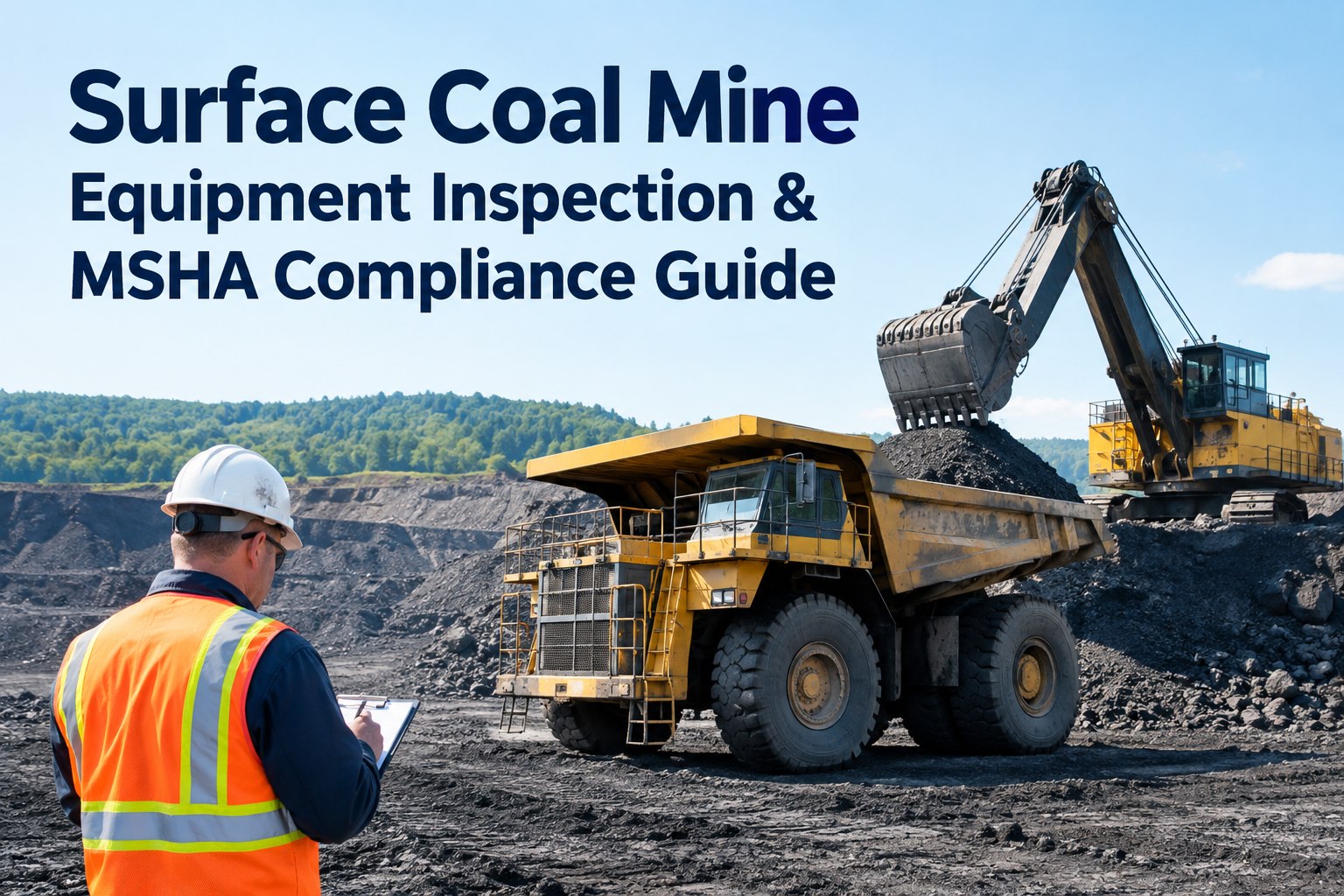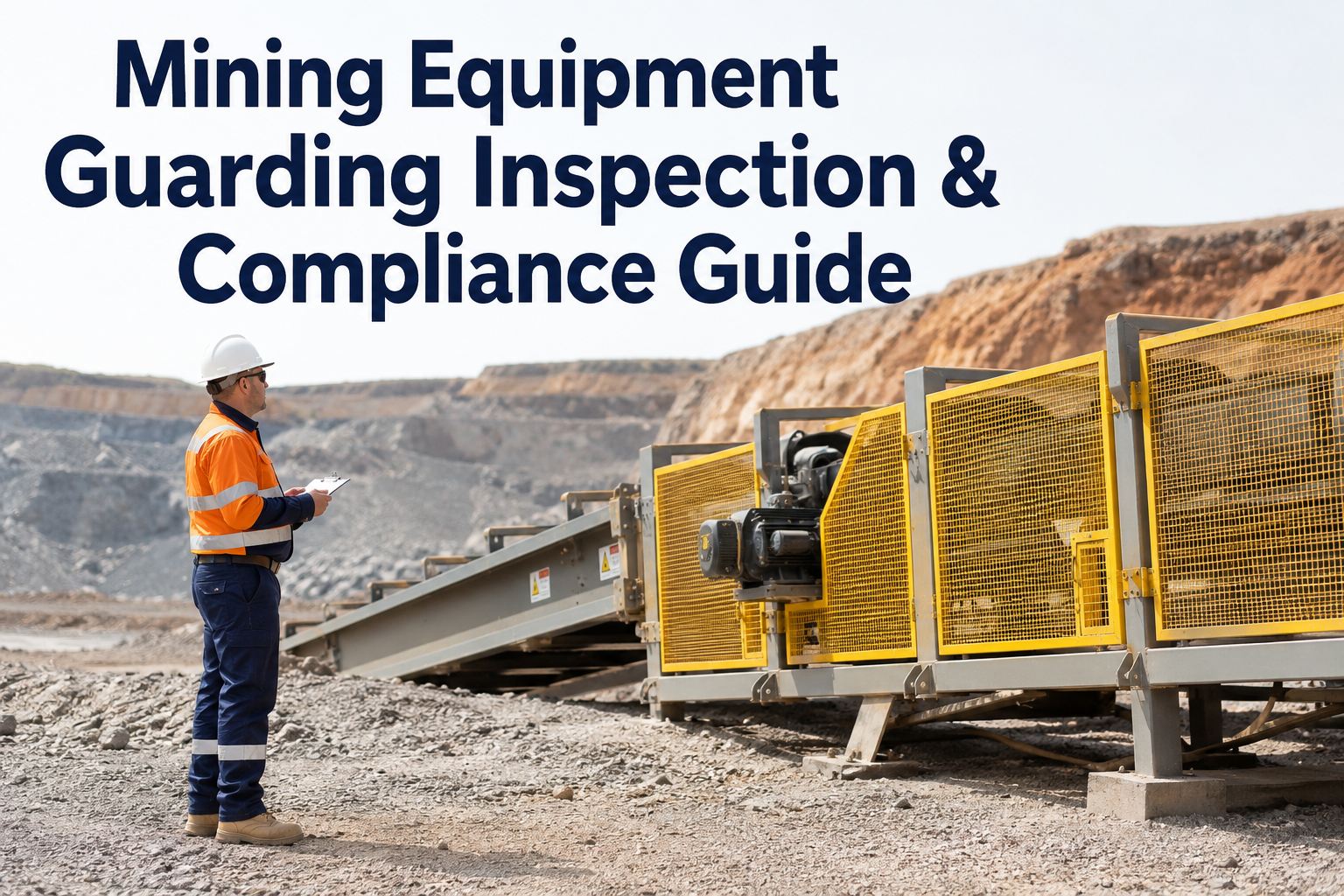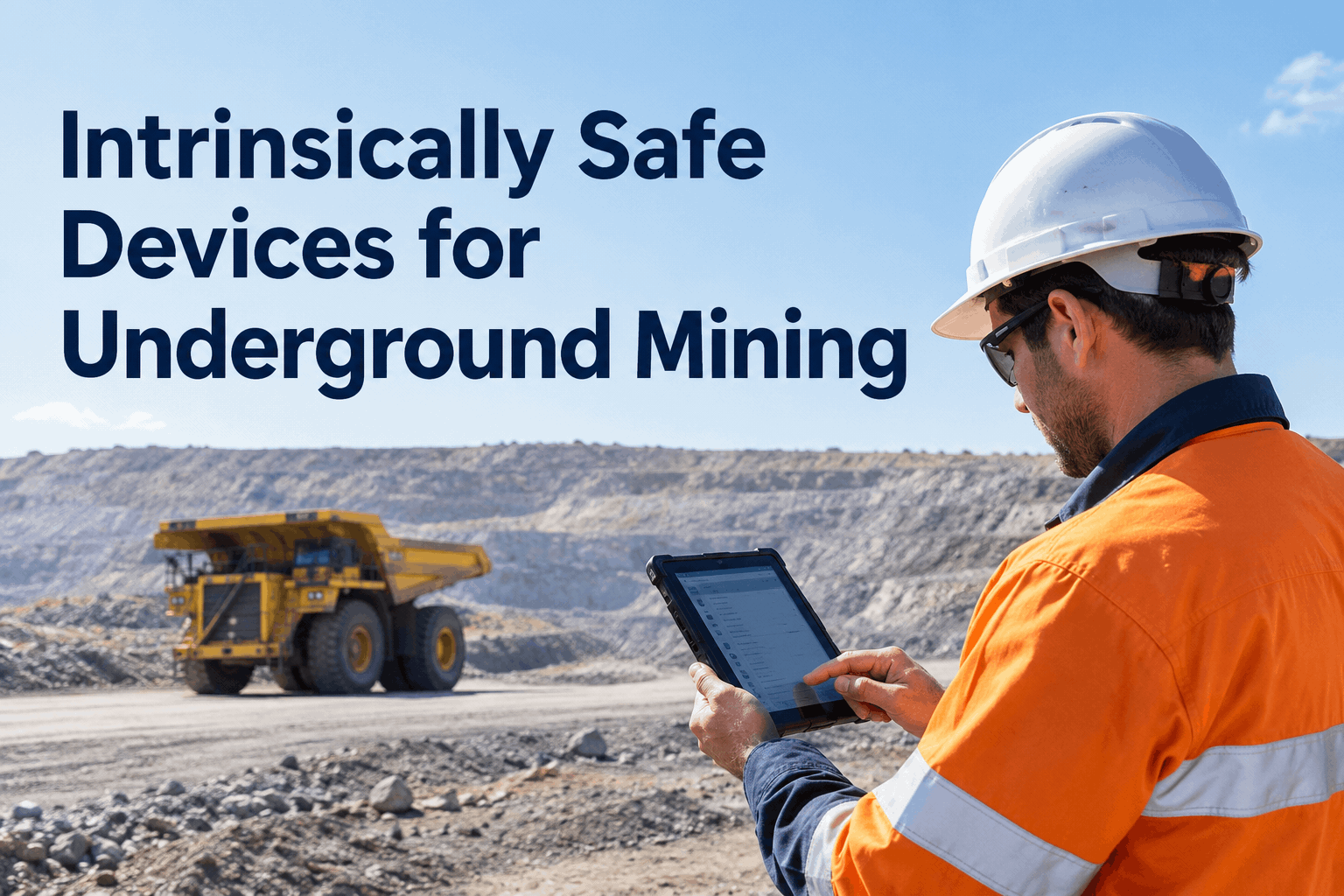
Underground, in a gassy heading, the ordinary tablet in a technician's hand is a problem — a battery fault or a stray spark in a flammable atmosphere is exactly the kind of ignition source a mine is built to eliminate. So when inspections go digital underground, the device matters as much as the software. Intrinsically safe devices for underground mining are built so they can't ignite that atmosphere, and the digital inspection runs on top. Book a demo to see HVI inspections on a hazardous-area device.
Intrinsically Safe Devices for Underground Mining — the Device and the App
Going digital underground is a two-part decision: a device certified not to ignite the atmosphere, and the inspection app that runs on it. HVI is the inspection and DVIR software — it runs on the intrinsically safe device you certify.
For a safety manager, the appeal of digital inspections underground is obvious — but it can't come at the cost of bringing an uncertified ignition risk into a hazardous area. The starting point is understanding what "intrinsically safe" actually guarantees.
What "intrinsically safe" actually means underground
Intrinsic safety isn't a rugged case or a waterproof rating — it's an electrical design principle. An intrinsically safe device is built so the energy it can release, even in a fault, stays below what's needed to ignite the surrounding gas or dust. It can't spark hot enough or store enough energy to set off the atmosphere. That's a fundamentally different guarantee from "tough."
That distinction is why you can't just put a consumer tablet in a strong case and call it safe for a gassy mine — the protection has to be in how the electronics handle energy, verified by certification. HVI is the inspection software that runs on such a device; the device itself is what carries the certification. Book a demo to see the inspection side.
Zones and certifications: matching the device to the hazard
Not every underground area carries the same risk, and not every certified device is rated for the worst of it. Hazardous areas are classified by how likely a flammable atmosphere is present, and a device must be certified for the zone it will enter. Getting this match right is the safety manager's call, not the software's.
General overview of hazardous-area classification and certification schemes; the exact zones, gas groups, temperature classes, and approvals that apply are set by regulators and your site's risk assessment. HVI is inspection and DVIR software — it does not manufacture, supply, or certify intrinsically safe devices.
Whichever scheme governs your site, the device carries the certification and the app runs within it. Many operations standardise on a Zone 1 certified tablet or phone and deploy their inspection software across it. Sign up free and trial the inspection workflow.
Choosing the device and the app: a two-sided checklist
A safe, useful underground inspection setup has to satisfy two separate requirement lists — one for the hardware, one for the software. Miss a line on either side and you've got either an unsafe device or an unusable app. Here's what each side has to clear.
- mustCertified for the specific zone and gas group it will enter
- mustCarries a recognised approval — ATEX, IECEx, or MSHA as required
- plusRugged enough for dust, water, and impact underground
- plusBattery life and screen that work a full shift in low light, with gloves
- mustWorks fully offline — no signal reaches the heading
- mustCaptures signed inspections and DVIRs against the right asset
- plusSyncs automatically once the device is back in range
- plusRoutes a flagged defect straight to a work order
You own the device-side decision with your hardware vendor and your risk assessment; HVI covers the entire software side — offline digital fleet inspections and daily operator reporting built for exactly this. Book a demo to see the offline inspection flow.
What digital inspections change underground — safely
Once the device is certified and the app runs on it, the gain isn't just "no paper." It's that a hazardous-area inspection becomes a live, traceable record the moment it's done — not something transcribed on the surface hours later from a smudged sheet.
Captured in the heading
The check is logged where the machine is, offline, with photos — not reconstructed from memory later.
Signed and attributable
Every inspection is tied to the operator, the unit, and the time — the traceability a safety audit expects.
Defects don't wait
A flagged fault becomes a work order the moment the device syncs — no shift-end paperwork gap.
That's the payoff of getting both halves right: the certified device makes it safe, and the software makes it worth doing. It also feeds the same asset record the rest of your mining program relies on, from RFID-tagged asset identification to equipment anomaly detection. See how mining operations run HVI.
From a safety manager who moved inspections underground to tablets
The push to go digital underground stalled for a year because nobody wanted to be the one who approved a tablet in a gassy section. Once we understood it was two decisions — a properly certified intrinsically safe device, and separately the inspection app that runs on it — it got simple. We certified the hardware with our supplier and put our inspection software on it. Now the check happens at the machine and I can prove it did, which is exactly what I couldn't do with paper that got written up at bank.
Intrinsically safe devices for underground mining FAQs
Does HVI make or certify intrinsically safe devices?
What makes a device intrinsically safe?
Can I just use a rugged tablet in a case underground?
What do ATEX, IECEx, and MSHA mean?
Does HVI work offline underground?
Take inspections digital underground — safely
Pair an intrinsically safe, zone-certified device with HVI's offline inspections and DVIR, and your crews capture signed checks at the machine in the heading — no ignition risk, no paper, no surface transcription. You certify the device; HVI handles everything above it.
No credit card · Runs on your IS-certified device · Offline inspections from day one
- Runs on your IS-certified device
- Fully offline, syncs on surface
- Signed inspections & DVIR
- Defect → work order
- Photos & asset-linked records