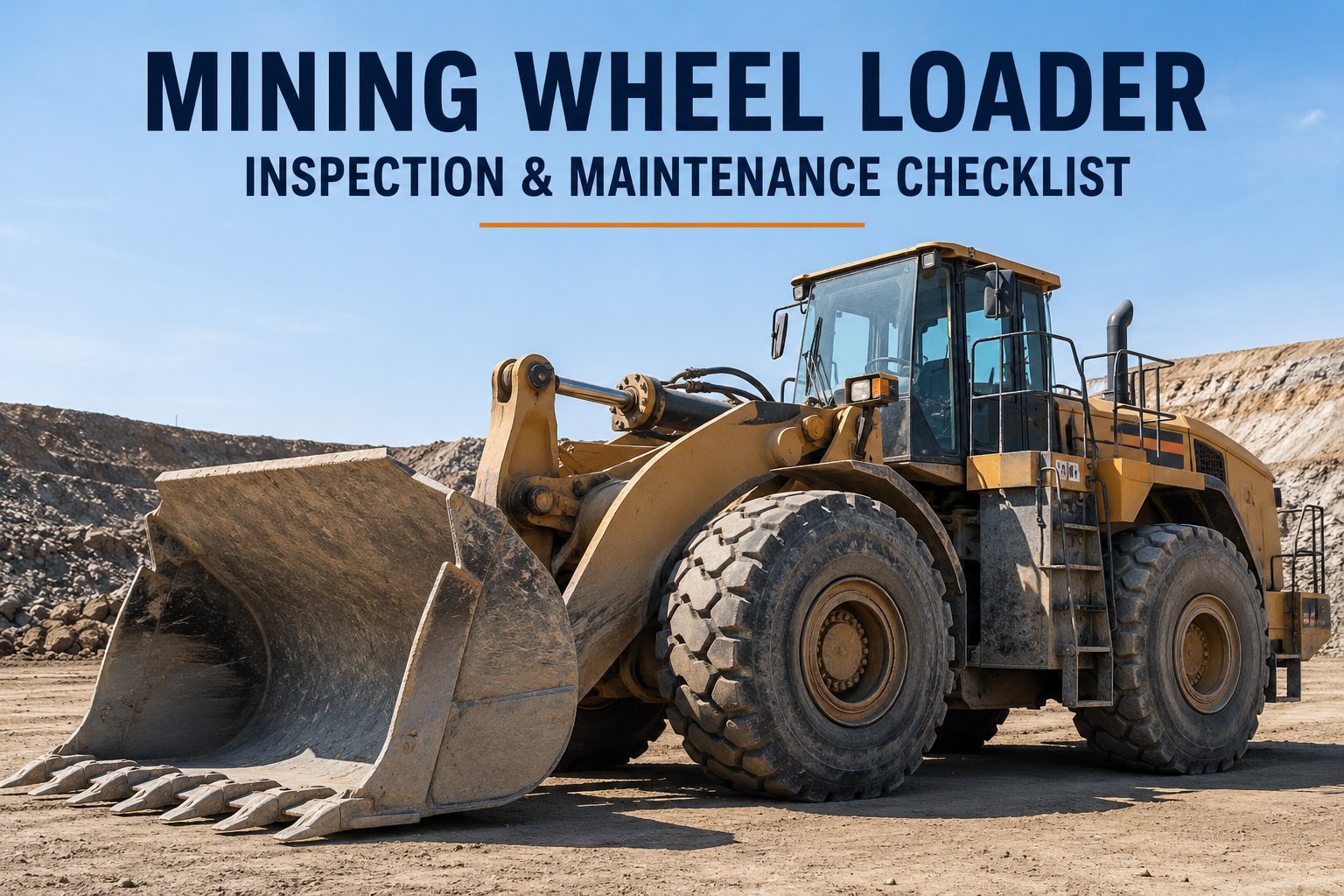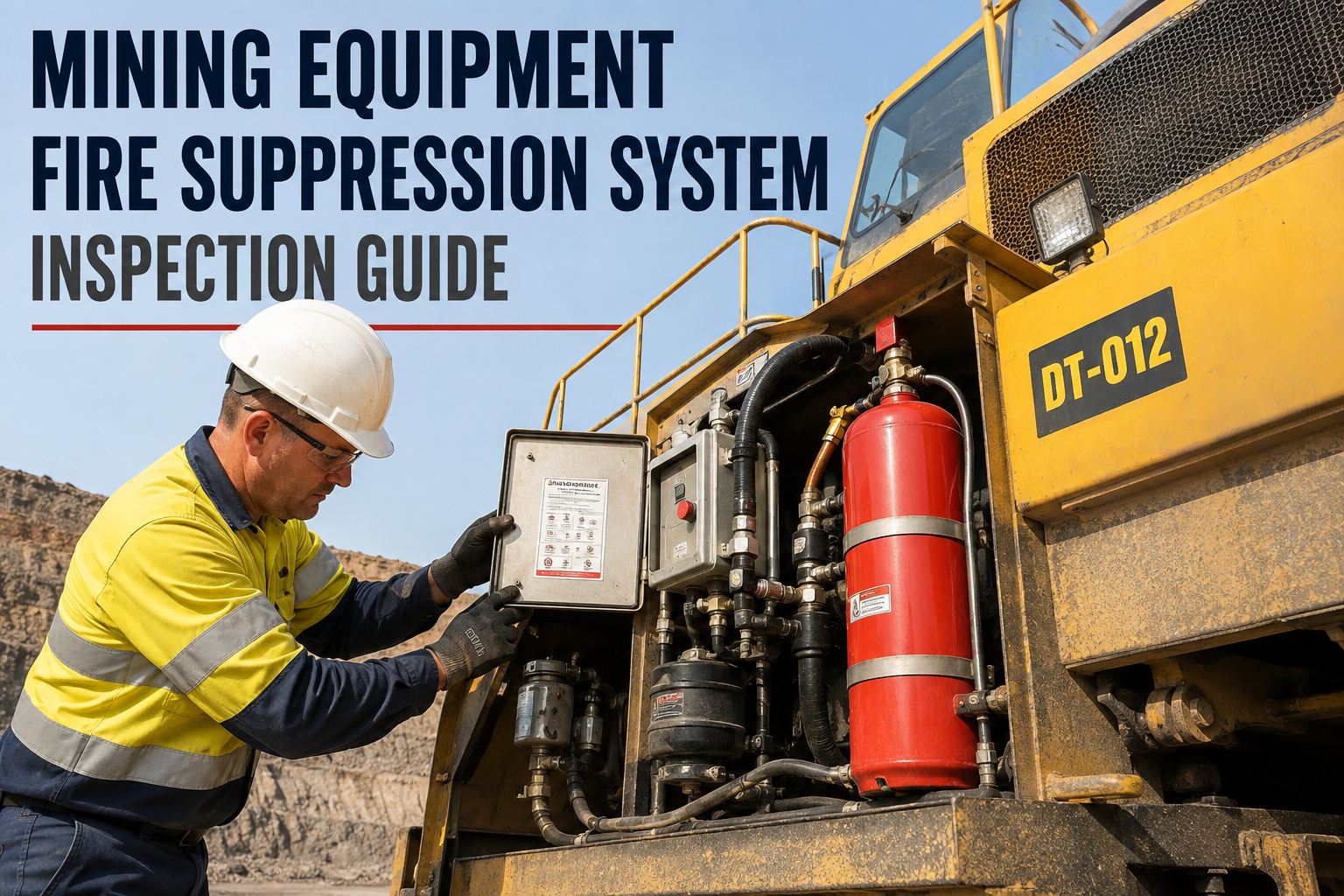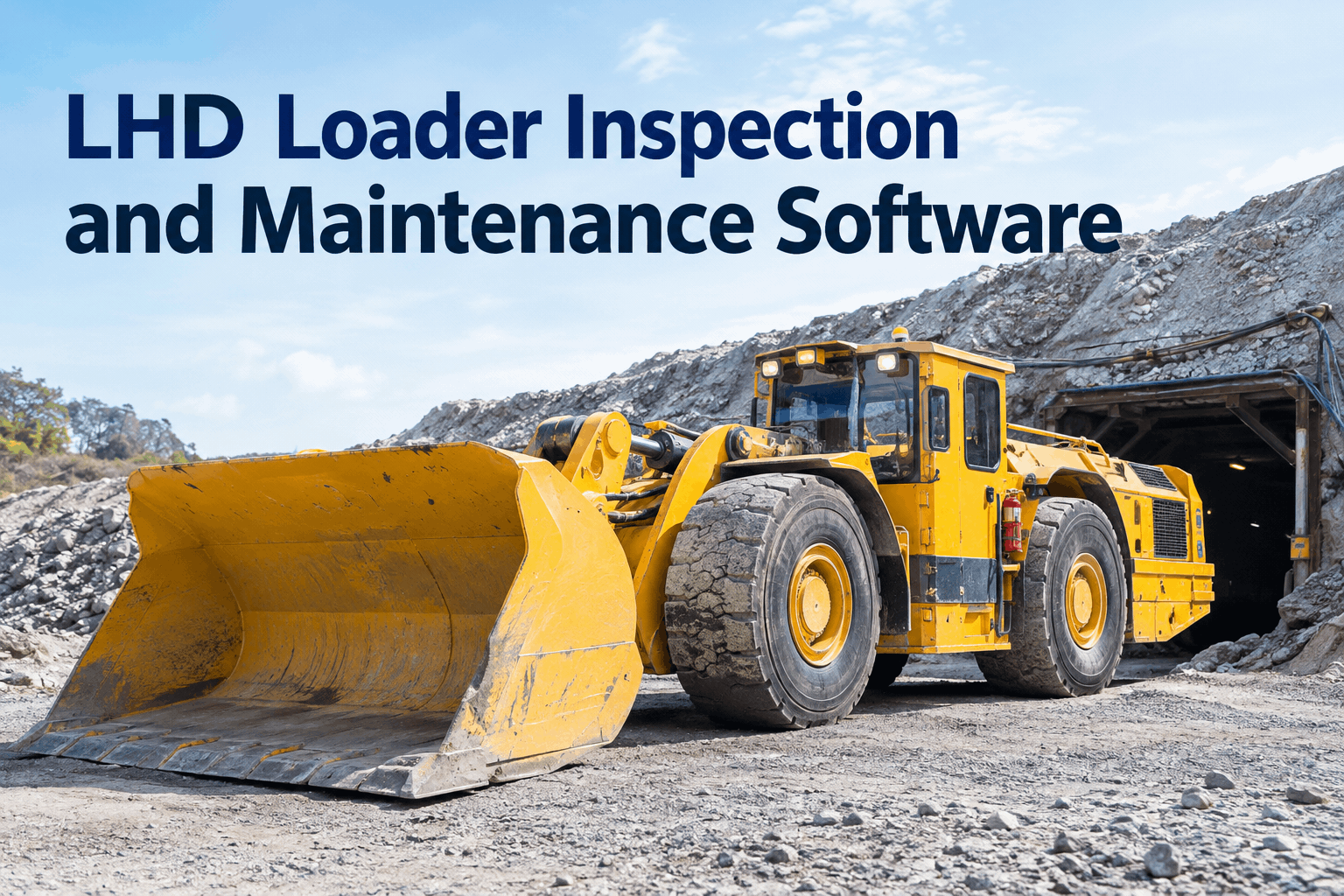
An underground mine rarely runs one LHD — it runs a fleet of them across headings, and a tramming cycle is only as fast as the slowest bucket in the loop. LHD loader inspection and maintenance software tracks GET wear, cycle-killing defects and meter-hour PM across every loader on one screen, so a supervisor knows fleet readiness at a glance instead of heading by heading. Book a demo to see it on your underground fleet .
Know Your Whole LHD Fleet's Readiness, Not Just One Loader's
LHD loader maintenance software rolls every unit's inspection, defects, and PM status into one fleet view — so a supervisor sees which loaders are ready before the shift starts tramming, not after one stalls mid-cycle.
An LHD is the hardest-worked machine underground — load, tram, dump, repeat, hundreds of times a shift, on grade, in confined headings. Most of what wears on it — the articulation joint, the wet brakes, the hydraulics — is well understood and worth tracking closely (our LHD loader maintenance guide breaks those zones down in depth). What gets missed more often is the bucket itself, and the fact that a mine rarely has just one LHD to watch. This page focuses on both: the GET economics riding on every bucket pass, and what it takes to keep a whole fleet of loaders — not just one — visibly ready.
The bucket economics every LHD program is quietly living withGET, lip, and liner wear — the cost line underground fleets track least
An LHD's bucket takes the same abuse an excavator's does, compressed into a faster, tighter cycle. Breakout force on a typical hard-rock LHD runs 25,000–50,000 lbf, and every one of those cycles is grinding at the lip, the GET, and the wear liners underneath.
Underground GET and lip systems matched to the ore and tracked on schedule have been shown to add up to 20% more service hours before replacement — fewer change-outs, less downtime per bucket.
A mismatched bucket or worn GET doesn't just cost parts — it increases tire slip, hydraulic demand, and total cycle time, which quietly drags down tons moved per shift across the whole loop.
The pattern mirrors every other wear part on the machine: caught on inspection, it's a scheduled swap; caught at failure, it's a stalled cycle and everyone behind that loader waiting. HVI logs GET and lip condition on every pre-shift so it's a tracked trend, not a surprise at the face. Start a free trial and track bucket wear against your own fleet
What the rest of the LHD is telling youarticulation, brakes, and hydraulics — the three zones that decide uptime
Beyond the bucket, three systems drive most of an LHD's unplanned downtime, and they're worth watching on every single shift.
Articulation joint
Carries every turn and the machine's full torsional load, cycle after cycle. Play here means losing steering in the worst possible place — a confined heading.
Wet brakes
Constant demand on loaded declines wears these fast. They're tested and signed every shift for a reason — this is the system that fails worst if it's skipped.
Hydraulics
Breakout and lift hydraulics run hot and contaminated in confined, dusty headings — fluid condition matters more here than almost anywhere else underground.
Our zone-by-zone LHD maintenance guide goes deep on each of these. On this page, the point is simpler: all three, plus the bucket, need to be visible across every loader in the fleet — not just the one someone happened to walk past. Book a demo to see all three tracked per unit, fleet-wide
The LHD pre-shift inspection checklistwhat a competent-person examination has to cover before tramming starts
MSHA's 30 CFR §57.14100 requires a competent-person inspection of every piece of self-propelled underground equipment — LHDs included — before each shift. For the full regulation breakdown, see our 30 CFR §57.14100 guide. Here's what that examination should cover on an LHD specifically.
In HVI this is a guided mobile template — tick, flag, photo — working fully offline underground and syncing the moment signal returns, timestamped to the right loader and ready for an MSHA review. Book a demo and see this checklist live on one screen
Meter-hour PM across the whole LHD fleetwhy one loader's schedule shouldn't live on a separate whiteboard from the next
Confined-space duty, constant load cycling, and 24-hour operation mean an LHD's real PM interval drifts from the OEM baseline fast — and when each loader's schedule lives on its own whiteboard or paper log, that drift goes unnoticed until something fails mid-cycle.
-
250 hr
Basic service
Engine oil and filter, articulation greasing, GET and bucket condition check, brake function test.
-
500 hr
Intermediate service
Hydraulic filter and fluid sample, wet-brake pack inspection, articulation pin and bushing measurement.
-
1,000 hr
Major service
Full brake pack service, transmission and differential service, structural inspection of frame and bucket linkage.
HVI's meter-hour PM scheduling auto-generates the work order when any loader's hours cross an interval — across the whole fleet, not one unit at a time — and lets you tighten intervals for a severe-duty heading. Book a demo to see tiered PM running across every LHD on your roster
From flagged defect to closed work orderhow one loader's inspection reaches the surface without a radio call
Underground connectivity is the real obstacle most paper and basic digital systems hit. A defect found at the face needs to reach the shop whether or not there's signal in that heading.
-
1
Operator runs the pre-shift, offline
Bucket, articulation, brakes, hydraulics — the full checklist, on a phone, working whether or not there's signal in the heading.
-
2
A defect is flagged with photo & severity
A worn lip or a slow brake response gets logged with a photo, tied to that exact loader, and queued to sync the moment signal returns.
-
3
It becomes a work order in one tap
The flag converts to a work order and lands with the surface shop — visible as soon as it reaches signal, without a radio relay.
-
4
Repair closes against that loader's history
Parts, labor, and sign-off record against the LHD's own file, feeding cost-per-hour analytics across the whole fleet.
From an underground maintenance superintendent
Every LHD has its own paper binder in the cab, in theory. In practice, half of them are missing pages, and the one time I actually need to know a loader's brake history is standing at the portal with an inspector asking for it.
What changed for us wasn't any single check — it was seeing all our loaders on one screen. I can tell which units are ready for the shift and which ones are sitting on an open work order without walking the whole level to find out. That's the difference between catching a worn lip at the pre-shift and losing a cycle to it at the face.
Frequently asked questions
What is LHD loader inspection and maintenance software?
A mobile checklist built around an LHD's wear points — bucket/GET, articulation, brakes, hydraulics — with defects routed to work orders, and every loader's status visible on one fleet-wide screen.
How much does bucket GET wear really cost an LHD program?
A matched, tracked GET and lip system can add up to 20% more service hours before replacement, while a worn or mismatched bucket drags down fill factor, tire life, and total cycle time.
How often should an LHD be serviced?
Typically 250-hour basic, 500-hour intermediate, and 1,000-hour major service tiers, tightened for severe-duty headings. HVI auto-fires the work order at each interval, fleet-wide.
Does this meet MSHA's underground pre-shift requirement?
Yes. 30 CFR §57.14100 requires a competent-person inspection before each shift; HVI's offline-capable checklist gives a timestamped, audit-ready record per loader.
Can HVI show the status of every LHD across the mine at once?
Yes. Each loader has its own inspection history, PM schedule, and open work orders, rolled into one fleet readiness view rather than tracked unit by unit.
Stop losing cycles to the loader nobody was watching
HVI gives every LHD operator an underground-specific pre-shift inspection, routes flagged bucket, brake, or hydraulic defects to a work order in one tap, fires PM on real meter hours, and shows every loader's readiness on one fleet-wide screen — working fully offline underground. Live on site in under two weeks.
- Bucket/GET, articulation, brake & hydraulic checks
- Defect → work order in one tap, offline-capable
- Meter-hour PM, fleet-wide not unit-by-unit
- One readiness view across every loader