A 400-ton haul truck doesn't need to be running to be deadly. When heavy mobile equipment is left unattended on a mine site, gravity becomes the primary hazard. A failed parking brake or a missing wheel chock can result in a catastrophic roll-away, threatening lives and triggering severe MSHA citations. Proper mine parking procedures require strict mechanical protocols, proper positioningand rigorous daily inspections to ensure parking systems never fail. See how HVI digitizes daily vehicle inspection checklists to ensure parking compliance
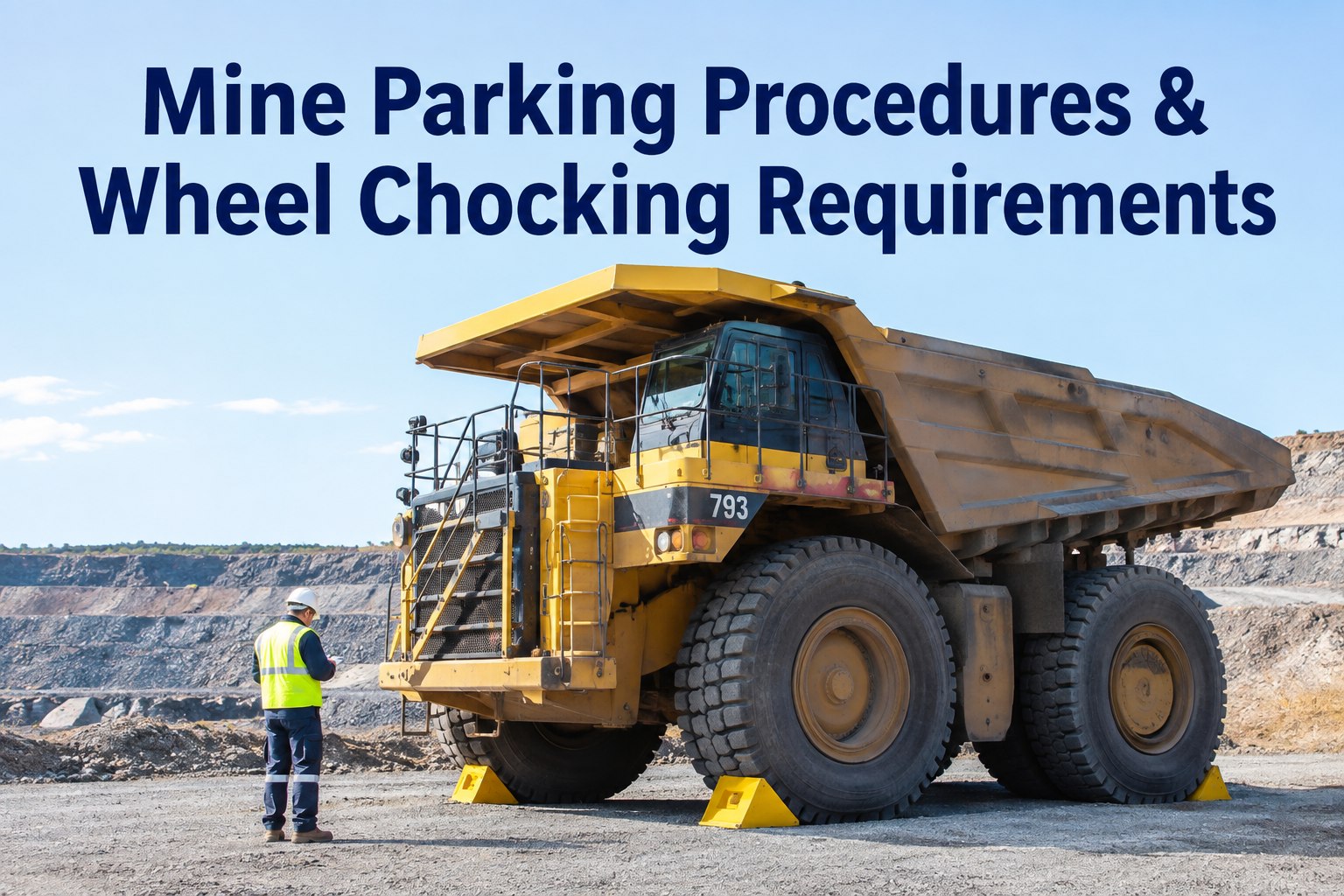
Mine Parking Procedures & Wheel Chocking Requirements
Prevent catastrophic runaways. Master MSHA parking compliance, correct wheel chocking techniques and the digital DVIR workflows needed to keep your fleet securely anchored and audit-ready.
The Universal 4-Step Mine Parking Protocol
MSHA regulations dictate that mobile equipment must not be left unattended unless the controls are placed in the park position and the parking brake is set. Furthermore, operating a machine with defective parking brakes is an immediate violation. Every operator must follow a strict sequential shutdown process.
Safe Positioning
Always attempt to park on flat, level ground in designated parking areas, away from highwalls, active haul roads, and blast zones. If parking on a grade is unavoidable, the vehicle must be positioned safely relative to the slope.
Lower Ground Engaging Tools
Dozer blades, grader moldboards, excavator buckets, and loader arms must be lowered completely to the ground. This relieves hydraulic pressure and provides an immense secondary physical anchor against unintended movement.
Set Brakes & Turn Wheels
Place the transmission in neutral or park, and engage the mechanical parking brake. If parked on a grade, the steering wheels must be turned into the berm, bank, or rib so that if the machine rolls, it will immediately embed itself rather than accelerating downhill.
Apply Wheel Chocks
Turn off the engine, remove the key, and dismount safely using three points of contact. Immediately place correctly sized wheel chocks snugly against the tires to block the direction of the grade.
Wheel Chocking Specifics: Size Matters
A chunk of waste rock is not a wheel chock. MSHA requires purpose-built chocks matched to the vehicle's tire size, weight, and the operational environment.
• Tire Size: The chock height must be at least 25% of the tire's diameter.
• Placement: On a downgrade, place chocks in front of the front tires. On an upgrade, place them behind the rear tires. On flat ground, chock both sides of a single tire.
Digitizing Parking Compliance with HVI
A parking procedure is only as good as the equipment it relies on. If a parking brake is out of adjustment or a wheel chock was crushed by a previous driver, the vehicle is unsafe. HVI's inspection app has transformed how safety teams handle the vehicle inspection process.
The Danger of Paper Logs
- Operators casually check "OK" for parking brakes without performing a drag test.
- Missing or crushed wheel chocks are not reported, leaving the next shift vulnerable.
- Safety managers lack real-time visibility into whether post-trip parking procedures are actually being followed.
The HVI Digital Advantage
- With the vehicle inspection form and daily vehicle inspection checklist, your team stays compliant and organized.
- Mandate photo evidence of properly applied wheel chocks and lowered implements during post-trip sign-off.
- The integration of the DVIR form and DOT inspection form ensures all necessary reports are filed on time, creating a flawless MSHA audit trail.
"The inspection app has transformed how we handle our vehicle inspection process. With the vehicle inspection form and daily vehicle inspection checklist, our team stays compliant and organized... Managing everything through the maintenance CMMS has made fleet management and vehicle maintenance a breeze."
Frequently Asked Questions
What is MSHA rule 56.14207?
MSHA 30 CFR § 56.14207 requires that mobile equipment shall not be left unattended unless the controls are placed in the park position and the parking brake, if provided, is set. When parked on a grade, the wheels or tracks must be chocked or turned into a bank.
When must wheel chocks be used on a mine site?
Wheel chocks must be used whenever a rubber-tired vehicle is parked on an incline or decline. Best practice on many mine sites is "100% chocking," meaning vehicles must be chocked even on seemingly flat ground to prevent any possibility of rolling.
How do you safely park a bulldozer or loader?
In addition to setting the parking brake and neutralizing the transmission, all ground-engaging implements (dozer blades, loader buckets, rippers) must be lowered completely to the ground before the operator turns off the engine and dismounts.
How can software prevent runaway vehicle accidents?
Software like HVI enforces daily checks on critical parking components. If a driver flags a degraded parking brake or missing wheel chocks on their DVIR, managing everything through the maintenance CMMS has made fleet management and vehicle maintenance a breeze, instantly routing the defect to a mechanic before an accident occurs.
Anchor Your Fleet's Safety Compliance
Don't wait for a roll-away incident to overhaul your parking protocols. Digitize your DVIRs, enforce mandatory wheel chock photo-uploads, and unify your safety and maintenance teams with HVI.