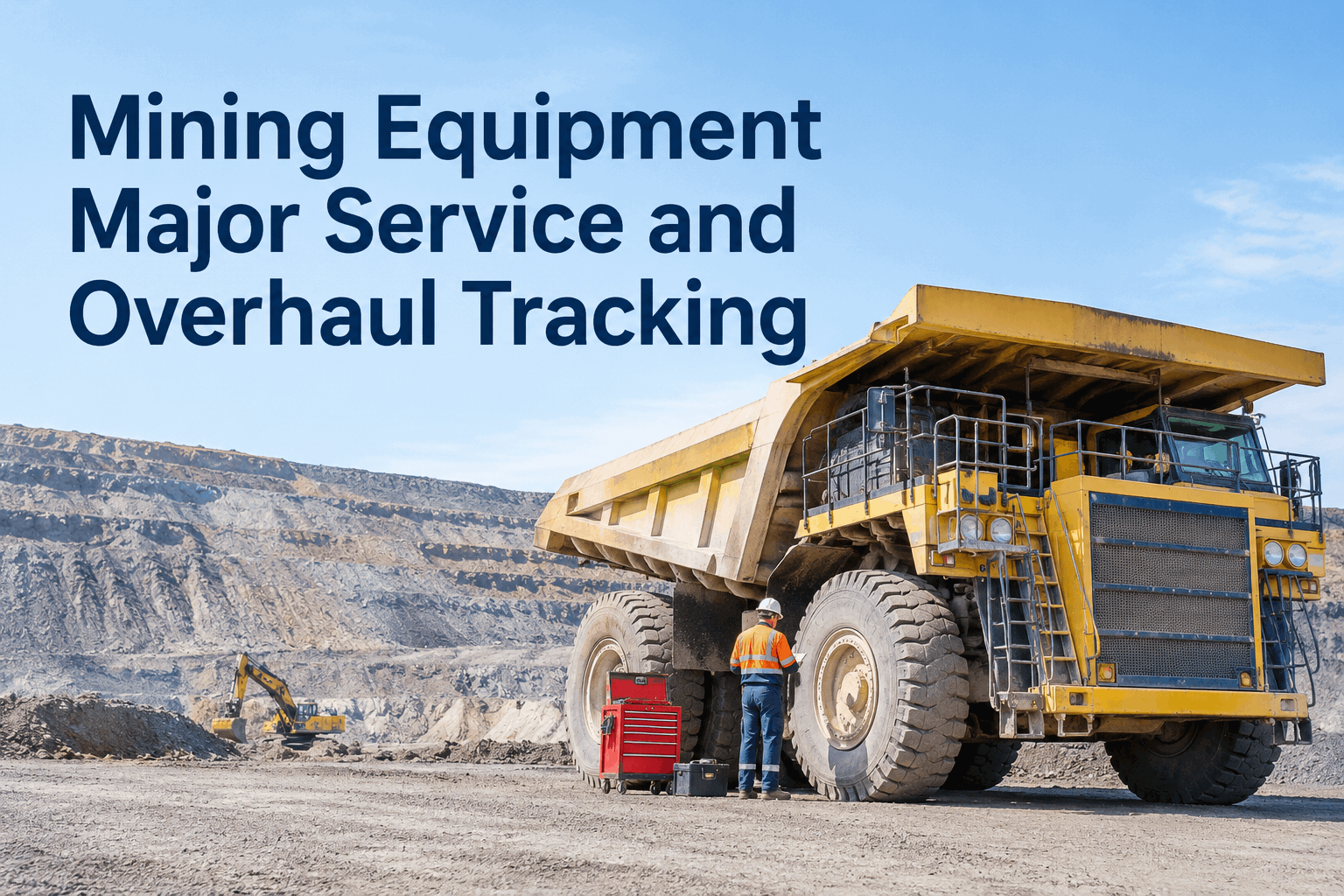
A haul truck reaches its scheduled service hours just as production enters a critical shift. Another truck receives the same service despite operating under much lighter conditions. Meanwhile, a loader with recurring hydraulic defects remains on the original maintenance cycle. Preventive maintenance optimization helps mining teams move beyond one-size-fits-all schedules without sacrificing safety, warranty protection or equipment reliability. This guide explains how to review service intervals using operating hours, inspection evidence and failure history—and how to book a demo to review mining PM workflows in HVI.
Mining PM Optimization & Service Interval Reviews
Build a defensible maintenance schedule that reflects machine duty, condition and reliability—not just the hour meter.
Illustrative planning example. Never extend an interval on a single favorable signal.
What does PM optimization actually change?
Mining preventive maintenance optimization is a controlled review of maintenance tasks, their frequency and their effectiveness. It is not simply a campaign to lengthen intervals. The objective is to perform the right work at the right time, while keeping statutory inspections, safety controls and OEM requirements intact.
Reduce avoidable servicing
Identify duplicate checks, unnecessary component replacement and tasks that do not address a credible failure mode. Use evidence before changing task frequency.
Catch deterioration earlier
Shorten review cycles for assets showing recurring defects, severe duty, abnormal oil results or escalating corrective work orders.
Protect production windows
Bundle compatible work, stage parts and coordinate downtime with dispatch and production teams without deferring critical maintenance.
A well-run program may retain the OEM interval for many assets. Optimization also includes improving inspection quality, job planning and task completion.
Choose intervals using multiple evidence streams
Hour-based maintenance scheduling is a useful starting point for haul trucks, loaders, dozers and excavators, but operating hours alone do not describe load severity, contamination or failure risk. Review each asset class and task separately.
OEM service schedule
Start with manufacturer instructions, applicable regulations, warranty conditions and site standards.
Retain · tighten · trial change
Approve, document, monitor and reverse any change that worsens risk or performance.
Changes to safety-critical, regulated or warranty-controlled tasks require the appropriate engineering, OEM and compliance approvals. A CMMS does not replace that authority.
A service interval review matrix for mining fleets
Use the following as a review framework, not as prescribed intervals. The correct interval depends on the machine model, duty cycle, component condition and manufacturer guidance.
| Maintenance area | Review evidence | Potential action | Required safeguard |
|---|---|---|---|
| Engine oil & filters | Fluid analysis, fuel burn, dust exposure, engine hours | Maintain or evaluate interval under approved program | OEM oil specification, sampling discipline, warranty review |
| Hydraulic system | Contamination counts, leaks, hose defects, heat trends | Increase targeted checks where deterioration appears | Pressure isolation and qualified inspection |
| Undercarriage & running gear | Wear measurements, ground conditions, damage history | Adjust inspection frequency by duty severity | Documented wear limits and safe access |
| Cooling system | Temperature alerts, coolant tests, blocked cores | Schedule cleaning or targeted corrective work | Safe cooling and lockout procedures |
| Brakes & steering | Inspection results, fault codes, functional testing | Escalate defects immediately under site rules | Never relax mandatory safety inspections |
| Attachments & structures | Cracks, pins, bushings, weld inspections, duty cycles | Target inspections to known failure locations | Approved structural inspection criteria |
Want a clearer history behind each review? Book a demo to see how HVI organizes inspection findings and service records.
Recognize over-maintenance and under-maintenance
The two problems can coexist in the same fleet. Repeated low-value servicing consumes workshop capacity, while late or ineffective maintenance creates failures that interrupt production. Compare actual outcomes with the purpose of each task.
Signs of possible over-maintenance
- Components routinely replaced with substantial usable life remaining
- Frequent intrusive work that introduces new defects
- Repeated inspections with no actionable findings
- High PM labor without a corresponding reliability benefit
Response: Review task purpose, failure mode and supporting evidence before proposing any adjustment.
Signs of under-maintenance
- Recurring failures shortly before planned service
- Growing overdue PM backlog or poor completion quality
- Repeat defects that remain open across shifts
- Unplanned breakdowns concentrated in severe-duty assets
Response: Investigate task coverage, execution quality and whether a shorter inspection cycle is warranted.
Make mining PM reviews easier to manage
See how HVI can bring equipment inspections, maintenance scheduling and work-order history into a more consistent workflow.
Six steps to a controlled PM interval review
Keep the review auditable. Each change should have a documented reason, named approver, implementation date and monitoring plan.
Segment assets by duty and criticality
Group comparable models by operating environment and production consequence. A support loader and a primary production excavator may need different review priorities.
Establish a clean performance baseline
Collect operating hours, PM history, inspections, corrective work orders, downtime reasons, failure codes and cost records. Correct inconsistent meter readings before analysis.
Test whether tasks address real failure modes
For each task, identify the defect it is intended to prevent or detect. Consider whether condition monitoring or a targeted inspection is more effective than routine replacement.
Approve a limited, controlled trial
Document the proposal, risk assessment, OEM or warranty review, accountable engineer, sample assets and rollback triggers. Do not trial relaxed safety controls.
Execute through scheduled work orders
Update the PM plan, notify supervisors, reserve parts and record actual labor, findings and service hours. Maintain a clear version history of schedule changes.
Measure results and decide
Compare failures, downtime, PM hours, component condition and costs against the baseline. Retain, modify or reverse the change based on evidence.
What a haul truck PM review might reveal
Consider a fictional group of similar haul trucks. All use the same OEM-approved service schedule, but two operate on dusty, high-grade routes while the others spend more time on lighter haul cycles.
Same model. Different operating stress.
Instead of extending Group B's interval immediately, the reliability team first checks oil analysis quality, service history, failure modes and OEM constraints. Group A may need more frequent targeted inspections or dust-control improvements even while scheduled service intervals remain unchanged. The result is a risk-based maintenance review—not a blanket increase in service hours.
For teams struggling with disconnected logs, book a demo to explore HVI's equipment maintenance history and inspection workflows.
KPIs that show whether PM optimization works
Track leading indicators of execution quality alongside lagging indicators of equipment performance. A reduction in maintenance hours alone is not proof of success.
On-time completion
PM tasks completed within the approved window ÷ PM tasks due. Define the allowed window consistently.
MTBF / failure rate
Use consistent definitions for qualifying failures and operating time. Segment by asset class and duty.
MTTR
Measure average active repair duration separately from parts or access delays when possible.
Repeat failures
Track the same failure mode returning after corrective work, especially within a defined follow-up period.
Compare planned downtime, unplanned downtime and repeat failure frequency before and after each approved change.
Review labor, parts, contractor costs and production impact together; lower PM spending can be offset by expensive breakdowns.
Always account for seasonality, fleet utilization and changing operating conditions before attributing KPI movement to a schedule adjustment.
How HVI can support mining PM optimization
A structured maintenance system makes interval reviews easier to execute consistently. HVI supports maintenance scheduling, digital inspection records, work-order tracking and fleet reporting. Confirm specific hour-meter automation and integration requirements during your evaluation.
Preventive maintenance plans
Organize recurring service tasks and review upcoming work against operational availability and workshop resources.
Digital inspection evidence
Capture defects and inspection observations so emerging issues can inform service reviews and corrective maintenance.
Work-order history
Connect completed work, repair findings and recurring problems to individual assets for a clearer reliability picture.
Maintenance reporting
Review service activity and asset trends to identify where planning quality, inspection follow-up or PM execution needs attention.
Ready to organize the process? Start free to explore digital mining maintenance workflows.
A practical 30-day PM review launch
Start with a small, well-understood asset group. The first month should establish trustworthy data and a repeatable review process—not rush interval extensions.
Choose the pilot
Select one equipment class, agree on baseline tasks and confirm who can authorize changes.
Validate the records
Check meter readings, inspection completion, failure codes, parts history and downtime reasons.
Review failure modes
Identify recurring defects, severe-duty exposure and PM tasks with weak evidence of effectiveness.
Approve next actions
Retain current intervals, add targeted checks or propose a formally reviewed trial with monitoring gates.
Mining PM optimization FAQs
What is preventive maintenance optimization in mining?
It is the systematic review of maintenance tasks and intervals using equipment criticality, operating hours, inspection results, condition data and failure history. The goal is reliable and safe equipment performance with less unnecessary work, not simply longer service intervals.
Can a mine extend OEM service intervals?
Only after reviewing applicable manufacturer requirements, warranty terms, regulations, site standards and engineering evidence. Some tasks cannot be extended. Any permitted change should have documented approval, monitoring criteria and a rollback plan.
Which equipment should be reviewed first?
Start with a manageable group of comparable assets where maintenance history is reliable and the potential benefit is meaningful. Critical assets with recurring failures may deserve urgent investigation, but safety-sensitive changes require stricter controls.
How does condition monitoring affect PM scheduling?
Fluid analysis, temperatures, wear measurements and inspection findings can identify deterioration that hour meters miss. These signals should complement—not automatically replace—scheduled tasks, especially where failure consequences are severe.
How can maintenance software support service interval reviews?
Software can centralize service plans, inspection findings, work orders and equipment history so teams can compare outcomes and document decisions. The quality of the analysis still depends on accurate data, clear failure coding and qualified engineering review.
Optimize mining maintenance with clearer service records
Bring inspections, planned maintenance and repair history into a practical workflow for your reliability and workshop teams.