Potash mining equipment works in a demanding combination of salt-bearing dust, moisture, confined underground routes and long production shifts. Keeping a continuous miner, shuttle car or conveyor available takes more than routine lubrication: teams need repeatable inspections, corrosion controls and repair histories tied to each machine. This guide shows how to organize those records and maintenance decisions. Book a Demo of HVI Mining Maintenance to explore a practical digital workflow.
Protect the Machines That Keep Salt Moving
From cutting face to surface transfer, build a maintenance program around corrosive exposure, high-wear components and the consequences of an underground breakdown.
Where Potash Equipment Maintenance Gets Difficult three linked reliability pressures
Salt exposure is not a single failure mode. Dry deposits can accumulate around housings and ventilation paths, while moisture and dissolved salts can accelerate corrosion of susceptible metals and electrical connections. Abrasive solids, vibration and repeated loading add mechanical wear. A reliable plan separates these mechanisms rather than treating every fault as routine wear.
Corrosion exposure
Inspect connectors, enclosures, fasteners and protective coatings for deposits, water ingress and deterioration. Match cleaning and protection methods to OEM instructions.
Wear and loading
Track cutter tooling, conveyor components, chains, rollers, seals and bearings against operating hours and observed condition.
Access and downtime
Plan parts, labor and safe access before work begins. An underground failure can affect several connected production stages.
The bars illustrate maintenance attention areas, not measured risk percentages or mine-specific assessments.
Equipment-by-Equipment Inspection Priorities what maintenance teams should look for
A potash mine may use continuous miners, shuttle cars, mobile equipment and extensive belt or chain conveying. Equipment configuration differs between underground and solution-mining operations, so use these examples as a starting point and apply OEM and site-approved procedures.
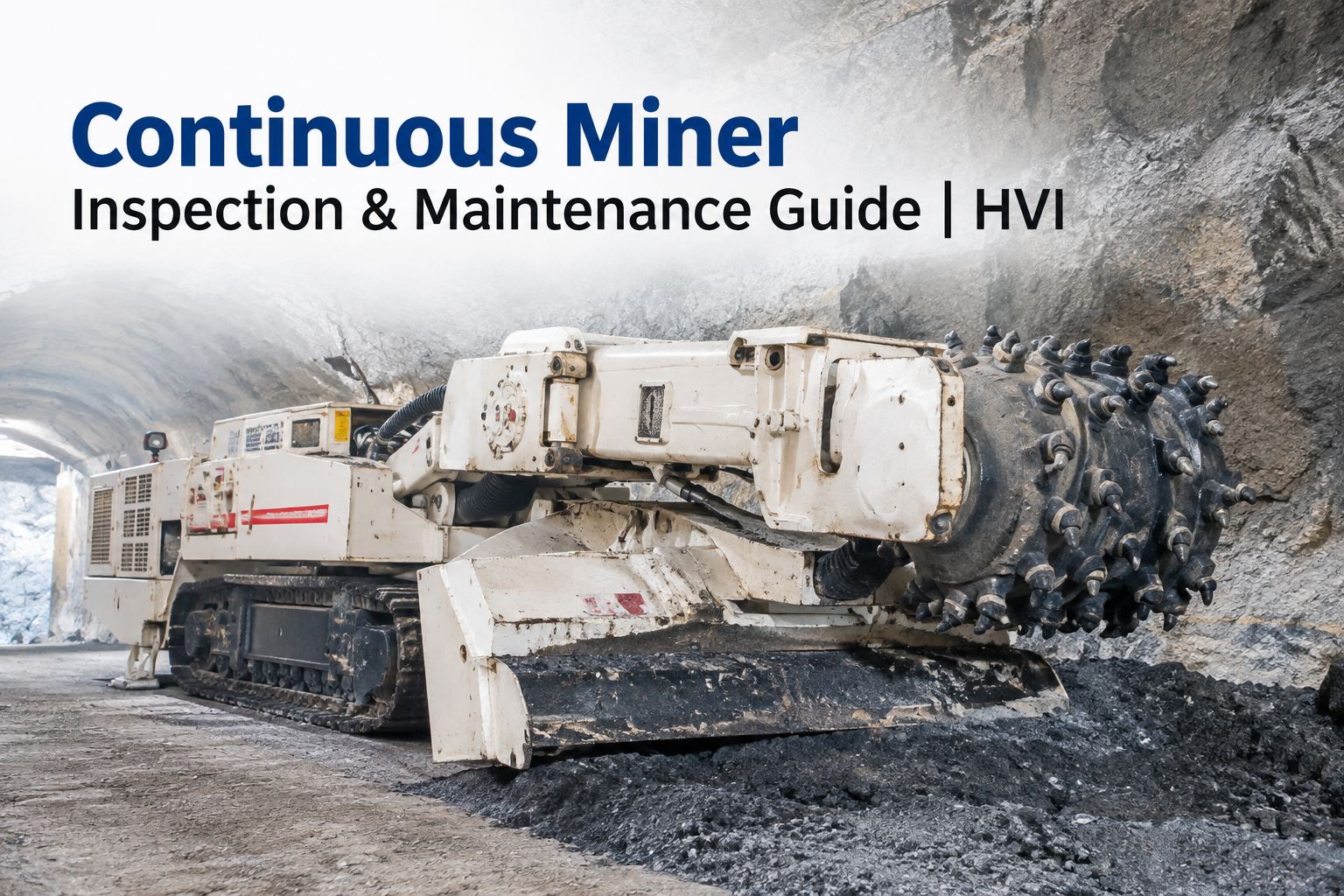
Continuous miners
- Cutting bits, drums and mounting hardware
- Hydraulic leaks, hoses and guards
- Cooling, dust control and ventilation interfaces
- Cables, controls and electrical enclosures
Shuttle cars and mobile haulage
- Brakes, steering and emergency stops
- Traction, tires or running gear as applicable
- Cables, battery systems or power connections
- Structural damage and salt accumulation
Conveyors and transfer points
- Belt tracking, splice and scraper condition
- Idlers, pulleys, bearings and drives
- Chute buildup and transfer-point wear
- Guarding, pull cords and interlocks
Pumps, fans and fixed plant
- Seal leakage and vibration trends
- Corrosion at flanges and connections
- Motor condition and ventilation pathways
- Lubrication and service intervals
A Corrosion Inspection That Leads to Action turn a visual finding into a documented repair
Inspection value comes from consistent follow-through. A corroded electrical connector should not disappear into an unstructured shift note. Capture the asset, location, condition and supporting evidence; assess the defect under the site's electrical and isolation procedures; then assign and verify corrective work.
Never energize, open or clean electrical equipment outside authorized procedures. Where a defect creates a safety concern, isolate or remove the equipment from service as required by site rules.
- Observed
- Salt deposits; seal damage suspected
- Evidence
- Inspection note + photo
- Action
- Qualified inspection and approved repair
- Closeout
- Verification before return to service
Build a Preventive Maintenance Plan Around Exposure not just a fixed calendar
Time-based and hour-based service intervals provide a baseline, but salt exposure makes condition observations important. Combine manufacturer requirements with inspection findings, operating hours, failure patterns and actual duty cycles. Review intervals when recurring defects or changing conditions justify it.
Establish the baseline
List assets, service requirements, critical components and the responsible maintenance owner.
Capture field conditions
Use repeatable inspections to record corrosion, wear, leakage, damage and abnormal operation.
Schedule and resource repairs
Raise work orders, reserve parts and align approved maintenance windows with production.
Review failure history
Compare repeat defects, repair costs and equipment availability; refine the plan using evidence.
Prioritize Underground Maintenance Without Losing Safety one decision table for competing work
When several machines need attention, safety-critical defects and mandatory compliance requirements take precedence. Only then should the team weigh production impact, failure likelihood, repair duration and parts availability. A scoring system can support planning, but it must never override an equipment hold or qualified safety decision.
| Work item | Decision driver | Action |
|---|---|---|
| Damaged emergency-stop circuit | Safety critical | Remove from service / follow site procedure |
| Conveyor bearing showing rapid deterioration | Failure risk | Evaluate urgently; plan controlled intervention |
| Recurring corrosion on connector housing | Repeat defect | Investigate cause and correct under approved procedure |
| Routine service due next shift | Scheduled PM | Confirm resources and service window |
Illustrative priorities only. Follow applicable mine rules, OEM instructions and qualified assessments.
How HVI Fits the Potash Mine Maintenance Workflow connect the inspection, repair and service record
One equipment history, fewer disconnected notes
Instead of treating an inspection finding, planned service and completed repair as unrelated events, organize them against the same asset record.
Book a Demo of HVI Equipment Maintenance →HVI supports fleet and equipment maintenance recordkeeping; it does not replace specialized mine safety systems, OEM controls or a mine's approved operating procedures. Confirm the exact deployment and integration requirements during a demo.
A Practical 30-Day Starting Plan small enough to implement, useful enough to measure
Identify critical assets
Inventory continuous miners, mobile units, conveyors and fixed plant. Record asset IDs, service intervals and owners.
Standardize inspections
Agree on salt exposure, electrical condition, wear and safety checks for each equipment type.
Connect repairs
Link findings to work orders; define defect escalation, parts requests and repair verification.
Review recurring issues
Identify repeat failures and overdue work; adjust schedules and stock planning where justified.
Start with a manageable set of critical machines before expanding. Useful measures include overdue preventive maintenance, repeat defects, work-order aging and equipment downtime—interpreted alongside operating conditions.
Make Every Potash Mine Inspection Easier to Act On
Bring inspections, preventive maintenance and repair records into a clearer equipment workflow. See how HVI can support your maintenance team across mobile and fixed assets.
Potash Mining Equipment Maintenance: FAQs
What equipment is commonly used in potash mining?
Underground potash operations may use continuous miners, shuttle cars or other haulage equipment, conveyors, ventilation systems and pumps. Some operations use different extraction methods, including solution mining, so the asset mix depends on mine design.
Why is corrosion important in salt mine equipment maintenance?
Salt deposits combined with moisture can accelerate corrosion of susceptible components and electrical connections. Inspections should look for water ingress, deteriorating seals, damaged coatings and deposits, with repairs performed according to OEM and site-approved procedures.
How should potash mining equipment preventive maintenance be scheduled?
Start with OEM requirements and site rules, then combine operating hours, time intervals, duty cycles and condition findings. Recurring failures, high exposure and repair history can justify reviewing the plan.
What should a potash mine equipment inspection checklist include?
Checklist items depend on the machine but commonly cover guards, emergency controls, electrical condition, corrosion, leaks, structural damage, lubrication, wear parts and conveyor components. Safety-critical findings need prompt escalation under site procedures.
How can HVI help manage potash mining equipment maintenance?
HVI can help teams organize equipment inspections, preventive maintenance, work orders and maintenance histories. It supports maintenance tracking and follow-through, but does not replace mine safety controls or specialized equipment monitoring systems.