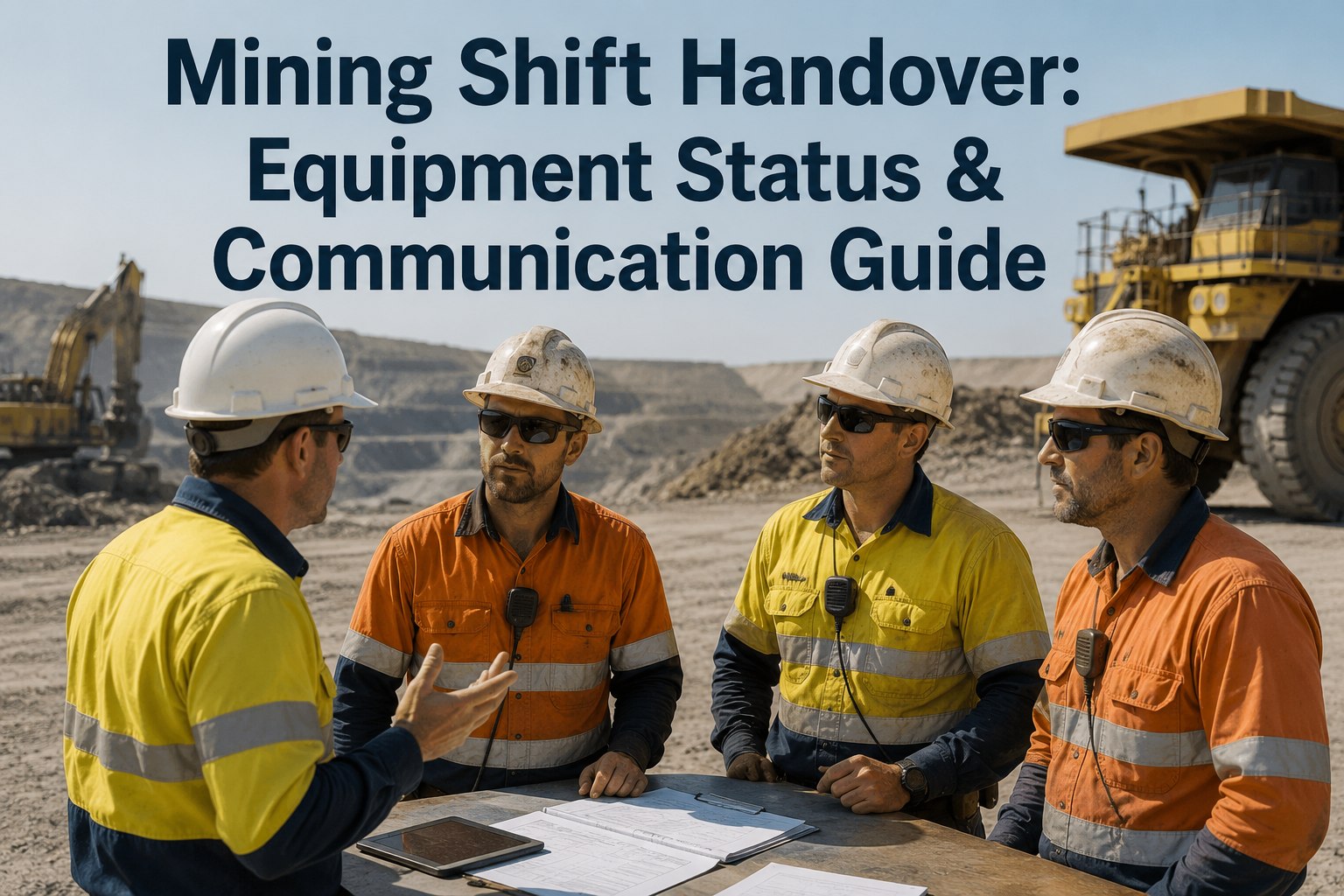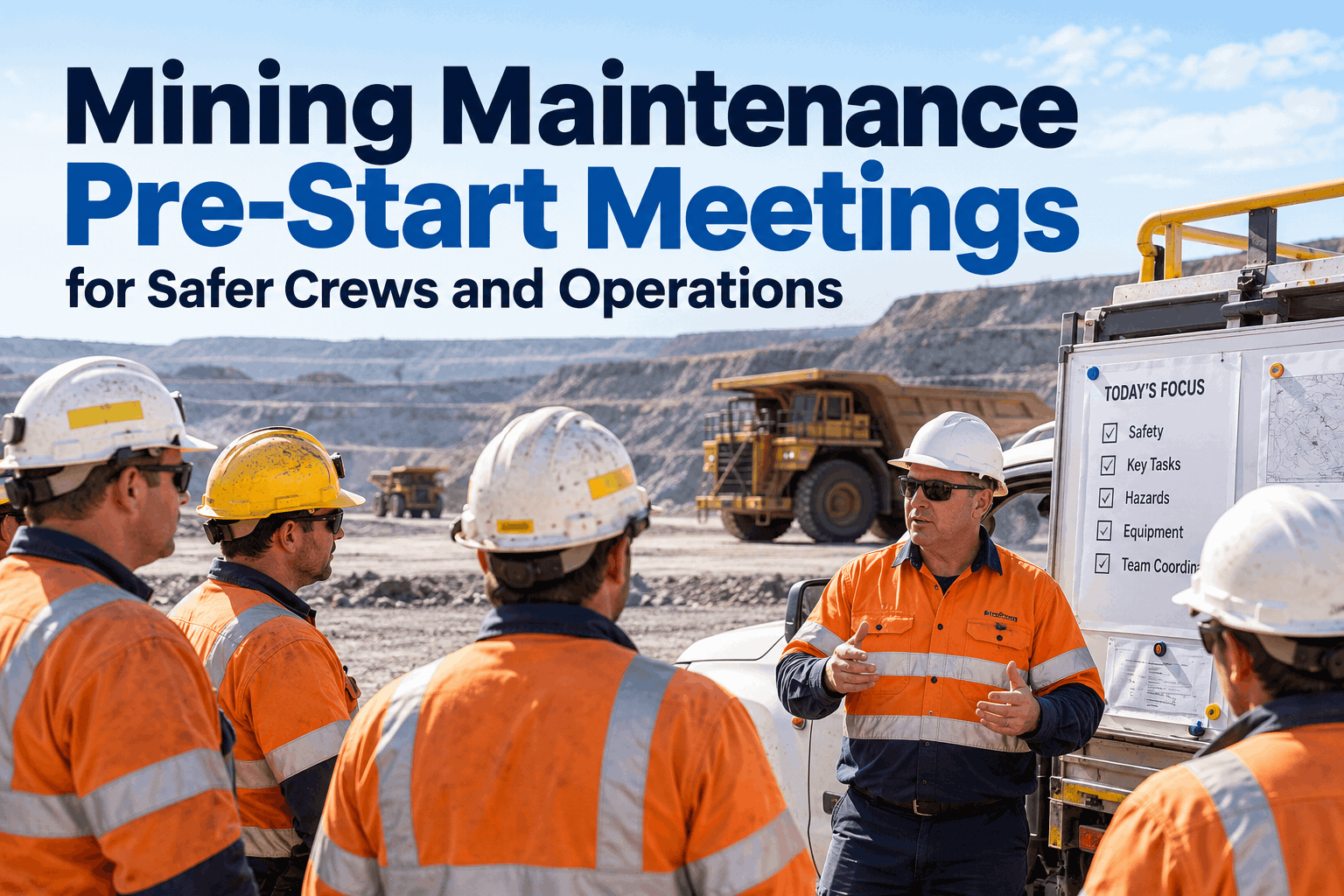
Mining pre start meetings give maintenance crews a shared picture of the shift before tools come out and equipment is isolated. A useful briefing connects the work order, machine condition, permits, hazards, crew roles and handover notes—not just a generic safety reminder. This guide shows supervisors how to run a focused meeting, capture decisions and follow through on defects. Book a demo of HVI mining maintenance coordination to see how digital records can support that preparation.
Mining Pre-Start Meetings: Turn a Shift Briefing Into a Safer Work Plan
Bring people, permits, plant condition and work priorities into one clear conversation before the maintenance shift begins.
What a Mining Maintenance Pre-Start Meeting Must Achieve
A pre-start is a short, structured coordination meeting before a crew begins planned or reactive maintenance. It is not a substitute for a task risk assessment, permit, isolation procedure or equipment-specific pre-use inspection.
Can every person explain the job, the hazard and the next safe action?
A successful meeting produces decisions people can act on: the right task priority, a named job owner, confirmed prerequisites, unresolved hazards escalated and a clear point at which work must pause.
A Practical 10–15 Minute Pre-Start Meeting Agenda
Use a short agenda for routine work and extend it when a job is complex or conditions have changed. The times below are illustrative, not a mandatory meeting duration.
Review unfinished jobs, active defects, equipment out of service and new site conditions.
Confirm work orders, asset locations, job sequence and dependencies on operations.
Discuss energy isolation, lifting, mobile equipment interaction, permits and changing ground conditions.
Assign roles, check competence and tools, invite questions, then agree on escalation and stop-work triggers.
Five Mining Maintenance Hazards Worth Bringing to the Board
Make the briefing specific to today's equipment and location. A crusher shutdown, workshop repair and haul-road breakdown have different exposure profiles.
Electrical, hydraulic, pneumatic and gravitational energy; verify isolation and test for zero energy under site procedures.
Vehicle routes, exclusion zones, spotters, reversing traffic and interactions with production teams.
Lift plans, load paths, dropped objects, access platforms and weather limitations.
Unstable surfaces, dust, heat, poor visibility, water and changing weather.
Open defects, guards, brakes, tires, structural damage and unexpected startup risk.
Make the Briefing Two-Way, Not a Supervisor Monologue
The most useful information often comes from the technician who completed the last repair or the operator who noticed an intermittent fault. Give them a structured opportunity to speak.
Three questions that reveal gaps
- Which part of today's work is most likely to go wrong?
- What do you need before you can start safely?
- Who do you contact if the task or conditions change?
Record unresolved issues and an owner. Attendance alone does not prove the crew understood the controls.
Turn Last Shift's Findings Into This Shift's Decisions
Pre-start meetings fail when defects are mentioned verbally and disappear after the crew disperses. Keep a traceable handover from inspection to work planning.
Operator or technician records an equipment condition.
Supervisor reviews urgency and site-specific restrictions.
Maintenance work, parts, people and isolation needs are assigned.
Crew confirms the job plan and outstanding controls.
What to Capture in a Mining Pre-Start Meeting Record
Keep the record short enough to use, but detailed enough to support handover and accountability. The example below is fictional and illustrates the type of information a crew might document.
Mining Maintenance Pre-Start Checklist
Use these prompts to guide a daily maintenance briefing. Add site-specific requirements for high-risk tasks, contractor work and emergency response.
Before the crew gathers
- Review overnight defects and incomplete work orders
- Check equipment availability and out-of-service status
- Confirm job locations, parts, tools and personnel
- Identify permits, isolations and specialist support
During the meeting
- Discuss changes to ground, weather and traffic
- Confirm critical hazards and required controls
- Ask workers to explain task-specific concerns
- Assign action owners and stop-work escalation
Before work starts
- Complete task risk assessments and permits as required
- Verify isolation and required authorizations
- Confirm the crew understands changes to the plan
- Document unresolved hazards and defer unsafe work
Measure Whether the Meetings Actually Improve Shift Readiness
Counting meetings is easy; measuring whether issues are addressed is more useful. Start with a small set of operational indicators, then compare performance over time.
Track how many briefing actions remain unresolved and who owns them.
Look for issues repeatedly raised without a lasting corrective response.
Check whether scheduled maintenance begins with necessary resources and controls.
Note delays caused by unclear status, incomplete work history or absent job details.
Avoid using low hazard-report counts as proof of safety. A healthy reporting culture may initially increase the number of issues surfaced.
Common Pre-Start Meeting Mistakes—and Better Alternatives
Mining Pre-Start Meetings: Frequently Asked Questions
What is a mining maintenance pre-start meeting?
It is a structured discussion before a maintenance shift or task that aligns the crew on work priorities, equipment status, hazards, controls, responsibilities and handover issues. It complements—not replaces—task risk assessments, permits and isolation procedures.
How long should a mining pre-start safety meeting take?
Routine briefings may fit into roughly 10–15 minutes, but there is no universal duration. High-risk, unfamiliar or changing work may require a longer discussion and additional task-level planning.
What should a mining pre-start meeting checklist include?
Include handover defects, planned jobs, asset status, personnel and competency, worksite changes, critical controls, permits and isolation needs, stop-work triggers, action owners and unresolved issues.
Who should lead a maintenance crew pre-start meeting?
A designated supervisor or competent leader typically facilitates, with meaningful input from technicians, operators, contractors and safety personnel where relevant. Site procedures should define who has authority for each task and permit.
How can HVI support mining pre-start meeting preparation?
HVI can help teams organize equipment inspections, defect information, maintenance schedules and related records for review before a shift. It does not replace the crew discussion, a risk assessment or site-specific authorization to begin work.