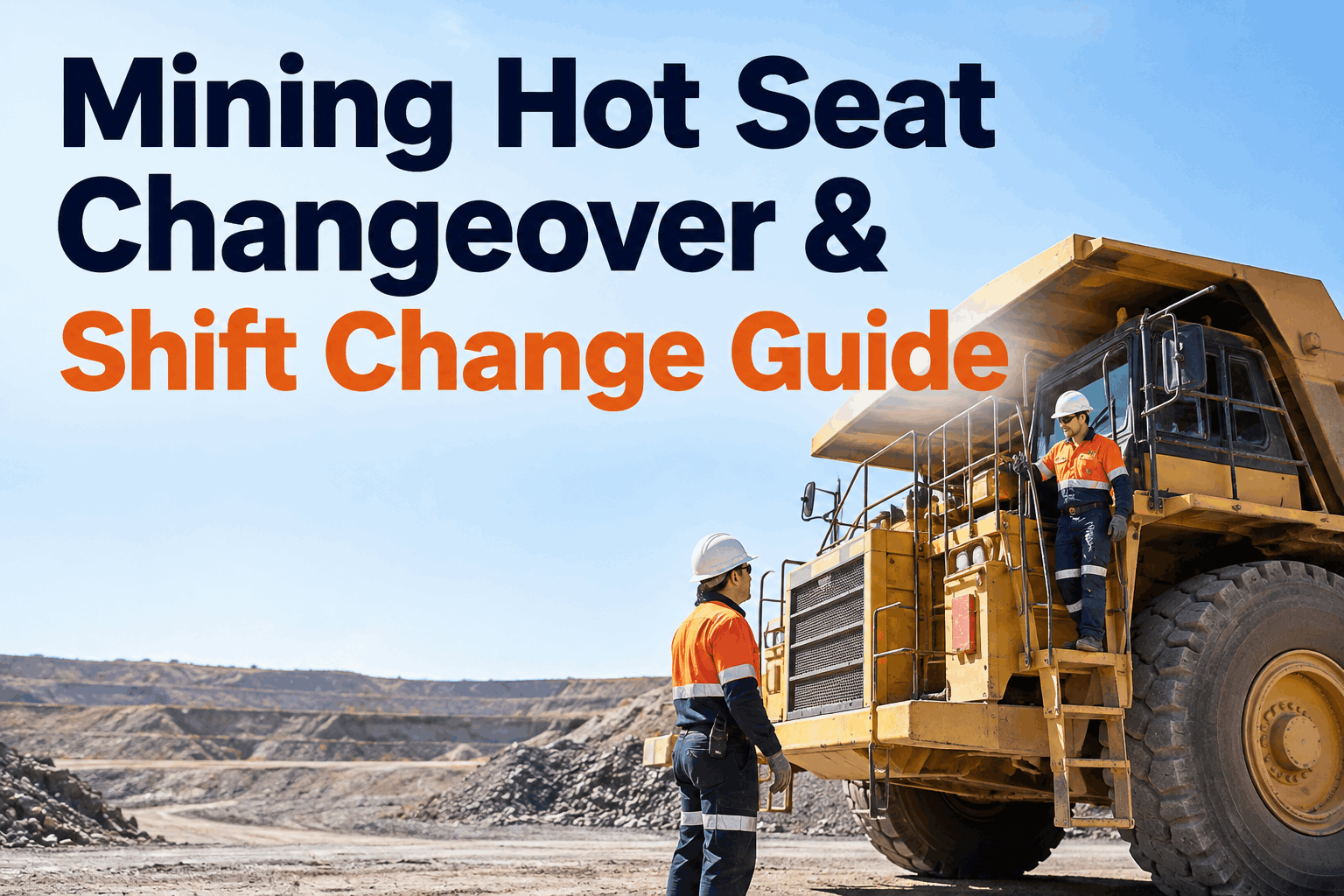
A hot seat changeover is how a mine keeps a multi-million-dollar haul truck earning through shift change — the fresh operator climbs in as the outgoing one climbs out, right there in the pit, so the truck barely stops. Do it well and you claw back idle minutes on every machine, every shift. Do it on paper, and the pre-start inspection and handover become the thing everyone's waiting on. Here's where shift-change time really goes — or start a free trial to run a faster, documented changeover.
Keep the truck earning through the swap.
Every minute a haul truck sits idle at shift change is production you never get back. Hot seating keeps it working — but only if the handover and pre-start inspection are quick and clean. Make those digital, and the changeover stops being the slowest part of the shift.
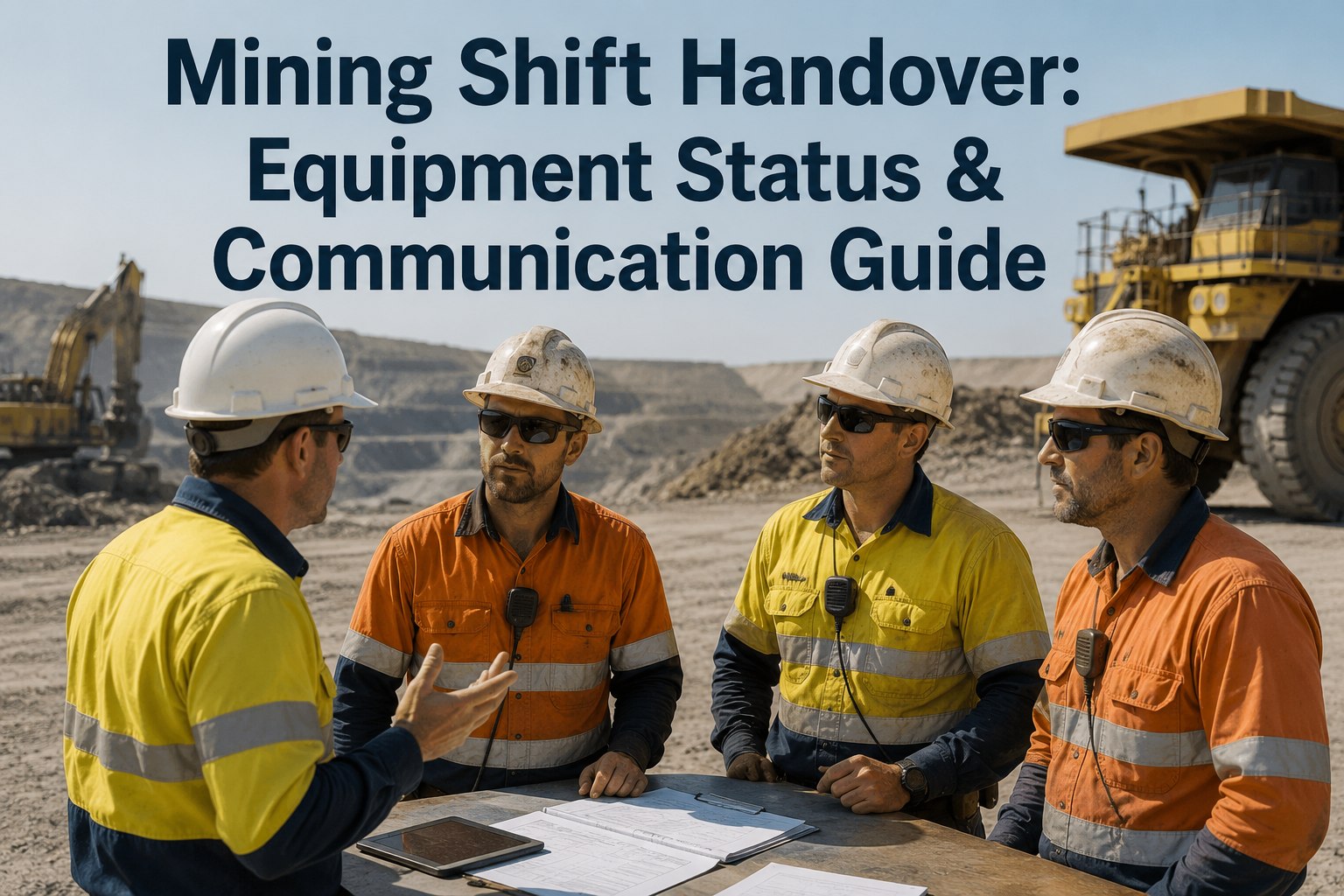
Quick boundary first, because it matters: HVI is not a mine dispatch system. It doesn't route crew buses, build rosters or optimize where every truck goes — that's your dispatch and planning layer. What HVI does is remove the friction that actually slows a hot seat changeover: the pre-start inspection and the operator handover. HVI already has a mining shift handover guide for the equipment-status side; this one is about the hot seat itself — the in-field operator swap and the minutes it costs or saves. Book a demo of daily operator reporting to see where it fits.
Where a shift change loses its minutesthe travel time and friction behind a slow hot seat changeover
The idle time at changeover isn't one big delay — it's a stack of small ones. Hot seating attacks the travel, but the handover and pre-start are still yours to make fast or slow.
Travel to and from the pit
Driving crews out to machines and back to the crib is often the single biggest chunk of lost time.
Muster & handover
Shift briefings and passing on equipment status add up when they're not quick and structured.
Fuel & service stops
If fueling isn't aligned with the swap, the machine waits twice instead of once.
Pre-start paperwork
A paper pre-start that has to be filled, found and filed is a quiet drag on every single swap.
Waiting on information
If the new operator can't see what the last shift flagged, they start the shift guessing.
You can't recover the geography of a big pit, but you can make the handover and pre-start near-instant — and you can measure what you're losing. Start a free trial to see utilization tracking on your own fleet.
The pre-start inspection decides your changeover speedhow HVI supports a faster hot seat changeover
Hot seating removes most of the travel, which leaves the pre-start inspection and handover as the thing standing between operators and a working machine. Five features make that part quick, consistent and recorded — none of them touch dispatch or rostering.
Daily operator reporting
The outgoing operator's report and the incoming pre-start happen on one device, right at the machine.
Digital equipment inspections
A fast guided pre-start the operator taps through in minutes, with defects flagged on the spot.
Equipment utilization tracking
See idle time and utilization per machine, so you can prove what the changeover is costing — and saving.
Asset management
Every truck's status, hours and open defects on one list, so the next crew knows exactly what they're taking.
Inspection records
Every pre-start and handover is a time-stamped record — proof the checks were done, not skipped for speed.
That's the same daily operator reporting and inspection backbone running the rest of your pit fleet. Start a free trial and digitize the pre-start.
What a digital hot-seat handover captures
A good changeover isn't just fast — it passes the machine on cleanly, so nothing gets lost between shifts. A digital handover locks in:
Outgoing operator's shift notes & issues
Any defects flagged, with photos
Current meter / hour reading
Incoming operator's pre-start sign-off
Fuel & fluid status at handover
Time stamp on the whole changeover
Anything flagged becomes a work order, so a hot seat never buries a fault in the rush. Start a free trial to build your handover record.
What changes across the shift
Higher utilization
Faster swaps keep trucks working through changeover, lifting production without new iron.
Less idle time
The handover and pre-start stop being the bottleneck that holds a machine at the swap.
Nothing dropped
Defects and notes pass cleanly between shifts instead of getting lost in a quick verbal handover.
Numbers to act on
Utilization data shows which crews and machines lose time, so you fix the real bottleneck.
It runs on the same platform as the rest of your mining fleet operations. Start a free trial and reclaim changeover time.
From a haul truck supervisor
We moved to hot seating to stop parking trucks at every shift change, and it helped — but the pre-start was still a bottleneck. Operators were filling out paper sheets in the cab, half of them never made it back to the office, and if the last shift had flagged something the new driver usually didn't know until it bit them. So we'd save travel time and give some of it straight back at the machine.
Putting the pre-start and handover on phones fixed the last piece. The new operator opens the truck, sees exactly what the last shift noted, taps through the check and they're moving. I can also finally see our idle time per truck, which is how I proved to the GM that the quick swaps were actually paying off. For a haul fleet, minutes per changeover times every shift is real money.
Hot seat changeover — FAQs
What is a hot seat changeover in mining?
It's swapping operators without stopping the machine's work for long — the incoming operator takes the seat in the field as the outgoing one leaves, so a haul truck or loader keeps running through shift change instead of being parked and idle. The goal is equipment utilization: the fewer minutes a machine sits at every changeover, the more production you get from iron you already own.
Does HVI handle dispatch, rostering or crew bus routing?
No — that's an important boundary. HVI is not a mine dispatch or planning system. It doesn't route crew transport, build rosters or decide which truck goes where. What it does is make the operator handover and pre-start inspection fast, consistent and recorded, and track equipment utilization so you can see the idle time your hot seating removes. It works alongside your dispatch layer, not in place of it.
How does a digital pre-start speed up the changeover?
A paper pre-start has to be filled in, carried and filed, and the new operator often can't see what the last shift flagged. A digital pre-start is a quick guided check on a phone at the machine, with last shift's notes and open defects already visible. The operator taps through it in minutes and starts work, and the record files itself — so the inspection stops being the thing everyone waits on.
Can we still keep proper inspections with faster swaps?
That's exactly the point. The risk with rushing a changeover is that checks get skipped for speed. A digital pre-start keeps the inspection quick and complete — it's a guided check that records every item with a time stamp, so you get the speed of hot seating without trading away the safety and the record. Anything flagged becomes a work order rather than a note that disappears.
How do we measure what hot seating is saving?
Through equipment utilization tracking. HVI records each machine's hours and idle patterns, so you can see how much time is lost at changeover and how that changes as you tighten the handover. That turns "hot seating feels faster" into numbers you can show — utilization per truck, per crew — which is usually what justifies the effort to management.
Make every hot seat changeover quick and documented
Keep dispatch and rostering where they are — and give the handover and pre-start a digital flow that gets the fresh operator working in minutes, passes the machine on cleanly, and shows you the idle time you're winning back. More production from the fleet you already run.
Digital pre-start · Clean handover · Utilization you can see