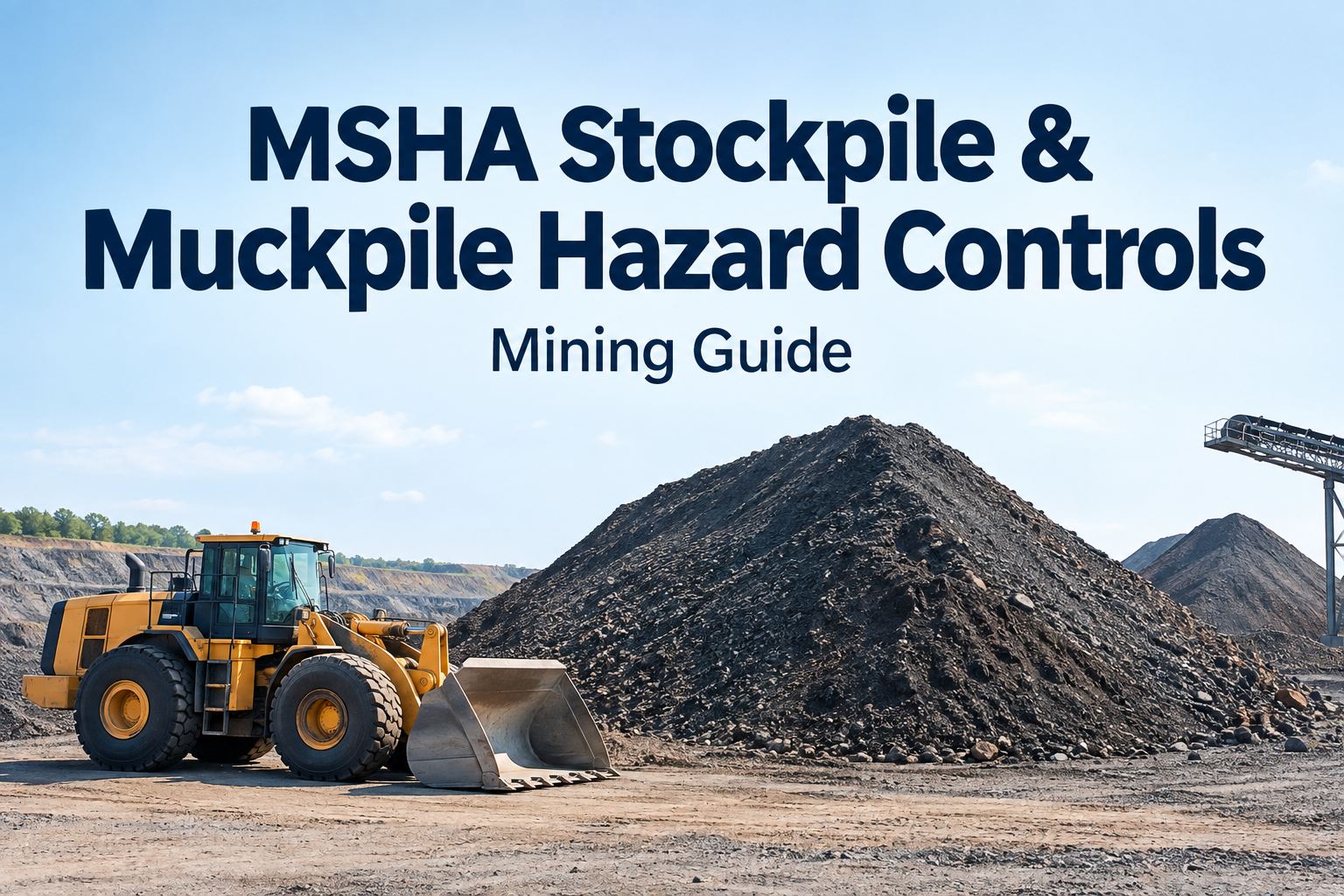
A stockpile can look completely solid and be seconds from collapse — the material a loader pulled from the bottom this morning has quietly steepened the face, and the next person who walks to the toe is standing in the collapse zone. Stockpile hazard controls exist because these piles kill people every year, through engulfment at the toe and ground failure at the dump edge — and the danger is almost always invisible until it isn't. See how workplace examinations build an audit-ready record
A Stockpile Has Three Danger Zones. Know Which One You're Standing In.
The top edge, the face, and the toe each fail differently. Tap a zone to see the hazard and the control that keeps equipment and people clear.
Hazard: the ground under a truck at the dump edge can give way and send the machine over — a leading cause of dump-point fatalities. Control: substantial berms or wheel stops, or a spotter and dumping short then pushing over with a dozer.
Hazard: an over-steepened face sloughs or collapses without warning — standing below it puts you in the line of fire. Control: keep slopes no steeper than the angle of repose, never work directly beneath the face, control pile size and shape.
Hazard: a face collapse can engulf a person at the toe in seconds — even a few feet of material prevents self-rescue and is often fatal. Control: stay clear of the toe except when loading, and never load from the toe while material is dumped above.
What makes stockpiles so dangerous is that they change while looking the same. Loading, weather, moisture, and settling all alter stability with no visible warning. Below is why piles fail, the controls for each danger zone, and the workplace examination that catches an unstable pile before someone trusts it.
Why a stable-looking pile isn't
The most dangerous thing about a stockpile or muckpile is that its surface tells you almost nothing about its internal condition. A pile that held firm yesterday can be primed to collapse today, because the things that undermine it happen out of sight.
Material removed from below
Loading out from the bottom over-steepens the face above and can create hidden voids — the single most common way a pile is made unstable.
Weather & moisture
Rain, freeze-thaw, and changing moisture content shift how material binds together, turning a stable slope into a slough risk overnight.
Active equipment nearby
Loaders and trucks working the pile change its stability in real time, and vibration or fresh dumping can trigger a collapse while someone is close.
Settling over time
Even an untouched pile settles and redistributes internally, so a dump point that was solid can quietly lose the ground beneath it.
Because none of this shows on the surface, you can't judge a pile by looking at it from a distance and assuming it's fine. The only reliable defence is examining conditions up close, from a safe position, every time before work — and treating any sign of instability as real. Book a demo to see ground-condition examinations logged before each shift.
Controlling the dump point and edge
The top of the pile is where equipment and material meet the edge, and where a truck can be lost over the side if the ground fails. The controls here are physical barriers and safe procedures — and they exist because dump-point overtravel has killed operators repeatedly.
Berms, wheel stops & bumper blocks
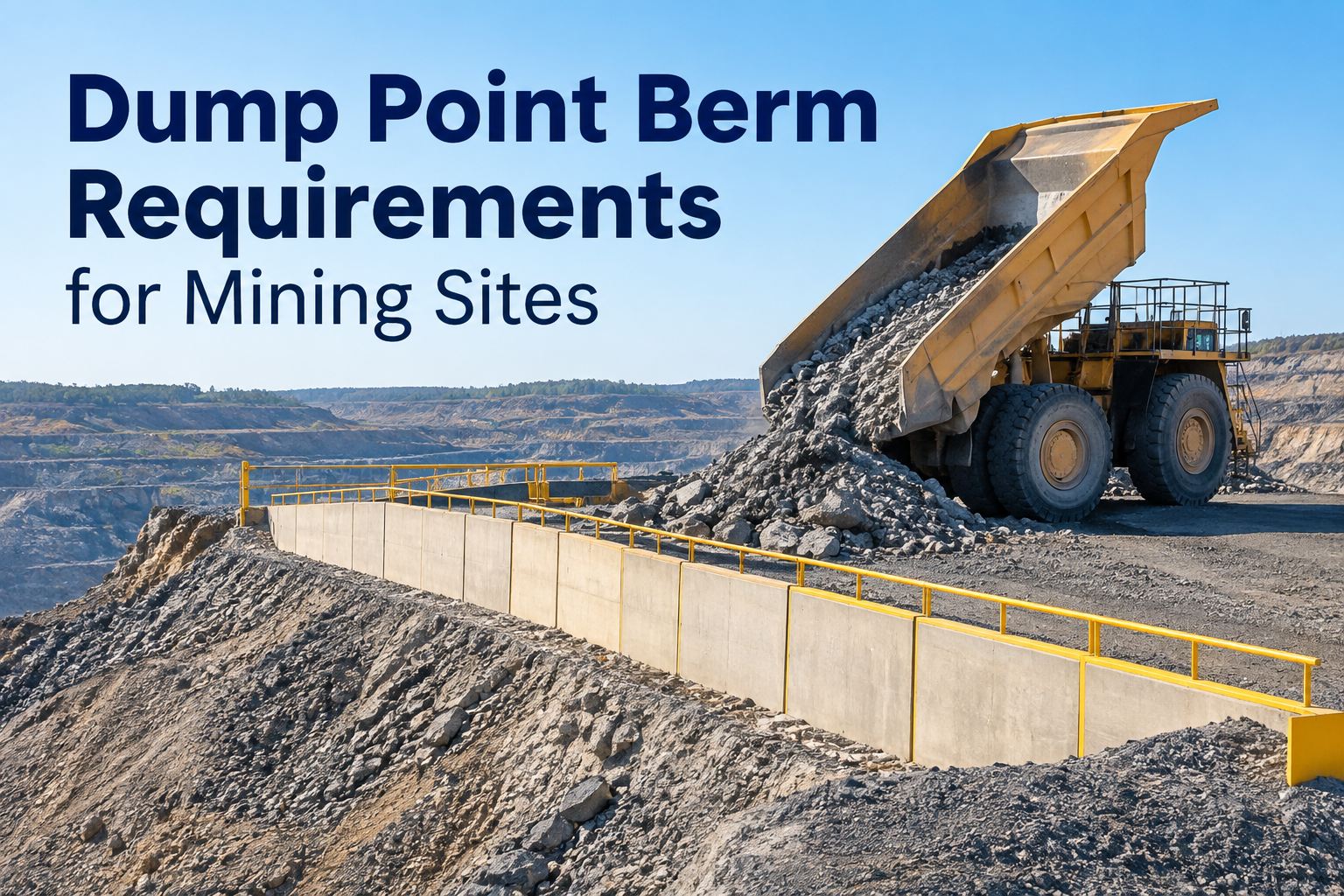
A substantial berm — a pile of material capable of restraining a vehicle — or a wheel stop at the edge prevents a truck backing over. It's the primary physical control at a dump point.
Spotter or dump-short-and-push
Where a berm isn't in place, use a spotter, or dump material at a safe distance from the edge and push it over with a bulldozer — never rely on judging the edge from the cab.
Dump from stable ground only
Always dump from a location the examination confirmed is stable. If ground conditions look unreliable, dump short and push — the few minutes saved by trusting a soft edge aren't worth a rollover.
The pattern in dump-point fatalities is consistent: an operator trusts an edge that hasn't been examined, brakes hard or over-raises the bed near it, and the ground gives way. Every one of the controls above exists to break that chain before it starts. Start free and make berm and dump-point checks a standing task.
The toe and face — the line-of-fire rule
If the dump point is where equipment is lost, the toe and face are where people are. The deadliest stockpile incidents happen when someone is on foot near the bottom of a pile and the face lets go — and the controls here are about position and never undercutting the slope.
Load from the toe below an active dump
Pulling material from the toe while loads are dumped above creates an over-steepened, unstable slope primed to collapse — one of the most dangerous configurations on a mine site. Stay clear of the toe except when actively loading from a safe position.
Stand or work below the face
A collapsing face engulfs anyone directly beneath it before they can move — even shallow engulfment prevents self-rescue. Keep people out of the line of fire below any material bank or overhang, on foot or in an open-cab machine.
These aren't cautious best practices — they're the specific positions that turn a slope failure into a fatality. Training everyone who works near piles to recognise the toe and the face as no-go zones, and to spot an over-steepened slope, is the human half of the control. The physical half is never creating that slope in the first place. Book a demo to see hazard training and exam findings recorded per area.
The workplace examination that ties it together
Every control above depends on one thing happening first: someone examining the area and the ground conditions before work, and again through the shift. The examination is the control that activates all the others — it's how an unstable pile gets caught before anyone trusts it, and how a hazard gets corrected instead of ignored.
Examine before work begins
Check dump sites, berms, ramps, slopes, and toe areas for instability before starting operations in the area — from a safe position.
Re-examine through the shift
Conditions change with every load, so examinations continue as work proceeds — a pile safe at the start of the shift may not be by mid-day.
Correct and document
A hazard found is acted on — area barricaded, slope reworked, dump point moved — and the finding and correction are recorded against the location.
That last step is where compliance and safety meet: an examination that finds a hazard and a record that shows it was corrected is both what keeps miners safe and what demonstrates diligence to MSHA. An undocumented examination, to an inspector, is one that may as well not have happened. A complete exam record is what proves the pile was checked before it was trusted. Start free and record stockpile examinations and corrective actions.
The stockpile & muckpile hazard checklist
Use this before any work around a stockpile, muckpile, or dump point. Use this stockpile hazard checklist online free, with each examination and corrective action recorded against the location automatically.
Examine before and during the shift
Dump sites, berms, ramps, slopes, and toe areas checked before work and re-checked as conditions change.Berm or wheel stop at every dump point
A substantial berm or wheel stop at the edge — or a spotter and dump-short-and-push where there isn't one.Slopes no steeper than the angle of repose
Control pile size and shape, and reconfigure piles to keep slopes stable rather than over-steepened.Never load from the toe below an active dump
Keep clear of the toe except when loading from a safe position, and never undercut an active pile.Keep people out of the line of fire
No one on foot or in an open cab below a material face or overhang that could slough or collapse.Record the exam and any correction
Document each examination, the hazards found, and the corrective action — retained and retrievable.
From an operations manager who changed the loading rule
We had a loader operator in the habit of digging into the toe of a stockpile while trucks were still dumping up top. It got material out fast, and nothing had ever gone wrong — which is exactly the trap. One morning the face above him sheared off and dropped a wall of material where his bucket had just been. He was in a cab, so he was fine. On foot, that's a fatality.
That was the day the toe became a no-load zone under an active dump, full stop, and every dump point got a berm and a documented pre-shift exam. Nobody loves the extra step until it's the thing that saves someone. Now the exam and the finding get logged every shift, and if a pile looks wrong, work stops until it's fixed and recorded. It's slower by minutes and safer by a life.
Frequently asked questions
What are the main hazards of stockpiles and muckpiles?
The main hazards are engulfment, slope failure, and dump-point ground failure. A worker near the toe can be engulfed in seconds if the face collapses — even a few feet of material prevents self-rescue and is often fatal. An over-steepened face can slough onto anyone below it. And at the top, the ground under a truck at the dump edge can give way and send the machine over. All three are dangerous because a pile can look stable while its internal condition changes from loading, weather, moisture, or settling.
Why should you never load from the toe of a stockpile?
Loading from the toe — the bottom of the pile — while material is dumped above creates an over-steepened, unstable slope primed to collapse. It removes support from beneath the face and can leave a near-vertical wall of material with nothing holding it. This is one of the most dangerous configurations on a mine site and a repeated cause of fatalities. The rule is to stay clear of the toe except when actively loading from a safe position, and never undercut a pile with an active dump point above it.
What controls prevent trucks going over a dump-point edge?
The primary control is a substantial berm — a pile of material capable of restraining a vehicle — or a wheel stop or bumper block at the edge to prevent overtravel. Where a berm isn't in place, use a spotter, or dump at a safe distance from the edge and push it over with a bulldozer rather than backing to the edge. Operators should always dump from ground the examination confirmed stable, and if conditions look unreliable, dump short and push instead of trusting a soft edge.
How often should stockpiles and dump points be examined?
Dump sites and ground conditions must be examined before work begins, and berms, ramps, slopes, and dump and toe areas examined throughout each shift. Frequent re-examination matters because conditions change constantly — every load dumped, every bucket removed, and shifts in weather or moisture can alter stability within hours. A pile safe at the start of a shift may not be by mid-day. Examine from a safe position, correct any hazard found before work continues, and document the finding.
Why does documenting stockpile examinations matter?
Documentation matters for both safety and compliance. A recorded examination that identifies a hazard and shows the corrective action taken demonstrates the pile was checked before it was trusted and that problems were acted on, not ignored. To an MSHA inspector, an undocumented examination is treated as one that may not have happened, so the record proves diligence. Because conditions change constantly and examinations recur every shift, keeping those findings and corrections retrievable per location is what turns a safety practice into demonstrable compliance.
Catch the unstable pile before anyone trusts it
HVI captures the pre-shift and pre-task examination of stockpiles, muckpiles, and dump points — the hazards found, the corrective actions, and the sign-off — against each location, retained and retrievable for an inspection. So the examination that keeps equipment and miners clear of a collapse actually happens, gets recorded, and is there to prove when MSHA asks.
No credit card · Workplace exams & corrective actions · Audit-ready records