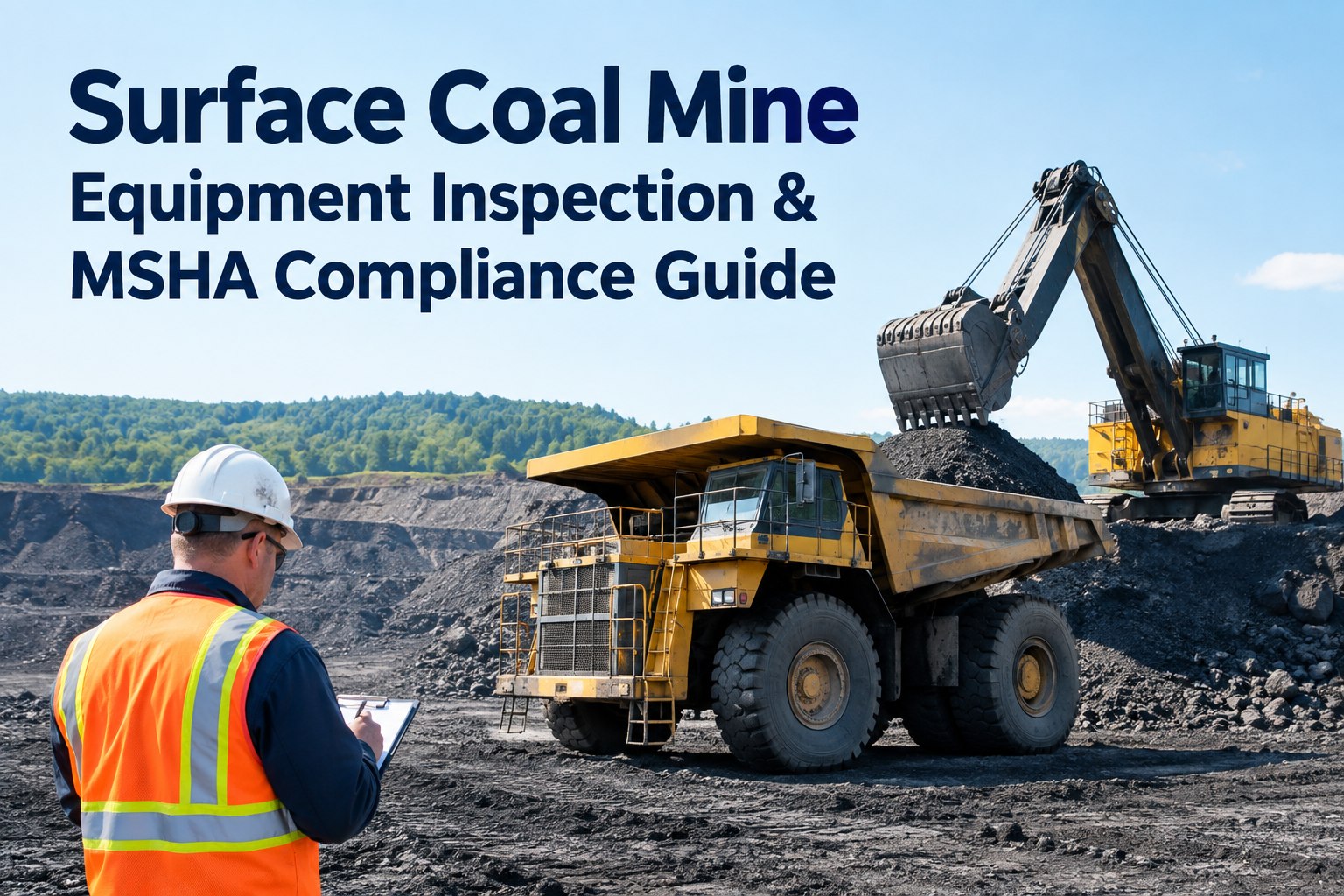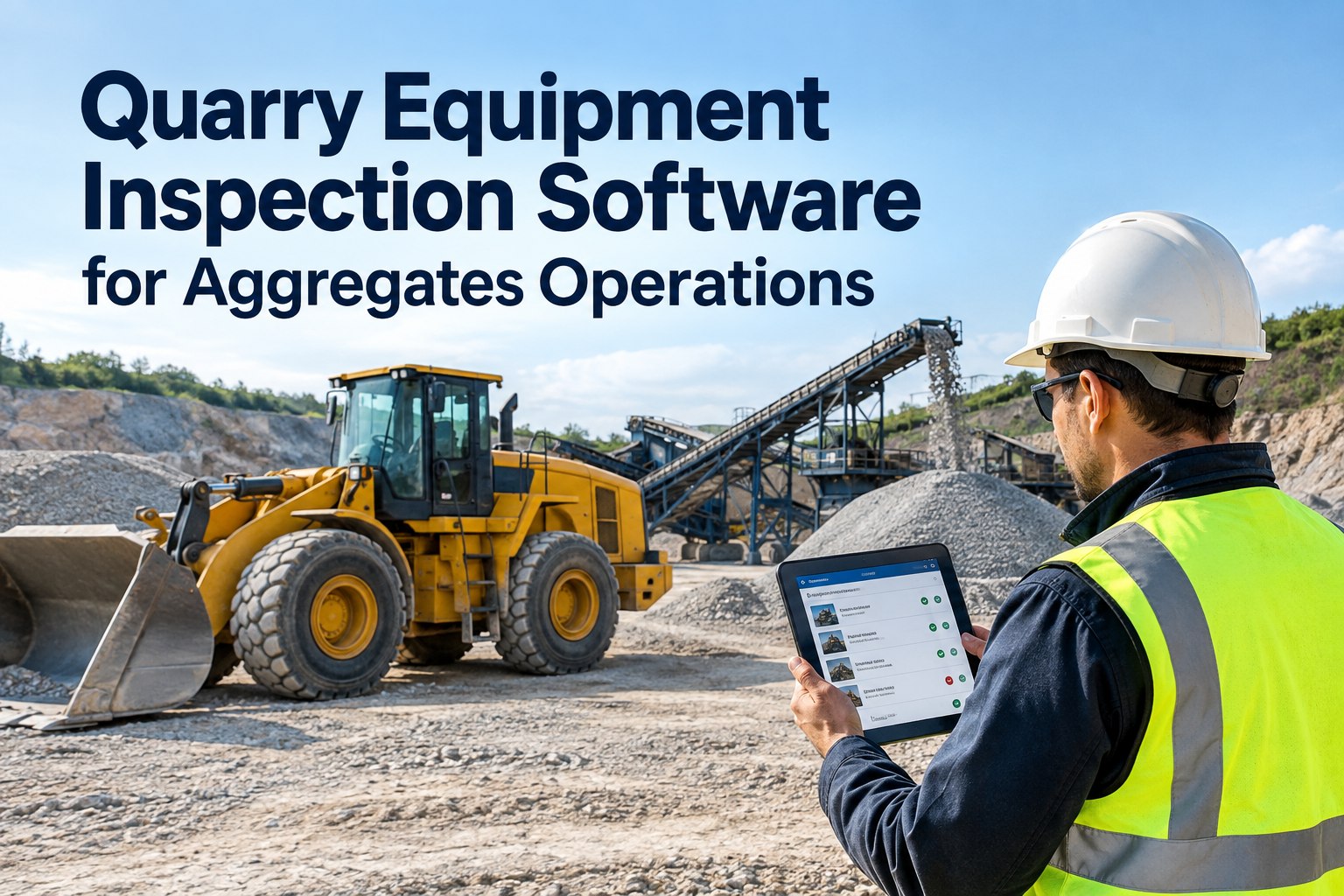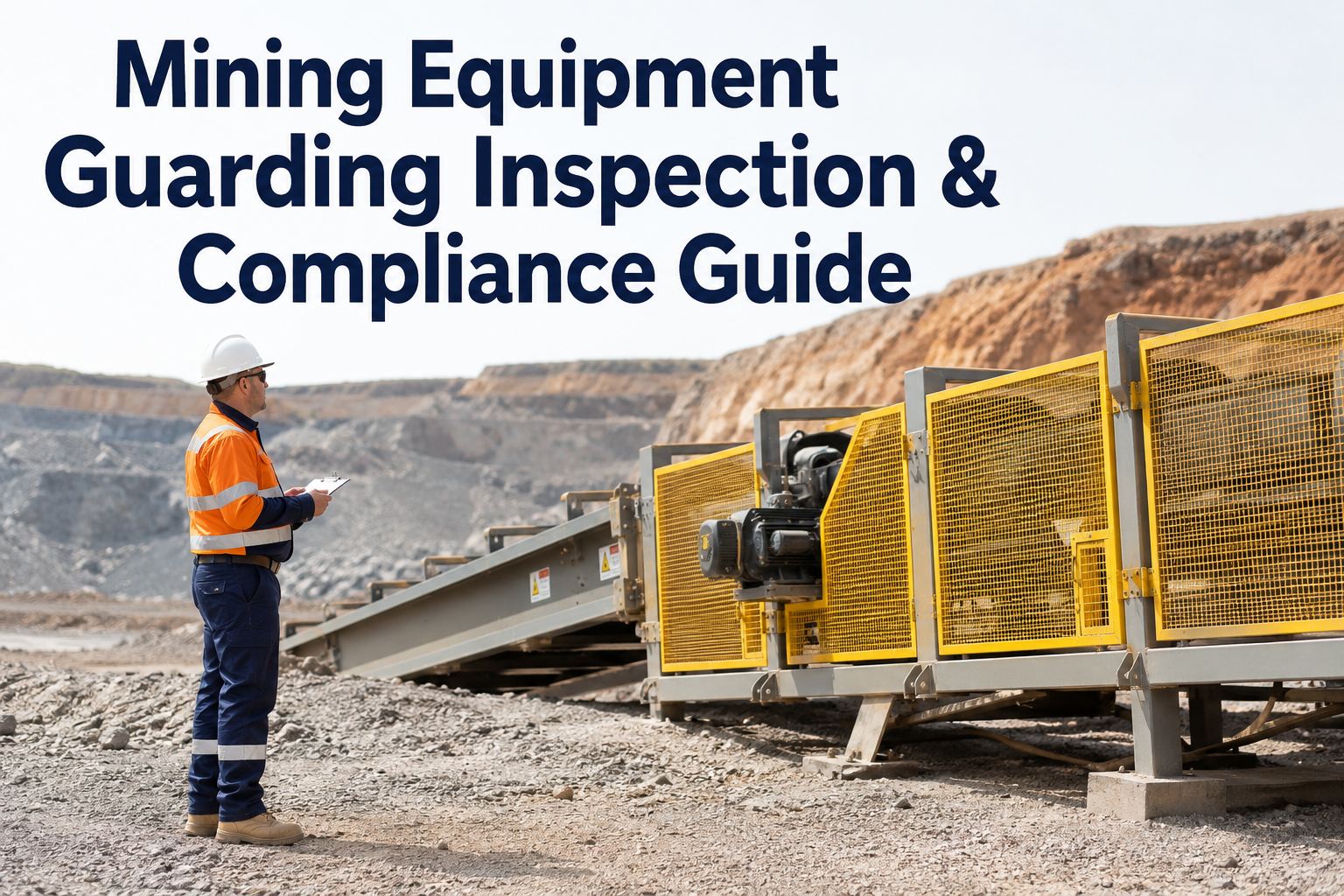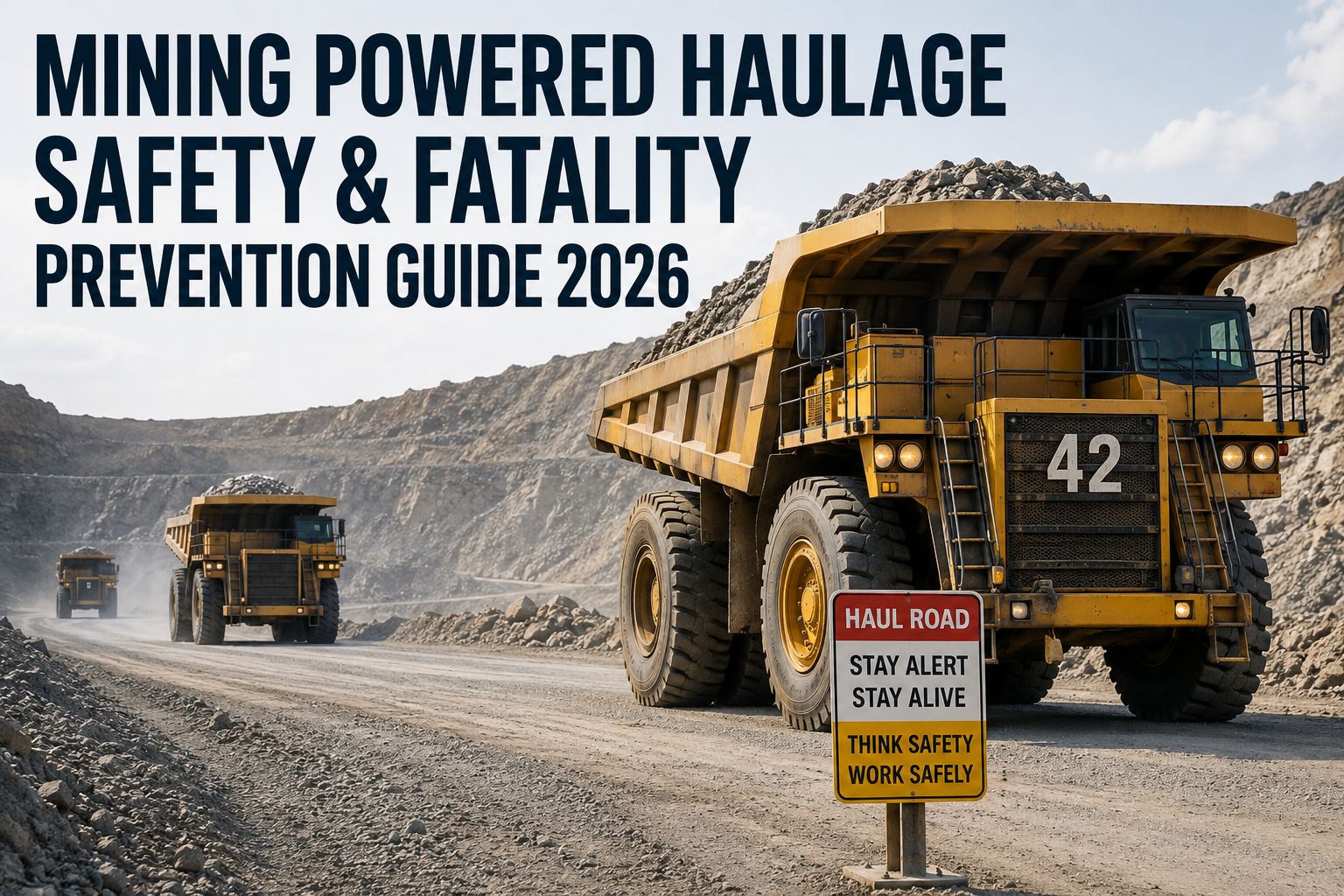
When a 400-ton haul truck goes down at 2 a.m. on a Wednesday, the shovel behind the berm is idle within the hour and every truck queued at the loader is burning fuel for nothing. Surface mining inspection software exists for exactly that moment — to catch the leaking steering cylinder, the cracked haul-road berm, or the drill mast cable with enough lead time that the shop can fix it before it shuts the pit down. If you are running ultra-class haul trucks, hydraulic shovels, front-end loaders, track dozers, motor graders, blasthole drills and water trucks across an open pit, the inspection process you use at shift change is the single biggest lever you have on availability. This page walks through what a defensible pit fleet inspection program looks like under 30 CFR 56.9300 and MSHA surface mine recordkeeping expectations — and how a focused demo of HVI on your own equipment list replaces clipboard rounds and text-message defect photos with timestamped, photo-verified records that hold up in every audit.
Surface mining concentrates enormous value in a small number of machines — one haul truck out of service idles the loading unit and every truck behind it.
Photo-verified pre-shift inspections on every unit in the pit. Defects routed to the workshop as severity-ranked work orders before the truck leaves the line. Dispatch auto-block on critical defects. Per-area dashboards for the superintendent, the shop foreman and the safety lead.
What a missed defect actually costs a pit fleet
Surface mining is not a volume business in unit count — it is a value business in a handful of assets. The numbers below are the ones a maintenance manager has to defend in the Monday morning review.
Open pit equipment inspection coverage — class by class
Every class in the pit has a different failure signature. A one-size checklist misses them. HVI loads an equipment-specific checklist the moment the QR code is scanned — so a haul truck pre-shift and a drill pre-shift share a platform but not a form.
Ultra-class haul trucks
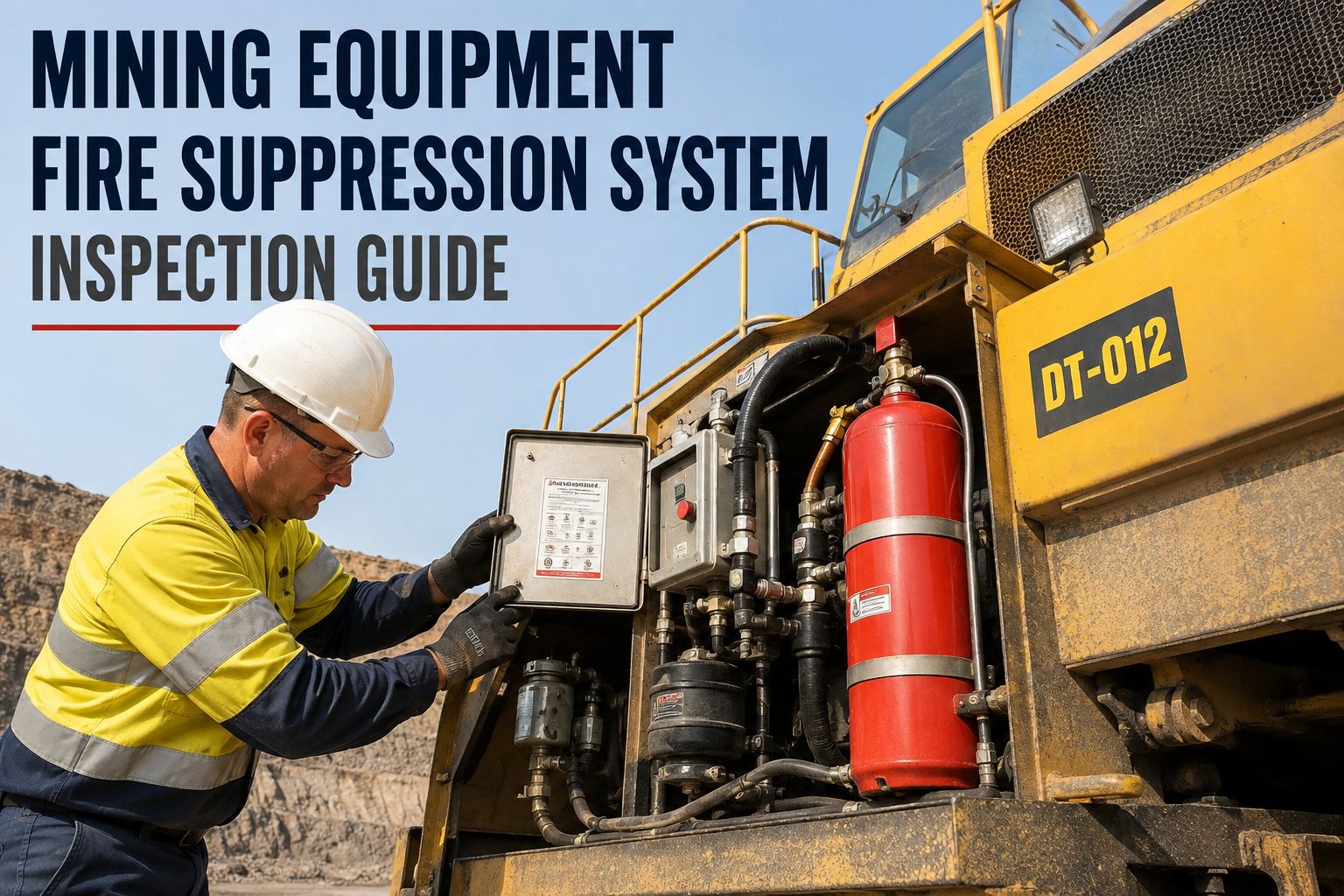
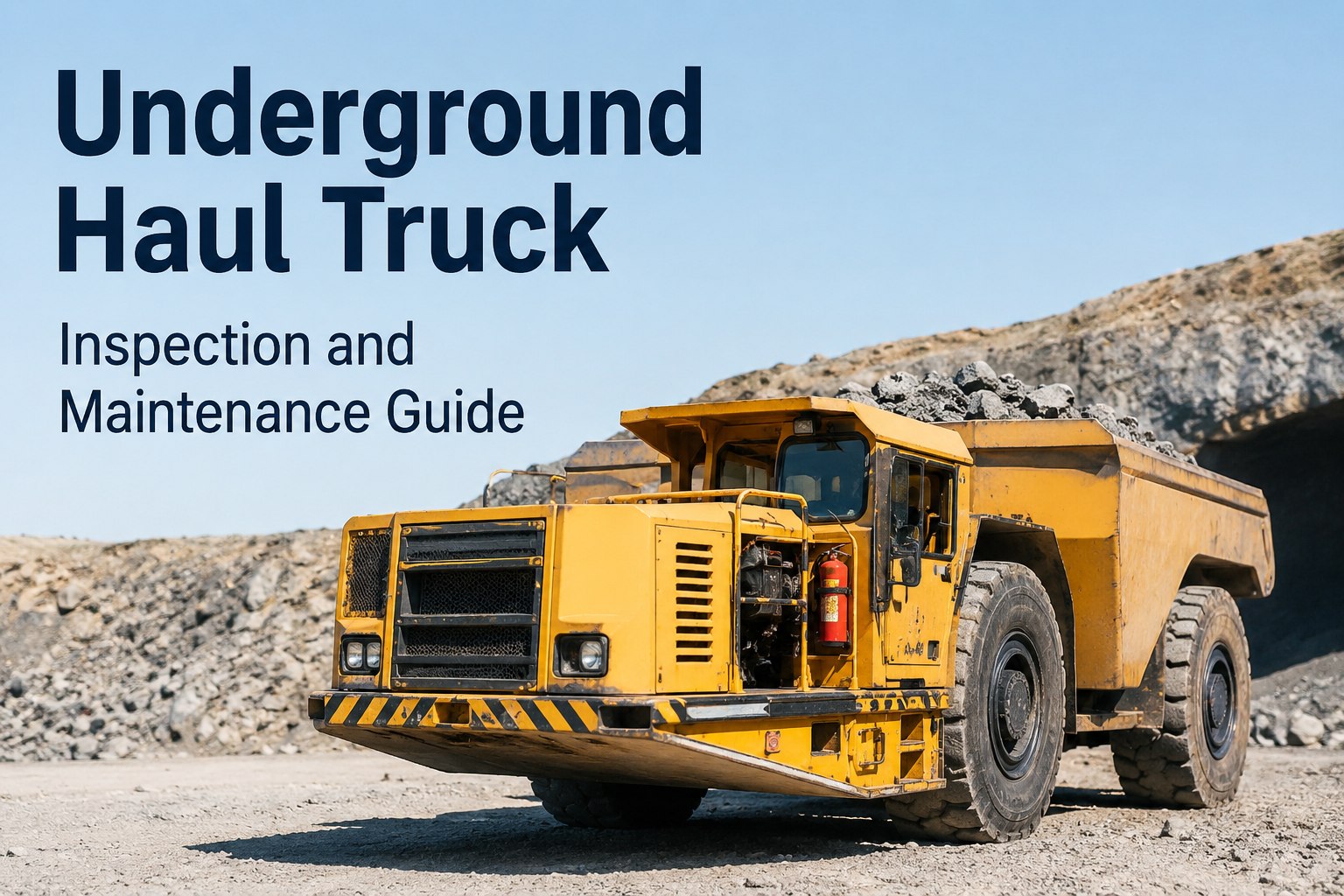
Tire pressure and condition, hoist cylinder leaks, brake actuator travel, body-lift safety prop, dump body pins, ladders and handrails, reverse alarm and lighting, fire suppression system charge.
Hydraulic & rope shovels
Boom and dipper structural cracks, crowd rope wear, bucket teeth inventory, swing gear lubrication, housekeeping on the operator platform, emergency escape descent, drop-off protection.
Front-end loaders
Bucket pin wear, lift arm cylinders, tire pressure and cutting depth, transmission temperature trend, bucket teeth, FOPS cab condition, backup alarm, fire extinguisher tag.
Track dozers
Track tension and shoe wear, carrier roller rotation, ripper pin and point, undercarriage debris, blade cutting edge, ripper cylinder leak, platform handrails, ROPS condition.
Motor graders
Moldboard edge and end-bit wear, circle and side-shift play, articulation pin wear, blade lift cylinder leak, tire condition, all-wheel-drive engagement, beacon and reverse alarm.
Blasthole drills
Mast cable wear and replacement date, bit and stabilizer condition, rotary head lubrication, dust collection system, bench-leveling interlock, cable reel, emergency stop circuit test.
Water trucks
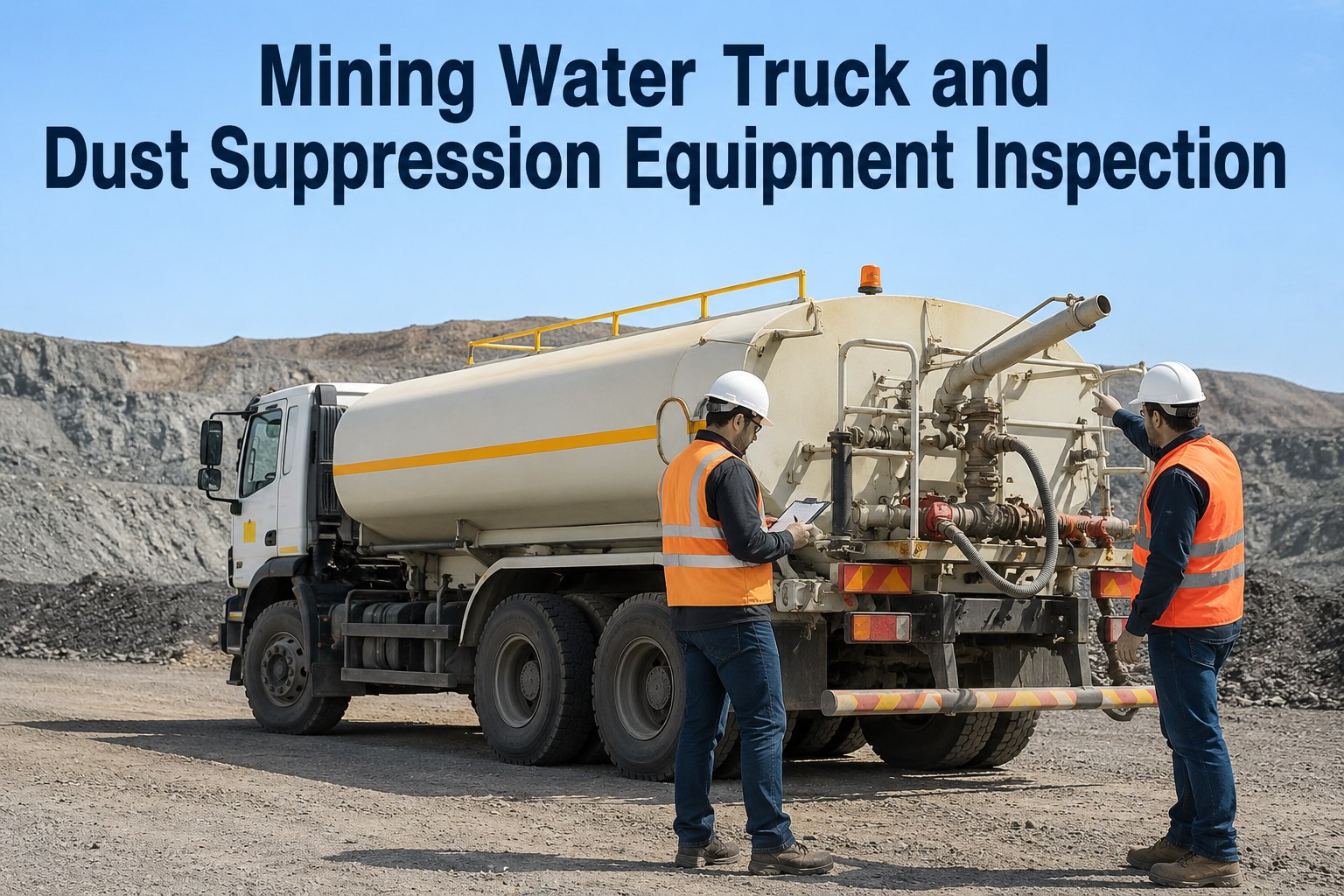
Tank internal baffles, spray bar nozzles and valves, pump PTO engagement, tank structural cracks, hose condition, onboard fire pump readiness (where fitted), chassis DVIR items.
One loading unit failure idles the entire truck fleet behind it
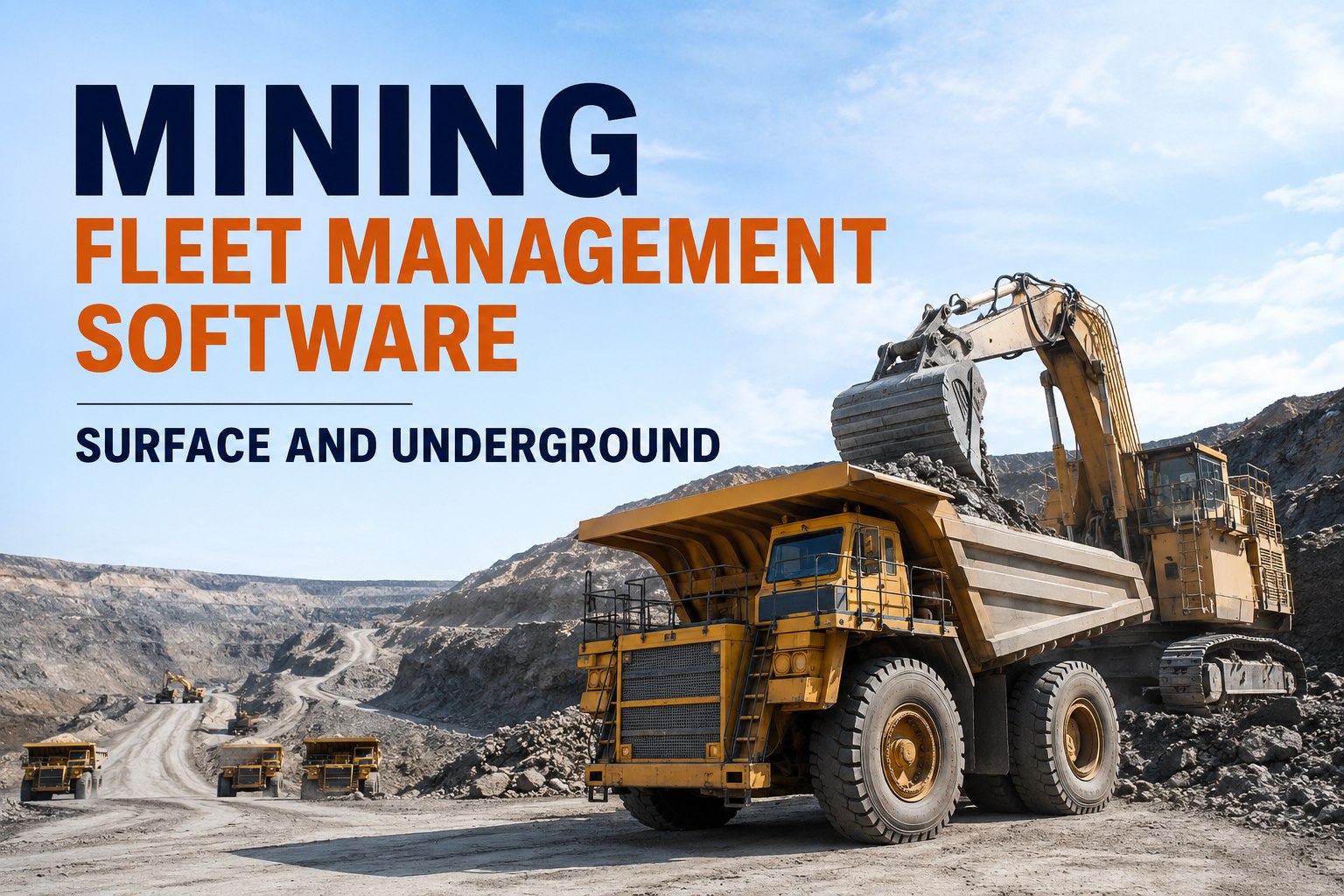
The defining characteristic of a pit fleet is that no asset works alone. The production sequence is a chain, and every link depends on the one before it. A defect that takes a shovel out at the start of the shift does not idle one machine — it idles the queue.
Loading unit failure
A rope shovel develops a crowd rope fray or a hydraulic shovel leaks a swing motor seal. The shovel is flagged out of service. Production stops at the face.
Truck queue idles
Six ultra-class haul trucks queued at the bench sit burning fuel, accumulating engine hours, and burning operator time. A single shovel stoppage can idle 1,800 to 2,400 tons per hour of haul capacity.
Downstream cascade
The crusher runs out of feed, the stockpile draws down, the load-out queue empties. By the time the shovel is back, the entire cycle has lost two to four hours of throughput that cannot be recovered.
Shop scrambles
The shop gets a radio call, not a work order. Parts are pulled manually, the job is not in the CMMS, and the as-found and as-completed condition is never recorded — so the same defect repeats three weeks later.
The point of surface mining inspection software is to break that chain at step one — to catch the crowd rope fray or the swing motor leak on the pre-shift inspection, route it to the shop as a severity-ranked work order, and have the parts staged before the shovel is needed. If you want to walk through that exact workflow on your own equipment list, the HVI team can set it up against your real asset register in a 30-minute call.
Haul road safety obligations and how each one maps to a record
Under 30 CFR 56.9300, berms or guardrails are required on elevated roadways where a vehicle could roll or fall. That obligation does not live in the cab — it lives on the haul road, and the only way to prove you are meeting it is a timestamped, photo-verified inspection of the road condition itself. The table below maps the obligation to the record HVI generates.
| Obligation or check | Where it applies | Record HVI generates | Audit evidence |
|---|---|---|---|
| Berm height and continuity on elevated roadways (56.9300) | Haul roads, ramps, dump edges, bench access roads | Grader or dozer pre-shift inspection with photo of berm condition at key points | Timestamped photo, GPS tag, operator signature, defect-to-work-order if substandard |
| Guardrail integrity where fitted in lieu of berm | Fixed plant access, workshop yards, light-vehicle roads near edges | Site safety inspection form with photo-verified guardrail section | Date-stamped image, location pin, severity-routed defect ticket |
| Road surface condition — potholes, washboarding, dust | All active haul roads, especially near intersections and brake-check areas | Haul truck operator pre-shift defect report with road condition category | Submission timestamp, unit number, operator ID, photo of hazard |
| Water truck dust suppression coverage | Active haul roads during production shifts | Water truck pre-shift inspection and shift coverage log | Pre-shift record, spray bar condition photo, shift hours logged |
| Equipment pre-operational inspection (56.14100) | Every self-propelled mobile unit in the pit | QR-scan equipment-specific digital inspection with photo-verified critical sections | Full submission record, defect routing log, work order close-out with mechanic signature |
The difference between a defensible inspection program and a clipboard program is whether the record exists at the moment the inspector is standing in front of the berm. If you are still transcribing paper rounds into a spreadsheet at the end of the shift, you are carrying the risk of every gap in that transcription. You can start logging pit inspections free and have the first shift's records in the system before the next toolbox talk.
How a pit fleet pre-shift inspection runs in under 90 seconds per unit
The shift-change window is where inspections either protect production or eat it. A paper pre-shift on a haul truck can take 15 to 20 minutes when the operator walks back to the light vehicle to fill out the form. The HVI mobile workflow is built to be completed at the machine, on a phone or tablet, in under 90 seconds for a clean unit — and to escalate instantly when it is not clean.
QR scan at the unit
Operator scans the QR code mounted on the haul truck, shovel, or drill. HVI auto-loads the equipment-specific checklist tied to that asset's class — no form selection, no dropdown, no chance of running the wrong inspection.
Walk and capture
The operator walks the unit, tapping pass or fail on each section. Critical sections — brakes, steering, tires, fire suppression, emergency stops — require a photo before they can be marked pass. A failed item opens a defect capture screen with photo and note.
Severity routing
The moment the inspection is submitted, HVI's defect-to-work-order engine reads the severity. Critical defects trigger an auto-block on dispatch — the unit cannot be assigned a load until the shop clears it. Non-critical defects create a work order at the correct priority.
Shop and dispatch sync
The shop foreman sees the work order on the dashboard with the operator's photo, the asset number, and the exact defect. Dispatch sees the unit flagged red. The superintendent sees the area-level availability hit. Everyone gets the same record at the same time.
Close-out and audit trail
When the mechanic completes the repair, the work order closes with parts pulled, labor hours, and a completion photo. The full chain — inspection, defect, work order, parts, close-out — is one timestamped record. That is what an MSHA inspector or a client safety audit asks to see.
From clipboard rounds to audit-ready pit fleet records
HVI is built for the pit, not the highway. Every capability below maps to a concrete failure mode in surface mining — the missed defect, the lost paper DVIR, the text-message photo that never made it to the work order, the audit where you cannot prove the berm was checked.
QR-scan auto-loading checklists
Each asset carries its own QR code. The scan loads the correct checklist for that unit — haul truck, shovel, drill, grader — so an operator never runs a highway DVIR on a piece of off-road plant. Outcome: zero wrong-form inspections, zero rework.
Photo-verified critical sections
Brakes, steering, tires, fire suppression, and emergency stops cannot be marked pass without a photo. The image is geotagged and timestamped. Outcome: every critical pass is provable — no more pencil-whipped inspections on paper.
Defect-to-work-order automation
A failed item on the inspection becomes a work order instantly, routed by severity to the correct shop queue with the photo, asset number, and operator note attached. Outcome: the shop starts work the moment the defect is found, not when the paper reaches the foreman.
Dispatch auto-block on critical defects
A critical defect flags the unit red in dispatch — it cannot be assigned a load until the shop clears it. Outcome: a truck with a brake defect never leaves the line because someone missed a radio call or a whiteboard update.
Per-area dashboards
The superintendent sees pit-level availability. The shop foreman sees open work orders by priority. The safety lead sees inspection compliance rate and outstanding defect aging. Outcome: one platform, three views, no spreadsheet reconciliation.
Parts and inventory across shops
When a work order opens for a haul truck hoist cylinder, the parts are pulled from the correct shop's inventory and the stock level updates across all locations. Outcome: no more running to the parts room to find the shelf empty at 3 a.m.
Audit-ready records in seconds
Every inspection, defect, work order, parts pull, and close-out is one timestamped chain. When MSHA, a client safety team, or an insurance auditor asks for proof, you pull the record in seconds — not a binder. Outcome: audit prep goes from days to minutes.
Works on any phone or tablet in the pit
No ruggedized proprietary hardware. HVI runs on the Android or iOS device the operator already carries. Offline mode captures inspections in dead signal zones and syncs when the unit returns to coverage. Outcome: no capex on hardware, no signal excuses.
If you want to see this running against your actual asset list — your truck numbers, your shovel IDs, your checklist sections — book a 30-minute demo and the HVI team will set it up live.
See HVI running on your own pit fleet — book a 30-minute demo
Bring your equipment list and your current inspection form. We will load them into HVI live and show you a pre-shift, a defect-to-work-order, and the audit record — all on your units.
Paper clipboard rounds vs. HVI digital pit inspections
The status quo in most pits is a paper DVIR on a clipboard in the cab, a radio call to the shop when something is wrong, and a photo sent by text message to a foreman who is already on another call. Here is what changes when that process moves to HVI.
The clipboard and text-message workflow
- Paper DVIR in the cab, transcribed to a spreadsheet at end of shift
- Defects called in by radio — missed when the foreman is on another call
- Photos sent by text to personal phones, never attached to the work order
- No photo proof that a critical section was actually checked
- Berm and haul-road checks logged on a separate paper form, often skipped
- Audit prep means three days of digging through binders and spreadsheets
- No link between the inspection, the work order, and the parts pulled
The QR-scan, photo-verified workflow
- QR scan auto-loads the correct checklist for the asset class in under 90 seconds
- Defects become work orders instantly, routed by severity to the right shop queue
- Photos are attached to the inspection and the work order — geotagged and timestamped
- Critical sections require a photo before they can be marked pass
- Haul-road and berm checks are part of the grader and dozer pre-shift, not a separate form
- Audit prep is a filter and a export — the record exists from the moment it was captured
- Inspection, work order, parts, and close-out are one chain — one click to prove it
What one missed haul truck defect costs over a single shift
A simple, illustrative number that a maintenance manager can put in front of a site manager. The figures below are representative of a mid-size open pit operation running a fleet of ultra-class haul trucks behind a single loading unit.
A single ultra-class haul truck moving material from the face to the crusher or stockpile.
The typical loading ratio — one shovel or loader feeding six haul trucks in a cycle.
Time from the defect being noticed to the shovel being back in service and the queue clearing.
That is one truck, one shovel, one defect class — twice a month. A surface mining inspection software platform that catches even half of those defects on the pre-shift, before the truck leaves the line, pays for itself inside the first quarter. If you want to build this exact model against your own fleet numbers in a demo, the HVI team will run it with you.
Surface mining inspection software: what matters and what to do next
The pit is a chain, not a collection of machines
A loading unit failure idles every truck behind it. Your inspection process has to catch defects on the loading units before the shift starts, not after the queue has already formed.
Haul-road obligations are inspection obligations
30 CFR 56.9300 on berms and guardrails is not a paperwork rule — it is a condition you have to prove was checked. Timestamped, photo-verified records are the only defensible evidence.
Shift change is the window that matters
If a pre-shift eats 20 minutes per unit, you have lost the first hour of the shift across a six-truck fleet. QR-scan digital inspections run in under 90 seconds and route defects before the truck moves.
The record is the deliverable
MSHA, client safety teams, and insurance auditors do not want your process — they want the record. Inspection, defect, work order, parts, and close-out in one chain is what audit-ready looks like.
The next step is simple. Pull together your current inspection form, your equipment list, and the names of the people who do the pre-shifts. Then book a 30-minute demo and have the HVI team load it live — or start logging inspections free and run the first shift yourself.
"Before HVI, a shovel going down at 2 a.m. meant a radio call, a texted photo to my personal phone, and a paper DVIR that showed up in the binder three days later — if it showed up at all. Now the operator scans the QR, the defect is a work order before I am out of bed, and the shop has the parts staged by the time I walk in. The thing I track now is inspection compliance rate by area — it was 64 percent on paper. It is 98 percent now. That is the number I take to the site manager."
Surface mining inspection software — what fleet and maintenance managers ask
What is surface mining inspection software and how is it different from a highway DVIR app?
Surface mining inspection software is built for off-road plant — haul trucks, shovels, drills, dozers, graders, water trucks — and for the production chain they form in a pit. A highway DVIR app covers a truck on a road; a pit inspection platform covers the interdependence where one loading unit failure idles a six-truck queue, routes defects to the shop by severity, blocks dispatch on critical defects, and captures haul-road and berm condition checks tied to 30 CFR 56.9300. HVI loads equipment-specific checklists per asset class, so a haul truck pre-shift and a drill pre-shift share a platform but not a form. If you want to see that distinction on your own units, book a demo and we will load your asset list live.
How does HVI handle MSHA 56.14100 equipment inspection records?
Every self-propelled mobile unit in the pit gets a QR code. The operator scans it, the correct checklist for that asset loads, and the completed inspection is timestamped and stored with the operator ID. Critical sections require a photo. Any failed item becomes a work order instantly — and the work order close-out, with parts and labor, is linked to the same record. When MSHA asks for proof of inspection, you pull the full chain in seconds.
Can HVI auto-block a haul truck from dispatch if a critical defect is found?
Yes. When an operator marks a critical section as failed — brakes, steering, fire suppression, tires, emergency stop — HVI flags the unit red in the dispatch view and auto-generates a critical work order in the shop queue. The unit cannot be assigned a load until the shop clears the work order. That closes the gap between the inspector finding the defect and dispatch sending the truck out anyway.
Does the inspection app work in areas of the pit with no cell signal?
Yes. HVI's mobile app runs in offline mode. The operator completes the inspection, captures photos, and submits — the record is stored on the device and syncs to the cloud the moment the unit returns to coverage. No inspection is lost because the haul road is in a dead zone, and no one has to walk back to the light vehicle to file the report.
How long does it take to roll out HVI across a pit fleet?
A typical pit fleet rollout takes a few days, not weeks. You load your asset register, mount QR codes on the units, and configure the checklists per class. Operators need minimal training — scan, walk, tap pass or fail, photo on critical sections. The shop foreman learns the work-order queue and the dashboard. Most sites are running live inspections inside the first week, and the first audit-ready records exist from shift one.
Stop running your pit fleet on clipboards and text messages
Book a 30-minute demo and see HVI running on your own equipment list — or start logging inspections free today. Either way, your next shift's records are audit-ready from the moment they are captured.
Free to start — Works on any phone — No card needed