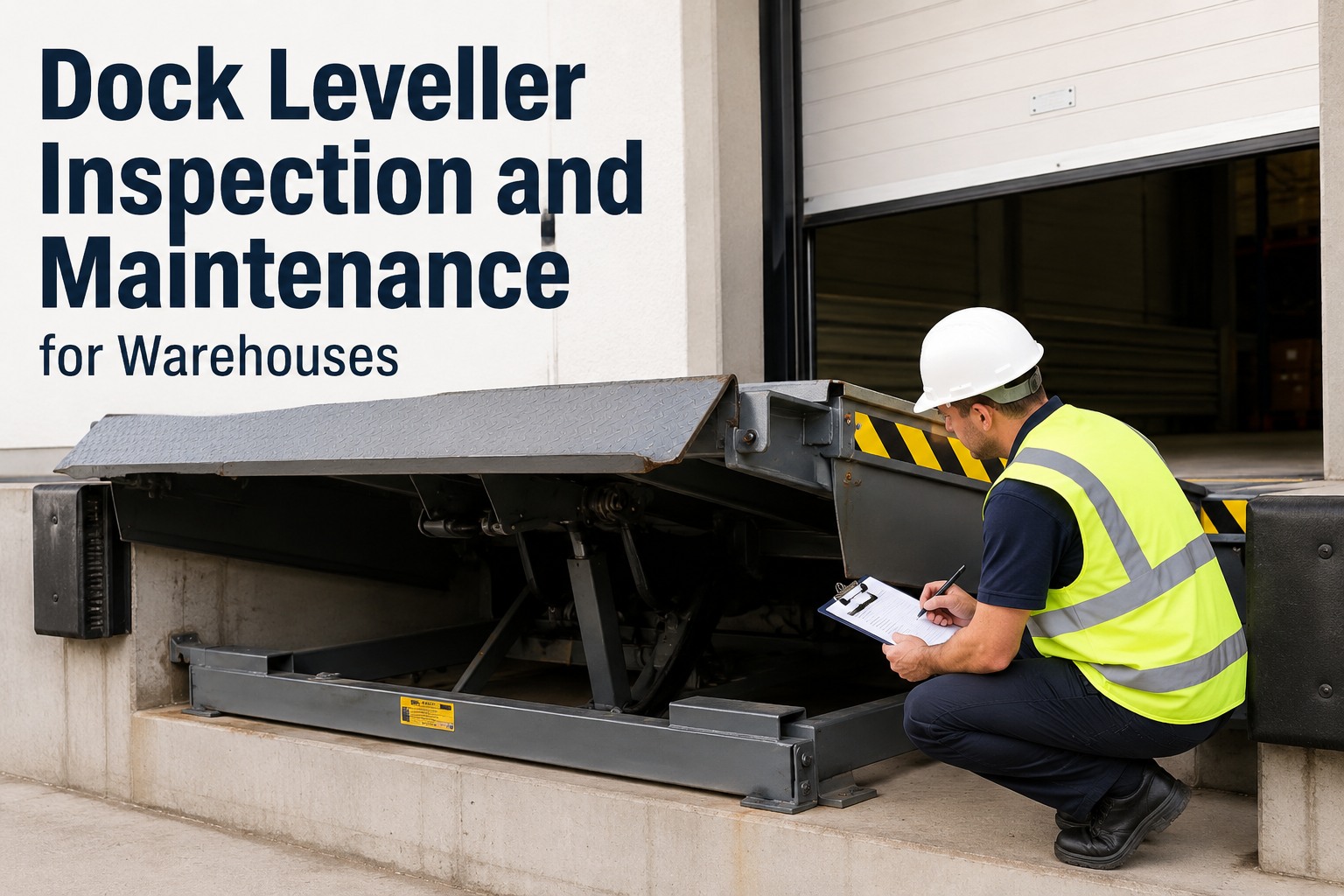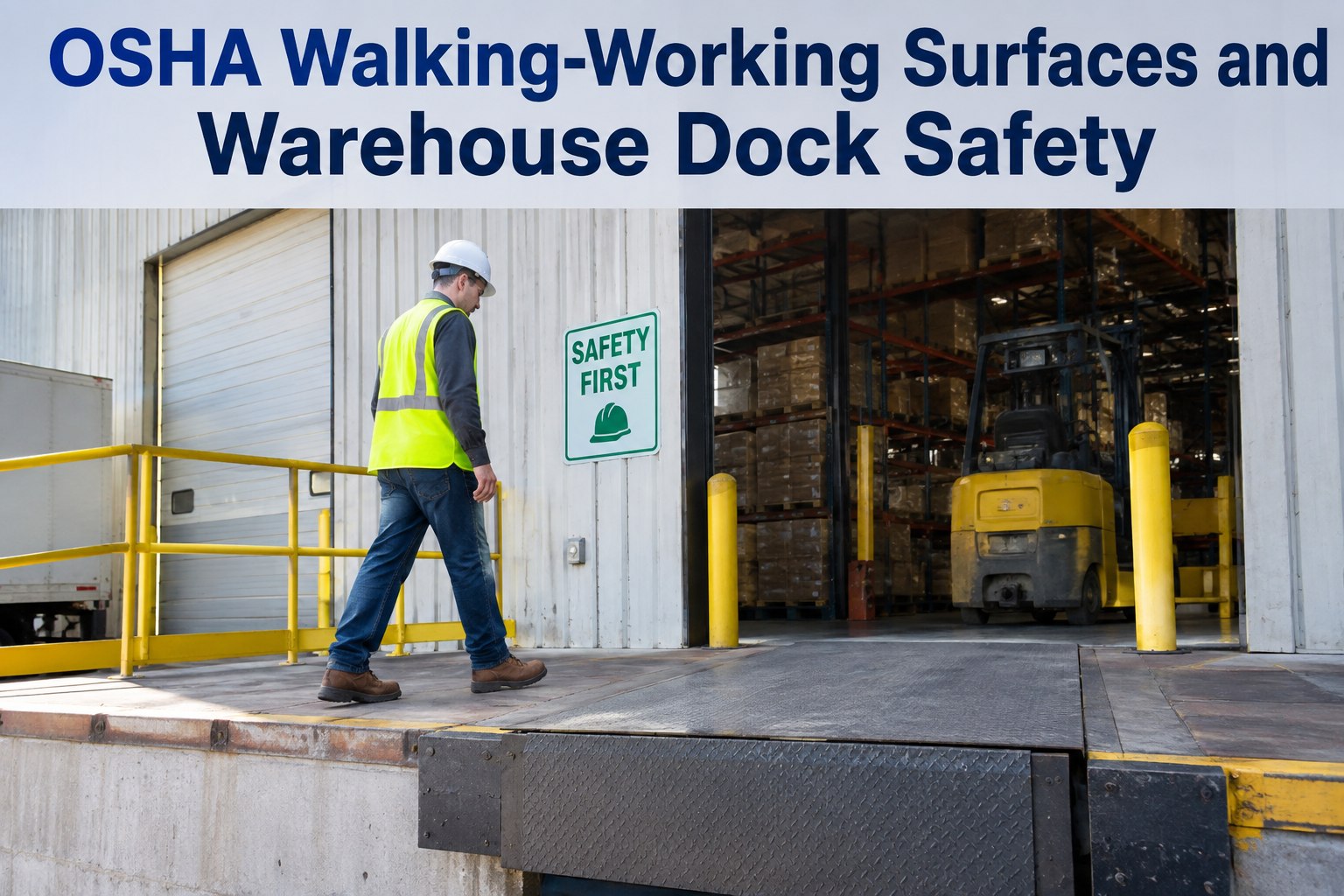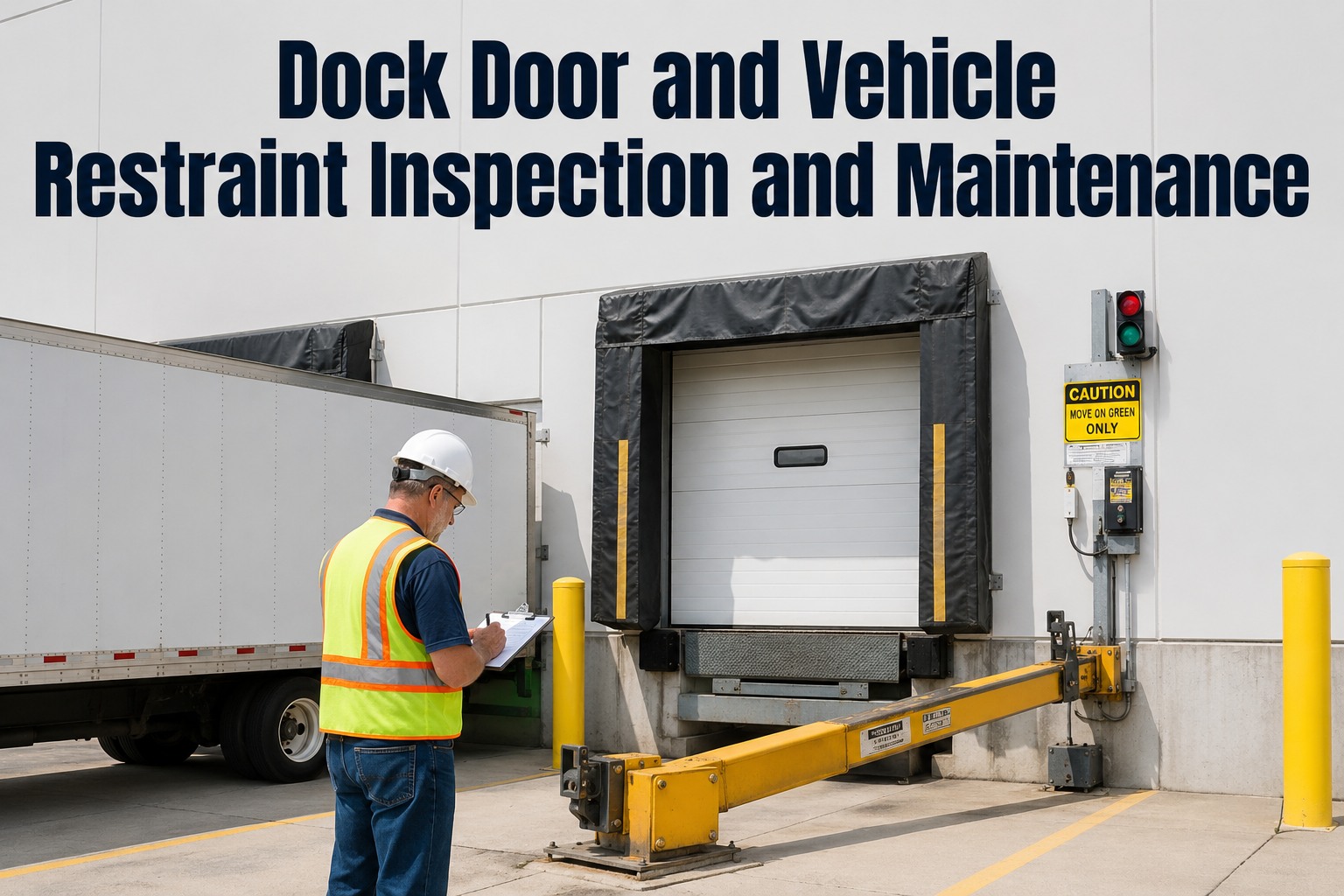
The forklift driver never saw the trailer move. The restraint light showed green, the dock crew was two pallets in, and the truck still rolled six inches off the dock plate because the hook had never actually caught the ICC bar. That gap between "looks engaged" and "is engaged" is exactly why dock door maintenance and vehicle restraint inspection belong on a scheduled checklist, not on a sticky note. Trailer creep and early departure are recurring causes of serious loading dock accidents, and the restraints, wheel chocks, communication lights, overhead doors and dock seals that prevent them only protect your people when they are inspected, tested and repaired on time. This guide walks through what to check, how often, what failures look like in the real world, and how to keep audit-ready proof without drowning in paper. If you want to see the whole workflow running on your own docks, you can book a 30-minute walkthrough of HVI and watch a failed restraint turn into a work order in real time.
Is your restraint actually holding the trailer, or just saying it is?
A green light means nothing if the hook never engaged the ICC bar. Here is the inspection and maintenance routine that keeps trailer creep, early departure and door failures from becoming your next incident report.
The numbers behind dock door and restraint maintenance
The dock is the most concentrated risk zone in most facilities - forklifts, pedestrians, trailers and doors in one tight space.
Medical, damage and lost time add up fast, and indirect costs like retraining and insurance loadings multiply it further.
Torn dock seals bleed conditioned air around every trailer gap, all shift, every shift, in both summer and winter.
A guided pass/fail check with photo evidence takes less time than finding the paper form and a working pen.
The four ways dock safety systems quietly stop protecting you
Most dock accidents do not come from missing equipment. They come from equipment that is present, looks fine, and fails in one specific way nobody tested for. These are the four failure patterns your inspection routine has to catch.
Restraint shows engaged but is not
The most dangerous failure in the dock. A bent hook, a worn ICC bar, ice or debris in the restraint housing, or a misaligned sensor can leave the indicator showing "engaged" while the hook sits below or behind the bar. The trailer is free to creep or be pulled away with the forklift still inside. Your function test must include a physical verification step - cycle the restraint, watch the hook rise, and confirm it wraps the bar, not just that the light changed colour.
Wheel chocks exist but nobody uses them
Chocks are the fallback when a restraint is down, missing, or incompatible with a trailer. They only work as a discipline, not as hardware. If chocks are chained to a wall 40 feet from the dock face, bent, or buried under pallets, crews skip them under time pressure. Wheel chock compliance is a behaviour you verify with spot checks and documented inspections, not a purchase you make once.
Communication lights die and trust dies with them
The red/green light system linking the dock worker and the driver is the traffic control for the whole operation. When bulbs fail, lenses crack, or the control box glitches, crews start making judgement calls - and once people stop trusting the lights, they stop looking at them even after repair. A weekly bulb and lens check, plus a logged function test, keeps the system credible.
Door springs and cables store lethal energy
An overhead dock door counterbalance system holds serious stored energy. A fatigued torsion spring or frayed cable that lets go can drop a door section or whip hardware across the dock. Tracks bend from forklift strikes, rollers wear flat, and bottom seals tear. These are inspect-and-replace items on a schedule, with spring and cable work locked out for qualified technicians only.
Vehicle restraint inspection and dock door checklist by frequency
Split your checks into three tiers so daily items stay fast and the heavy mechanical work lands on a planned schedule instead of an emergency callout.
Daily - per shift
Dock crew, 5 min- Cycle the restraint and watch the hook physically engage a test point or trailer ICC bar
- Confirm inside and outside communication lights match restraint state
- Check chocks are present, undamaged and staged at each dock position
- Look for dock plate lip damage, bent edges or loose anchoring
- Report any door that drags, jerks or sounds wrong - do not force it
Weekly - supervisor
15-20 min per dock- Full restraint function test: engage, hold, release, and verify the sensor matches hook position
- Inspect restraint housing for debris, ice, bent components and hydraulic leaks
- Test every bulb and lens in the dock light communication system
- Check door tracks for dents, rollers for flat spots, cables for fraying
- Inspect dock seals and shelters for tears, compression set and loose mounting
Quarterly / annual - technician
Qualified service only- Measure spring tension and cable condition; replace fatigued counterbalance parts
- Load-test the restraint against manufacturer spec and document the result
- Verify interlock arrangements where fitted: door, restraint, leveler and lights in sequence
- Lubricate tracks, hinges, rollers and restraint pivot points per OEM schedule
- Review the defect history per dock position and plan capital replacement before failure
| Component | What fails | What it causes | Check cadence |
|---|---|---|---|
| Vehicle restraint hook / barrier | Bent hook, worn ICC bar, sensor drift | Trailer creep, early departure, forklift drop-off | Daily cycle + weekly function test |
| Wheel chocks | Missing, bent, not staged, not used | No fallback when restraint is down or incompatible | Daily presence + spot audits |
| Communication lights | Burnt bulbs, cracked lenses, control faults | Driver pulls away while dock is occupied | Daily visual + weekly full test |
| Overhead door springs & cables | Fatigue, fraying, lost tension | Dropped door section, struck-by injury | Weekly visual + quarterly technician |
| Tracks, rollers, panels | Forklift strikes, worn rollers, torn seals | Door jams open or closed, dock out of service | Weekly inspection |
| Dock seals & shelters | Tears, compression set, loose frames | Energy loss, weather ingress, product damage | Weekly visual + seasonal review |
| Interlocks (where fitted) | Bypassed relays, failed sensors | Door opens with restraint released, sequence broken | Quarterly sequence test |
How a failed dock check should move through your shop
The inspection is only half the job. What matters is how fast a defect becomes a locked-out dock position and a scheduled repair. Here is the chain that works.
Catch it on the checklist
The dock crew runs the daily restraint cycle and light check on a phone or tablet. A failed item is tapped, photographed and commented in under a minute - no paper form, no radio call that gets forgotten by break time.
Defect becomes a work order automatically
The failed item generates a work order with the photo, timestamp, dock position and asset history attached. The restraint on door 7 shows its last three repairs, so the technician arrives knowing whether this is a recurring sensor drift or a new bend.
Dock position is flagged and chock discipline kicks in
While the restraint is down, that position runs on documented wheel chock procedure with supervisor sign-off. The fallback is visible and enforced, not improvised by whoever is on shift.
Repair, retest, close with evidence
The technician completes the repair, runs the function test again, and closes the work order with a passing result and photos. The record is timestamped and audit-ready - you can pull the full history of any dock position in seconds when a client, insurer or safety auditor asks. You can see this defect-to-work-order chain live in a demo using your own dock list.
What one dock position costs when restraint maintenance slips
Reactive: fix it after it fails
- Restraint fails mid-shift: door 12 out of service for 2 days waiting on a service call
- 12-dock facility loses 8% of dock capacity during peak inbound window
- Emergency callout plus parts: roughly $1,800 versus $350 for planned parts and labour
- Detention and rescheduling on 9 trailers across two days
- No documented test history when the insurer asks after a near-miss
Planned: catch it on the weekly test
- Weekly function test flags sensor drift before the hook misses the bar
- Work order scheduled for the quiet window, dock down for 3 hours, not 2 days
- Planned parts and labour at standard rates, no callout premium
- Chock procedure covers the position during the short repair window
- Timestamped test and repair history ready for any audit or claim
Multiply that gap across every restraint, door and leveler you own, and a documented preventive maintenance schedule stops looking like overhead and starts looking like the cheapest insurance you carry. Many teams start logging dock inspections free and have the schedule running before the next weekly test is due.
Dock equipment inspections that close the loop automatically
HVI is cloud and mobile inspection and maintenance work order software built for fleet-heavy operations - and your dock equipment lives in the same platform as your trucks, trailers and plant.
Dock equipment templates
Pre-built and custom checklists for restraints, doors, lights, seals, levelers and interlocks, with guided function-test steps so every shift tests the same way. Outcome: no more skipped verification steps or pencil-whipped forms.
Photo evidence on every defect
Crews snap the bent hook or torn seal on any phone, right at the dock face. Outcome: technicians arrive knowing the failure, and you hold timestamped proof for DOT-style, client, safety and insurance audits.
Defects auto-create work orders
A failed restraint check becomes a tracked work order instantly, with asset history attached and due-date alerts. Outcome: repairs happen in the planned window instead of as emergency callouts, cutting unplanned dock downtime.
PM scheduling and compliance reporting
Quarterly spring service, annual restraint load tests and seasonal seal reviews run on automatic schedules with overdue alerts. Outcome: every dock position shows a complete, defensible maintenance record in one report.
See a failed restraint become a work order in 30 minutes
Bring your dock list and we will walk the inspection, defect and repair workflow on your own equipment - restraints, doors, lights and all.
Dock door and vehicle restraint maintenance, in one view
Trust nothing you have not tested. A restraint indicator can lie. Every function test needs a physical confirmation that the hook actually wraps the ICC bar.
Chocks are a discipline, not hardware. Staged, undamaged chocks plus spot-checked usage are your only fallback when a restraint is down or incompatible.
Communication lights run on credibility. Weekly bulb and lens tests keep crews trusting the system, because once trust goes, the lights are decoration.
Door springs and cables are scheduled replacements. Stored energy does not warn you. Inspect weekly, service quarterly, and keep counterbalance work for qualified technicians.
Seals and shelters are an energy line item. Torn seals quietly tax your heating and cooling budget around every docked trailer.
Documentation is the defence. When an incident or audit lands, timestamped inspections and photo-backed repairs are the difference between a defensible record and a shrug.
If your dock checks still live on clipboards, moving them into a CMMS with automatic work orders is usually the single fastest reliability win in the building. Teams that want to see it first can book a short demo focused on dock equipment, or create a free account and build the checklist today.
"The number I watch is restraint function tests completed per week, per door. Before we digitised it, I honestly could not tell you if door 9 had been tested that month - the paper lived in a drawer in the dock office. My gripe was never the equipment, it was that a green light and a shrug looked identical. Now a failed test opens a work order before the crew walks away, and I can show two years of test history in one screen when our insurer calls."
Dock door and vehicle restraint inspection FAQs
How often should a vehicle restraint be function tested?
Are wheel chocks enough on their own, or do we need restraints?
What causes a restraint to show engaged when it is not?
Who should repair overhead dock door springs and cables?
What records should we keep for dock equipment audits?
Make every dock position prove it is safe, every shift
Digital dock door and restraint checklists, photo evidence, automatic work orders and audit-ready history - for your docks and your whole fleet in one platform.
Free to start - Works on any phone - No card needed