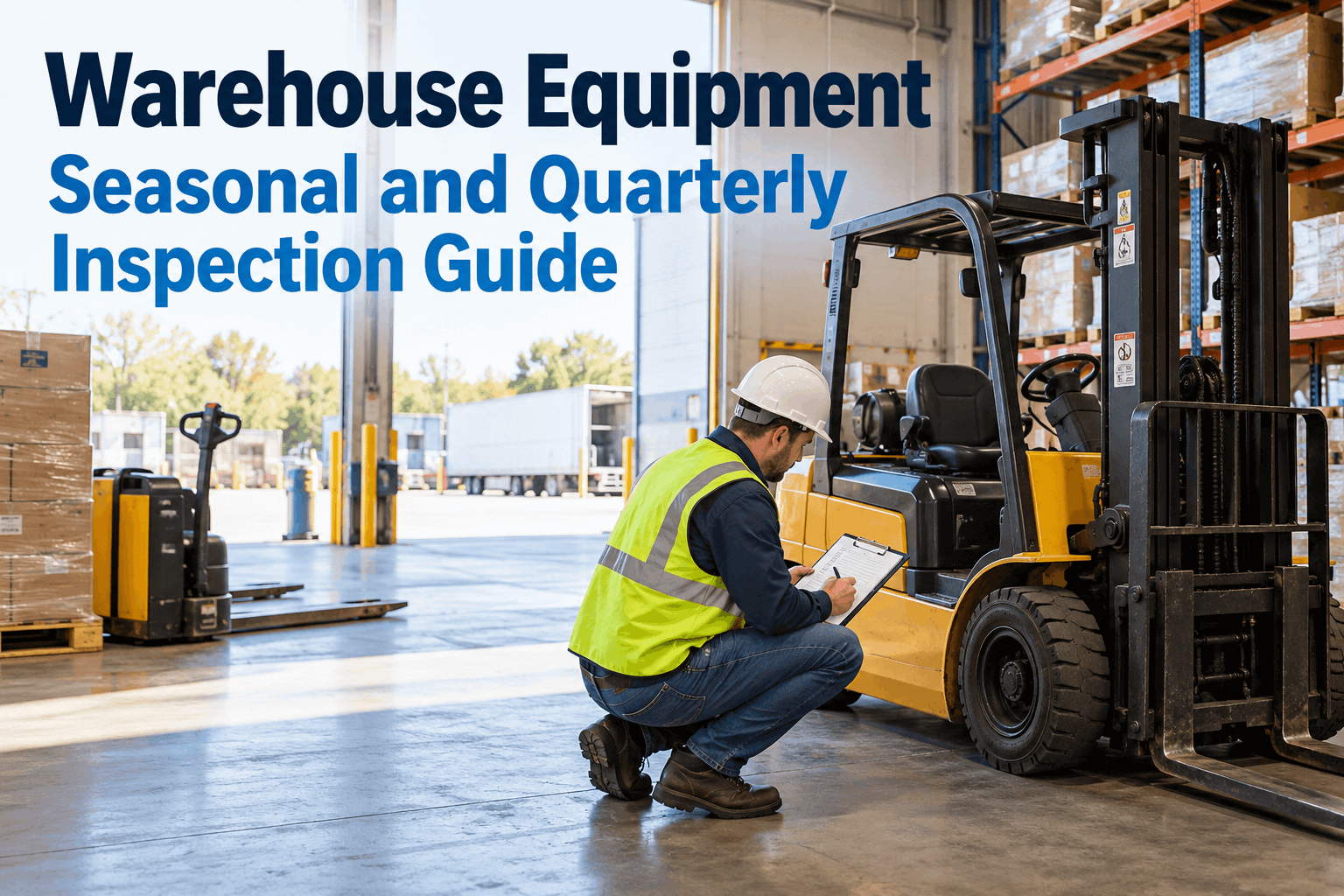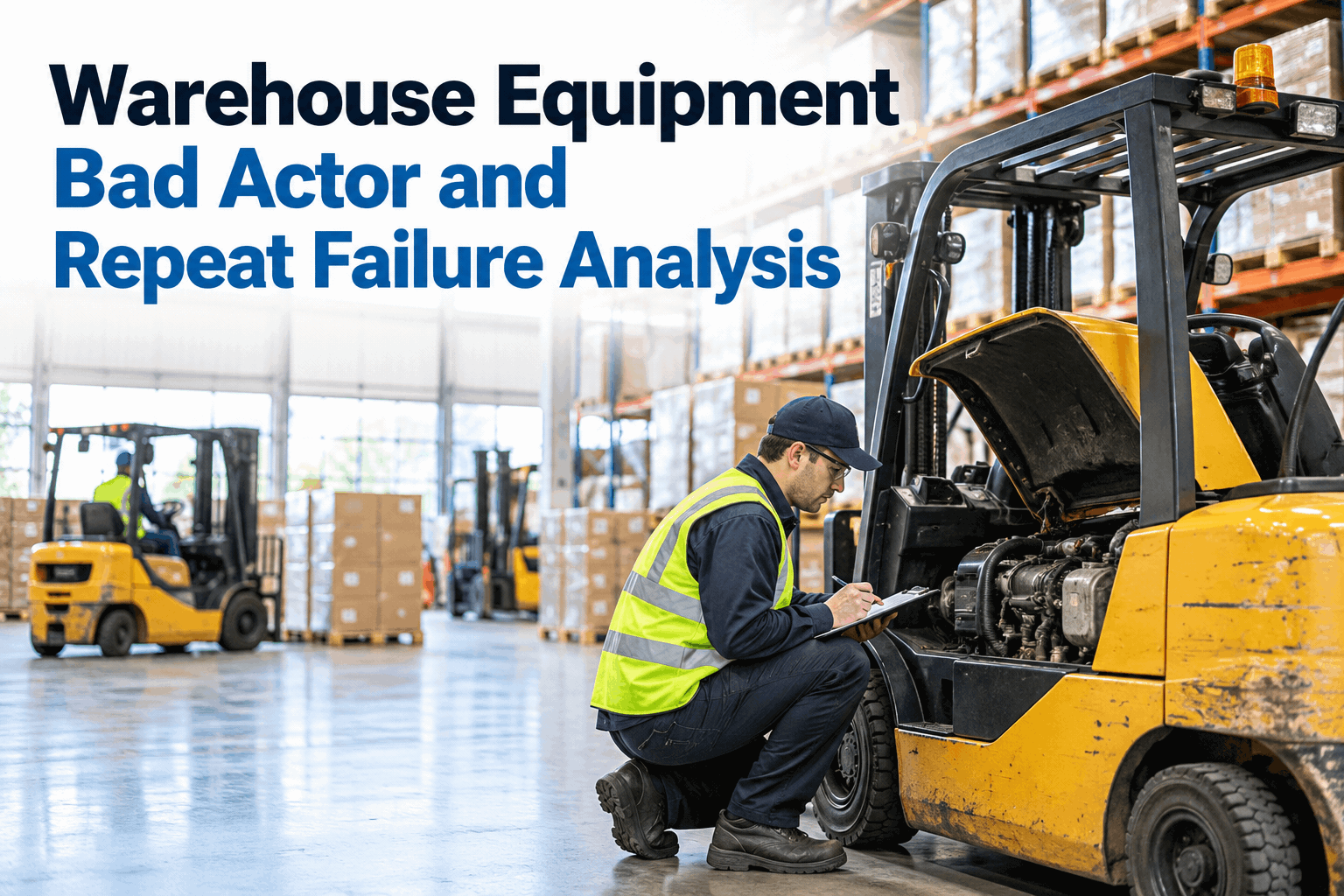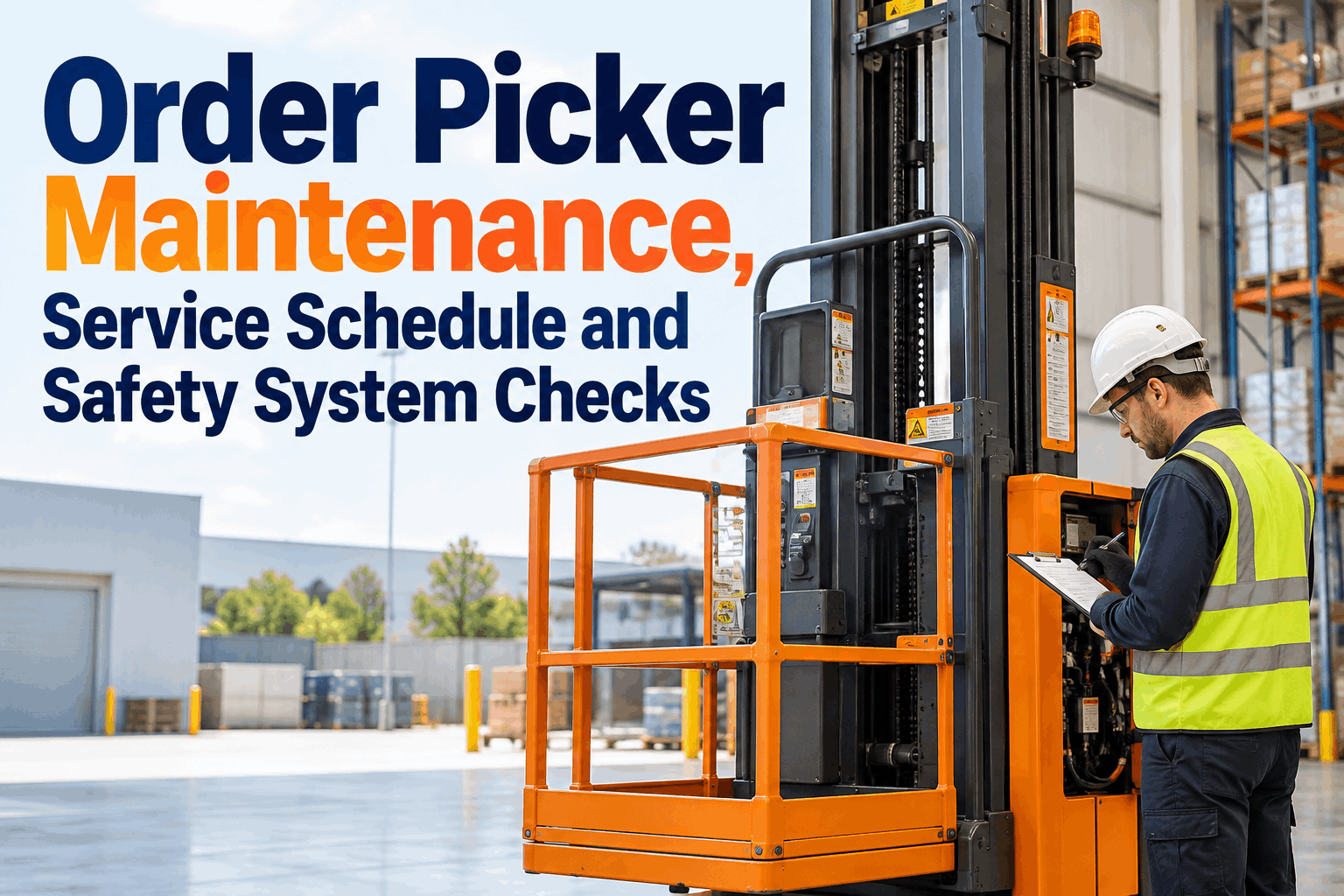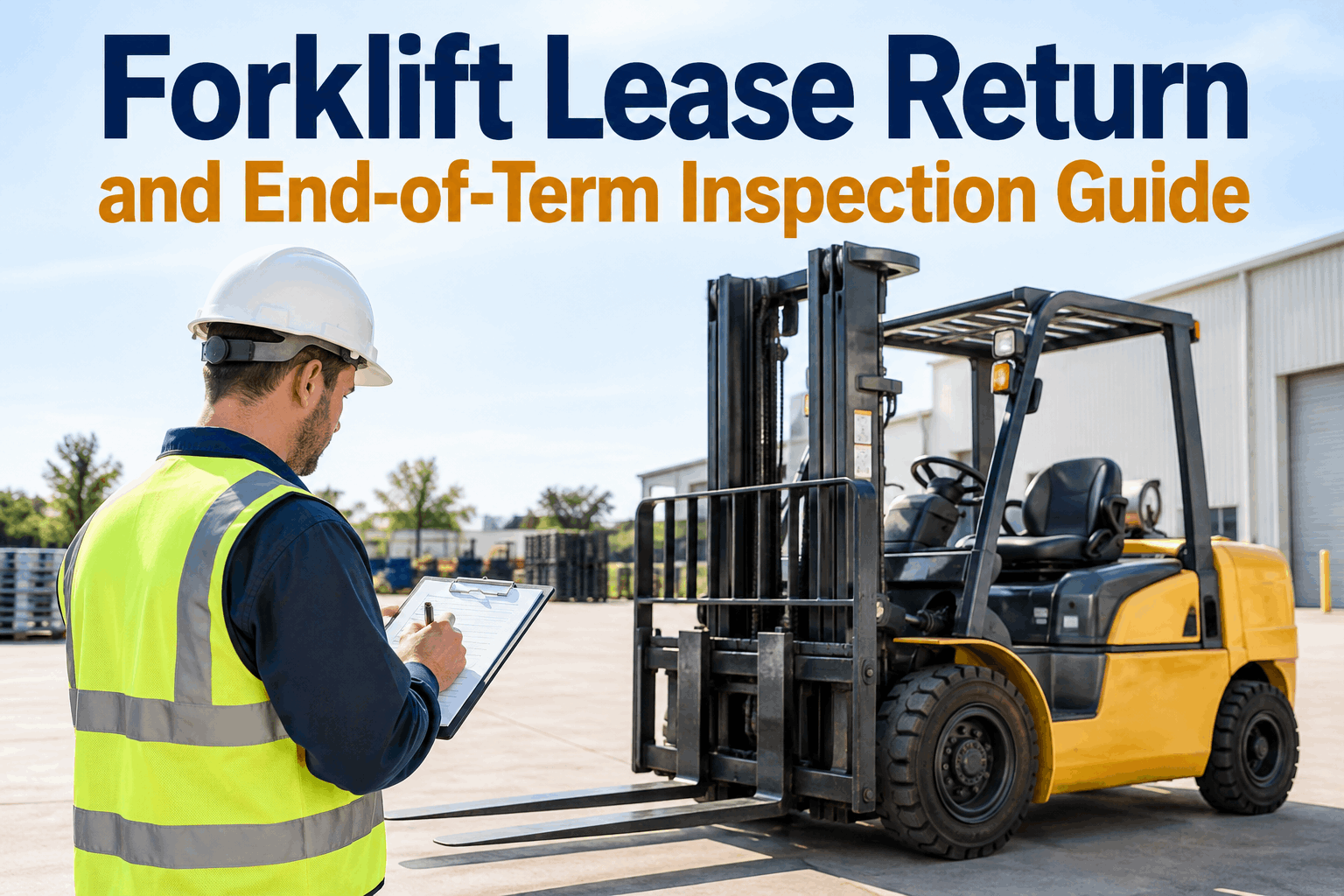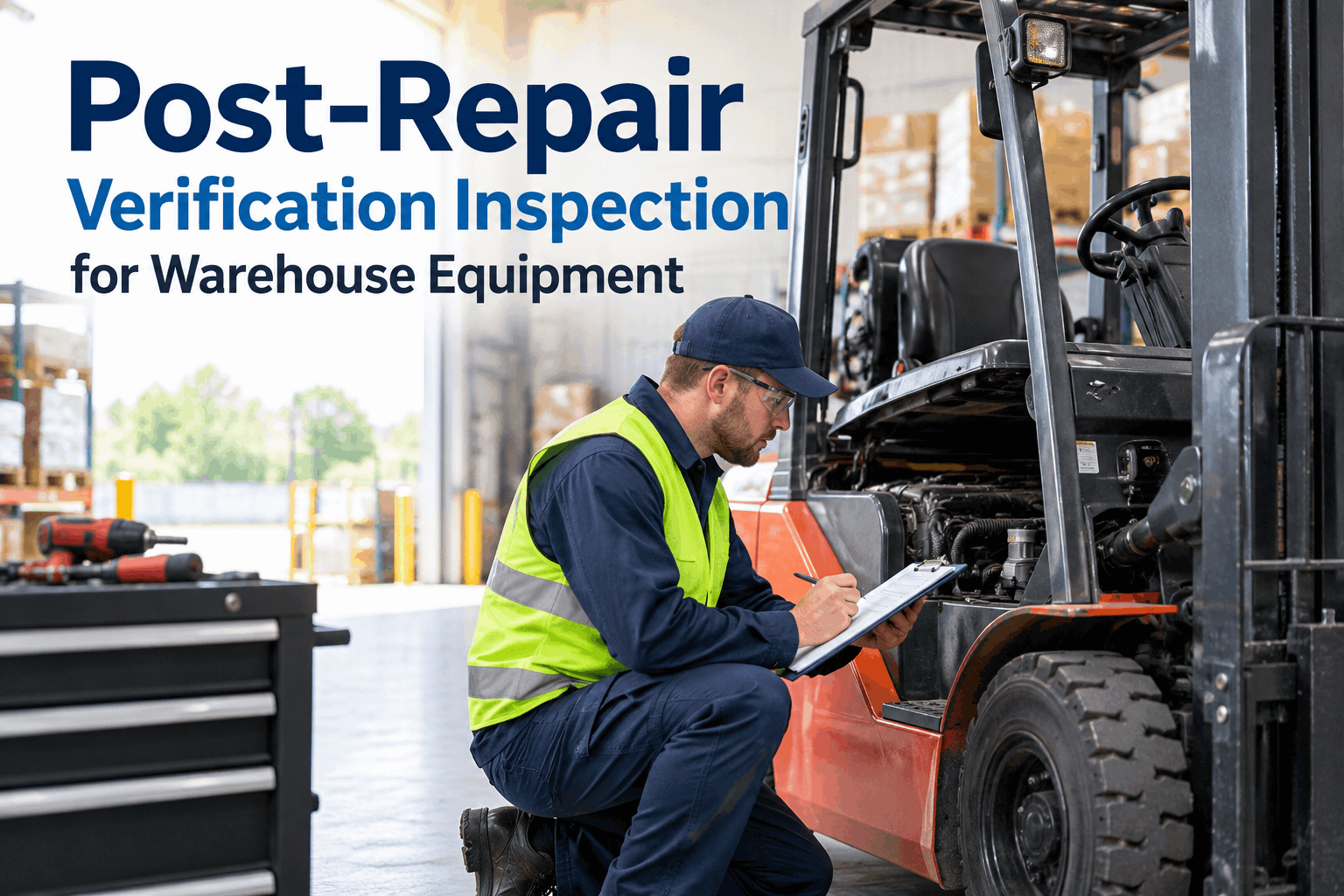
A forklift can leave the repair bay with a closed work order and still have the same fault. A post-repair verification inspection confirms that the original defect is resolved, affected systems function correctly, and safety controls remain effective before warehouse equipment returns to service. This guide explains the checks, decisions, and records that turn a completed repair into a defensible release.
Post-Repair Verification Inspection for Warehouse Equipment
Close the gap between repair completed and safe to operate with a repeatable, equipment-specific release process.
Why repair completion does not prove the fault is fixed
Closing a work order records that work was performed. A post-maintenance inspection answers a different question: did the equipment pass the checks needed to resume its intended duties?
A technician may replace a leaking hose without checking whether a clamp, abrasion point, or excess system pressure caused the damage. The truck looks repaired, but the underlying condition remains. Similarly, replacing an electrical component may temporarily clear a fault without correcting damaged wiring.
A reliable warehouse equipment post-repair inspection separates workmanship confirmation, functional performance, and independent release approval where the site's risk assessment requires it. The test must reflect the original complaint, manufacturer instructions, site procedures, and safe operating conditions.
Use HVI digital equipment inspections and repair histories — book a demo to explore how documented checks can stay associated with the asset.
A six-stage post-repair verification workflow
Use a consistent sequence for forklifts, reach trucks, pallet trucks, and other material handling equipment; tailor individual test steps to the asset and repair.
Review the original fault
Read the defect report, operator observations, failure symptoms, and prior repairs.
Confirm repair scope
Check completed tasks, replacement parts, torque or adjustment records, and outstanding items.
Inspect affected areas
Look for leaks, loose fasteners, damaged guards, unsecured wiring, and disturbed nearby components.
Run functional tests
Verify the repaired function using approved methods and safe, controlled operating conditions.
Check safety systems
Verify relevant brakes, steering, alarms, interlocks, and other required protections.
Record and authorize
Attach evidence, document pass/fail outcomes, and obtain authorized return-to-service approval.
Stop-work rule: If a safety-critical function fails, the original defect persists, or required testing cannot be performed safely, keep the equipment out of service until the issue is resolved and verified.
Forklift post-repair functional testing matrix
Testing must be proportional to the work completed and must not expose operators or technicians to unnecessary hazards. Follow the OEM service manual and your site's qualified-person requirements.
| Repair area | Verification focus | Evidence to record |
|---|---|---|
| Hydraulic lift | Leaks, lift/lower response, abnormal noise, hose clearance, safe load-handling function | Test conditions, observations, photos of repaired connections |
| Brakes | Service and parking brake function under approved test conditions | Result, adjustment details, qualified tester |
| Steering | Response, free play, binding, hydraulic leaks, and safe maneuvering | Functional test result and any follow-up defect |
| Electrical | Connector security, wiring condition, fault recurrence, and affected functions | Fault-code status if applicable, test observations |
| Warnings and interlocks | Horn, warning lights, operator-presence systems, and relevant safety devices | Individual pass/fail results |
| Mast and load handling | Attachment security, mast movement, forks, chains, and visible damage | Inspection record and authorized sign-off |
Examples are illustrative, not a substitute for manufacturer-specific tests or legally required inspections.
Make every warehouse equipment release easier to trace
See how HVI supports digital inspection records, asset-specific maintenance history, and documented defects so repair outcomes do not disappear into disconnected paperwork.
12-point return-to-service inspection checklist
Record each item as pass, fail, or not applicable with a reason. A failed safety-critical check blocks release.
For a consistent digital record, sign up for HVI equipment inspection tracking and adapt the checklist to your fleet and operating procedures.
Track repair comeback rate—not just work order closure time
A comeback occurs when equipment returns for the same or substantially related fault within a defined follow-up window. Set a consistent definition before measuring it.
Use the same follow-up period, equipment scope, and event definition each month. A repeat fault does not automatically prove poor workmanship: it can result from an incomplete diagnosis, defective replacement part, operating conditions, or an unrelated failure that resembles the first complaint.
Link the new defect to the earlier work order, inspect the failed component, and document the most likely root cause. Book a demo to explore HVI maintenance histories and repeat-defect visibility.
Two warehouse repair verification scenarios
These examples show why a targeted test and clear repair history matter more than a generic “operational” tick box.
Hydraulic leak returns after a hose replacement
What happened: A leaking hose was replaced, but the new hose contacted a bracket during mast travel. The same leak reappeared days later.
Better verification: Inspect routing and clearance, verify secure fittings, cycle the affected function under approved conditions, and photograph the repaired area.
Intermittent electrical fault survives component replacement
What happened: A control component was changed, but a damaged connector intermittently interrupted the circuit.
Better verification: Inspect related harnesses and connections, confirm fault behavior is resolved, and document the controlled functional test.
Build repair verification into the warehouse maintenance workflow
Start with safety-critical repairs and expand the program based on risk and repeat-failure patterns.
Define release ownership
Identify who performs testing, who reviews failed checks, and who authorizes return to service.
Use repair-specific templates
Pair core safety checks with hydraulic, braking, steering, or electrical tests as applicable.
Keep evidence together
Connect the defect, work order, replacement parts, inspection photos, and release decision.
Review comeback trends
Use findings for coaching, procedure updates, and better diagnosis—not automatic blame.
HVI can help teams organize equipment inspections, work order histories, and maintenance records. The site's qualified personnel remain responsible for selecting tests and approving safe operation. Book an HVI demo focused on warehouse repair documentation to see how this fits your process.
Reduce repeat warehouse equipment repairs with better documentation
Explore how asset-specific inspections, defect records, and maintenance histories can help your team see what was fixed, what was tested, and what needs attention next.
Post-repair verification inspection FAQs
What is a post-repair verification inspection?
It is a documented check performed after maintenance to confirm the original fault is resolved, affected equipment functions work as intended, and relevant safety systems remain operational before the equipment returns to service.
Who should authorize a forklift's return to service?
An appropriately qualified and site-authorized person should make the release decision according to applicable requirements, manufacturer guidance, and the employer's procedures. The repair technician and release approver may be different people when risk or policy requires independent verification.
What should be tested after forklift hydraulic repairs?
Depending on the repair, verify hose and fitting condition, leakage, routing and clearance, lift/lower operation, abnormal noises, and other affected functions under approved safe test conditions. Use manufacturer-specific instructions rather than a generic test alone.
How do you calculate maintenance repair comeback rate?
Divide repeat repair events by completed repair events for the same period and multiply by 100. Define what counts as a related failure and the follow-up window so comparisons are meaningful.
How can HVI support warehouse post-repair verification?
HVI supports digital equipment inspections, defect documentation, asset-specific work order histories, and maintenance records. These can help teams retain evidence and investigate repeat faults. HVI does not replace qualified functional testing or the site's release authorization.
Make verification the final step of every warehouse repair
A consistent warehouse equipment post-repair inspection protects against premature release, improves maintenance quality, and makes recurring defects easier to investigate. Review the original complaint, verify the repair, test affected safety functions, and record an explicit release decision. To see how HVI supports the inspection and maintenance record behind that decision, book a demo for your warehouse equipment team.