Warehouse equipment seasonal inspections and quarterly reviews catch problems that hour-based maintenance can miss. A standby forklift may record almost no operating hours while its battery, tires, seals, and hydraulic components still deteriorate. A practical warehouse inspection schedule combines calendar checkpoints, usage-based service, and seasonal facility checks so equipment is ready when demand changes.
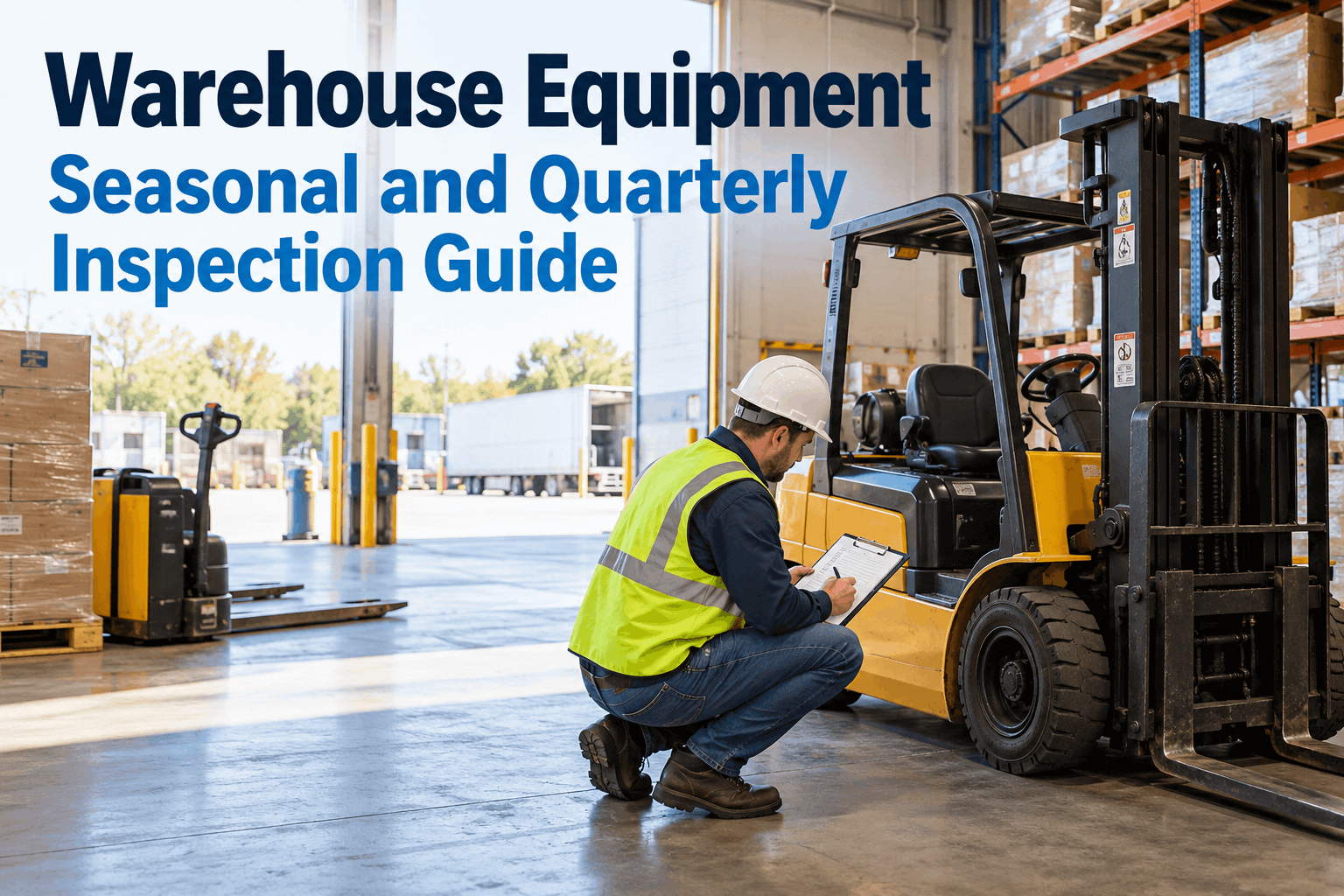
Warehouse Equipment Seasonal and Quarterly Inspection Guide
Build a dependable inspection rhythm for standby forklifts, dock assets, emergency provisions, and high-use warehouse equipment—without treating every asset the same.
Why calendar-based inspections matter—even for idle equipment
Hour meters are useful for wear-driven maintenance, but they cannot capture every time-related failure. Low-use warehouse equipment can be unavailable precisely when operations need it most.
The low-use equipment paradox
A spare pallet truck can remain parked for weeks while batteries self-discharge, tires develop flat spots, exposed connectors corrode, or hydraulic seals begin to leak. The absence of operating hours is not evidence of readiness.
Use periodic warehouse safety inspections to uncover deterioration before standby assets are assigned. For active equipment, keep manufacturer-recommended operating-hour services in place as well.
With HVI, teams can organize equipment-specific inspection records and preventive maintenance tasks. Book a demo to explore calendar and equipment maintenance workflows.
Calendar-based checks
Useful for standby readiness, battery condition, corrosion, seasonal exposure, emergency provisions, and facility assets.
Operating-hour service
Useful for components affected by run time, duty cycles, mechanical wear, and manufacturer-defined service intervals.
Event-triggered checks
Required after faults, impacts, unusual operation, long storage, or before returning a previously unavailable asset to use.
Build a quarterly equipment inspection schedule
Use quarters as planning checkpoints, not universal compliance deadlines. Actual inspection frequencies must follow equipment instructions, site risk assessments, and applicable rules.
| Asset group | Quarterly review focus | Additional trigger | Evidence to retain |
|---|---|---|---|
| Standby forklifts | Battery state, tires, leaks, mast, brakes, steering, warnings | Before deployment; after extended storage | Inspection and release decision |
| Pallet and reach trucks | Wheels, forks, controls, charging connections, safety devices | Manufacturer interval; fault report | Defect and repair history |
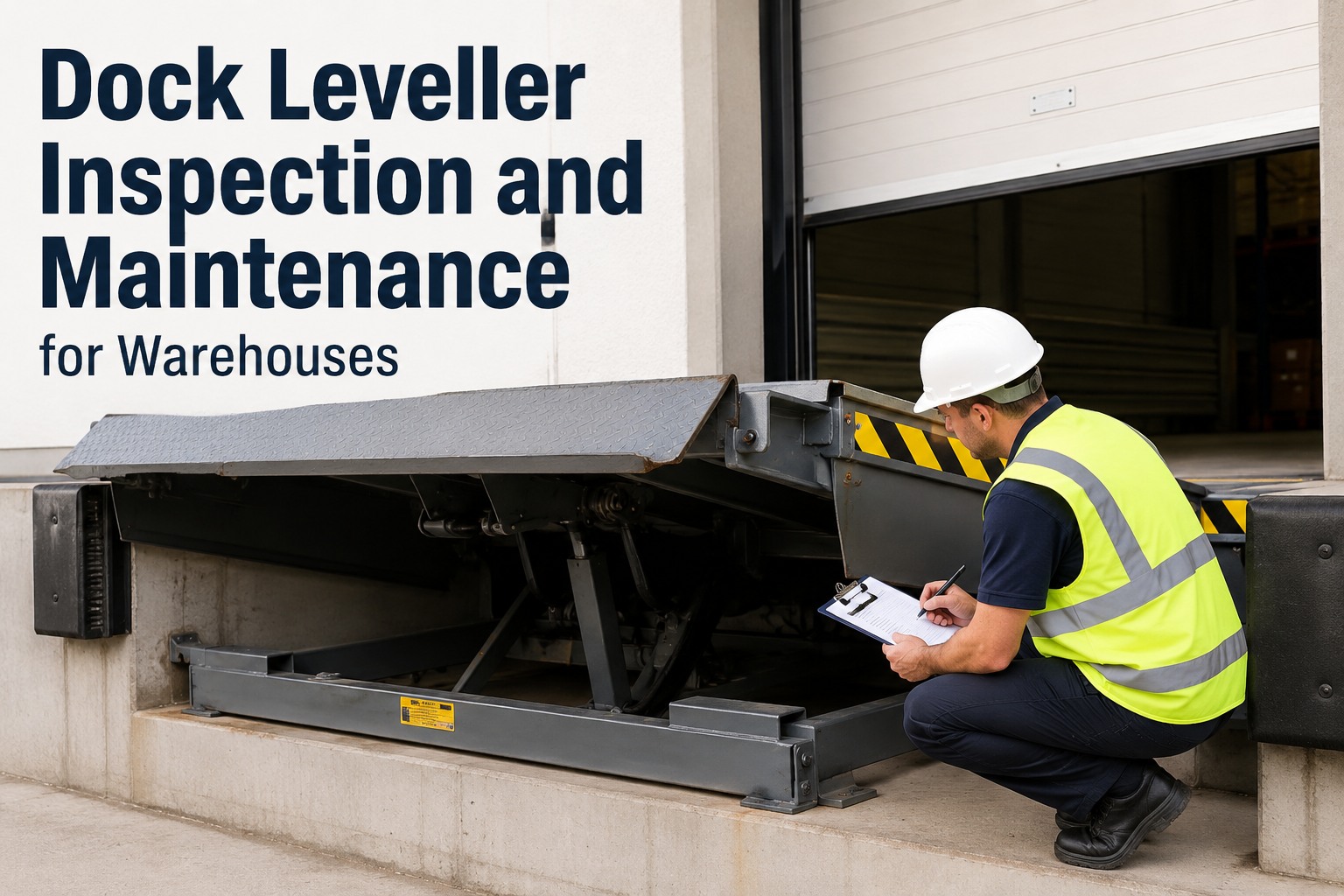
| Dock doors and levelers | Operation, seals, hinges, guards, restraints, visible damage | Impact, malfunction, seasonal weather | Facility work orders |
| Traffic and facility areas | Lighting, floor damage, drainage, marked routes, visibility | Weather events; layout changes | Area checklist and actions |
| Emergency provisions | Access, condition, required checks and expiry dates | Applicable regulations and manufacturer instructions | Compliance-specific inspection records |
Important: A quarterly review does not replace pre-use inspections, required periodic examinations, fire safety inspections, or manufacturer-mandated maintenance.
Adjust warehouse maintenance to seasonal operating risks
Seasonal warehouse maintenance works best when each review targets the conditions the site will actually face.
Protect dock access and cold-exposed assets
Inspect dock seals, door operation, heating readiness, battery performance, wet or icy entry zones, and condensation-related issues.
Evidence: Dock and standby-equipment inspection logs.Control water intrusion and slip hazards
Review drainage, roof and door leaks, floor conditions, electrical exposure, rust-prone components, and outdoor equipment storage.
Evidence: Area defect reports and corrective actions.Check ventilation and heat-sensitive systems
Review ventilation, charging areas, cooling provisions, hydraulic temperatures, tire condition, and manufacturer heat-related guidance.
Evidence: Equipment checks and PM records.Make standby capacity genuinely deployable
Test spare forklifts, check dock equipment, verify consumables, resolve open defects, and confirm maintenance coverage for higher throughput.
Evidence: Signed readiness decisions.Make periodic inspections easier to assign, document, and follow up
Connect warehouse equipment checks with maintenance tasks, equipment histories, and defect follow-through instead of scattered paper forms.
Quarterly warehouse equipment inspection checklist
Adapt this practical checklist by equipment type, manufacturer guidance, local requirements, and operating conditions. Mark findings, assign owners, and track corrective actions.
Any safety-critical defect should follow the site's removal-from-service and repair verification procedure. A checklist completion alone does not authorize unsafe equipment to operate.
Turn seasonal inspection findings into a readiness plan
Example: a distribution center expects a surge in inbound trailers and needs two standby forklifts and three additional dock positions available within four weeks.
Inspect and baseline
Check standby units, dock doors, levelers, and open defects. Separate safety holds from routine work.
Source parts and schedule repairs
Confirm replacement batteries, hoses, wheels, or dock components; allocate workshop and contractor time.
Repair and verify
Complete work orders, test repaired functions, and record unresolved items before equipment is released.
Confirm readiness
Repeat critical checks, review open actions, assign operators, and approve only equipment fit for intended use.
In HVI, equipment-specific records help connect an inspection finding to its repair history. Book a demo to review inspection-to-maintenance tracking for peak readiness.
Combine calendar and hour-based PM without losing accountability
A reliable warehouse equipment inspection schedule has named owners, clear escalation rules, and a visible record of what is due, completed, or still unsafe.
Use a single maintenance review rhythm
- Classify assets: high-use, standby, facility, and emergency-related.
- Set triggers: manufacturer hours, calendar intervals, events, and seasonal reviews.
- Assign responsibility: operator, technician, safety lead, or contractor.
- Capture evidence: checklist results, photos where useful, defects, and work orders.
- Verify closure: document corrective work and confirm safe return to service.
HVI supports digital inspection documentation and maintenance follow-through. Sign up to start organizing warehouse equipment inspections.
Warehouse seasonal and quarterly inspection FAQs
How often should warehouse equipment receive quarterly inspections?
Quarterly reviews are a useful planning cadence for selected equipment and facility risks, not a universal legal requirement. Follow manufacturer instructions, required pre-use checks, site risk assessments, and applicable inspection regulations when setting frequencies.
Why inspect standby forklifts if they have very few operating hours?
Battery discharge, tire deterioration, corrosion, leaks, and storage-related damage can develop while equipment sits idle. Calendar-based checks help identify problems before standby units are urgently needed.
Should warehouses use calendar-based or hour-based preventive maintenance?
Most sites benefit from both. Operating hours address usage-driven wear; calendar checks cover time-dependent deterioration, seasonal conditions, and low-use equipment. Add event-triggered inspections after damage or unusual operation.
What should a seasonal warehouse facility inspection include?
Consider dock doors and levelers, lighting, drainage, floors, traffic routes, weather seals, charging areas, and relevant emergency provisions. Tailor the checklist to site hazards and applicable requirements.
How can HVI help manage seasonal warehouse equipment inspections?
HVI can help teams document equipment inspections, organize maintenance tasks, review asset histories, and follow up on reported defects. Site managers remain responsible for setting correct inspection intervals and authorizing equipment use.
Keep standby forklifts and warehouse equipment ready for the next shift in demand
Give maintenance managers a clearer way to plan recurring inspections, track defects, and confirm work completion across warehouse assets.