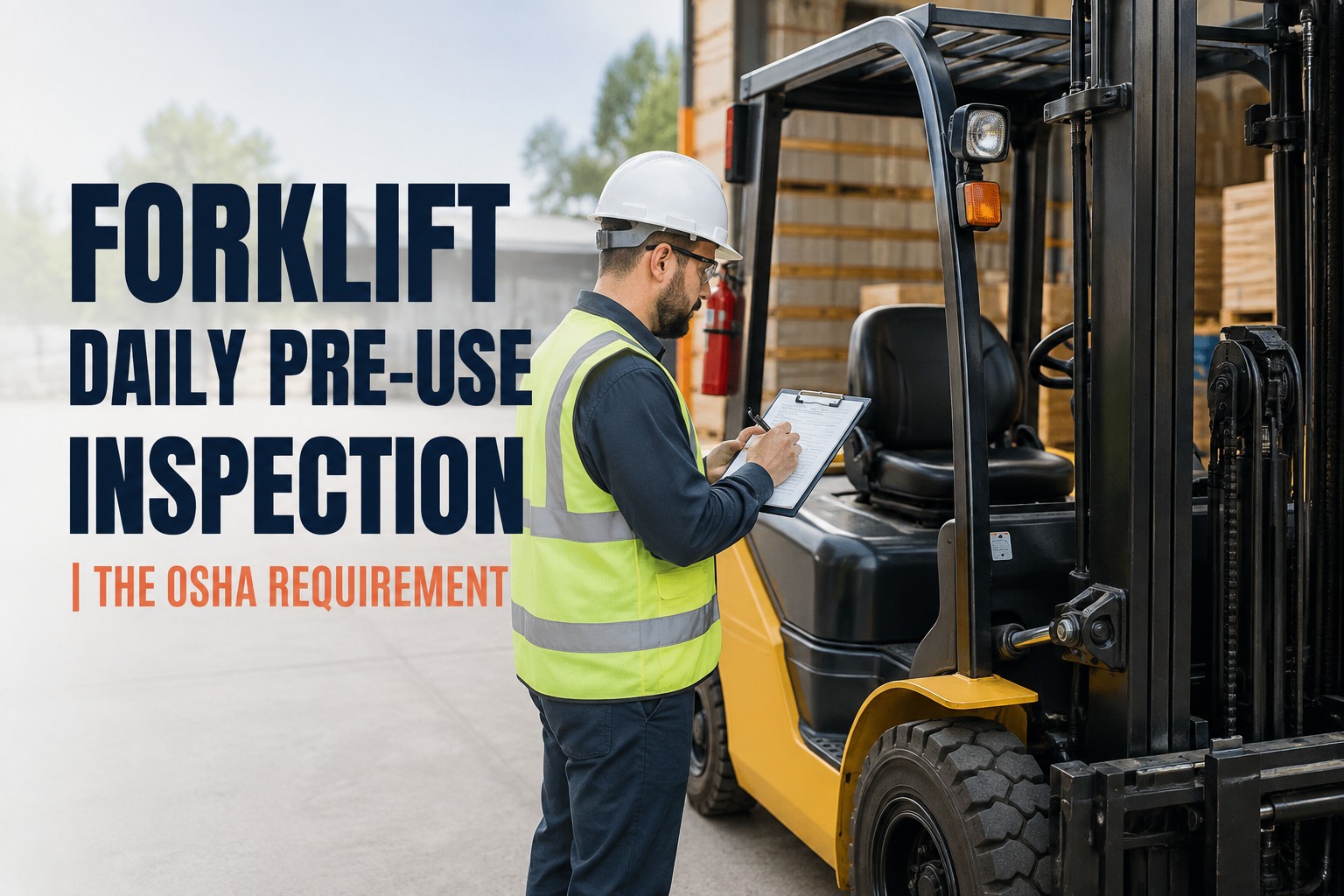
Forklift inspection frequency becomes harder to control when powered industrial trucks move across day, evening, night, and weekend shifts. Under OSHA 29 CFR 1910.178(q)(7), industrial trucks must be examined before being placed in service and at least daily; where trucks are used on a round-the-clock basis, they must be examined after each shift. A shift-aware inspection process helps warehouse teams identify missed coverage, report defects and keep unsafe equipment out of service.
One Forklift. Multiple Shifts. Is Every Operating Window Covered?
Inspection frequency is not only a calendar question. Warehouse managers need to know whether the required examination happened before the truck entered service, whether round-the-clock shift coverage is complete and whether a reported safety defect changed the truck's status.
A forklift can have an inspection marked complete for the day and still leave an operational question unanswered if the truck continues through multiple shifts. The correct inspection schedule starts with how the equipment is actually used. Warehouses can then align responsibilities, shift handovers and internal records with that operating pattern. See how HVI supports shift-aware inspection workflows.
Forklift Inspection Frequency Follows How the Truck Is Used
OSHA's rule combines a minimum daily examination requirement with an additional shift-based requirement for industrial trucks used on a round-the-clock basis.
Before service + at least daily
The truck must be examined before being placed in service, and the examination must be made at least daily.
Examine after each shift
Where industrial trucks are used on a round-the-clock basis, OSHA specifies that they shall be examined after each shift.
That distinction matters when defining a forklift inspection schedule. A warehouse should first understand each truck's actual operating pattern and then make inspection responsibility visible to operators and supervisors. For rotating crews, shared equipment and extended operating hours, HVI can help make inspection coverage easier to review.
The Examination Leads to a Safety Decision
If the examination shows a condition adversely affecting vehicle safety, the industrial truck must not be placed in service. Defects, when found, must be immediately reported and corrected.
A Completed Day Is Not Always the Same as a Covered Operation
Instead of asking only whether an inspection exists for the date, compare each truck with the operating periods that matter to the facility.
This type of coverage view is an operational management tool. It does not mean OSHA requires a particular dashboard or electronic record. Its purpose is to compare expected equipment use with captured inspection activity and make exceptions easier to investigate.
Every Examination Should End With a Clear Equipment Decision
A practical forklift pre-operation inspection workflow connects the examination with defect reporting and the decision to release or hold the truck.
Examine
Check the truck before it is placed in service according to the facility's inspection process.
Inspection eventEvaluate
Determine whether an observed condition adversely affects the safety of the vehicle.
Safety decisionReport
When a defect is found, report it immediately so the issue reaches the responsible team.
Defect visibilityRelease or Hold
Keep a truck out of service when an examination identifies a condition adversely affecting safety.
Equipment statusMatch the Inspection to the Forklift and Workplace
The exact inspection content should reflect truck type, manufacturer guidance, workplace conditions and the employer's procedures. The goal is to identify safety-related conditions rather than encourage a quick box-ticking exercise.
Forks & Load Handling
Look for visible damage or conditions affecting forks, carriage and load-handling components.
Tires & Wheels
Review tire condition and obvious wheel-related issues appropriate to the equipment.
Mast & Hydraulics
Look for visible damage, leakage or other conditions that may affect safe operation.
Controls & Safety Devices
Check relevant controls, warning devices and safety equipment under the employer's procedure.
Power System
Include battery, fuel or other power-system conditions relevant to the specific truck.
General Condition
Capture other observable conditions that could adversely affect vehicle safety.
The Next Operator Should Inherit the Truck's Status — Not Just Its Keys
Shift changes create a predictable information gap. A defect reported near the end of one shift can become dangerous if the next operator sees an available forklift but does not know that its safety status changed.
A digital workflow can keep the inspection result, reported defect and equipment status associated with the asset. Start building a shared inspection record with HVI.
Make Missing Forklift Inspection Coverage Easier to See
Schedule inspections, capture timestamped results and keep reported defects connected to the equipment and operating period.
Separate the Required Safety Action From the Record Used to Manage It
The examination requirement and an employer's inspection documentation process are related, but they are not the same thing.
Perform the examination
Under 1910.178(q)(7), industrial trucks must be examined before being placed in service and at least daily. Trucks used on a round-the-clock basis must be examined after each shift.
Unsafe conditions affecting vehicle safety prevent the truck from being placed in service, and defects found must be reported and corrected.
Document and monitor coverage
OSHA has stated that 1910.178(q)(7) does not itself require the examination to be recorded on a written checklist.
Digital records can nevertheless help an employer verify internal procedures, identify missed inspection coverage, retain timestamps and follow defects across shifts.
This distinction matters. HVI can support inspection documentation and operational visibility without implying that using software or maintaining a particular electronic checklist is itself the OSHA requirement. Teams can also review HVI's safety management capabilities.
Monthly Totals Can Hide Individual Shift Gaps
A simple weekly matrix can expose patterns such as recurring night-shift or weekend exceptions without forcing the reader into a wide desktop-only table.
A dashboard gap is a prompt to investigate what occurred. It should not automatically be treated as proof that a required examination did not happen.
A Reported Forklift Defect Needs a Visible Path to Resolution
An inspection workflow becomes more useful when a finding moves into a visible equipment-status and correction process instead of remaining isolated on a checklist.
Operator examines the forklift.
Finding reaches the responsible team.
Unsafe equipment is not placed in service.
Defect is addressed by the appropriate team.
Truck returns after the issue is corrected.
Keeping these stages connected can reduce ambiguity between operations and maintenance and gives supervisors a clearer view of unresolved findings. Book an HVI demo to explore digital inspection and defect workflows.
Build a Shift-Aware Forklift Inspection Process in Five Steps
Connect equipment schedules, inspection responsibility, defect routing and management review instead of treating each checklist as an isolated event.
Map equipment to operating periods
Identify which forklifts operate during defined hours and which are used across continuous or round-the-clock operations.
Define inspection responsibility
Make it clear who performs the examination and how responsibility transfers when operators or shifts change.
Use an equipment-appropriate inspection
Align the checklist with truck type, manufacturer information, workplace conditions and employer procedures.
Route defects into a visible process
Connect findings with reporting, equipment status and correction so the next operator does not inherit an unknown condition.
Review coverage instead of counting forms
Compare expected operating periods with inspection activity to find recurring gaps across nights, weekends, assets or shifts.
Make Forklift Inspection Coverage Visible Across Every Operating Period
Forklift inspection frequency should be understood in the context of how the truck is used. OSHA requires industrial trucks to be examined before being placed in service and at least daily, while trucks used on a round-the-clock basis must be examined after each shift. If an examination identifies a condition adversely affecting vehicle safety, the truck must not be placed in service, and defects found must be reported and corrected.
For warehouse operations, the management challenge is making that process clear across changing operators, shifts and equipment. Digital scheduling, timestamped inspection records and visible defect status can help teams identify missing coverage and preserve context between shifts. Start free with HVI.
Forklift Inspection Frequency FAQs
How often does OSHA require forklifts to be inspected?
Under 29 CFR 1910.178(q)(7), industrial trucks must be examined before being placed in service, and the examination must be made at least daily. Where industrial trucks are used on a round-the-clock basis, they must be examined after each shift.
Do forklifts used on multiple shifts need an inspection after every shift?
The OSHA provision specifically states that where industrial trucks are used on a round-the-clock basis, they shall be examined after each shift. For other operating patterns, employers should apply the requirement to examine trucks before service and at least daily while establishing a process appropriate to actual equipment use.
Does OSHA require a written forklift inspection checklist?
OSHA requires the examination under 1910.178(q)(7), but OSHA has stated that this provision does not itself require the examination to be documented on a written checklist. Employers may still use paper or digital records to manage their internal inspection process and verify coverage.
What happens if a forklift inspection finds a safety defect?
If the examination shows a condition adversely affecting the safety of the vehicle, the industrial truck must not be placed in service. Defects, when found, must be immediately reported and corrected.
How can warehouses track inspections across night and weekend shifts?
Warehouses can map each truck to expected operating periods, assign inspection responsibility and compare timestamped inspection activity with those schedules. Digital records can make gaps easier to identify and help preserve defect and equipment-status information across shift handovers.
Know Which Truck Was Checked, When It Was Checked and What Happened Next
Bring inspection scheduling, timestamped results, defect reporting and shift coverage visibility into a connected warehouse equipment workflow.