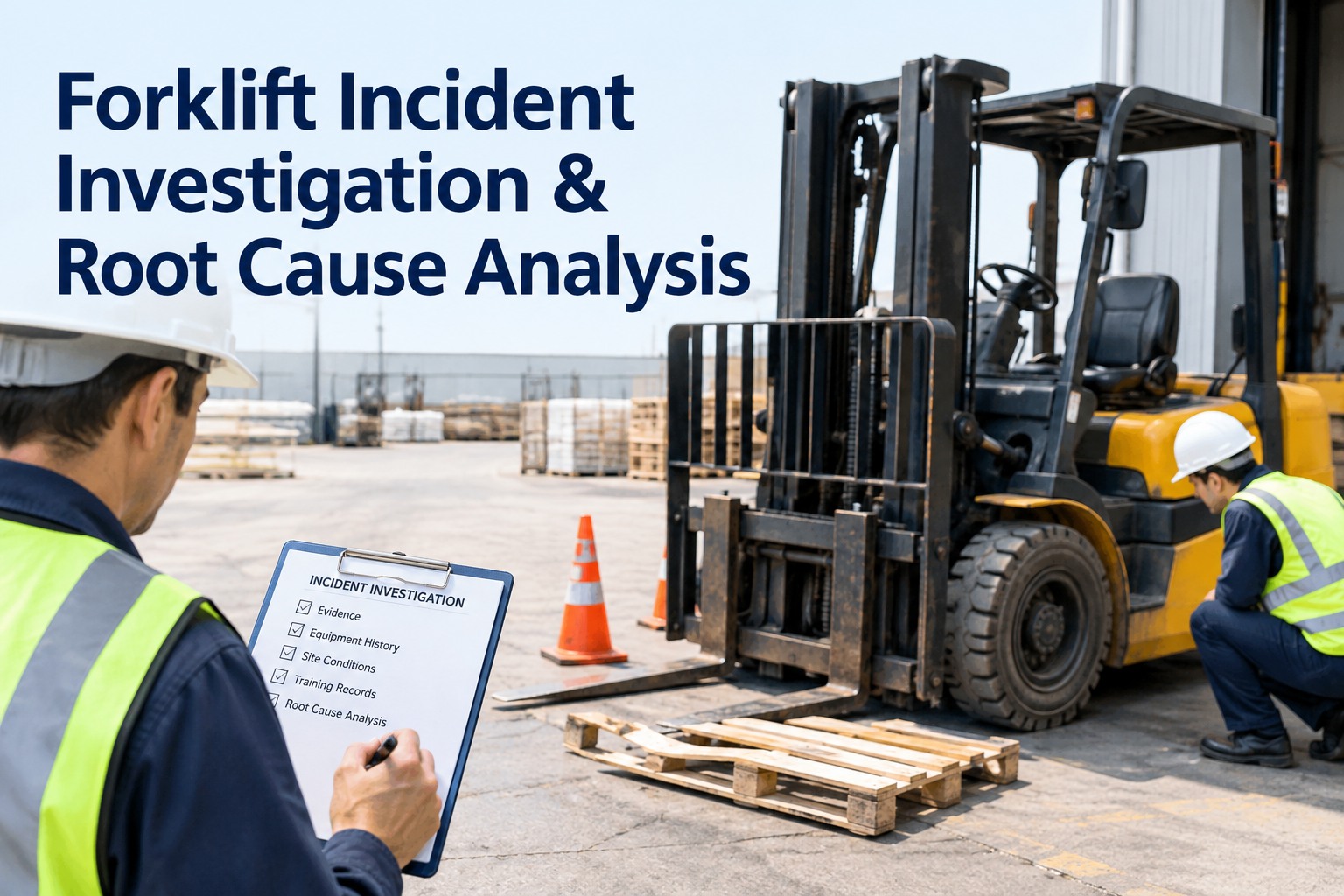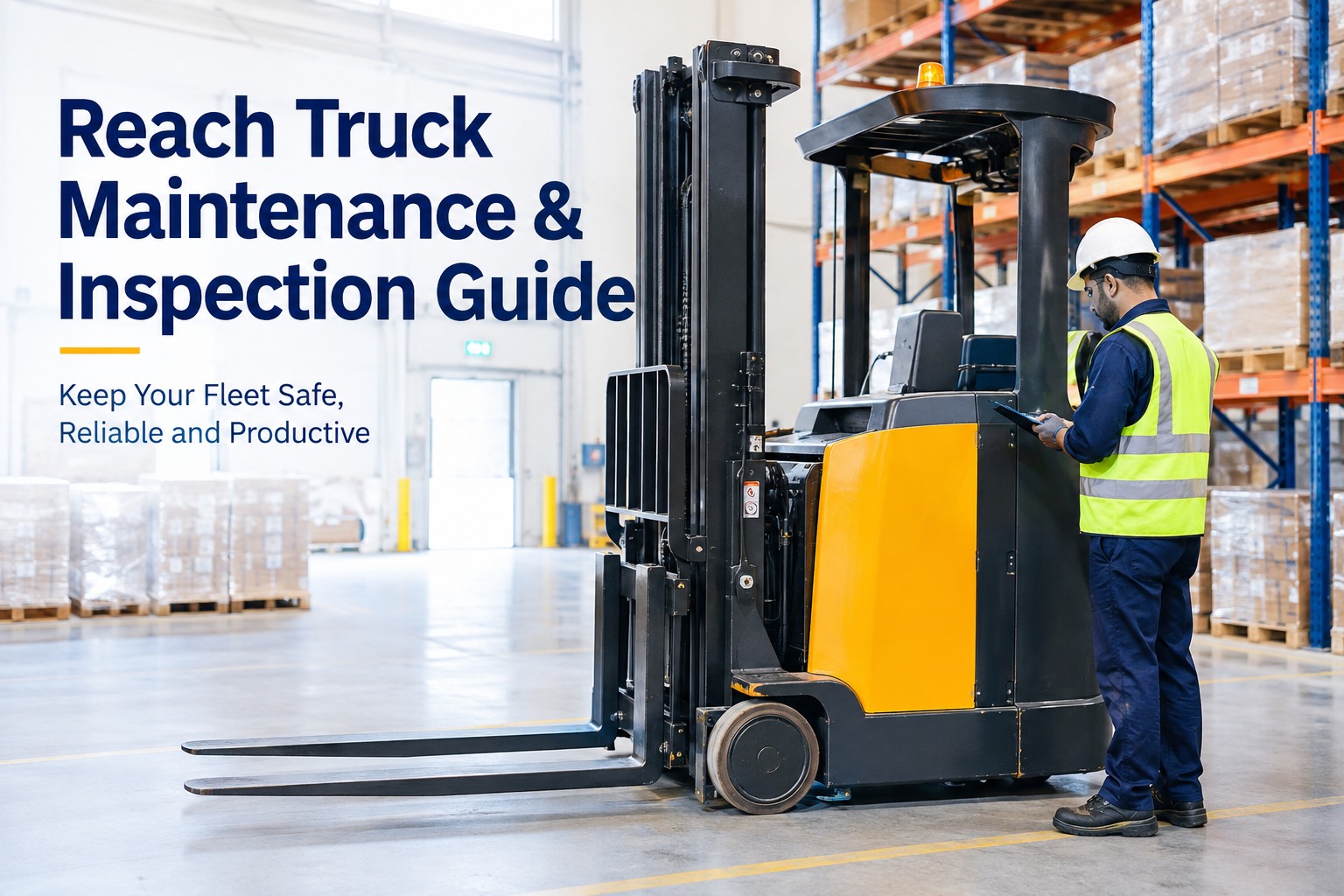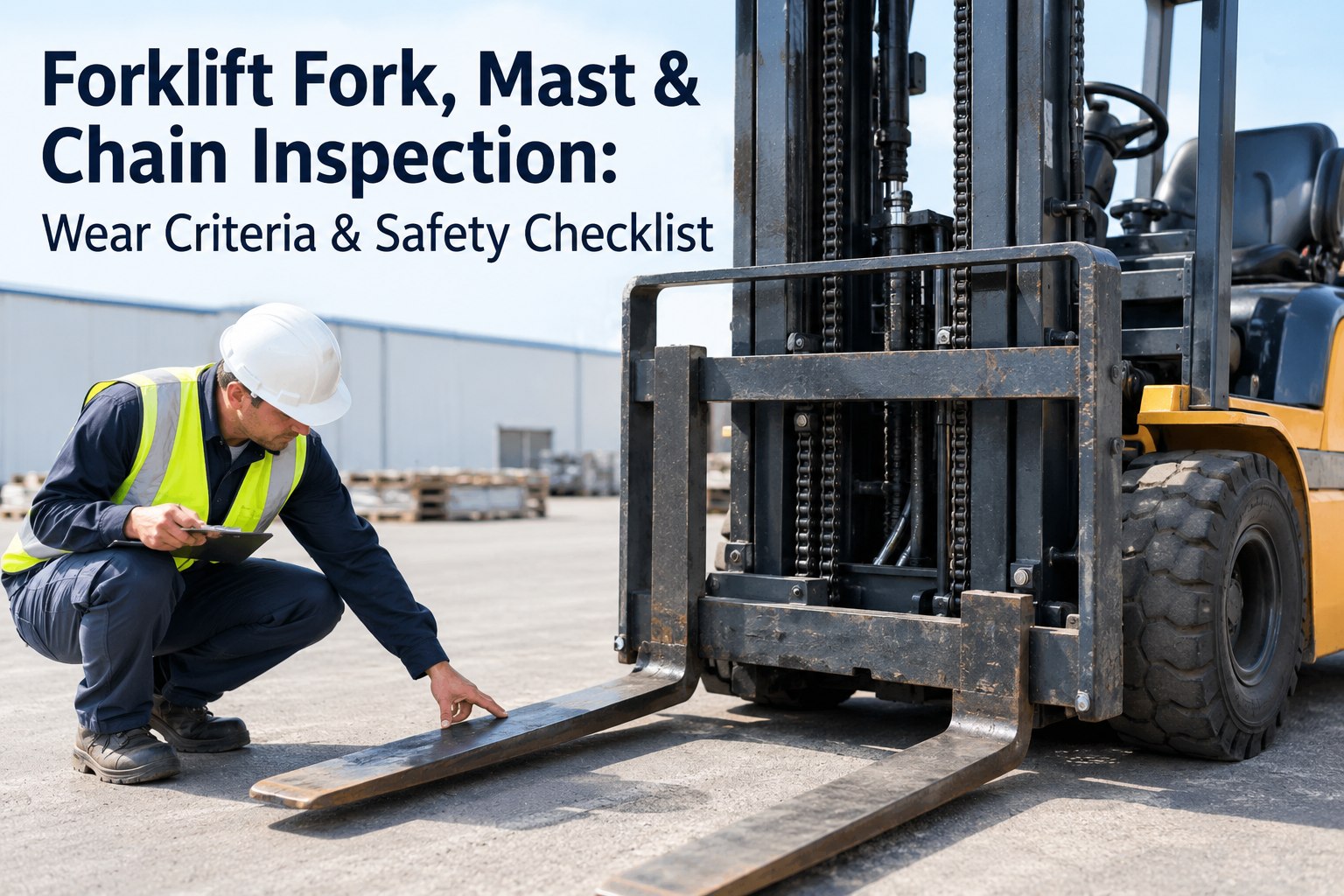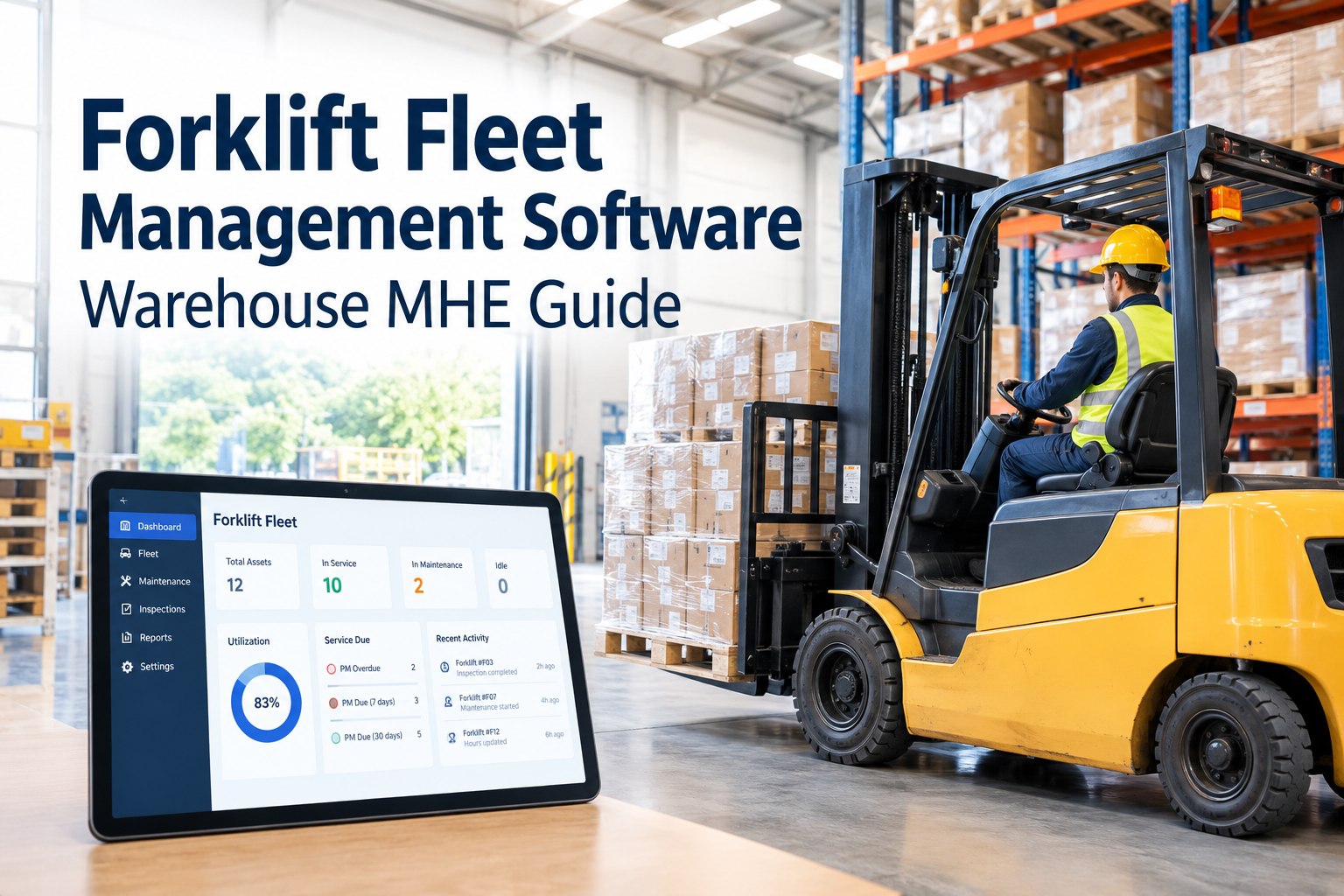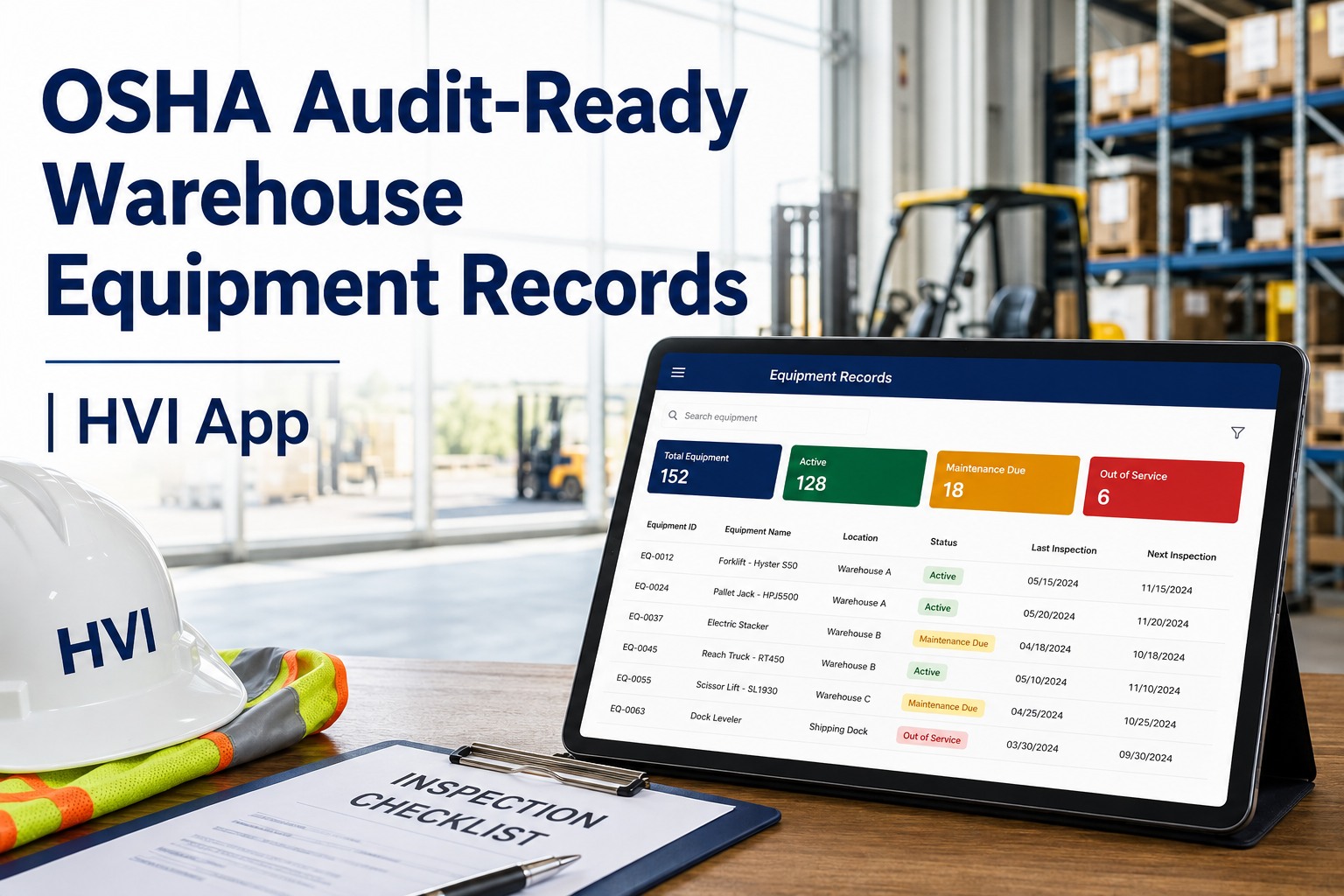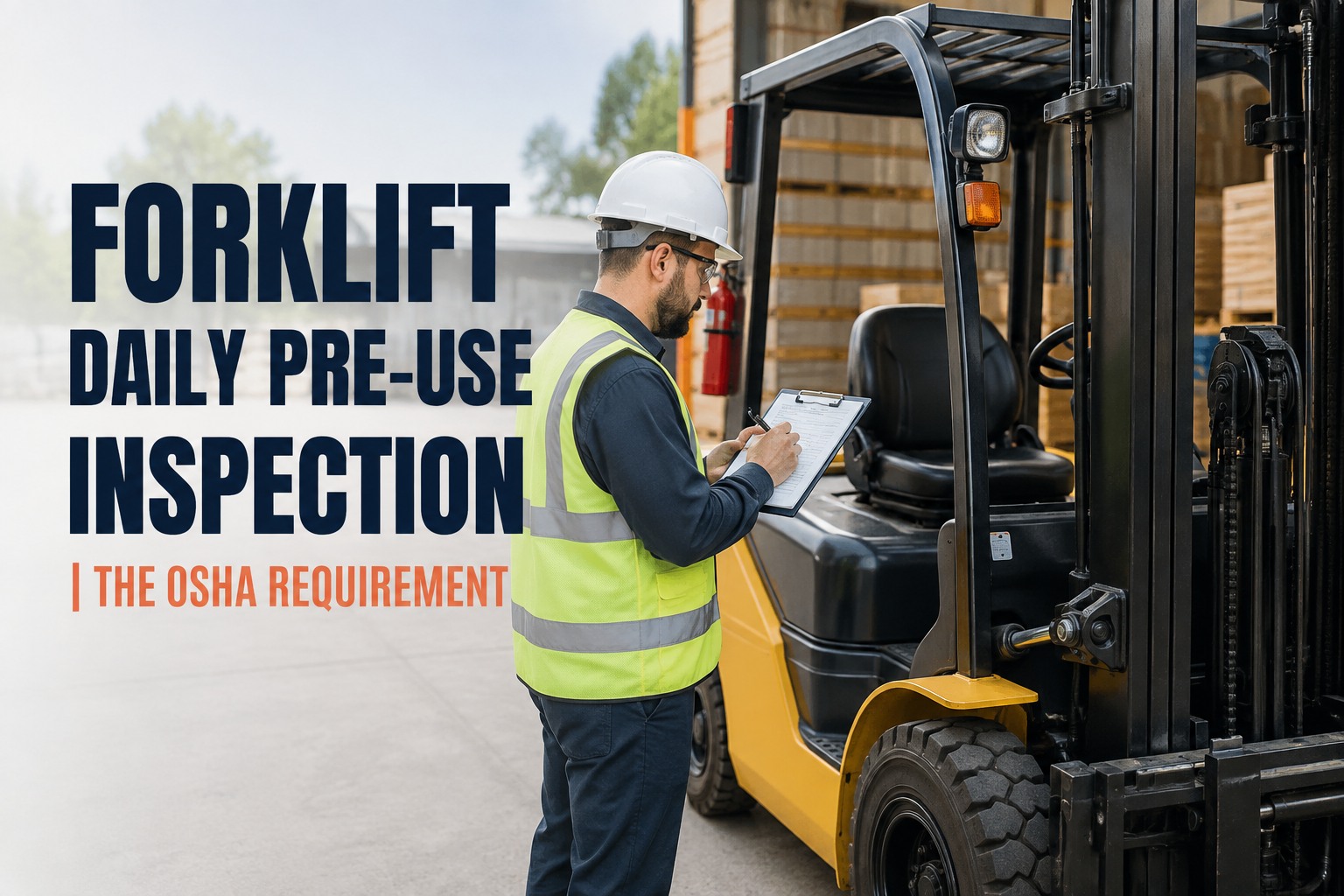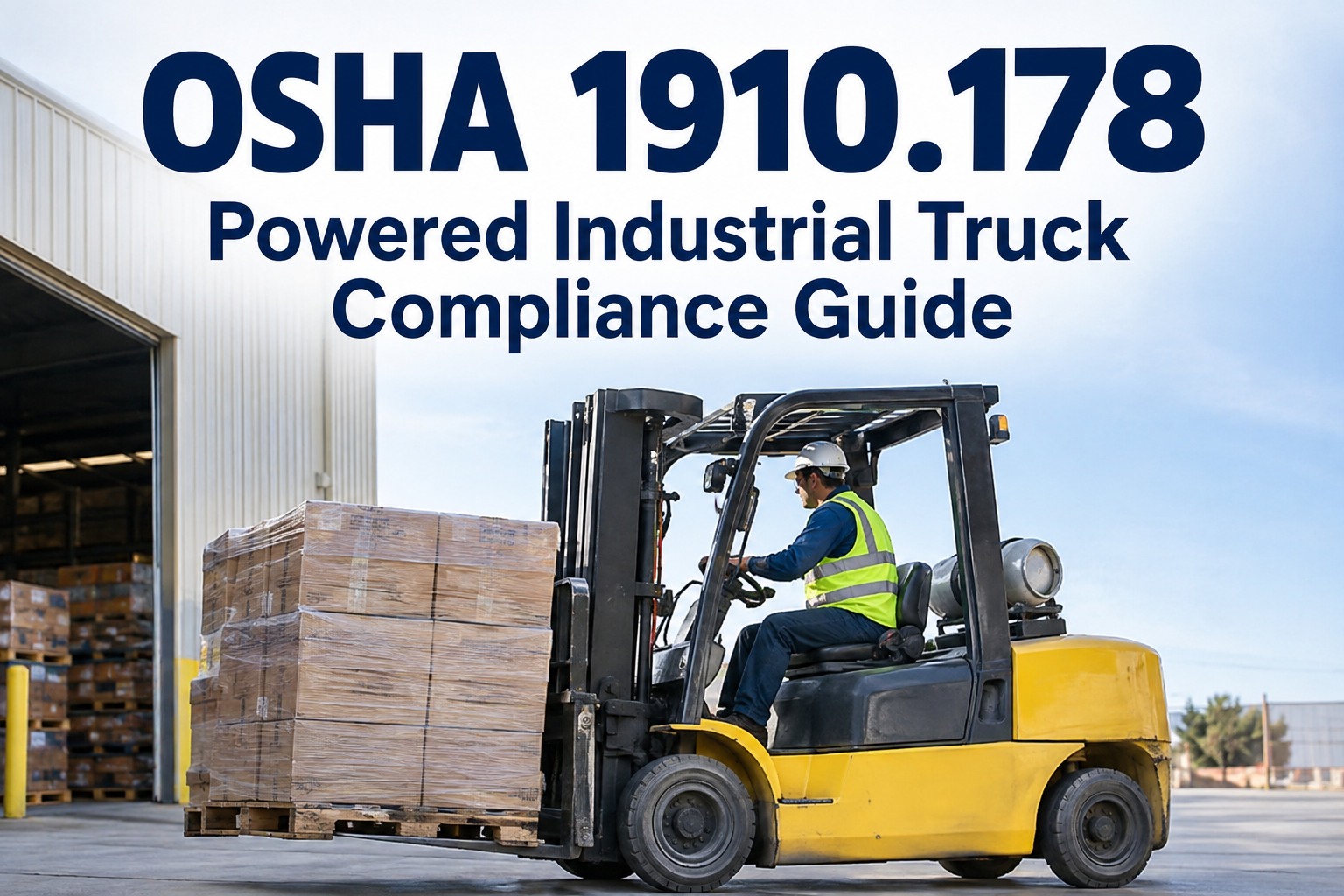
Walk into any warehouse yard at shift change and you will see the same ritual: a forklift operator grabs a clipboard off the cab, scrawls a checkmark down a pre-printed form, and drives off before the ink is dry. That piece of paper is what most employers think OSHA 1910.178 powered industrial truck compliance looks like, and it is exactly why powered industrial trucks landed at number eight on OSHA's most-cited list in FY2025 with 1,826 citations. The standard itself is not mysterious, and most trucks being written up are not genuinely dangerous, the paperwork is. If you are the person who has to defend your program in front of an inspector, or explain to a CFO why a $16,550 serious citation landed on the desk, understanding where warehouses actually fail the PIT regulation matters more than memorising the rule. You can see exactly how a digital inspection program closes that gap when you walk through a live setup on your own fleet.
1,826 forklift citations in FY2025 — and most were paperwork, not unsafe trucks
Powered industrial trucks rank eighth on OSHA's top-ten most-cited list, yet the majority of violations trace back to missing training records, skipped pre-shift inspections, and no documentation that a defective truck was removed from service. The 1910.178 standard is unforgiving about evidence.
The real exposure behind a 1910.178 citation
OSHA does not issue a gentle warning for a missing evaluation record. The penalty schedule for FY2026 puts a serious violation at $16,550 and a willful or repeated violation at $165,514, and a single warehouse with fifteen untrained operators can stack those line items fast. The numbers below are what you are actually defending against.
What OSHA 1910.178 actually requires — and the record you must produce
An inspector does not ask whether your trucks are safe. They ask whether you can prove it. Every clause below maps to a specific document, timestamp, or signature you need to produce on demand, and that is where most warehouses collapse. If your current program lives in a binder and a group chat, see how a digital audit trail handles every row below before the next inspection window opens.
| 1910.178 requirement | What the inspector asks for | Where warehouses fail it |
|---|---|---|
| Operator training & evaluation (l) | Certification with operator name, training date, evaluator name | Training done verbally, no signed record, no three-year refresher tracked |
| Pre-use inspection each shift | Daily inspection record with defects noted | Clipboard form left blank, or backfilled at the end of the week |
| Removal from service | Evidence the truck was tagged out and repaired before reuse | Defect noted but truck keeps running; no repair order linked |
| Capacity plate & modifications | Legible plate; manufacturer approval for any attachment or modification | Plate painted over, missing, or contradicts an unapproved aftermarket attachment |
| ANSI B56.1 alignment | Inspection checklist that mirrors B56.1 pre-operational items | Generic checklist that omits key safety-critical components |
Forklift operator training: the four parts OSHA expects you to prove
Section 1910.178(l) is the single most-cited slice of the PIT standard, and it is not because employers are sending untrained operators into the warehouse. It is because they cannot produce a clean record of what the training covered, who delivered it, when it happened, and when the next evaluation falls due. The regulation breaks operator training into four distinct parts, and every one of them needs a defensible artifact behind it.
Formal instruction
Classroom, online, or written material covering truck characteristics, stability, operating limitations, and site-specific hazards. OSHA does not mandate a set hour count, but your record must show what was taught, who taught it, and that the operator absorbed it — typically through a written or oral test.
Practical training
Demonstrations and hands-on exercises performed in the actual workplace on the actual truck the operator will use. This is where generic certification mills fall apart, because the standard expects the training to match the equipment, the surface conditions, and the loads specific to your site.
Workplace evaluation
An observed evaluation of the operator's performance in the real working environment, not a closed-course exercise. The evaluator's name and date must be on the certification, and this is the record most often missing when a citation lands.
Three-year refresher & incident trigger
Evaluation must be repeated at least every three years, and refresher training is required immediately after any near-miss, observed unsafe operation, accident, or assignment to a different truck type. Most programs track the hire date and forget everything after that.
The forklift inspection requirement: 62 items across 3 phases
A compliant pre-use inspection under 1910.178 is not a five-second walk-around. The ANSI B56.1 checklist that OSHA defers to covers dozens of distinct components, grouped into three phases that mirror how an operator actually interacts with the truck: before start-up, during operation, and after the shift. Most paper forms capture maybe ten of these. The full 62-item structure below is what a defensible digital forklift inspection template should look like, and it is what HVI ships with out of the box.
Phase 1 — Pre-operational
- Tire condition, pressure, and lug torque
- Forks — cracks, bend, wear, heel thickness
- Mast chains — stretch, tension, lubrication
- Hydraulic fluid level and leaks
- Battery charge and electrolyte (electric trucks)
- Propane tank mounting and valve (LPG trucks)
- Horn, lights, reverse alarm, strobe
- Capacity plate legibility and accuracy
- Seatbelt and operator restraint
- Overhead guard — cracks, welds, debris
Phase 2 — Operational
- Accelerator and brake response
- Steering — free play, return, noise
- Lift, lower, tilt, and side-shift function
- Mast operation — smooth, no chatter
- Gauge and indicator function
- Hour meter reading
- Unusual noise or vibration
- Capacity plate matches truck in use
- Attachment function and security
Phase 3 — Post-operational
- Park position and neutral gear
- Parking brake engagement test
- Fork lowering to rest position
- Key removal and power isolation
- LPG tank valve closed
- Battery connected to charger (electric)
- Cab condition — debris, fluid spills
- Defect report submitted
See HVI running on your own forklift fleet — book a 30-minute demo
We will load your truck list, your operators, and a 1910.178-aligned inspection template so you can judge it against a real shift, not a slide deck.
Three jobsite scenarios that turn into citations
The standard reads cleanly on paper. The warehouse floor does not. These are the three real-world situations where a defensible program falls apart, and where the gap between a clipboard and a digital inspection and work order system becomes the difference between a clean audit and a five-figure penalty.
The expired three-year evaluation
An operator was certified in March 2022. By April 2025 the three-year evaluation window under 1910.178(l)(4)(iii) has lapsed, but nobody is tracking it because the original trainer left and the spreadsheet lives on a departed laptop. The operator is still running the truck every shift. An inspector pulls the cert, sees no re-evaluation, and the citation writes itself — $16,550 per operator, multiplied across however many certs are stale. A CMMS with training records and expiry alerts catches this nine months before the deadline, not after.
The defect that never became a work order
A pre-shift check on a reach truck notes a leaking hydraulic fitting. The operator writes it on the clipboard, hands it to the supervisor, and goes to lunch. The supervisor sets it on the desk. The next operator sees the truck parked, assumes it is fine, and runs it for three more shifts before the hose fails under load. Under 1910.178(q) the truck should have been removed from service immediately and repaired. The paper form exists, but there is no record of tag-out, no work order, and no repair sign-off. That is a willful citation waiting to happen.
The unapproved attachment
A maintenance tech bolts a carton clamp onto a counterbalance truck without checking whether the manufacturer approved the modification or updating the capacity plate. The truck's rated capacity is now wrong, the operator does not know it, and the plate still reads the old number. Under 1910.178(a)(5) and (q), modifications and additions that affect capacity and safe operation require written manufacturer approval and an updated plate. This is one of the most common willful citations because the truck looks fine — until it does not.
Built to prove 1910.178 compliance in seconds, not binders
HVI maps directly to the four failure points that generate most PIT citations — missing training records, skipped inspections, undocumented removal-from-service, and untraceable defects. Every capability below produces a timestamped, photo-backed record that holds up in an OSHA audit, a client safety review, or an insurance inspection.
62-item forklift inspection template
A 1910.178 and ANSI B56.1-aligned checklist with 62 items across pre-operational, operational, and post-operational phases. Operators complete it on any phone or tablet in the yard, and every response is timestamped and geotagged the moment it is submitted.
Photo capture on every defect
When an operator flags a defect, they attach a photo before the form will submit. That photo, the timestamp, and the operator identity travel with the record — so an inspector sees the actual leaking hose, not a checkmark on a form that could have been filled in a week later.
Training records with expiry alerts
Every operator cert is stored with the training date, evaluator name, and the three-year refresher deadline. HVI sends escalating alerts at 90, 60, and 30 days out, so no evaluation lapses silently. The same logic handles incident-triggered refresher training after a near-miss.
OSHA-ready export in one tap
When an inspector arrives, you export a filtered report — by truck, by operator, by date range — and hand over a clean PDF with photos, timestamps, and signatures. No binder hunting, no spreadsheet stitching, no texting the night supervisor for a photo of last Tuesday's form.
OSHA 1910.178 compliance: what to fix first
The pattern across 1,826 citations in FY2025 is clear: the trucks are usually fine, the documentation is not. If you are triaging where to spend the next two weeks of safety bandwidth, the order below is where the citations concentrate and where the fix is fastest. Moving off paper to a digital inspection and CMMS platform like HVI's fleet compliance system collapses all four into one workflow.
Pull every operator cert and check the three-year clock
This is the highest-frequency citation under 1910.178(l). List every operator, their last evaluation date, and the expiry. Anything within 90 days gets scheduled now.
Replace the generic pre-shift clipboard with a B56.1-aligned checklist
If your form has fewer than 20 items, it does not cover what OSHA expects. Match the 62-item three-phase structure, and make sure every submission is timestamped.
Build a removal-from-service paper trail for every defect
A defect note is not enough. You need tag-out, a linked work order, a repair sign-off, and a return-to-service record. If any link is missing, the truck is a citation on wheels.
Audit every capacity plate and attachment approval
Walk the floor and check that every plate is legible, matches the truck, and reflects any installed attachment with written manufacturer approval. This is where willful citations live.
The inspector did not care that our trucks were in good shape. He wanted to see the last three pre-shift inspections for unit fourteen, the training record for the guy who drove it, and the work order for the hydraulic leak we fixed two weeks ago. We had the trucks. We did not have the paper. That was the day we stopped using clipboards.
OSHA 1910.178 powered industrial truck compliance — common questions
How often does OSHA require forklift operator training under 1910.178?
What must a forklift pre-use inspection include each shift?
What happens if a forklift is found in an unsafe condition during a pre-shift inspection?
Can an employer use a generic forklift training certificate from an outside provider?
What is the current OSHA penalty for a 1910.178 powered industrial truck violation?
Stop defending paper — book a demo on your own fleet
Load your trucks, your operators, and a 1910.178-aligned inspection template into HVI in under 30 minutes and see what a defensible compliance record looks like.
Free to start — Works on any phone — No card needed