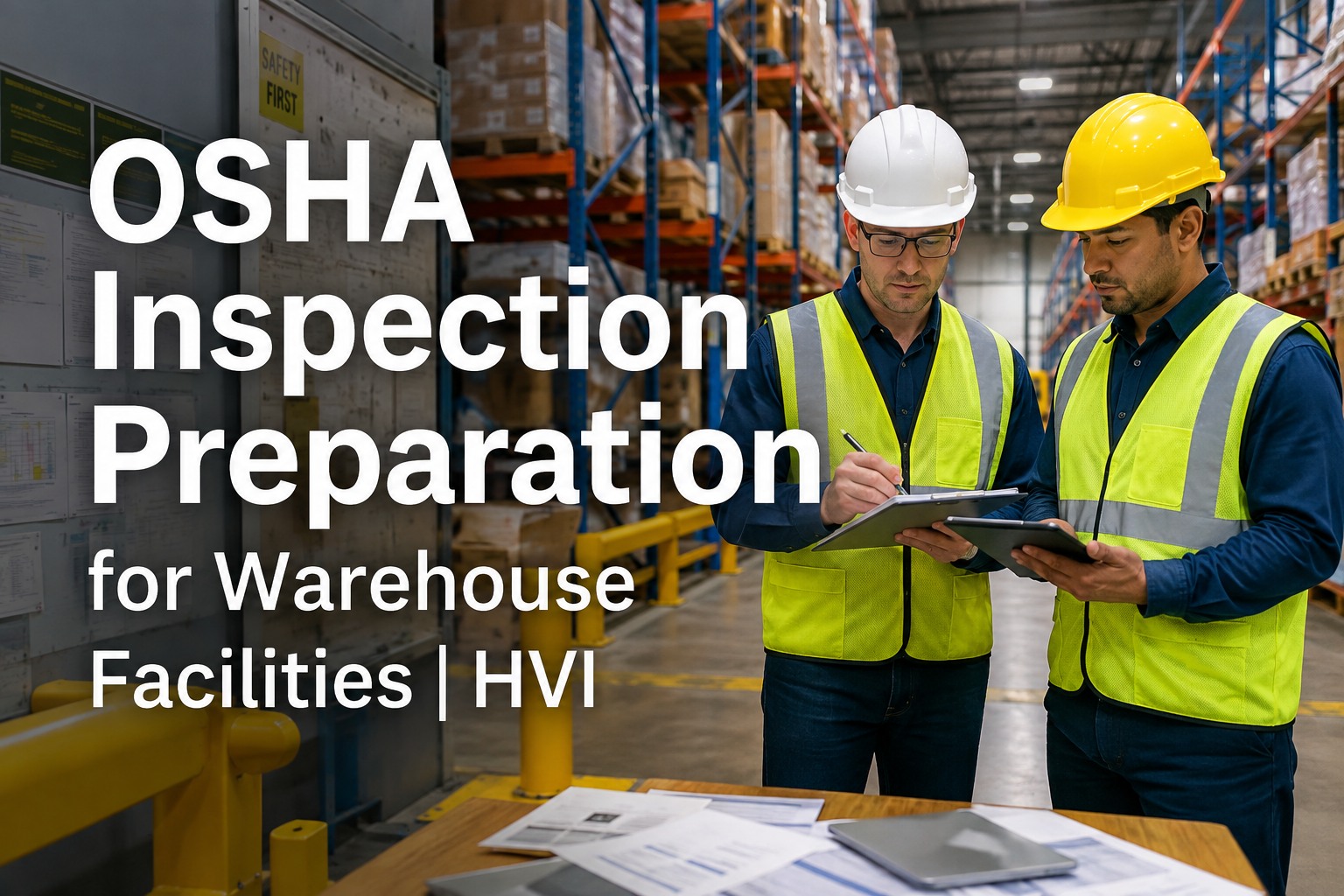
When the OSHA compliance officer walks through the warehouse gate, the outcome of the visit is often shaped in the first thirty minutes. How quickly and completely you produce your safety documents sets the tone for the entire walkaround, because incomplete production reads as an absent programme. OSHA inspection warehouse readiness is not a last-minute scramble to sort paper DVIRs and forklift training binders; it is a permanent state built on records you can pull up instantly. If your current audit response plan relies on chasing down supervisors and digging through cab binders, you can walk through a better setup on a live call before the next unannounced visit arrives.
INSPECTION READINESS
Is your warehouse ready for an OSHA visit today?
Inspections are triggered by complaints, referrals, accident reports and programmed emphasis activity. When the officer arrives, the speed and completeness of your document production sets the tone. If your records are scattered across paper binders and spreadsheets, an incomplete response reads as an absent safety programme.
THE REAL COST OF UNREADINESS
What a disorganised warehouse audit actually costs you
Inspection outcomes rarely hinge on a single catastrophic finding. They are built from dozens of small gaps that compound when you cannot produce a clean, timestamped record on demand. These are the numbers that drive the real cost of getting caught unprepared.
WHAT TRIGGERS A VISIT
How an OSHA inspection at a warehouse begins
Inspections do not happen at random. They are driven by four primary triggers, and warehousing has periodically been a target of programmed emphasis activity. Knowing which trigger applies to you tells you how wide the scope will be.
Worker Complaints
An employee, often a current forklift operator, contacts OSHA about a specific hazard. The officer is legally required to respond, and the scope usually focuses on the named issue but can expand if other violations are in plain sight.
Referrals
Other agencies, local fire marshals, or even a workers' compensation insurer can refer a facility. These visits often start with a narrower scope but carry the same documentation requirements as any programmed inspection.
Accident Reports
Any hospitalisation, amputation, or fatality must be reported to OSHA within strict timeframes. This triggers an immediate, high-scope inspection that will scrutinise every related record, LOTO procedure and training file.
Programmed Emphasis
OSHA periodically runs emphasis programmes focused on warehousing, powered industrial trucks and fall protection. These are planned, broad-scope visits where the officer arrives with a specific checklist of items to verify.
INSPECTION PROCESS WAREHOUSE MANAGERS MUST KNOW
The four phases of an OSHA visit: opening to closing conference
Every OSHA inspection follows the same structural phases. Your ability to navigate each one calmly depends entirely on how your records are stored. A paper-based system forces you into a reactive scramble; a digital system lets you move through each phase with confidence.
Opening Conference
The officer presents credentials and explains the scope. This is where you hand over the written safety programme, OSHA 300 logs, forklift training files and LOTO procedures. If you cannot produce these immediately, the officer notes it, and the inspection widens. This is where an audit-ready digital trail changes the entire tone of the visit.
Document Review
Before walking the floor, the officer reviews your records for gaps. They look for daily forklift inspection documentation, operator evaluation dates, and whether your 300 log matches the actual incident history. Missing or incomplete logs are treated as evidence of a missing programme.
Walkaround and Interviews
The officer walks the warehouse, accompanied by management and an employee representative. They observe rack labelling, dock plate condition, forklift seatbelt use and LOTO execution. They will pull operators aside for private interviews to confirm training matches what the paperwork claims.
Closing Conference
The officer summarises apparent violations and discusses possible citation categories. This is your first opportunity to present abatement evidence and demonstrate good-faith compliance effort. An organised, immediate response here can influence penalty determination significantly.
WAREHOUSE DOCUMENT REQUEST
The documents most commonly requested in the opening conference
The opening conference is not a casual chat. It comes with a document request list, and the officer expects you to produce these items while they wait. If you have to leave the room to search a filing cabinet, the silence is already working against you.
| Document Requested | What the Officer is Verifying | How HVI Proves It Instantly |
|---|---|---|
| Written Safety Programme | That a formal, site-specific programme exists and is accessible to employees. | Stored in the cloud, shared via secure link, time-stamped and version-controlled. |
| Forklift Operator Training & Evaluation | Currency of certifications, classroom and practical evaluation dates, evaluator names. | Training records with automatic expiry alerts and full evaluation history per operator. |
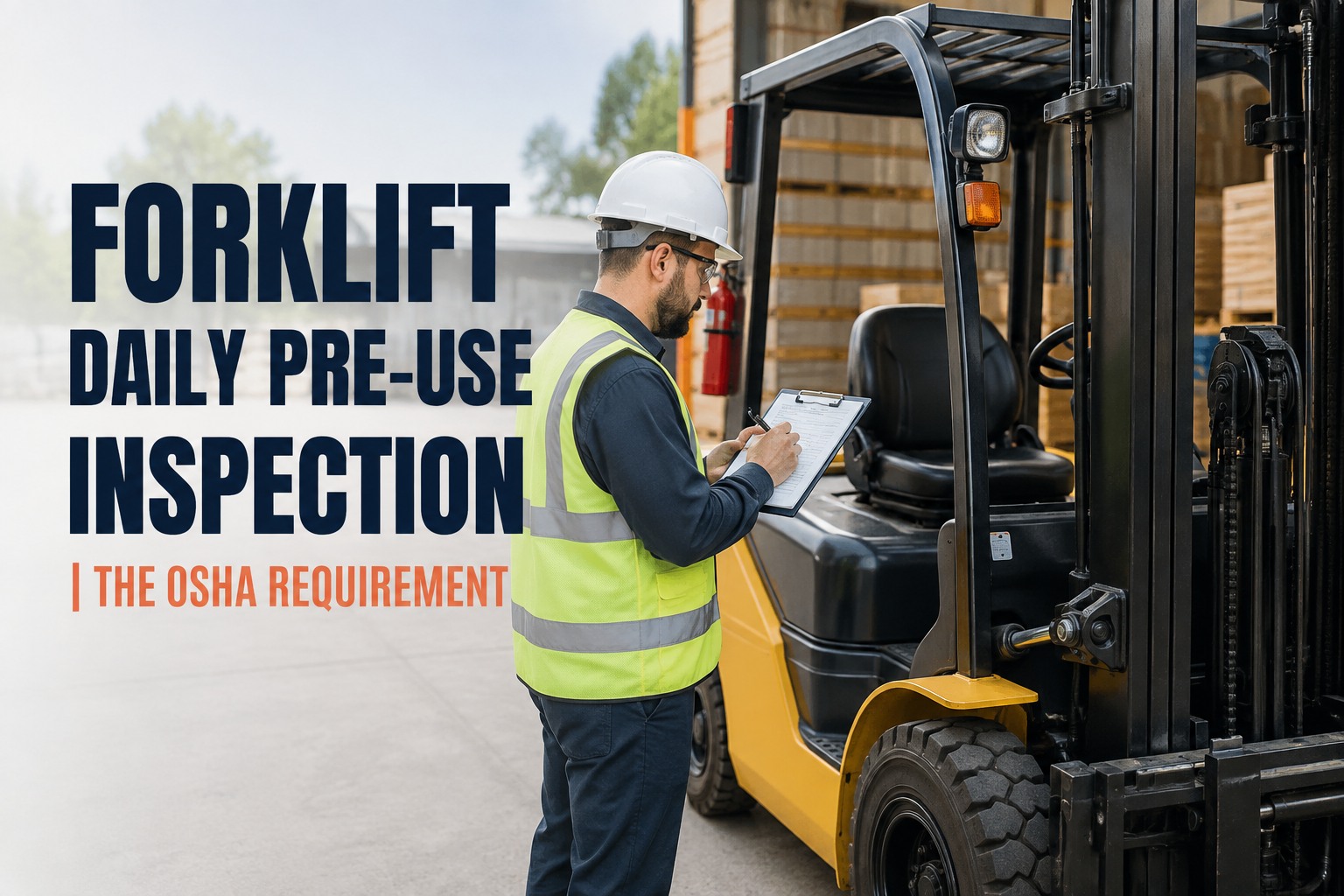
| Daily Forklift Inspection Documentation | That pre-use inspections are actually happening, not just being pencil-whipped. | Photo-backed digital DVIRs with timestamps, defect notes, and completion tracking. |
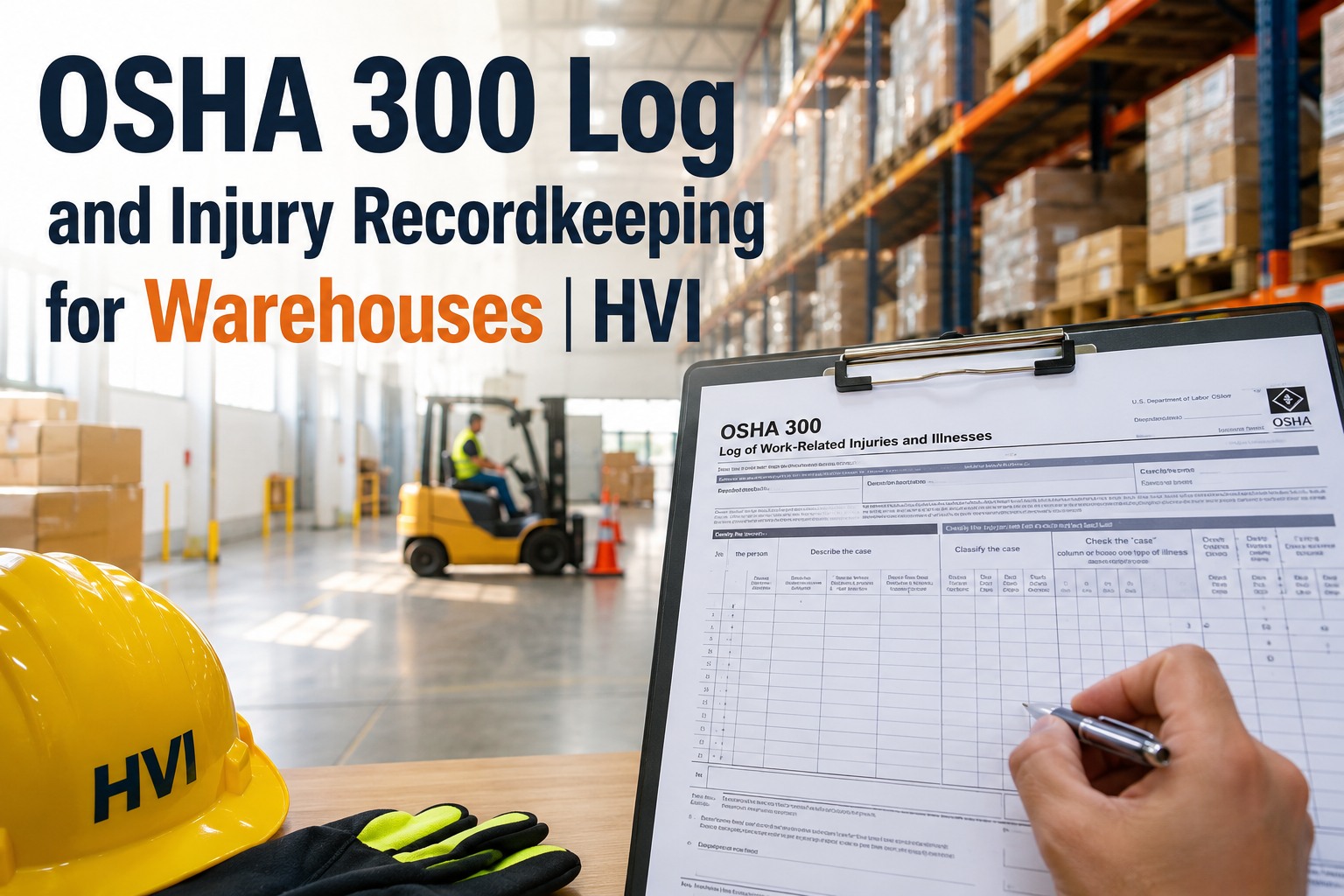
| OSHA 300 Log | That recordable injuries are logged accurately and within the required timeframe. | Safety incident records exportable to standard formats for immediate handover. |
| Lockout/Tagout (LOTO) Procedures | That machine-specific LOTO procedures exist and are authorised by current personnel. | Procedure library linked to specific assets, with digital authorisation logs. |
OSHA PREPARATION CHECKLIST
Facility audit readiness: your week-by-week discipline
Audit readiness is a permanent state, not an event. If you maintain these disciplines weekly, an unannounced visit becomes a routine verification rather than an emergency. Treat this as your living OSHA preparation checklist.
Daily Disciplines
- Mobile pre-use forklift inspections submitted by every operator before shift start.
- Defects flagged on the DVIR automatically generating a work order for the shop.
- LOTO logs completed and timestamped for any maintenance activity on the floor.
- Yard walks by shift supervisors logged with photos of any housekeeping hazards.
Weekly Disciplines
- Review open safety work orders and confirm defect-to-repair chains are closed.
- Audit the previous week's DVIR completion rate and follow up on missed trucks.
- Verify rack integrity, dock plate condition and pedestrian aisle markings.
- Update the 300 log with any new recordable incidents from the week.
Monthly Disciplines
- Run a training currency report to catch any forklift certs expiring in the next 60 days.
- Review preventive maintenance completion across all powered industrial trucks.
- Reconcile parts inventory used for safety repairs against work orders.
- Generate a compliance summary report for management review and sign-off.
If your current toolset cannot produce this data without manually cross-referencing spreadsheets, it is time to start logging inspections free on a system that does it automatically.
Be ready before the officer arrives
See how HVI gives you OSHA-ready records, audit-ready DVIRs and complete defect-to-repair chains in one platform. Book a 30-minute demo on your own warehouse operation.
HOW HVI HELPS
From paper scramble to OSHA-ready in seconds
HVI replaces the paper binder and the group chat with a single, timestamped system of record. When the officer asks for your forklift inspection history, your LOTO procedures and your defect-to-repair evidence, you export it in seconds from a phone or tablet. Here is how the specific capabilities map to your inspection response plan.
OSHA-Ready Records Export
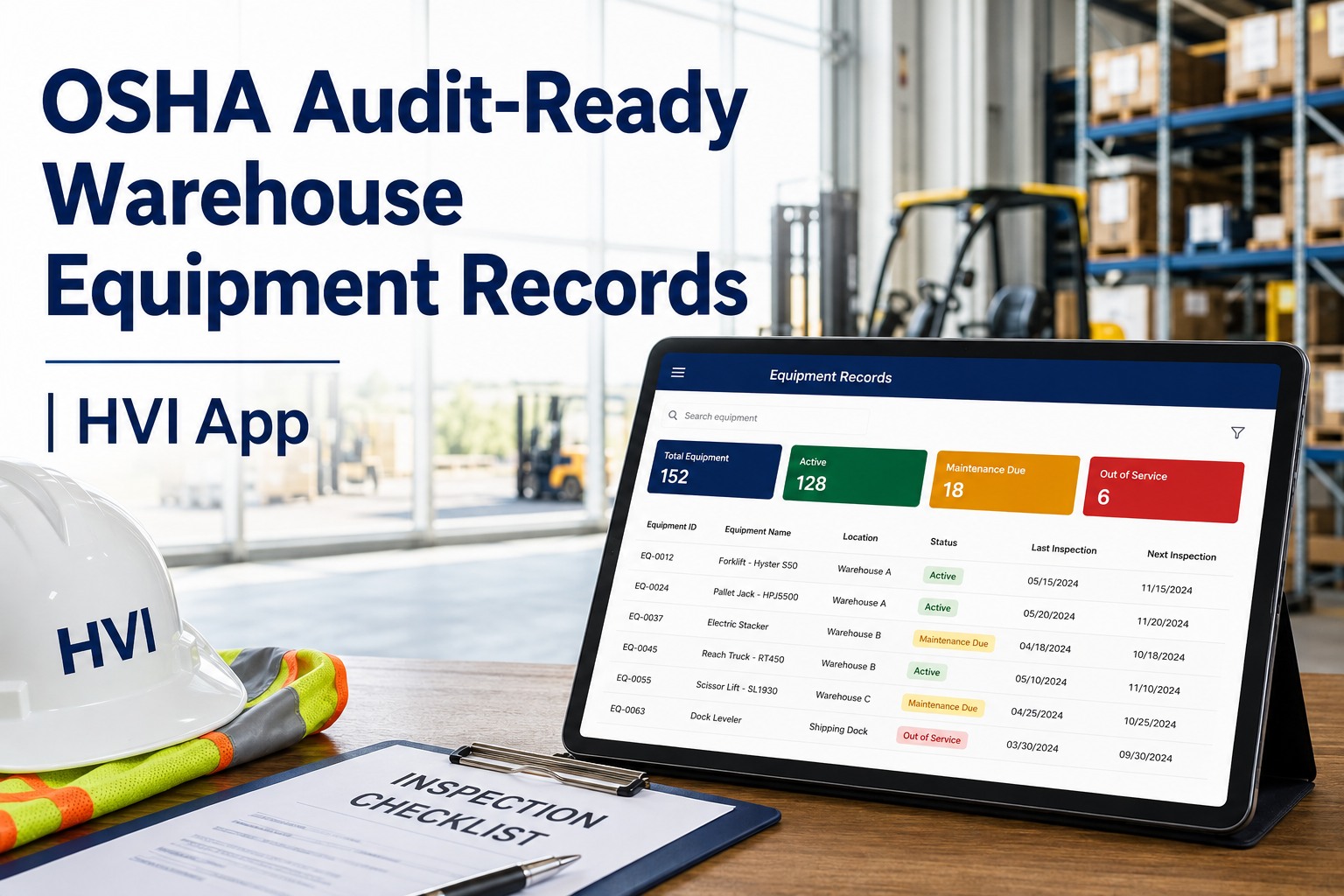
Every DVIR, work order, training record and safety incident is stored in the cloud with a timestamp. When the compliance officer asks for documentation, you export a complete, filtered report in seconds rather than flipping through binders on the warehouse floor.
Audit Checklist Manager
Build custom audit checklists for internal weekly walks and external OSHA-style reviews. Supervisors complete them on a phone, attach photos, and flag hazards that instantly become tracked work orders for abatement.
Complete Defect-to-Repair Chain
When a forklift operator logs a defect on their pre-use DVIR, HVI automatically creates a work order, tracks the parts used, and records the technician sign-off. You can prove the truck was taken out of service, repaired and returned to service with a full digital trail.
Training Records with Currency
Track classroom and practical evaluation dates for every forklift operator. HVI alerts you when a certification is 60 days from expiry, so you never hand an officer an expired training card during the walkaround or the document review phase.
If you want to see exactly how these records look when an officer asks for them, book a walkthrough on your own units and we will show you the export in real time.
CITATION RESPONSE AND GOOD-FAITH FACTOR
How an organised response reduces penalties
The closing conference is not the end of the process. Penalty determination includes a good-faith factor, which evaluates whether the employer made a genuine effort to comply. An organised, documented response demonstrating an active safety programme can reduce penalties significantly, while a disorganised response with missing records confirms negligence.
Without Digital Records
85% of time spent searching for documents instead of addressing hazards
- Paper DVIRs missing, incomplete or backdated.
- Training records expired or stored in a departed supervisor's binder.
- No defect-to-repair proof for flagged equipment.
- Good-faith reduction unlikely due to visible disorganisation.
With HVI Digital Records
15% of time on admin, 85% on actual safety improvement
- Digital DVIRs with photos and timestamps for every shift.
- Training currency alerts prevent expired certifications.
- Full defect-to-repair chain proves immediate abatement.
- Good-faith effort clearly demonstrable to the compliance officer.
A 40-truck mixed fleet losing just one truck-day a week to unresolved defects or audit prep scrambling is burning thousands in hidden downtime. See the exact numbers for your fleet on a demo before the next inspection notice arrives.
KEY TAKEAWAYS
OSHA inspection warehouse readiness: the permanent state
Inspection readiness is not a project you start when you get a call. It is the daily discipline of capturing data at the source, linking defects to repairs and keeping training current. The warehouses that handle OSHA visits without panic are the ones where the safety manager already knows, on any given morning, exactly what their DVIR completion rate was yesterday and which forklift certs expire next month. If your inspection process warehouse plan still depends on a paper binder, a clipboard and a group chat, the next unannounced visit will expose the gap. The good-faith factor in penalty determination rewards the fleet that can produce a clean, timestamped record instantly; it punishes the one that cannot. Confirm current OSHA procedure for your region, build the daily checklist discipline and move your records to a system that turns a thirty-second export into your best defense.
The worst part of an OSHA visit was never the walkaround. It was the twenty minutes of dead silence while three supervisors flipped through binders trying to find a forklift training record from eight months ago. Now I just tap export on my phone and hand the officer the link. That silence is gone, and so is the panic.
Marcus T.
Safety & Compliance Manager, regional 3PL warehouse operation
FREQUENTLY ASKED QUESTIONS
OSHA warehouse inspection questions, answered
What triggers an OSHA inspection at a warehouse facility?
OSHA inspections are triggered by worker complaints, referrals from other agencies, severe accident reports requiring notification, and programmed emphasis activity that periodically targets warehousing and powered industrial trucks. Programmed inspections are planned based on high-hazard industry data, while complaint and accident visits are reactive and can happen at any time without notice.
What documents does an OSHA compliance officer request in the opening conference?
The officer typically requests your written safety programme, forklift operator training and evaluation records, daily forklift inspection documentation (DVIRs), the OSHA 300 log of recordable injuries, and written Lockout/Tagout (LOTO) procedures. You should also be ready to produce your hazard communication programme and any recent incident investigation reports. Using a system like HVI to log these inspections free means you can export all of this in seconds.
Can I refuse to let an OSHA inspector walk around my warehouse?
You can request a warrant before allowing entry, but refusing entry is rarely advisable. OSHA will obtain a warrant and the inspection will proceed, often with a broader scope and a more adversarial tone. It is almost always better to cooperate, exercise your right to accompany the officer during the walkaround and have your records organised and ready to present.
How long does an OSHA warehouse inspection take?
The duration depends on the scope of the inspection and the size of the facility. A focused complaint inspection might take a few hours, while a programmed emphasis inspection of a large distribution centre can span several days. The document review and employee interview phases often take longer than the physical walkaround itself.
What is the good-faith factor in OSHA penalty determination?
OSHA considers an employer's good-faith effort to comply with safety standards when calculating penalties. If you can demonstrate an active, documented safety programme, current training records and a history of prompt abatement, the penalty reduction can be significant. Disorganisation and missing records eliminate this reduction, as they indicate a lack of good-faith effort.
Turn your next OSHA visit into a routine check
Build a permanent state of inspection readiness with HVI. Digital DVIRs, defect-to-repair chains and training records that export in seconds. See it running on your own fleet in a 30-minute demo.
Free to start - Works on any phone - No card needed