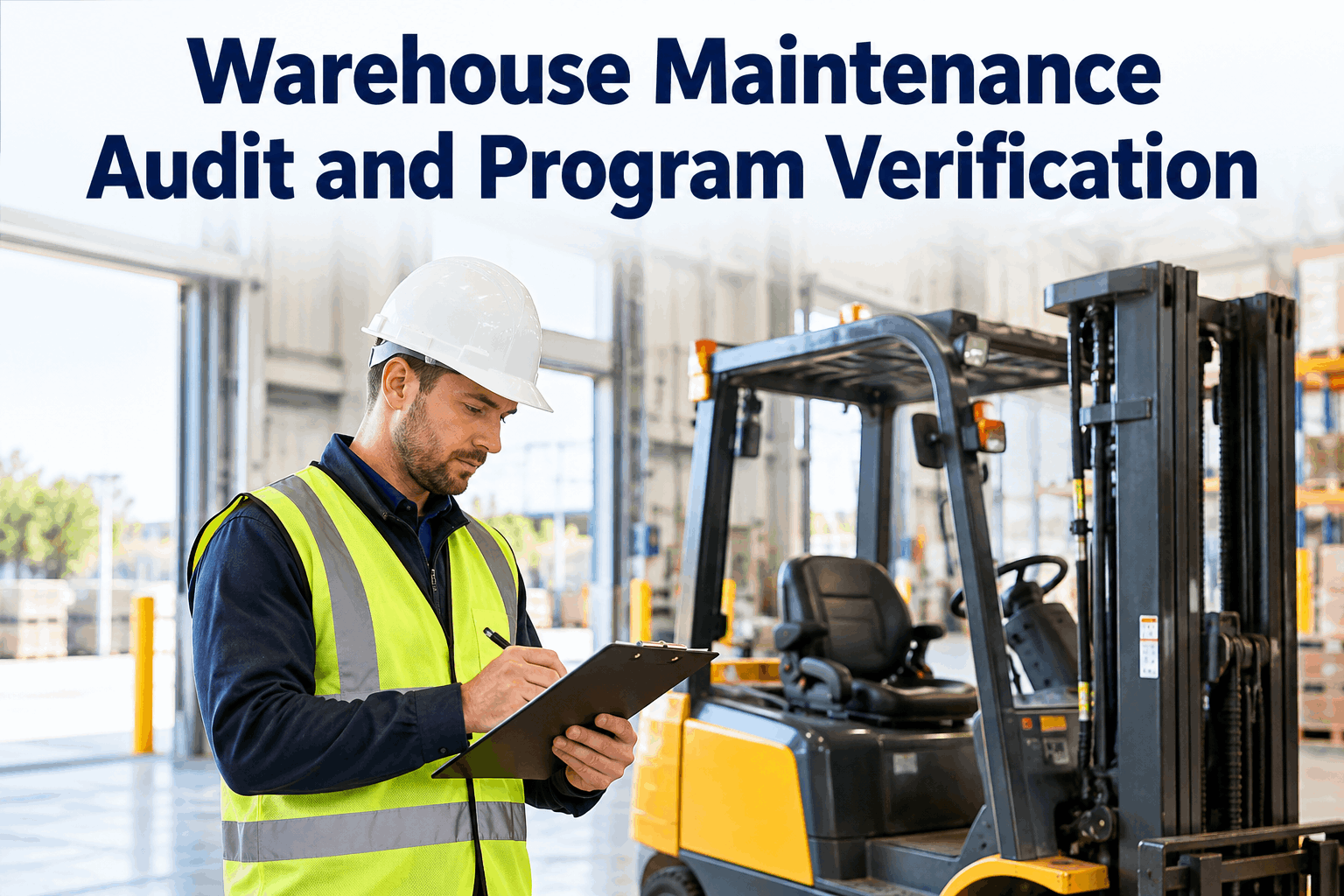
A maintenance audit answers one uncomfortable question: does your program actually do what the records say it does? It's easy to have a PM schedule, an inspection form and a work-order list and still have trucks failing — because the schedule slips, inspections get rubber-stamped and work orders close without the work being done. A real maintenance audit isn't a paperwork review; it verifies the whole chain, comparing what's claimed against what's really happening on the floor. That gap is where the risk lives. Book a demo to see a program you can verify.
Does the Program Do What the Records Say?
A maintenance audit checks the whole chain — PM, inspections, work orders, parts, training — and finds where what's claimed and what's real quietly diverge.
Most maintenance programs look healthy on paper and still spring leaks, because nobody steps back and checks the system as a whole. An audit does exactly that — it samples records, walks the floor, and asks whether each part of the program is real, complete and current. The point isn't to catch people out; it's to find the process gaps before a breakdown or an external auditor does.
The Five Domains of a Maintenance Audit
A complete maintenance audit verifies five areas. Each one can look fine in isolation and still hide the gap that's actually causing failures.
Scoring each domain turns a vague "are we okay?" into a specific "these two need work." Pulling that evidence from one maintenance system is what makes an audit fast instead of a week of spreadsheet archaeology. Book a demo to see audit-ready data.
Claimed vs Verified: Where Programs Fail
The heart of a maintenance audit is comparing what the records claim against what you can actually verify. The gap between the two columns is the finding.
When the right-hand column can't back up the left, you've found a process gap — not a person to blame. The PM side of this is measured by your PM compliance rate; a full audit widens that same claimed-vs-verified lens across every domain. Sign up free and make verification a search, not a hunt.
A Maintenance Audit Checklist
Run this across a sample of assets — not every truck, but enough to be representative. Group it by domain so a gap points straight to the part of the program that needs work.
Scoring the sample gives you a defensible picture of the whole program. Keeping every record in one place is what lets the audit pull from reporting and dashboards instead of a filing cabinet. Book a demo to run the checklist on live data.
From Audit Findings to Action
An audit that produces a report nobody acts on is just more paperwork. The value is in the loop — find the gap, assign the fix, and re-check it next cycle.
Score each domain and record specific gaps with evidence, not vague impressions.
Turn each finding into an owned action with a due date — a fix, not a note.
Re-audit the gap next cycle to confirm it closed — and that it stayed closed.
Running audits on a cycle, with each finding tracked to closure, turns verification from a one-off event into a habit the program improves against. That trend over time is the real deliverable of maintenance auditing.
A Maintenance Manager's Take
Our first real audit was humbling. On paper our PM compliance looked great. When we actually pulled the completion dates, half the "on-time" PMs were done two weeks late and backdated to look clean. The schedule wasn't the problem — the verification was missing.
Now the audit is four filtered views: PMs against their window, inspections for real criteria, work orders with parts and cause, training on file. It takes an afternoon, not a week, and the findings are specific enough to actually fix. We stopped grading ourselves on paperwork and started grading on what happened.
Sierra D.Maintenance Manager · regional distribution center
Maintenance Audit FAQs
What is a maintenance audit?
It's a structured review that verifies whether your maintenance program actually does what its records claim — checking PM compliance, inspection quality, work order closure, parts tracking and training. Rather than just reading paperwork, an audit compares what's claimed against what can be verified on the floor, so process gaps surface before a breakdown or an external auditor finds them.
What should a maintenance audit checklist cover?
Five domains: PM compliance (tasks done within their window), inspections and defects (real, observable, turned into work orders), work orders and parts (closed with parts, labor and cause recorded), and training and records (certifications current and retrievable). Score each on a representative sample of assets so a gap points straight to the part of the program that needs work.
How often should you run a maintenance audit?
Most operations run an internal program audit quarterly or semi-annually, with a lighter spot-check monthly on a few assets. The right cadence is often enough to catch drift before it compounds, but not so often it becomes noise. Running it on a cycle — and tracking findings to closure between audits — matters more than the exact frequency.
What's the difference between a maintenance audit and PM compliance?
PM compliance rate is a single metric — the share of preventive tasks done on time. A maintenance audit is broader: it verifies PM compliance alongside inspection quality, work order closure, parts and training. Think of PM compliance as one domain the audit scores, not the whole picture. A program can have strong PM numbers and still fail elsewhere.
How does HVI support a maintenance audit?
HVI keeps PM history, inspections, work orders, parts and training records in one place, so an audit becomes a set of filtered views rather than a binder hunt. You can check completion dates, inspection quality, work order detail and training status directly from the data. It supports verification and reporting; it doesn't replace your own audit judgment or safety program.
Run a Maintenance Audit You Can Stand Behind
Score every domain, compare claimed against verified, and track each finding to closure — so your maintenance audit proves the program works instead of just confirming the paperwork exists.
No credit card · See audit-ready data in a short demo