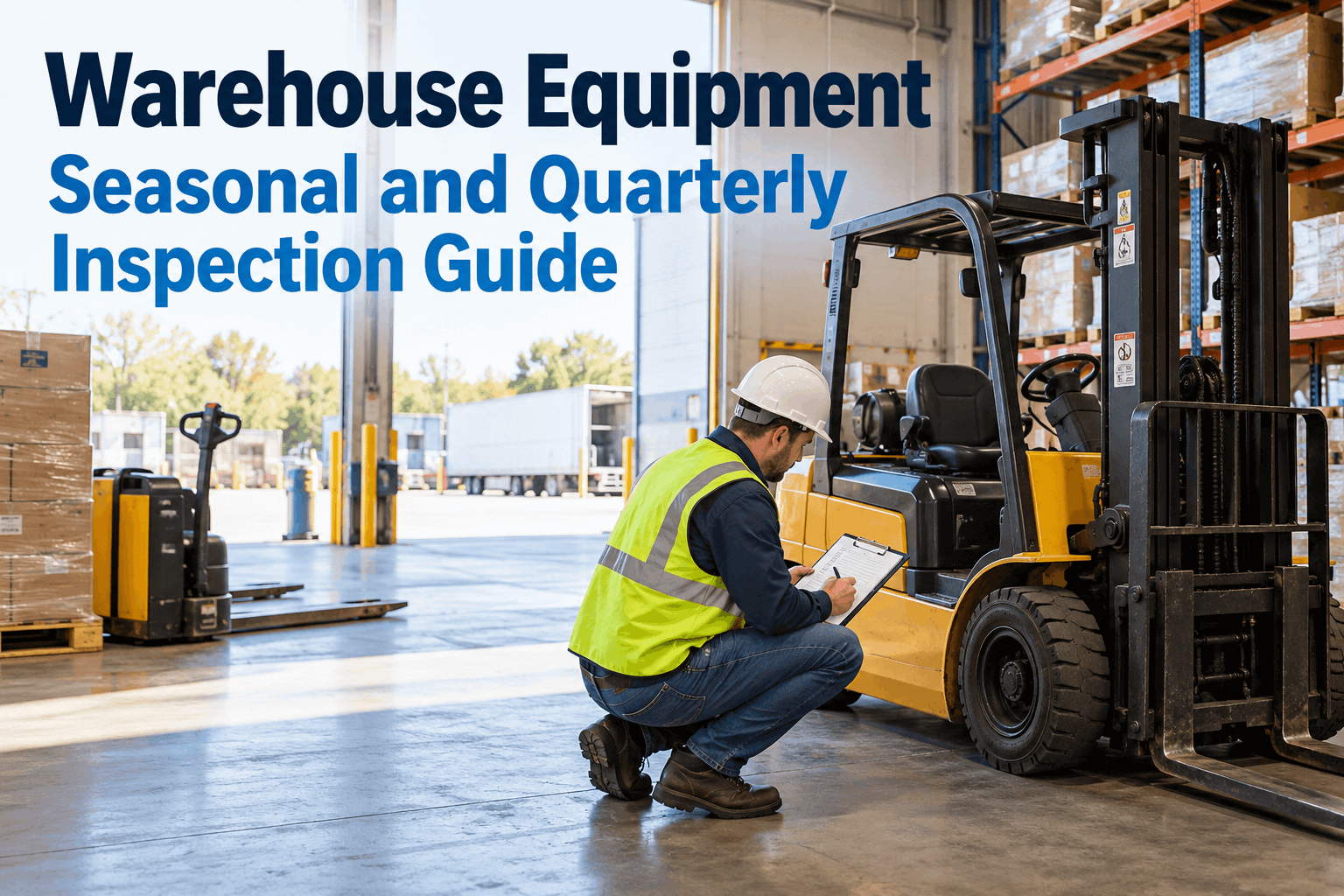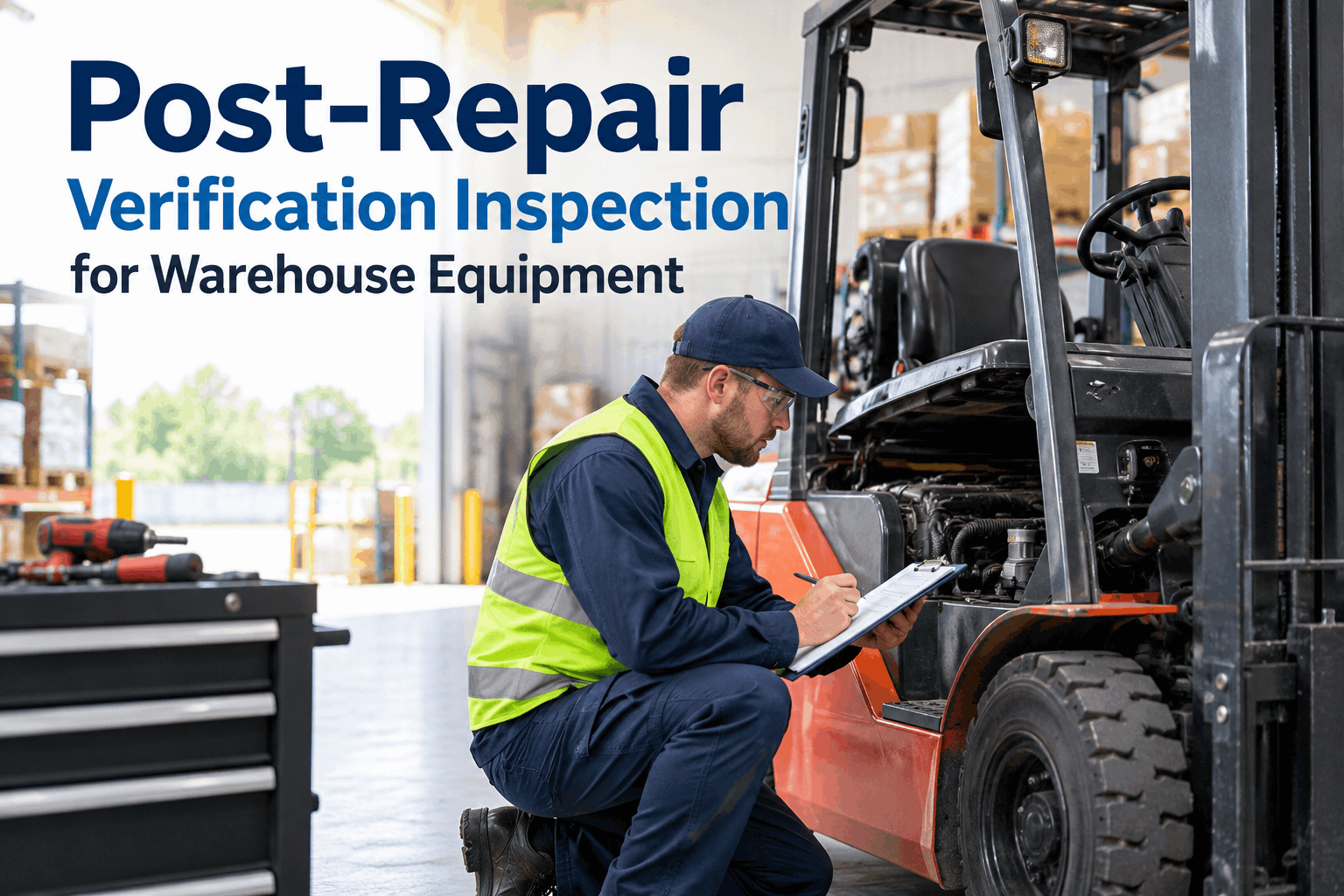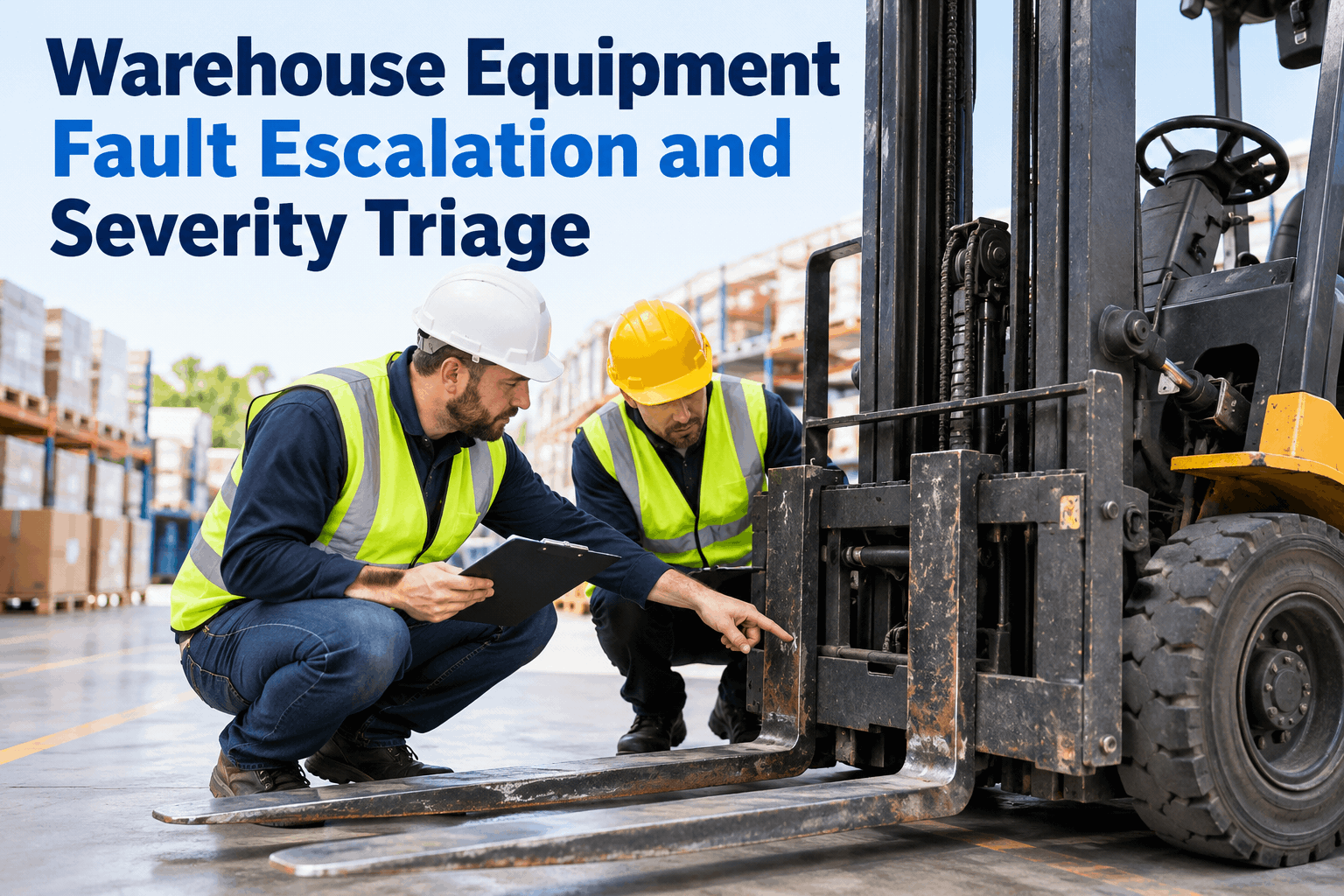
One forklift comes in with a spongy brake pedal; two bays over, another has a scuffed counterweight. Treat both the same and you either park a truck that was fine or keep running one that could hurt someone. Warehouse equipment fault escalation and severity triage tells those two apart fast — classifying each defect and keeping unsafe trucks out of service. This guide covers a three-level severity framework, the OSHA line, and the escalation workflow. Book a defect-triage demo to see it live.
Not every defect is an emergency. Some can't wait a minute.
When every fault gets the same priority, critical safety defects get buried and minor ones steal shop time. Triage by severity, escalate the dangerous ones, and schedule the rest — on record, every time.
-
CRITICAL
FL-09 · brakes ineffectiveOut of service · now
-
HIGH
FL-14 · hydraulic leakAssess · today
-
LOW
FL-22 · scuffed guard paintPlan · next PM
The problem isn't that defects go unreported — it's that they all land in the same pile. A flat list treats a brake failure like a cosmetic scratch, so the dangerous fault waits behind five trivial ones and the trivial ones pull a technician off real risk. Severity triage fixes that: classify first, then route. Here's the framework, the compliance floor underneath it, and the workflow that makes it hold across shifts.
Three levelsa warehouse equipment defect severity classification that actually sorts the queue
Most defects fall cleanly into one of three bands. The band decides the response target — not the loudest voice in the yard.
Any defect that makes the truck unsafe to operate. No judgment call, no "finish the shift."
- Brakes ineffective or failing
- Steering loss or excessive play
- Mast, fork or structural cracks
- Fuel or major hydraulic leak near heat
A real fault that needs fast attention but may allow limited, confirmed-safe use pending assessment.
- Slow hydraulic leak, lift drifting
- Worn tires, chunking but holding
- Intermittent warning horn or light
- Battery fault affecting run time
Non-safety issues, once continued operation is confirmed safe. Fix on the maintenance calendar.
- Cosmetic dents or scuffed paint
- Faded (still legible) decals
- Minor seat or trim wear
- Non-critical light lens crack
The bands set the pace, but they never override the manufacturer or the regulation: if a defect makes a powered industrial truck unsafe, it comes out of service regardless of which box it fell in. See configurable severity classification on digital inspection templates, or book a demo of defect severity routing.
The hard linewhat OSHA 1910.178 requires — and why no severity label overrides it
This is the floor your triage sits on. A severity framework helps you prioritize the grey-area faults — it never gives you permission to keep an unsafe truck running because it's "only high, not critical." A documented safety defect left unresolved while the truck keeps working is exactly the exposure OSHA and your insurer look for. For the inspection side of the same rule, there's a dedicated read our OSHA 1910.178 compliance guide.
The pipelinea warehouse equipment fault escalation workflow that holds across shifts
From the operator spotting a fault to an authorized return to service, every defect runs the same nine steps. Skip one and the chain breaks where the audit will find it.
- 1Operator identifiesFault spotted during pre-use or shift
- 2InspectVerify against the template
- 3DocumentLog defect + photo evidence
- 4Assess severityCritical / high / low
- 5Notify supervisorAuto-escalate critical faults
- 6Create work orderPriority set by severity
- 7Assign repairAuthorized technician
- 8Verify fixCorrective action confirmed
- 9Return to serviceAuthorized sign-off only
The two steps most paper systems drop are 5 and 8 — the critical fault never reaches a supervisor fast enough, and the repair gets closed without anyone confirming it actually worked. A connected workflow auto-escalates the first and blocks return-to-service until the second. See the defect-to-work-order flow that enforces both.
Who owns whatthe responsibility split that keeps operators from approving unsafe trucks
Triage only works when each role's job is clear — especially the line that an operator reports a suspected safety defect, but never self-clears it.
Spots and reports suspected defects. Does not decide a questionable truck is safe to keep running — reports up instead.
Inspects, confirms severity, performs authorized repairs, and verifies the corrective action before closing the work order.
Receives escalations, sets repair priority, tracks response targets, and manages exceptions across shifts.
The only role that authorizes return to service, after repair verification — the final gate before a truck runs again.
Consistent criteria, named responsibilities and clear response targets are what let the same triage logic hold across shifts and facilities — not one supervisor's memory. See role-based safety defect management for multi-shift sites, or book a demo of multi-shift escalation routing.
Run the lista warehouse equipment fault escalation checklist for every reported defect
When a defect comes in, walk it through this before anyone touches a wrench — it's the difference between a documented decision and a judgment call nobody can defend later.
Identify & document
- Defect recorded against the correct unit ID
- Photo evidence of the fault attached
- Reporting operator and time captured
Classify severity
- Severity band assigned: critical / high / low
- Safety-critical defects flagged for removal
- Manufacturer and OSHA limits checked
Escalate & action
- Critical faults escalated to supervisor now
- Truck set to out-of-service if unsafe
- Work order created with correct priority
Verify & return
- Repair completed by authorized technician
- Corrective action verified, not assumed
- Return to service signed by designated authority
Every box, logged and timestamped, becomes the record that proves the right call was made at the right time. Sign up free and build your escalation checklist into every inspection template.
The last gatereturn-to-service verification before a truck runs again
The most dangerous moment isn't the breakdown — it's an unverified "fixed." A truck returns to service only when all four hold.
Block return-to-service until all four are green and an unverified repair can't quietly put an unsafe truck back in the aisle. Book a demo of return-to-service controls and out-of-service status tracking.
Five metricsthe defect-management KPIs that prove triage is working
Watch these and you'll see a stalled escalation before it becomes an incident report.
Overdue safety repairs is the one to put on the wall — a single critical fault sitting past its response target is both a safety risk and a compliance liability. See defect-management reporting that trends every one of these by shift and site.
From the safety desk
Our old problem wasn't missed defects — it was that a brake complaint and a scratched panel sat in the same list, so the brake sometimes waited. Once we classified severity at the point of report and auto-escalated anything critical to me directly, the out-of-service decision stopped being a hallway argument. Now a truck that's unsafe is parked and logged in seconds, and I can show exactly who signed off before it ran again. That record is what I lose sleep over, and now I don't.
Fault escalation & severity triage FAQs
What is equipment fault severity triage?
It's classifying each reported defect by how dangerous and urgent it is, then routing it to a matching response — rather than treating every fault with the same priority. A three-level framework (critical, high, low) sets the response target, so safety-critical defects get acted on first and minor ones go on the maintenance calendar.
Does a severity label override OSHA requirements?
No. Under 29 CFR 1910.178, any powered industrial truck found unsafe or in need of repair must be removed from service until restored to safe condition. A severity framework helps prioritize grey-area faults — it never authorizes keeping an unsafe truck running because it was labeled "high" instead of "critical."
Can an operator decide a forklift is still safe to use?
No. Operators should report suspected safety defects, not independently approve continued use of potentially unsafe equipment. The decision to keep running, repair, or return to service belongs to technicians and designated authorized personnel — keeping that line clear is central to a defensible escalation process.
What are the steps in a fault escalation workflow?
Operator identifies the fault, inspects, documents it with evidence, assesses severity, notifies the supervisor, creates a priority-set work order, assigns an authorized repair, verifies the corrective action, and only then authorizes return to service. The weak points in paper systems are supervisor notification and repair verification.
Which KPIs show defect triage is working?
Critical defect response time, overdue safety repairs, defect closure rate, repeat defects, and equipment downtime by severity. Overdue safety repairs is the one to watch most closely — a critical fault past its response target is both a safety risk and a documented compliance liability.
Stop treating every defect the same
HVI gives you configurable inspection templates, defect severity classification, digital reporting, priority work orders, repair tracking and out-of-service status — so the dangerous faults get escalated in seconds and every return-to-service decision is documented. Live in under two weeks.
No credit card · Severity templates and out-of-service status from day one