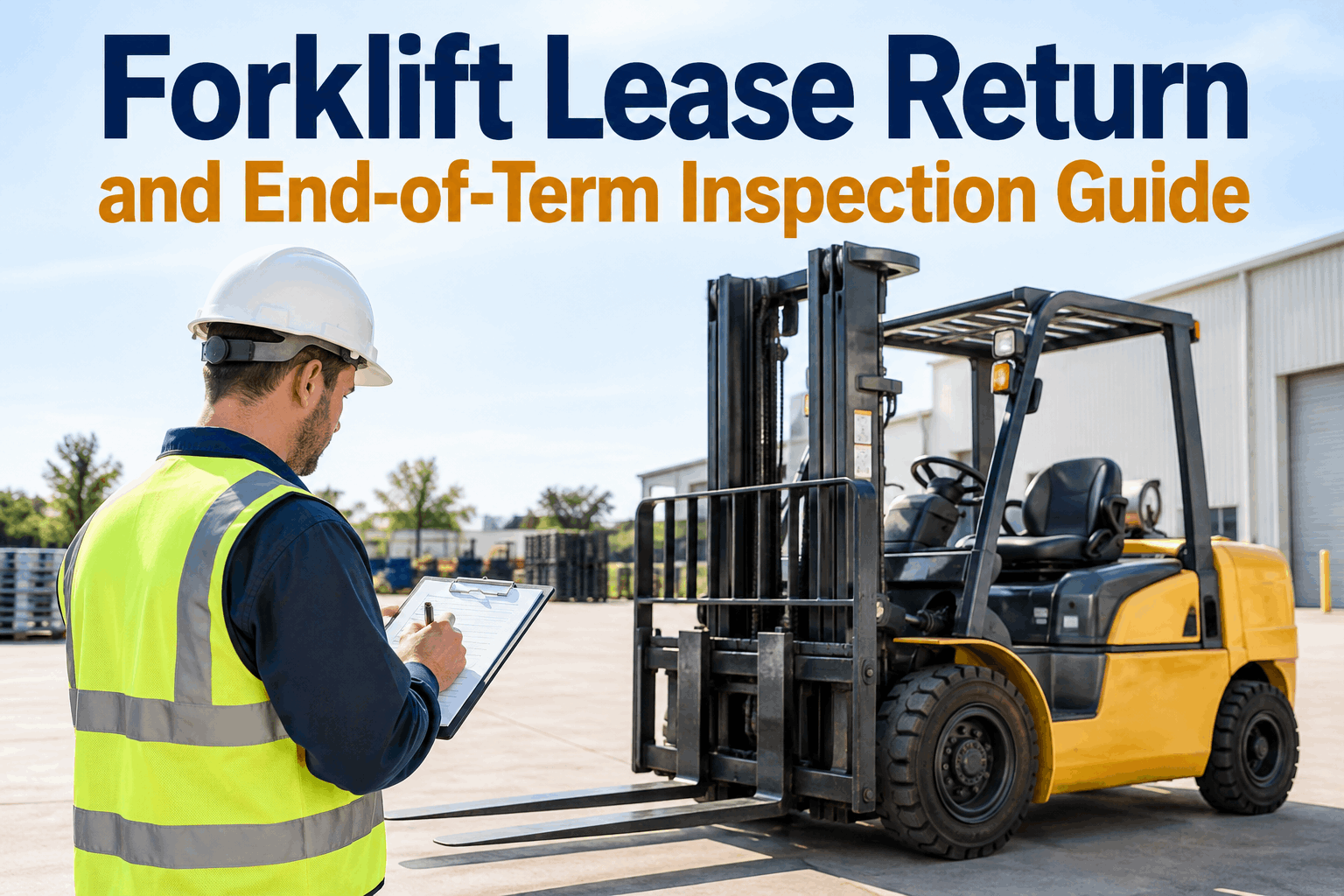
A forklift lease return almost never goes sideways because the truck was abused. It goes sideways because, on the day the inspector shows up, the lessee can't prove how the truck was treated. End-of-term charges are negotiated against the condition standard in the lease, and that argument is won by whoever has better paperwork — service history, hour logs, dated photos. Walk in with those and "excess wear" becomes a conversation; walk in with nothing and it becomes an invoice. Book a demo to see return-ready records.
The Handback Is Won by Whoever Has the Records
Excess-wear and over-hour charges are negotiated, not fixed. Documented maintenance, accurate hours and dated photos turn a disputed invoice into a conversation you can win.
Leased forklifts are the norm in a lot of warehouses, and most of the time the lease ends quietly. The expensive surprises come at the very end — a condition report you never saw coming, an hour meter that quietly ran past its allowance, a "neglect" claim you can't answer. None of it is really about the truck. It's about whether you can show, in writing, what happened to it over three or four years.
The Four End-of-Term Charges to Expect
Almost every disputed forklift lease return comes down to the same four line items. Knowing which is which tells you what documentation answers it.
Each of these is contestable, but only with evidence. A clean maintenance history held per asset answers the neglect claim before it's even made. Book a demo to see the records that answer a charge.
What "Fair Wear and Tear" Actually Means
The condition standard in the lease is more specific than most lessees remember — and it's the yardstick every charge is measured against. The line between acceptable and chargeable is usually written down.
- Light scuffing and paint wear from normal use
- Tire wear within the stated tread range
- Minor seat and cab wear consistent with hours
- Routine consumables at expected intervals
- Cracked or bent forks, mast damage, impact dents
- Tires worn past limit or chunked
- Missing overhead guard, data plate or attachments
- Deferred service that caused further damage
Reading the standard early tells you what to repair yourself and what to leave. The repair-versus-charge arithmetic almost always favors fixing it on your own terms. Sign up free and log each asset's condition against its lease terms.
The Repair-Versus-Charge Arithmetic
When you find damage before the handback, you get to choose how it's fixed. When the lessor finds it, they choose — and they bill at their rate. That gap is the whole reason to inspect early.
Catch a cracked fork or worn tire early and repair it through your own vendor at trade cost, on your schedule.
The same repair lands as an end-of-term charge at the lessor's book rate, with no chance to shop it.
A pre-return inspection, done early enough to act on, is what puts you on the left side of that comparison. Running it as a structured digital inspection with photos gives you a dated condition record too. Book a demo to see a pre-return inspection.
A Forklift Lease Return Checklist
Run this well before term end, so anything flagged can still be repaired on your terms. Group it the way the lessor's inspector will look at the truck.
Each line here is something an inspector will check — and something you can pre-empt. Keeping the condition and service evidence in one place per asset is exactly what exportable records and reports are for at handback time.
Lease-Exit Planning Starts Months Out
The single biggest mistake is treating the return as a one-day event. The leverage is all in the months before term end, when you still have time to act on what you find.
Starting at 90 days turns the inspector's visit into a formality instead of a negotiation you're losing. That lead time is only usable if the records already exist — which is the case for keeping them from day one.
A Fleet Manager's Take
The first lease return I handled, the lessor came back with a five-figure condition report and a line about "inadequate maintenance." I had a drawer of paper somewhere and no way to prove any of it in the room. We paid most of it because arguing without records is just noise.
Now every truck has its whole history in one place — services, hours, photos by date. Last handback, the inspector flagged a mast and I pulled up the repair record and a photo from six months earlier. The charge came off. Same trucks, same wear; the only thing that changed was that I could prove it.
Sierra D.Fleet Manager · multi-site distribution operation
Forklift Lease Return FAQs
What happens at a forklift lease return?
The lessor inspects the truck against the lease's condition standard, checks the hour meter against the contracted allowance, and issues an end-of-term statement for any excess wear, over-hours or missing items. Those charges are negotiable — and are usually resolved in favor of whichever side has the better documentation of how the truck was maintained.
What counts as fair wear and tear on a leased forklift?
Light scuffing, paint wear, tire wear within the stated range and seat wear consistent with hours are usually accepted. Cracked or bent forks, mast damage, impact dents, tires past limit and missing guards or attachments are typically chargeable. The exact line is written in the lease's condition standard, which is more specific than most lessees remember.
How do I avoid excess charges on a forklift lease return?
Run a pre-return inspection months before term end, so chargeable damage can be repaired through your own vendor instead of at the lessor's rate. Keep a dated service history and hour log per asset to answer any neglect or over-hour claim. The documentation, not the truck's condition alone, is what controls the final bill.
When should lease-return planning start?
About 90 days before term end. That leaves time to re-read the condition standard, run the pre-return inspection, repair chargeable items on your own terms and price any hour overage before the inspector arrives. Treating the return as a one-day event removes all your leverage, because there's no time left to act on what you find.
How does HVI help with a forklift lease return?
HVI keeps a full maintenance history per asset, tracks hours, and stores dated photo and inspection records across the lease term — the exact evidence cited at handback. You can run the pre-return inspection in the app and export the records per truck. It documents condition and service; it doesn't set or waive the lessor's charges.
Make Your Next Forklift Lease Return a Documented One
Hold each truck's service history, hours and dated photos in one place, run the pre-return inspection early, and walk into the handback with evidence for every line — so excess-wear charges meet a record, not a shrug.
No credit card · See return-ready records in a short demo