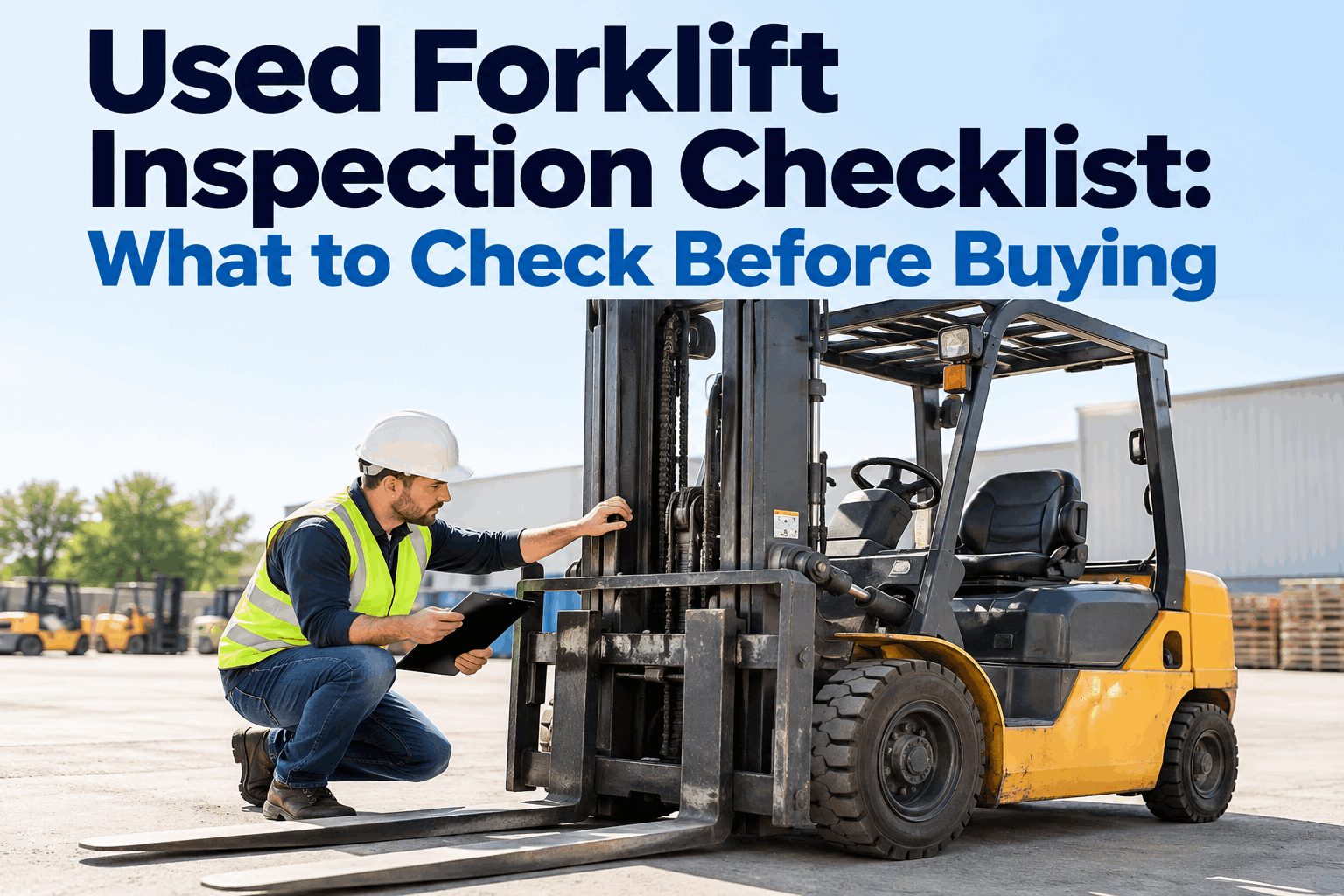
A used forklift inspection should answer one question before money changes hands: what condition are you actually buying? Hours and fresh paint tell only part of the story. Fork wear, lift chains, mast movement, hydraulics, tires, structural repairs, battery condition and service history can reveal costs that are easy to miss during a quick walkaround.
Inspect the Truck Behind the Price Tag
Turn a used forklift walkaround into a documented condition assessment covering identity, wear, structure, power source, operation and maintenance history.
Buying a used forklift is a condition-assessment problem, not just a price comparison. A structured inspection gives procurement and maintenance teams the evidence to estimate immediate repair needs, question unexplained wear and establish a baseline record if the truck joins the fleet.
Start With the Forklift's Identity — Before Inspecting the Paintverify what is being sold and whether the records tell the same story
Before measuring wear, confirm the basic facts. Record the manufacturer, model, serial number, rated capacity, power source, attachments and displayed operating hours. Check that the capacity/data plate is legible and corresponds to the truck's current configuration.
Missing history does not automatically make a truck unacceptable, but it increases uncertainty. Inspect the physical condition accordingly.
Do not treat the hour meter as a condition score. Compare the displayed hours with wear on the forks, pedals, controls, mast, carriage, tires and other high-use components. Large inconsistencies deserve questions before purchase.
Inspect From the Load Backwardthe components carrying and controlling the load deserve more than a glance
A useful forklift pre-purchase inspection moves through the machine systematically. Look for visible damage first, then record measurements or detailed observations wherever condition cannot be judged reliably from appearance alone.
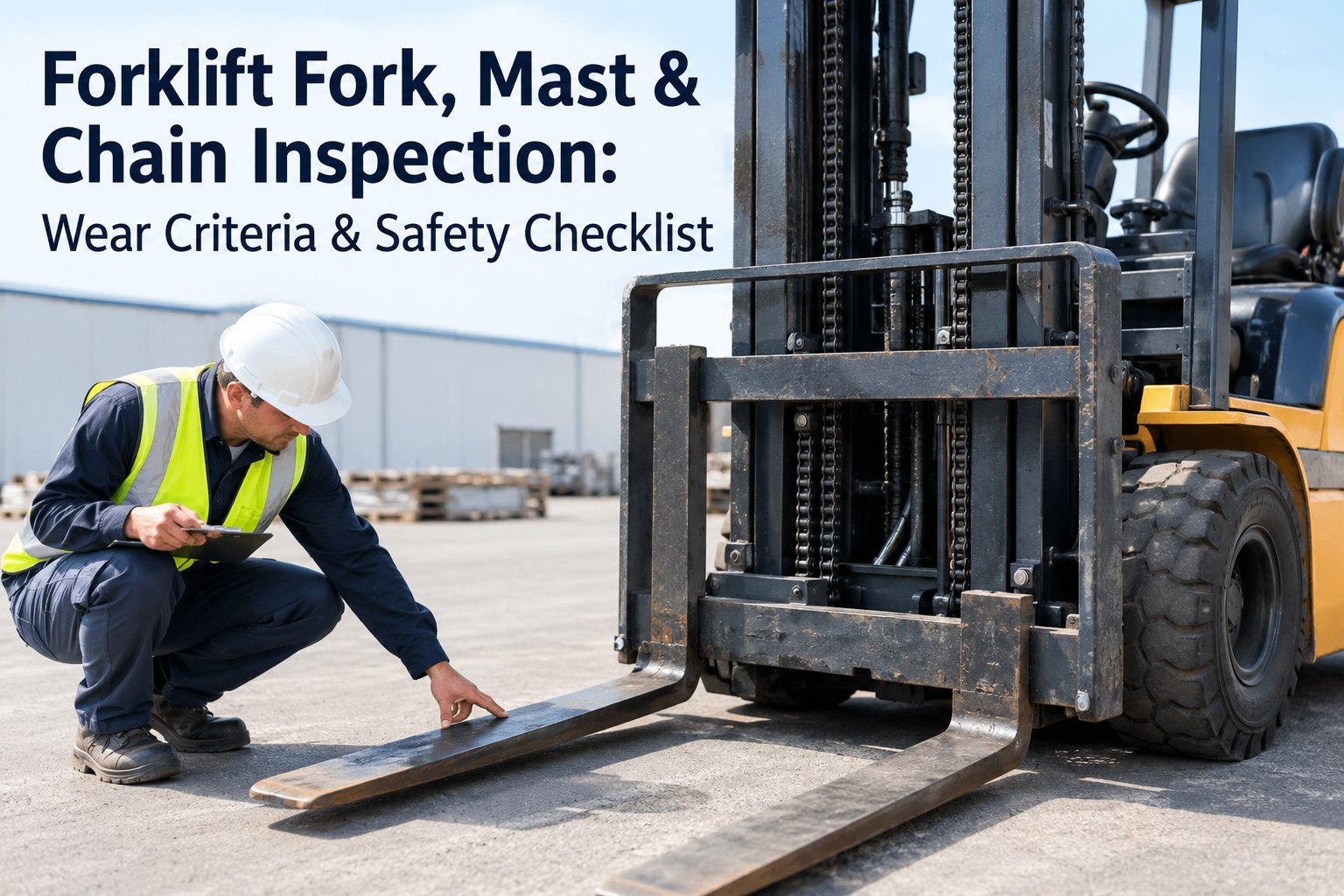
Check for cracks, bends, heel wear, blade wear and damaged locking components.
LOOK + MEASURELook for abnormal chain condition, mast damage, roller wear and excessive movement.
LOOK + COMPAREInspect hoses, fittings and cylinders for leakage, damage, chafing or rod condition.
LOOK + OPERATERecord wear, cuts, chunking, damage and pneumatic pressure where applicable.
LOOK + RECORDLook for cracks, deformation, impact damage, corrosion and evidence of structural repair.
LOOK + PHOTOGRAPHVerify identification, rated capacity and required markings are present and legible.
VERIFY + PHOTOA digital HVI inspection template can standardize these checkpoints so different buyers or technicians evaluate candidate forklifts using the same process instead of relying on memory.
Turn “Looks Worn” Into Evidencemeasurements and photos make the condition report useful after you leave the seller
Memory becomes unreliable when several forklifts are being compared. Record measurable wear where appropriate and photograph defects, identification plates, the hour meter and major components so the purchasing team can review the same evidence later.
Record the finding, not a vague pass/fail. Measurements create a baseline that can be reviewed before purchase and retained if the asset enters the fleet.
Use manufacturer specifications and qualified inspection procedures when deciding whether measured wear is acceptable. HVI's role is to help capture the value, photo and observation in a consistent record — not replace the manufacturer's acceptance criteria.
Electric Forklift? Inspect the Battery as Its Own Asseta good-looking truck can still carry a significant battery-related cost
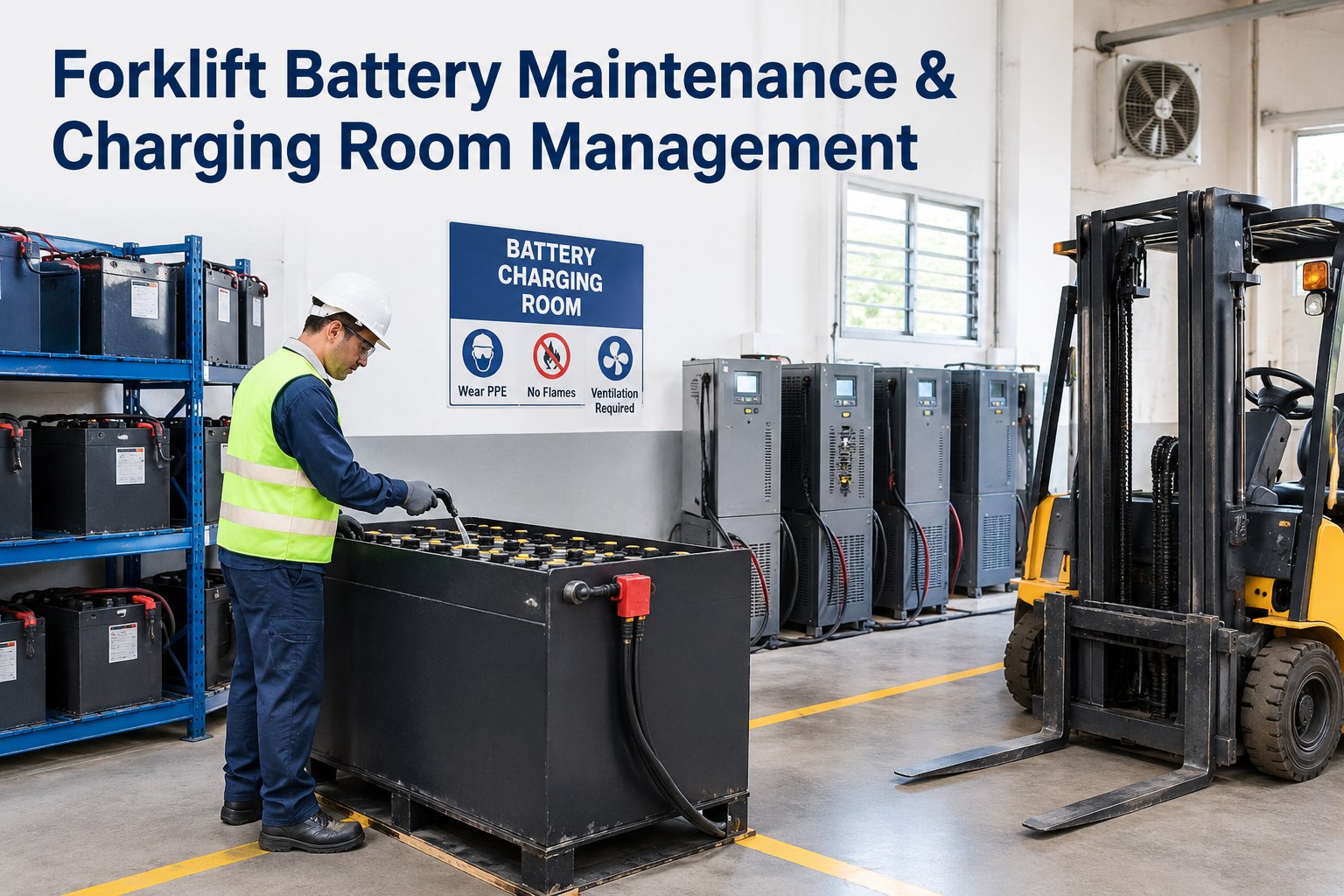
When evaluating a used electric forklift, do not let the truck inspection substitute for battery due diligence. Record the battery type and available age information, inspect cables and connectors, review charging information and ask for battery service or performance records where available.
Battery chemistry, model and available age information.
Case, cables, connectors, restraints and visible condition.
Available service, charging and battery maintenance records.
Use appropriate qualified testing if remaining battery performance matters to the purchase.
Battery procedures vary by chemistry and manufacturer. Flooded lead-acid, maintenance-free and lithium-ion systems should not be assessed with one universal battery checklist.
Now Operate It — Because Static Condition Is Only Half the Inspectionthe operational check connects visible condition with how the truck actually behaves
After the static inspection, a qualified person should perform an appropriate operational check in a safe area. The objective is to identify abnormal behavior in travel, steering, braking, lifting, tilting and applicable hydraulic or safety functions.
Convert Findings Into a Purchase Decisiona checklist is useful only when it changes what happens next
The final report should separate minor maintenance from findings that need specialist review or materially affect the purchase. Avoid reducing a complex machine to one arbitrary condition score. Show the evidence and the expected next action.
Record the condition and include expected maintenance in the ownership plan.
Evidence → maintenance estimateGet qualified evaluation, measurements or repair estimates before committing.
Evidence → specialist reviewDo not treat a major unresolved defect as a normal bargaining item.
Evidence → resolution requiredA structured used forklift condition assessment gives procurement a clearer basis for negotiation while giving maintenance a starting record if the truck is purchased. Start your HVI free trial to build a repeatable equipment inspection process.
If You Buy It, Don't Throw Away the Pre-Purchase Inspectiontoday's condition report can become tomorrow's maintenance baseline
The inspection becomes more valuable when it follows the forklift into your fleet. Instead of creating a new asset record from zero, retain the initial hours, photos, measurements, known defects and available service information as the beginning of its maintenance history.
Capture condition before purchase.
Review defects and expected work.
Create the fleet asset record.
Close known maintenance items.
Continue PM and inspection history.
That continuity is the strongest HVI fit for this workflow: one documented inspection can support the purchase evaluation and then become part of the asset's ongoing maintenance record rather than disappearing in a folder after procurement signs the invoice.
Used Forklift Inspection: Quick Answers
What should I check before buying a used forklift?
Verify the forklift's identity, serial information, capacity plate, hour meter and available service history. Inspect the forks, lift chains, mast, carriage, tires, hydraulics, frame, overhead guard and power source. Finish with an appropriate operational check of travel, steering, brakes, lift, tilt, controls and safety devices.
How important are forklift hours when buying used?
Operating hours are useful but should not be treated as a complete condition rating. Duty severity, maintenance quality and operating environment matter. Compare the displayed hours with service records and physical wear on high-use components to build a more complete picture.
What should I look for on used forklift forks and lift chains?
Look for visible cracking, bending, deformation, abnormal wear and damaged fork locking components. Inspect lift chains and the mast for abnormal condition, wear, damage and alignment concerns. Measurements and acceptance decisions should follow the forklift and component manufacturer's applicable criteria.
How should I inspect a used electric forklift battery?
Identify the battery type and available age information, inspect the case, cables, connectors and restraints, and review available charging or service records. If battery performance materially affects the purchase, appropriate testing by qualified personnel can provide information that a visual inspection cannot.
Why document a used forklift pre-purchase inspection digitally?
A digital report keeps identification data, measurements, photos, findings and notes together so buyers can compare equipment using documented condition rather than memory. If the forklift is purchased, the same information can become the starting point for its asset and maintenance history.
Build a Used Forklift Condition Report You Can Actually Make a Decision From
Use HVI to standardize pre-purchase inspections, capture photos and measurements, document defects and carry the condition record into future maintenance if the forklift joins your fleet.