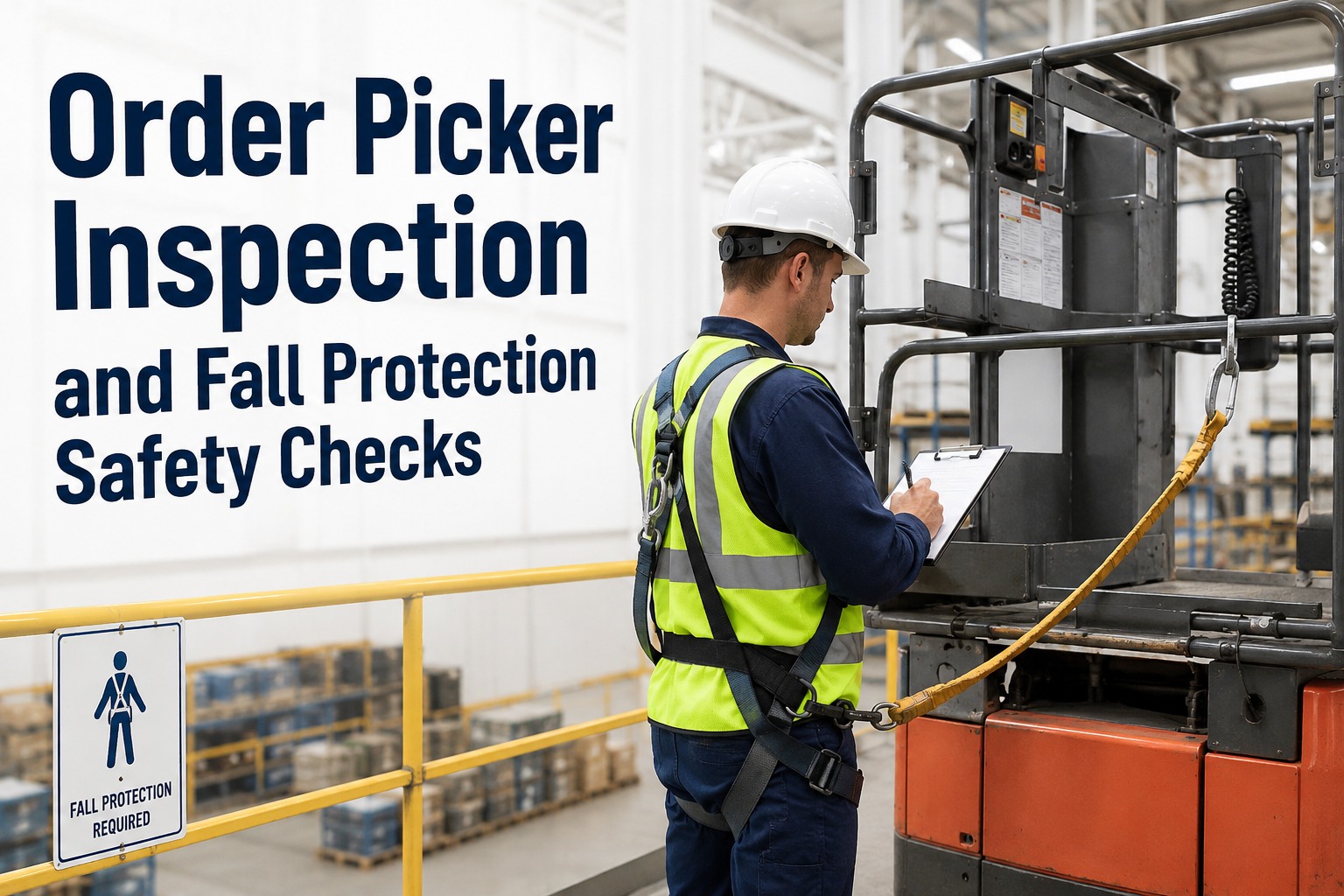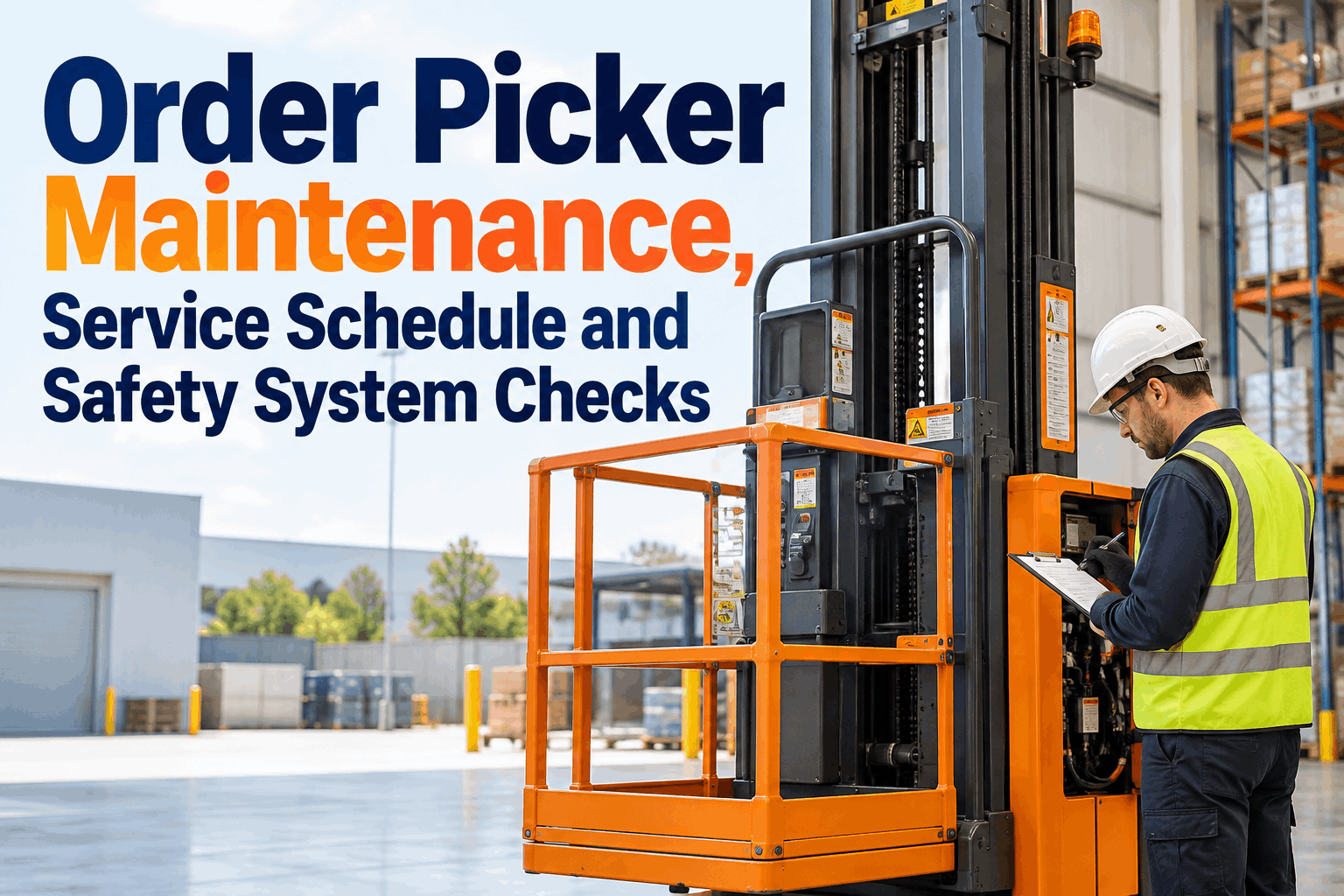
Order picker maintenance needs to protect both machine reliability and the operator working at elevation. A practical program combines pre-use inspections with scheduled service for the mast, chains, platform, controls, brakes, battery and hydraulic or lift systems, while giving fall protection, gates and emergency functions their own documented safety checks.
Maintain the Machine Around the Operator's Elevated Work Zone
An order picker combines powered-industrial-truck systems with an elevated operator platform. HVI helps warehouse teams standardize inspections, capture safety defects, schedule preventive service and keep completed maintenance connected to each truck.
Order pickers deserve a maintenance program that reflects how they are actually used. Unlike a standard lift truck where the operator remains near ground level, an operator-up order picker raises the person with the platform. That makes platform condition, operator-protection systems and controlled lifting just as important to the maintenance plan as wheels, brakes, steering and battery condition.
An Order Picker Inspection Should Follow the Operator From Ground to Height
A useful order picker inspection checklist should not be a generic forklift form with a few extra fields. It should reflect the elevated platform, the truck's lift mechanism and the safety equipment installed on the specific model.
Use the truck manufacturer's inspection instructions and your applicable safety requirements to define the exact checkpoints.
The inspection should be specific enough to identify which system has a problem rather than producing a generic “forklift failed” result. HVI can organize equipment-specific inspection forms around the order picker model and your required checks. See how HVI can turn your order picker safety checks into a repeatable digital inspection.
Give Fall Protection and Platform Safety Their Own Inspection Layer
Order picker safety changes when the operator rises with the platform. Fall-protection equipment, attachment arrangements, gates, rails and the platform itself should therefore be treated as visible safety systems—not as minor accessories buried inside a general equipment checklist.
Inspect the fall-protection equipment required for the specific truck, application and employer program before use.
Look for damage, missing hardware or conditions that prevent the installed gate or guard arrangement from operating correctly.
Inspect the operator area for visible damage, loose components, floor concerns or other conditions affecting normal use.
Include the emergency and lowering functions specified by the truck manufacturer in the appropriate inspection or service routine.
The appropriate system depends on the truck configuration, manufacturer instructions, employer safety program and applicable requirements. Document the equipment and inspection process actually required for your order picker operation.
Keeping these checks distinct also makes failures easier to review. Instead of recording “safety issue,” the inspection can identify whether the concern involves personal fall-protection equipment, a platform gate, structural damage or an emergency function. See how HVI can document order picker fall-protection and platform checks alongside the truck inspection.
Order Picker Maintenance Must Control What Raises the Platform
The mast and lift system carry a different maintenance consequence on an operator-up truck because the platform and operator move with the lifting structure. Inspection findings around chains, mast components, rollers, hydraulic components or other lift-system parts should therefore move into maintenance review without losing their connection to the truck.
Look for visible damage, abnormal movement and service conditions specified by the manufacturer.
Inspect and service lift chains according to manufacturer procedures and required wear criteria.
Review applicable rollers, guides and related components for wear or abnormal condition.
Inspect accessible components and investigate leaks or changes in normal lifting performance.
Use manufacturer procedures and qualified service guidance for chain wear, adjustment, mast repair, hydraulic service and other technical limits rather than inventing universal tolerances.
HVI's maintenance management workflows can retain lift-system findings with the resulting repair and service record. See how HVI can connect order picker mast and lift inspections with maintenance work.
Build an Order Picker Service Schedule Around Different Maintenance Triggers
A good order picker maintenance schedule separates frequent operating checks from deeper technician service. The exact intervals should come from the manufacturer and the fleet's operating requirements, but the program can still organize work into clear maintenance triggers.
Review the required truck, platform, control and safety items before operation according to the applicable inspection program.
Perform the manufacturer-defined preventive work for mast, chains, lubrication, battery, drive and other service systems.
Investigate reported damage, abnormal operation or failed safety checks and document the actual repair decision.
Close the maintenance record only after the required repair and verification process has been completed.
Use the maintenance manual for the specific truck to establish inspection, lubrication, adjustment, battery and service intervals. HVI can then schedule those requirements rather than replacing them.
With preventive maintenance scheduling, the recurring service program can stay connected to the same equipment record used for daily inspections and repairs. See how HVI can organize your order picker service schedule by truck.
Order Picker Safety Checks Need a Clear Defect Closeout Path
Finding a defect is only the beginning of the maintenance process. A safety-related inspection result should make it clear which truck is affected, what the operator observed, what maintenance action followed and when the required work was completed.
Order Picker OP-17
Follow the required removal-from-service and repair process.
Assign the inspection, adjustment or repair needed for the actual condition.
Keep the finding attached to the correct order picker.
Capture the actual condition instead of a vague maintenance note.
Retain the work performed, parts or actions as appropriate.
Use history to identify repeated findings on the same truck or system.
This is where digital defect tracking becomes more useful than an inspection form alone. HVI can connect inspection findings with maintenance work and retain the completed result against the asset. See how HVI can carry an order picker safety defect from inspection through maintenance closeout.
Maintain the Whole Order Picker—Including the Systems Protecting the Person at Height
A strong order picker maintenance program connects truck condition with elevated-work safety. Mast components, chains, controls, brakes and batteries matter, but so do the platform, gates, fall-protection arrangement and emergency functions specified for the equipment.
HVI helps warehouse teams standardize those inspections, schedule preventive maintenance, route defects into work and retain service history for each order picker.
Order Picker Maintenance and Inspection FAQs
What should an order picker maintenance checklist include?
The checklist should follow the manufacturer requirements for the specific order picker. Common inspection areas can include wheels and tyres, brakes, steering, battery condition, mast and lift components, chains, hydraulic components where fitted, operator controls, warning devices, platform condition, gates and installed safety systems. The fall-protection equipment and emergency functions required for the particular application should also be handled through the appropriate inspection program.
How often should an order picker be inspected?
Inspection frequency depends on the type of check and the applicable requirements. OSHA's powered industrial truck rule requires industrial trucks to be examined before being placed in service and at least daily; where trucks are used on a round-the-clock basis, they must be examined after each shift. Scheduled preventive maintenance should separately follow the manufacturer's service intervals and the fleet's maintenance program.
Do order picker operators need fall protection?
Order pickers expose operators to a fall hazard because the operator platform elevates. The appropriate protection should be determined from the truck configuration, manufacturer instructions, applicable consensus standards, employer safety program and governing requirements. OSHA guidance for narrow-aisle order pickers recommends appropriate, properly fitted and adjusted fall-protection equipment and training in its use.
What happens if an order picker is found defective or unsafe?
Under OSHA's powered industrial truck rule, a truck found to need repair, be defective or be unsafe must be taken out of service until it has been restored to safe operating condition. The maintenance process should document the original finding, required repair and completed work according to the employer's procedures.
How does HVI help manage order picker maintenance?
HVI can organize order-picker-specific inspections, schedule preventive maintenance, capture equipment and safety defects, route findings into maintenance work and retain completed service against each truck. This gives warehouse maintenance teams a connected history instead of separate inspection sheets, spreadsheets and repair notes.