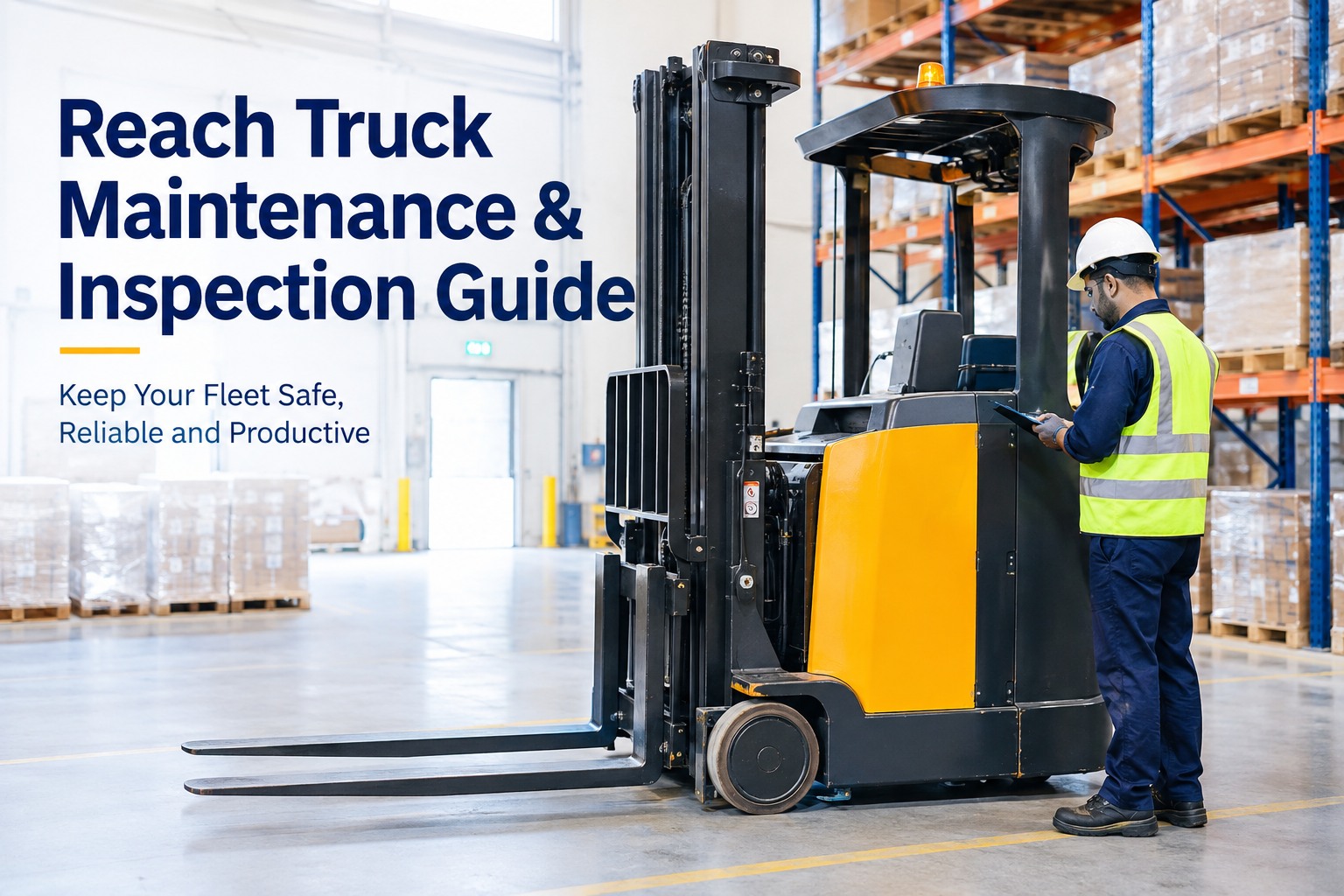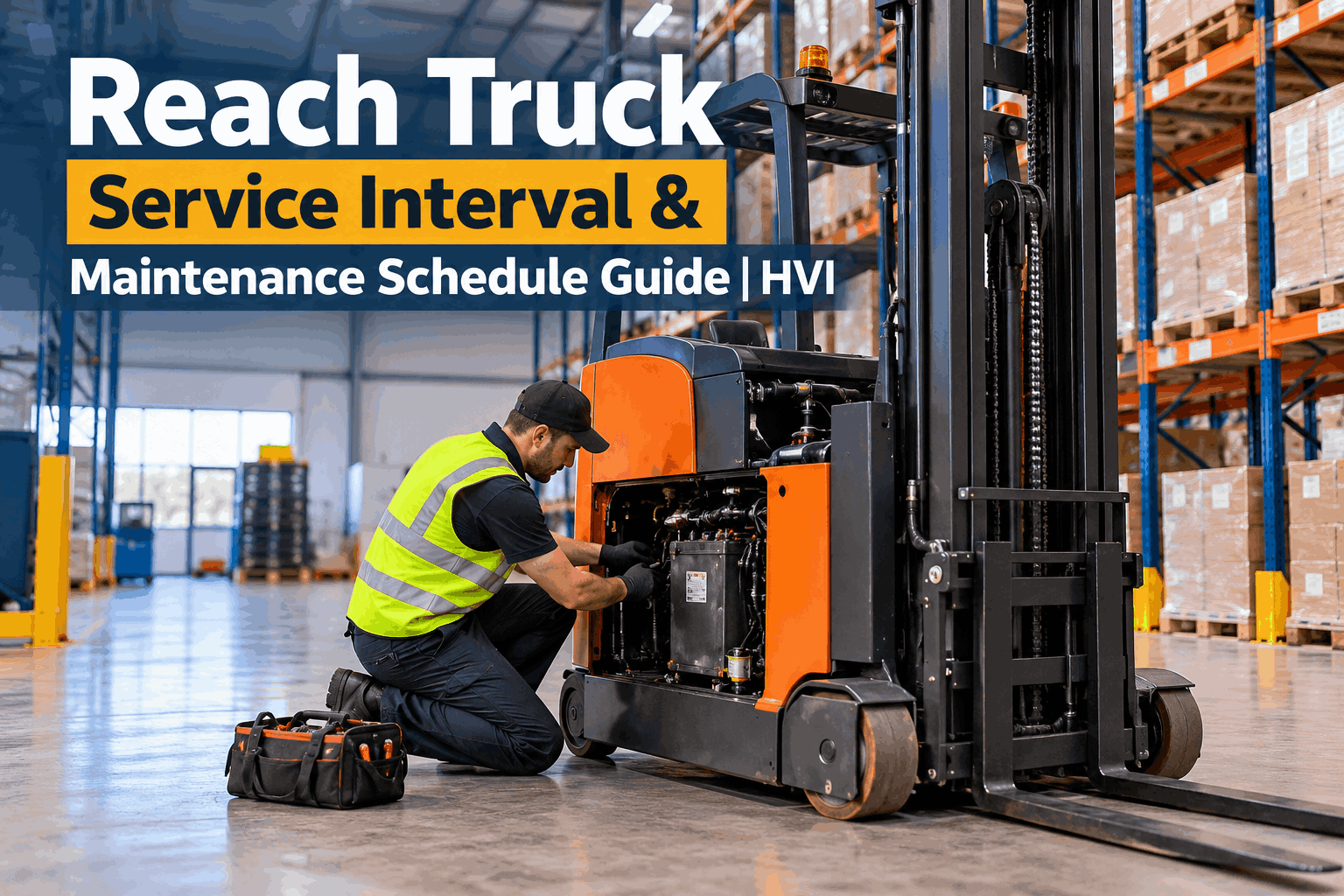
Getting the reach truck service interval right is the difference between a truck that runs three shifts in a tight aisle without drama and one that drops a mast or seizes a reach carriage mid-pick. The trap most fleets fall into is running reach trucks on the same generic PM schedule as their counterbalance forklifts — but a reach truck has an extension mechanism, load wheels and a multi-stage mast that a counterbalance truck simply doesn't, and those parts wear on their own clock. Book a demo to see reach-truck service intervals built per asset, not copied from a forklift.
A Reach Truck Needs Its Own Service Clock
Run it on a counterbalance schedule and the reach carriage, rollers and load wheels get undermaintained. A reach truck service interval has to be built around the parts that make it a reach truck.
Here's the practical schedule — why a reach truck earns its own PM plan, the reach mechanism component by component, what sets your intervals, a layered service-interval table, mast and load-wheel checks, battery and charging, and why an equipment-specific schedule beats one generic PM across the fleet.
Why a reach truck needs its own scheduleit isn't a counterbalance truck with a longer reach
Reach trucks work harder in ways a counterbalance forklift never does: they extend a loaded carriage into racking, run multi-stage masts to full height in narrow aisles, and turn tight all shift. That duty puts stress on parts a generic forklift schedule doesn't even list.
Extra parts, extra wear. The reach mechanism, extension rollers, load wheels and multi-stage mast are reach-truck-specific wear items. Copy a counterbalance PM schedule onto a reach truck and those exact parts are the ones that go unserviced — right up until they fail at full height in a busy aisle.
The reach mechanism, component by componentthe service points a generic schedule skips
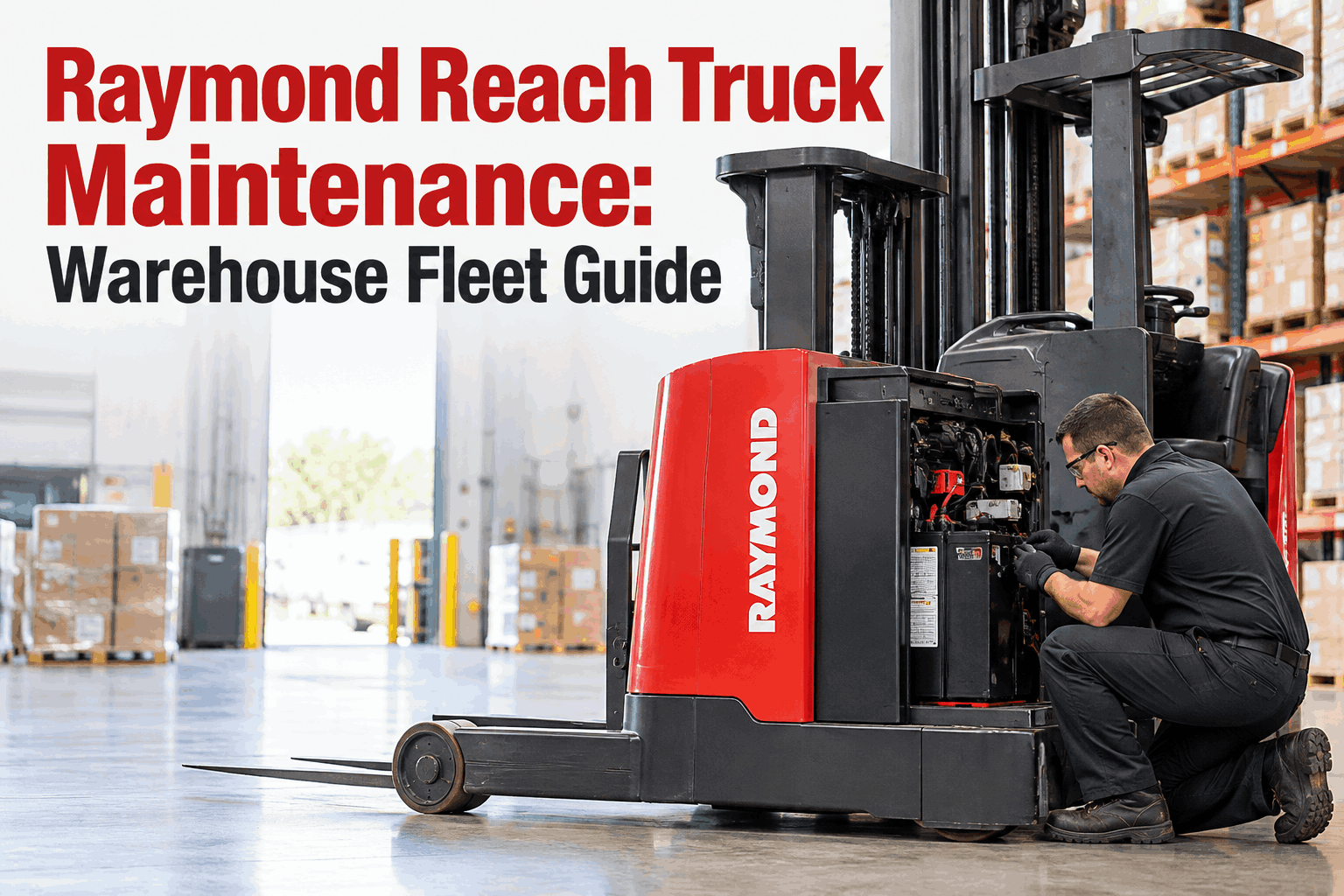
The reach mechanism is what extends the forks into the rack and back, and it's the defining system on the truck. Every part of it takes cyclic load thousands of times a shift, so each belongs on its own service interval — not lumped into a generic mast check.
This is the layer a shared forklift schedule quietly leaves out. Building it into an hour-based preventive maintenance schedule per truck catches roller and bearing wear before it costs you a rack-height failure. Book a demo to schedule the reach mechanism properly
What actually sets your service intervalswhy one fixed number doesn't fit every truck
A reach truck service interval isn't a single figure you copy from a manual — it's a balance of four factors. Two trucks of the same model on different jobs can need service weeks apart, which is exactly why the schedule has to be per asset.
The reliable way to handle this is an hour-meter-driven schedule with a calendar backstop, tuned per truck. Following the manufacturer's recommendation as the baseline and then adjusting for your duty cycle is what keeps a hard-working truck from slipping through the gaps. The practical setup is to let each truck's hour meter and a calendar date each trigger the service, whichever lands first, so nothing rides past its interval.
A layered reach truck service schedule
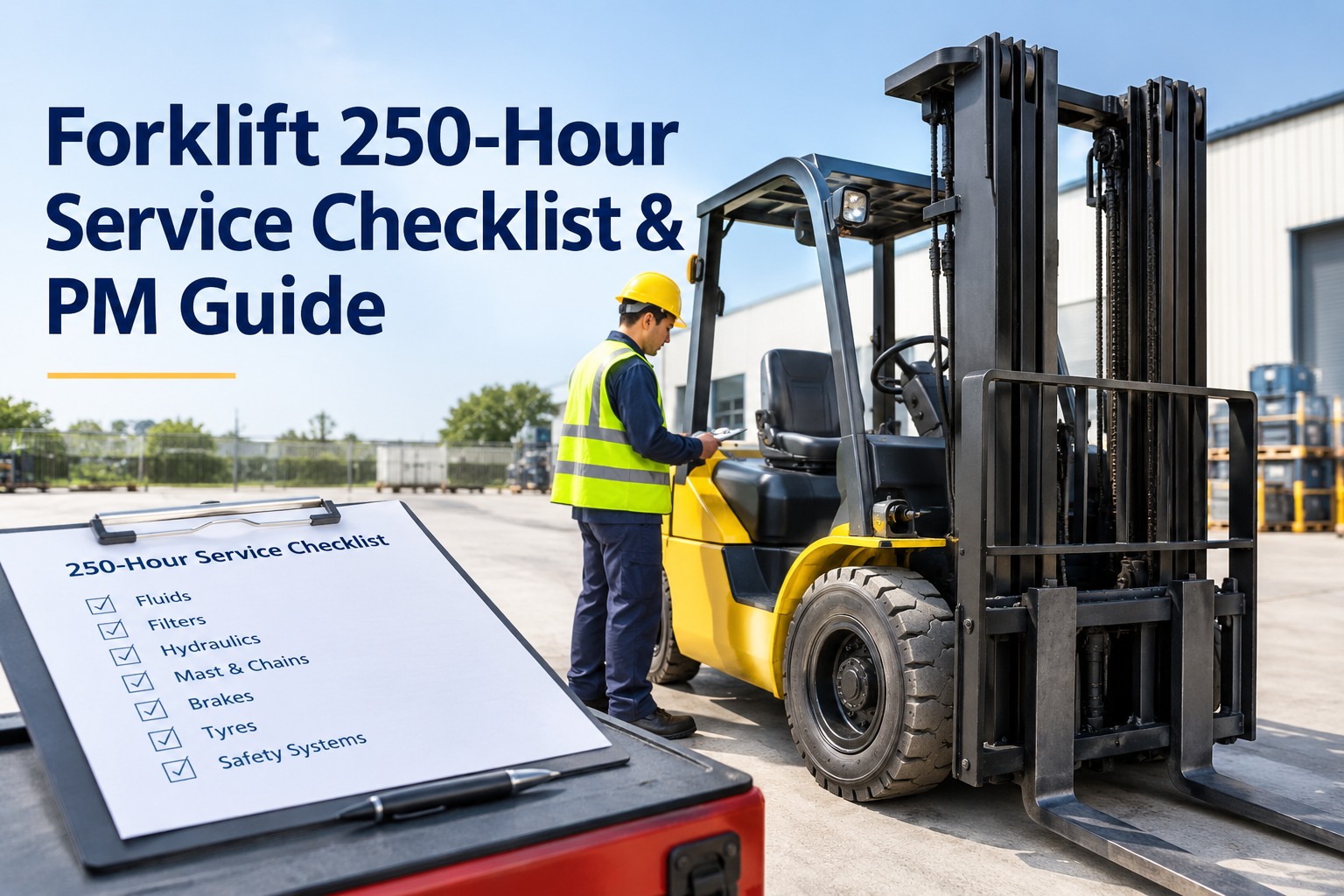
The most practical way to run reach-truck PM is in layers — a quick daily check, deeper service at hour milestones, and a full annual. Treat these as a starting framework and tune the hours to your manufacturer's guidance and duty cycle.
The hour figures are a common starting point, not a rule — a cold-store or three-shift truck may need the 250-hour service closer to 200, while a light-duty unit can stretch. That's the whole reason to drive it off each truck's real hours rather than a fleet-wide guess — a schedule that adjusts to how hard each unit actually works, instead of a single number that over-services the light trucks and under-services the busy ones.
Mast, chains & load wheelsthe high-cycle wear items that decide uptime
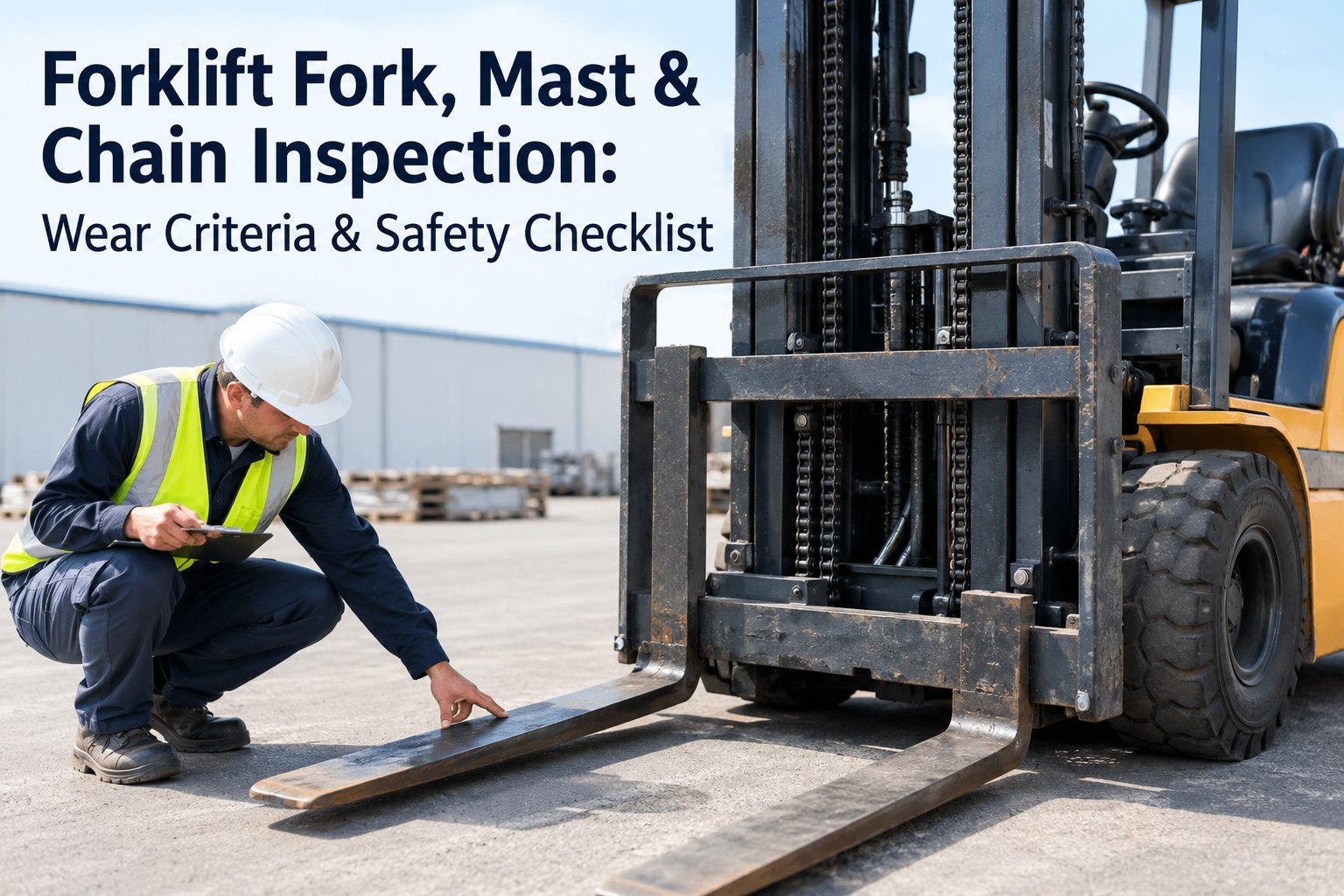
The multi-stage mast and the wheels take the load and the mileage, and both wear steadily under narrow-aisle duty. These are the checks that keep a reach truck lifting straight and rolling true between services.
Load wheels especially are a reach-truck tell: chunked or flat-spotted wheels make the truck bang over floor joints and throw off fork positioning at height. Replacing them on a wear schedule beats waiting for the operator to complain about the ride. Track it against the wider warehouse MHE maintenance plan so nothing falls between trucks.
Battery & charging on electric reach trucksthe power system that runs the whole shift
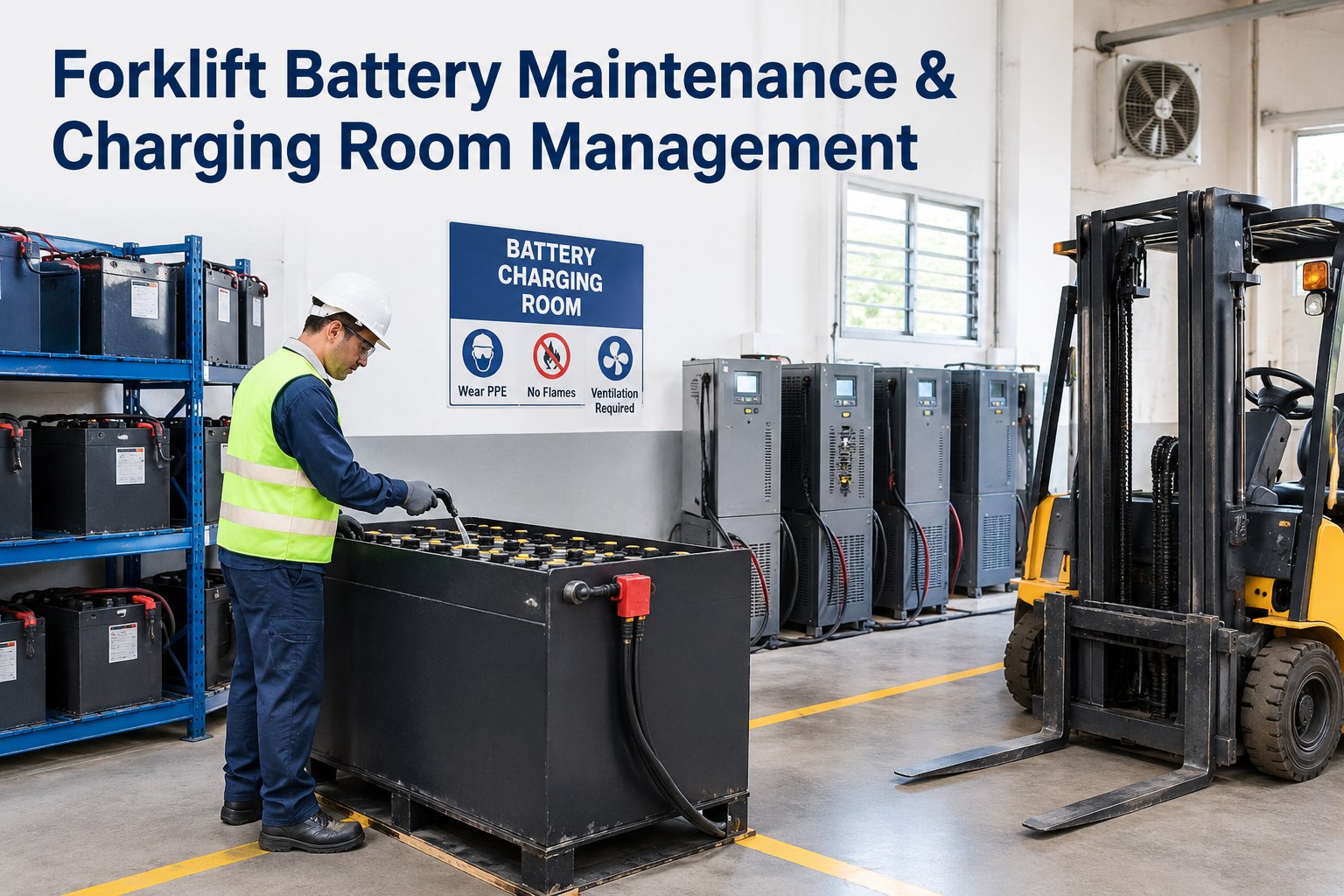
Most reach trucks are electric, so the battery and charging system are as service-critical as the mechanics. A weak battery or a bad connector doesn't just cut runtime — it can drop performance mid-lift, which matters at rack height.
Battery health also overlaps the wider daily forklift inspection checklist the operator already runs, so the pre-shift catch and the scheduled service reinforce each other. Book a demo to fold battery PM into the reach-truck schedule
Why equipment-specific beats one generic schedulethe control you lose with a fleet-wide PM
Plenty of fleets run every truck — counterbalance, reach, order picker — on one shared PM template because it's simpler to set up. It's also how reach-specific parts get missed and how you lose the ability to see which trucks actually cost you money.
- Reach mechanism & load wheels not listed
- Same interval for a 1-shift and 3-shift truck
- No per-asset history to spot repeat faults
- Cost blurred across the whole fleet
- Reach-truck tasks on their own intervals
- Intervals driven by each truck's real hours
- Full maintenance history per asset
- Cost tracked per truck to find the money pits
The payoff of the specific approach is visibility: when each reach truck carries its own schedule, history and cost, the unit that keeps eating rollers or batteries stops hiding in a fleet average and shows up as the repeat offender it is. Start free and give each reach truck its own schedule and history.
From a warehouse maintenance lead
We used to run one PM template across the whole fleet, and the reach trucks were quietly the worst for it — the reach carriage and load wheels never had their own service line, so we only touched them when something broke in the aisle. Once we split the reach trucks onto their own hour-based schedule, the surprise breakdowns dropped off, and the cost tracking showed us two trucks that were eating load wheels every few months because of a floor-joint problem we'd never have spotted in a fleet average. Now every reach truck has its own schedule and its own history.
How HVI runs reach truck service intervalsper-asset schedules, hour & calendar PM, cost tracking
Reach-truck service holds up when each truck carries its own schedule, history and cost instead of hiding in a fleet template. HVI's equipment-specific templates, hour and calendar PM, and per-asset tracking keep every truck on its own clock.
Build the reach truck schedule
Reach, mast, wheel and battery tasks on hour and calendar intervals per truck.
Capture defects, photos & cost
Every service, defect and part cost logged against the specific truck.
History flags repeat issues
Per-asset history and cost surface the trucks that keep eating parts.
See how reach-truck schedules, PM and per-asset cost live inside HVI's inspection and maintenance platform. Walk through it in a quick demo
Reach truck service intervals: quick answers
What is a typical reach truck service interval?
A common framework is layered: a daily operator pre-shift check, a deeper service around every 250 operating hours covering the reach mechanism, mast and hydraulics, a 500-hour service for load wheels, brakes and battery, a heavier 1000-hour service, and a full annual structural and battery check. These hour figures are a starting point — the right interval depends on the truck's actual operating hours, workload and site conditions, so always tune them to the manufacturer's recommendation and your duty cycle.
Why can't I use my counterbalance forklift PM schedule for reach trucks?
Because a reach truck has components a counterbalance forklift doesn't — the extension carriage, reach rollers and guides, load wheels, and a multi-stage mast that runs to full height in narrow aisles. A counterbalance PM schedule has no service lines for those parts, so they go unmaintained until they fail. An equipment-specific schedule puts the reach-truck-specific wear items on their own intervals, which is the whole reason reach trucks need their own plan.
Should reach truck service be based on hours or calendar time?
Both — whichever comes first should trigger the service. Operating hours are the truest measure of wear, so a three-shift truck reaches its intervals far faster than a one-shift truck. But seals, fluids and batteries also age with time, so a calendar backstop catches low-hour trucks that would otherwise never trigger an hours-based service. The most reliable approach is an hour-meter-driven schedule with a calendar backstop, adjusted for workload and site conditions.
What are the most overlooked reach truck maintenance points?
The reach mechanism and load wheels. Because they don't exist on a counterbalance truck, they're the parts most often missing from a shared PM schedule. Worn extension rollers make the reach jerky and hurt placement accuracy at height, and chunked or flat-spotted load wheels make the truck bang over floor joints and throw off fork positioning. Both wear gradually under narrow-aisle duty, so they belong on a defined wear-and-replace interval rather than a run-to-failure approach.
How does HVI help manage reach truck service intervals?
HVI lets you build an equipment-specific PM schedule for reach trucks with reach-mechanism, mast, load-wheel and battery tasks, triggered by each truck's hour meter or calendar date rather than a fleet-wide guess. Every service, defect and part cost is logged against the individual truck, so you get full maintenance history and per-asset cost tracking — which surfaces the specific trucks that keep eating rollers, wheels or batteries instead of losing them in a fleet average.
Give every reach truck its own service clock
HVI runs reach-truck service intervals per asset — a reach-mechanism, mast, load-wheel and battery schedule triggered by each truck's hours or calendar, with maintenance history and per-asset cost tracking that catches the repeat offenders before they cost you a shift.
No credit card · Equipment-specific reach truck schedules on day one
- Reach carriage, rollers & guides
- Multi-stage mast & chains
- Load & drive wheels, bearings
- Battery, charger & connectors
- Hour & calendar triggers per truck