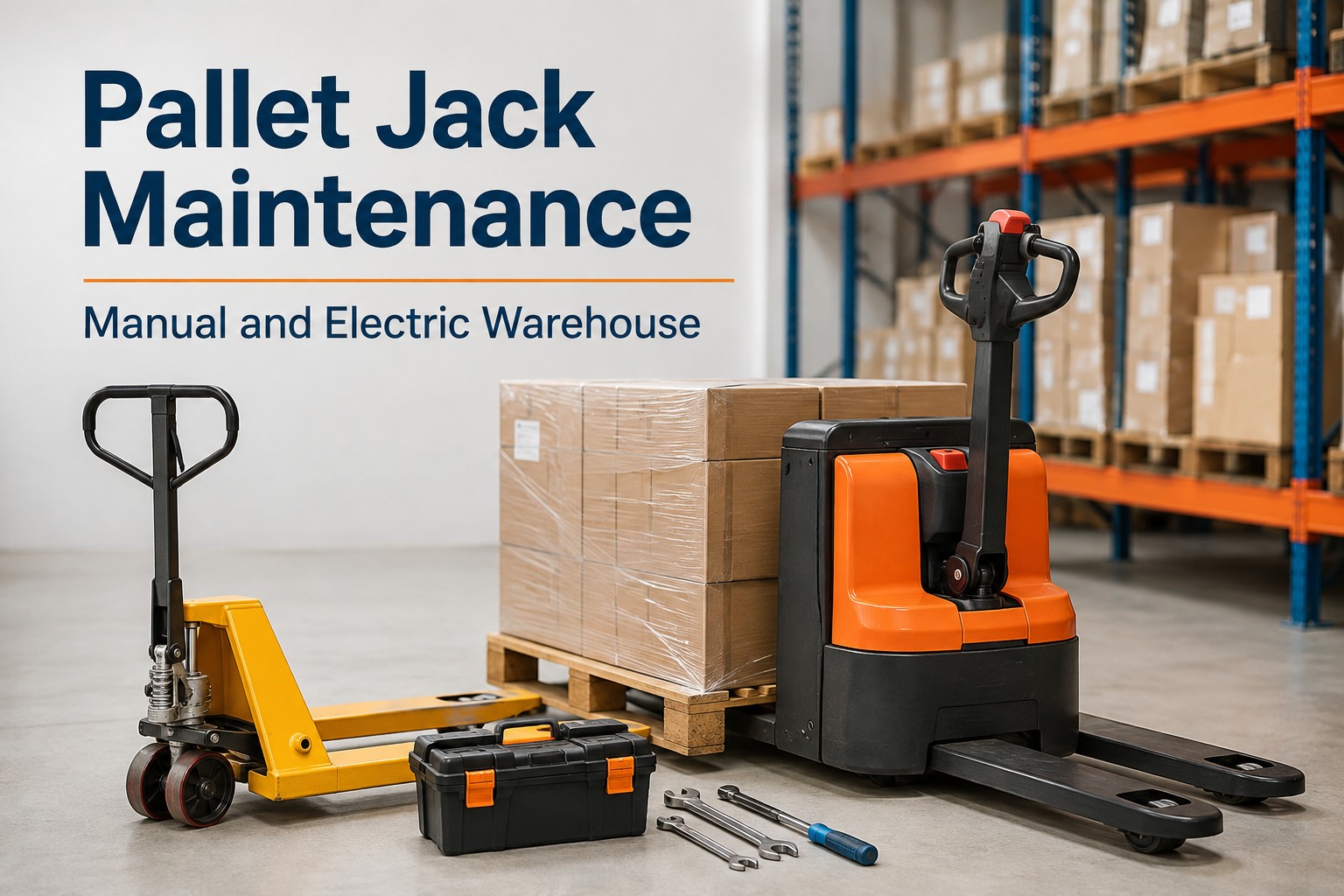
Every warehouse has them: the pallet jack that's been "repaired" four times this year, the walkie whose battery costs more than the unit is worth. Pallet jack maintenance keeps a healthy fleet running — but knowing which units to stop pouring money into is a different decision, and it's the one that quietly drains a budget. This page is about the repair-vs-replace call: when a jack is worth fixing, and how to tell with data instead of gut feel. Book a demo to see repair history and cost per unit.
Some of Your Pallet Jacks Cost More to Keep Than to Replace
A single repair is easy to approve. Five repairs on the same unit is a replacement you didn't make. Without per-jack history, that pattern hides — and the worst offenders keep getting fixed instead of retired. Here's how to spot them.
Pallet jacks are cheap individually and countless collectively, so the repair-vs-replace decision almost never gets made deliberately — a unit just gets fixed again because approving one more repair is easier than proving it should be retired. That default is where the money leaks. The fix is a per-unit record that makes the pattern visible.
Repair or Replace: The Five Factors That Decide
The call isn't a single number — it's a handful of signals read together. When several point the same way, the decision makes itself. Here's what to weigh on any pallet jack before approving the next fix.
Repair frequency
One repair is maintenance. A third repair in a quarter is a pattern — the unit is telling you it's past its reliable life, whatever the individual fix costs.
Cumulative repair cost
Add up the year's repairs on the unit. Once that total approaches half the price of a replacement, every further fix is throwing good money after bad.
Age & hours
Past the 5–7 year mark, or high engine hours on a powered walkie, wear compounds. A rebuild on an old chassis buys months, not years.
Battery condition (electric)
On electric jacks the battery is often the deciding cost. A pack that needs replacing on an aged unit can exceed the truck's residual value — a clean replace signal.
Structural & safety damage
Cracked forks, a bent chassis, or a failed load backrest aren't economic repairs — they're retire-or-rebuild-to-spec decisions, because the unit carries loads over people.
Read them together
No single factor decides it. A 6-year-old jack on its third repair with a tired battery is an easy retire; a 2-year-old unit with one seal leak is an easy fix.
Every one of these factors is a data point you either have per unit or you're guessing at. The warehouses that get this right aren't smarter — they just keep a history on each jack, so the pattern is on a screen instead of in someone's memory. For the servicing that generates that history, see the full pallet jack service schedule. Start free and give every jack a history.
The Cost Threshold: When Repair Stops Making Sense
There's a simple rule of thumb that cuts through most repair-vs-replace debates: compare the repair cost against what a replacement would cost, factoring the unit's remaining life. As the repair climbs toward the replacement price, the case for fixing collapses.
A seal kit, a pair of rollers, a control switch on a unit with life left. Cheap, fast, obvious — keep it running.
Now age, hours, and repair history decide. On a young unit, fix it; on an old repeat offender, this is the tipping point to retire.
A major hydraulic rebuild or a new battery on an aged jack. You're buying a fraction of a new unit's life for half its price — replace.
The threshold isn't rigid — a near-new unit earns more repair headroom than a seven-year-old one — but it turns a fuzzy argument into a number. The only thing it needs is an honest tally of what the unit has already cost you, which is precisely the figure a paper log never has and a per-asset record always does. Book a demo to see repair cost against replacement per unit.
The Retire-or-Repair Decision Checklist
Before you approve the next pallet jack repair, run the unit through these. If several land in the retire column, you're not saving money by fixing it — you're deferring a replacement you'll pay for anyway.
- First or second repair on the unit this year
- Repair cost under a quarter of replacement
- Unit within its expected service life
- No structural, fork, or backrest damage
- Second repair this quarter, wear accelerating
- Repair cost 25–50% of replacement
- Approaching the 5–7 year mark
- Battery showing early decline on electric units
- Three or more repairs in a quarter
- Cumulative cost past half a replacement
- Battery replacement exceeds residual value
- Cracked forks, bent chassis, or failed backrest
The columns only work if the numbers behind them are real — repair count, cumulative cost, age, battery status per unit. That's the difference between a decision and a guess, and it's why the warehouses that retire the right jacks are the ones tracking each one. Start free and build the record that makes the call.
How HVI Makes the Repair-vs-Replace Call Obvious
You don't need a new process — you need every jack's history in one place so the pattern surfaces on its own. Three capabilities do that across a fleet of dozens of units.
An ID and file per jack
Every unit gets an asset ID, photo, location, and full history — inspections, repairs, parts, and cost. "The blue one with the bad wheel" becomes a record you can act on.
Cumulative cost per unit
Every repair and part logs to the jack, so its running total is always current. The moment a unit's cost nears a replacement, it's visible — not discovered a year late.
Filter the fleet by status
Sort 60 jacks by repair count or cost in seconds and the repeat offenders rise to the top — the replace list writes itself instead of hiding in a corner.
Mobile defect capture feeds it all: an operator flags a failing jack on a phone, it becomes a work order, and that repair joins the unit's record automatically. Over a quarter, the money pits identify themselves. It's the same asset tracking and cost data that powers analytics and reporting across your fleet. Book a demo to see it on a sample pallet jack fleet.
From a maintenance supervisor who stopped over-repairing
I used to approve pallet jack repairs one at a time and never see the pattern — then I pulled the history and found one walkie we'd sunk $900 into over eight months, more than a new unit. Now every repair logs to the jack, and when one hits its third fix in a quarter it flags for replacement. We stopped bleeding money on units that were already done.
Frequently asked questions
When should you replace a pallet jack instead of repairing it?
Replace it when the signals stack up: three or more repairs in a quarter, a cumulative repair cost past roughly half a replacement, age beyond the typical 5–7 year service life, a battery replacement that exceeds the unit's residual value, or structural damage like cracked forks or a bent chassis. No single factor decides it — but when several point the same way, repairing is just deferring a replacement you'll pay for anyway, plus the downtime in between.
What is the average lifespan of a pallet jack?
Industry reporting puts it around 5–7 years, after which maintenance costs typically start to outweigh the benefit — though real life depends heavily on usage intensity, load weights, and how well the unit was maintained. A lightly used manual jack in a small backroom can run far longer; a powered walkie cycling all day in a busy DC wears faster. Tracking hours and repair history per unit tells you where a specific jack actually sits, rather than assuming an average.
How much does a pallet jack repair cost versus a replacement?
A single repair ranges widely — roughly $100–$500 for surface-level items like rollers or a seal kit, and $500–$2,000 for complex component failures — while replacement units run from a few hundred dollars for a basic manual jack to several thousand for a powered walkie or rider. The useful comparison isn't the one repair; it's the unit's cumulative repair cost against replacement. Once repairs cross about half the replacement price, replacing is usually the better call.
Is it worth replacing the battery on an old electric pallet jack?
Often not. On an aged electric pallet truck, a new battery pack can cost more than the unit is worth, so a battery at end of life is frequently the trigger to replace the whole jack rather than the pack. The exception is a relatively young unit in good structural condition, where a fresh battery restores years of service. The decision comes down to the truck's age, hours, and repair history — the same record that drives every repair-vs-replace call.
How do you track repair history across a large pallet jack fleet?
Give every unit a unique asset ID and log each inspection, repair, part, and cost against it, so the running total and repair count are always current per jack. A CMMS like HVI does this across dozens of units, lets operators capture defects on a phone that become work orders automatically, and filters the whole fleet by status — so repeat offenders surface instead of hiding in a corner. That per-unit history is what turns the repair-vs-replace decision from a guess into a number.
Know Which Jacks to Keep and Which to Retire
An asset ID and full history per unit, cumulative repair cost that flags the money pits, mobile defect capture, and fleet-wide filtering that surfaces repeat offenders — so every repair-vs-replace call is a number, not a guess. Live in under two weeks, trusted by 25,000+ users worldwide.
No credit card · No hardware · Tag your first zone of jacks in an afternoon