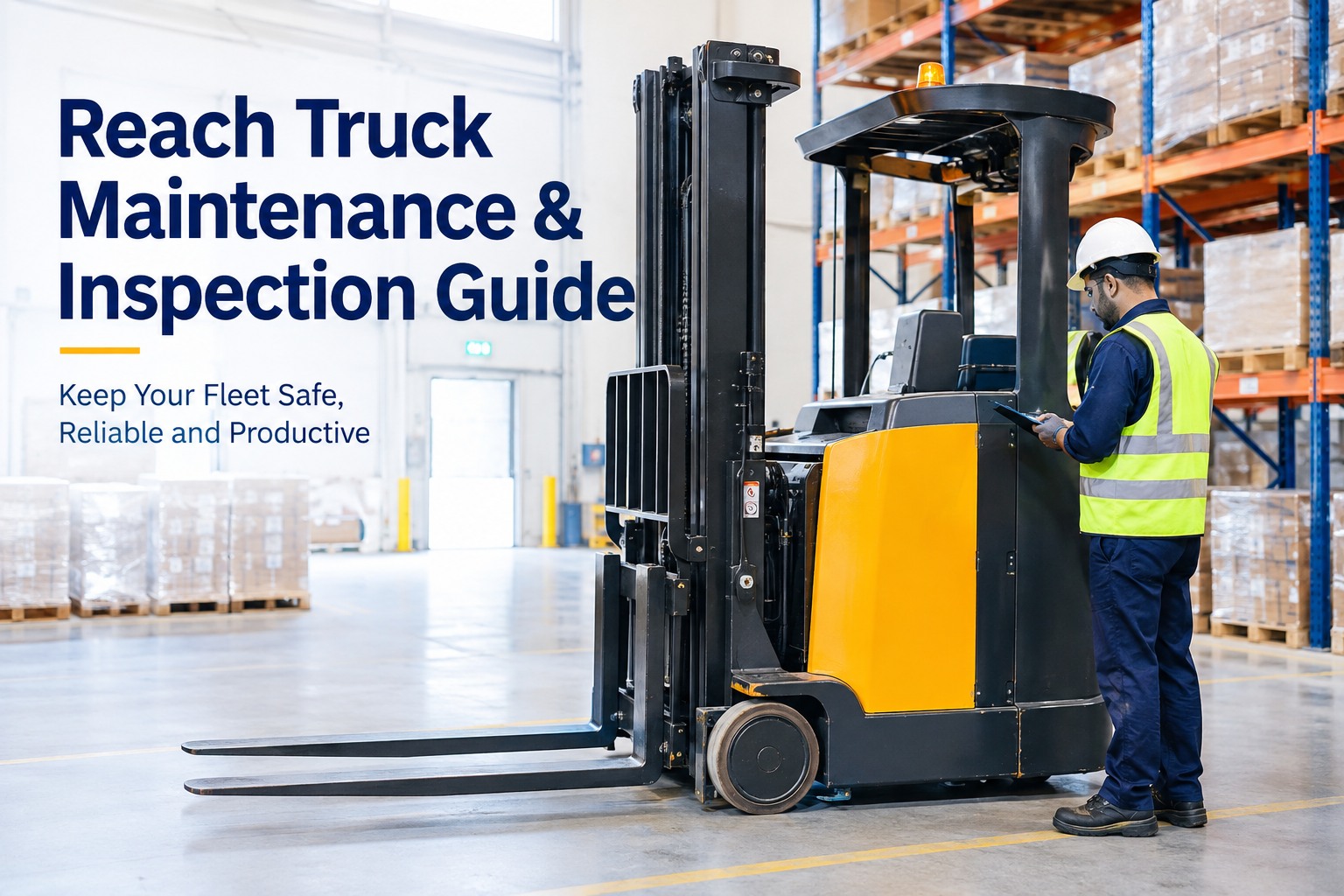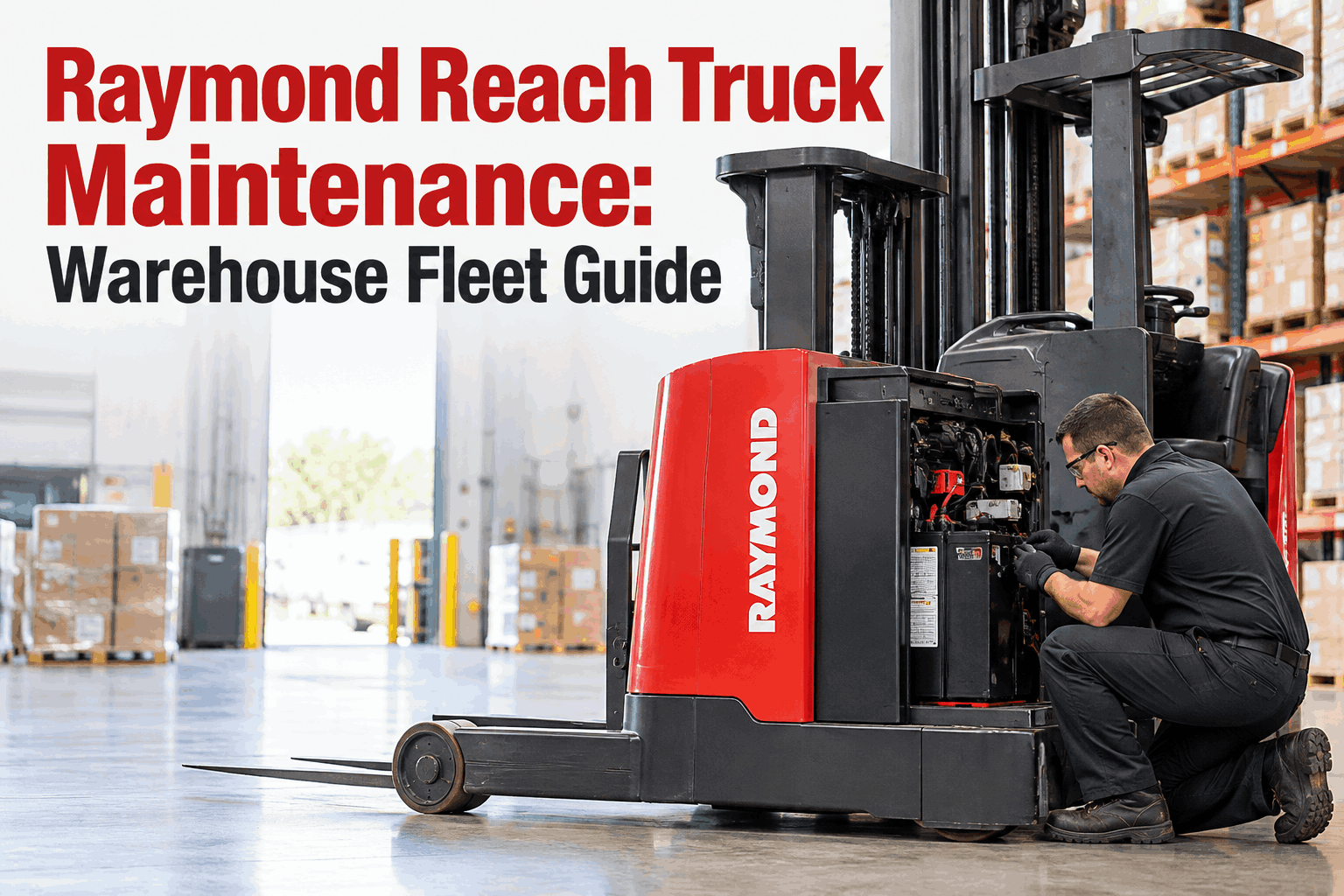
Raymond reach truck maintenance works best when the service plan follows the actual truck, application and operating hours rather than one generic warehouse forklift schedule. Reach mechanisms, high-lift mast components, load wheels, batteries and electrical systems all need documented attention, while recurring repairs and downtime should remain visible across the life of each asset.
Maintain the Reach Truck Around the Work It Actually Does
Build model-aware inspection and PM records around reach components, mast systems, load wheels, batteries, operating hours and recurring maintenance history.
Raymond's reach-truck family covers different capacities, lift heights and configurations, so maintenance planning should begin with the exact model and applicable Raymond documentation. HVI can then provide the operational layer that keeps inspections, PM due dates, repairs, costs and downtime organized across the warehouse fleet.
Start With the Raymond Model, Not a Generic Reach-Truck Intervalthe maintenance record should know exactly which truck the technician is servicing
A warehouse may operate several Raymond reach-truck configurations under the same roof. Model, serial number, battery configuration, attachments, operating environment and meter hours should therefore be part of the asset record before preventive maintenance intervals are assigned.
Some current Raymond 7000 Series product information references scheduled maintenance intervals of 500 hours, but that should not be copied blindly across every model or configuration. Use the applicable manufacturer documentation and service information for the truck being maintained. If your team manages several units, see how HVI can keep Raymond PM schedules separated by individual asset while maintaining one fleet-level view.
Give Reach-Truck-Specific Components Their Own Inspection Pathnarrow aisles and high lifting put the maintenance focus in different places
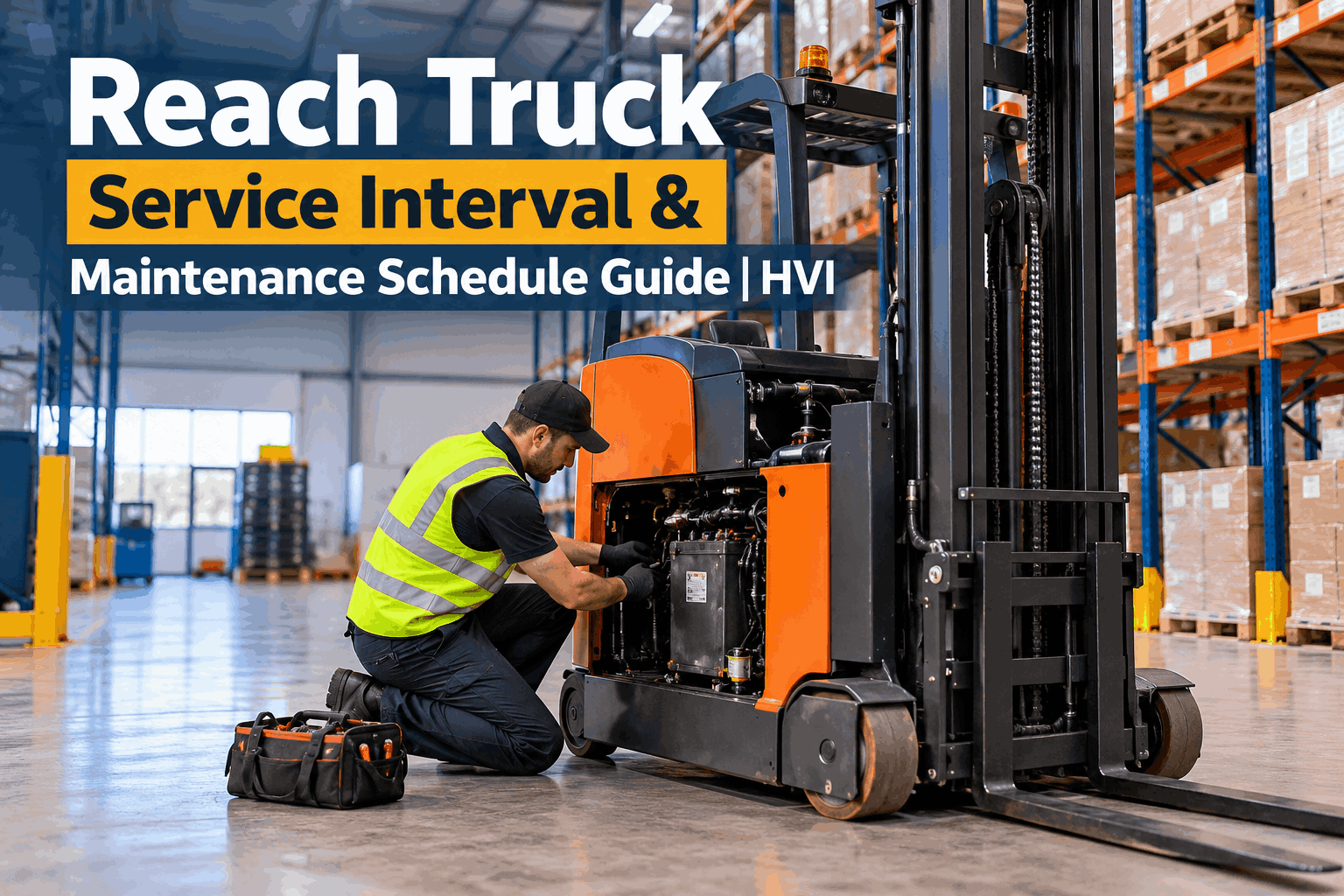
A Raymond reach truck should not disappear inside a generic forklift checklist. The inspection needs to surface the components that make the truck useful in narrow-aisle, high-rack work and make emerging defects easy to document.
Focus Truck-specific condition points
Chains, rollers, channels, carriage and visible mast condition.
Moving components, mounting points, wear and abnormal movement.
Wear, damage, wheel condition and replacement history.
Battery, cables, connectors and chemistry-specific condition.
Hoses, fittings, cylinders, leaks and lift response.
Steering, braking, controls, warning devices and structural condition.
Raymond highlights features such as bolt-on load-wheel plates on current 7000 Series equipment, making load-wheel condition an especially practical item to keep visible in inspection and replacement history. With custom equipment inspection templates, warehouse teams can create Raymond-specific checkpoints instead of burying these components inside a generic forklift form.
Turn Pre-Use Findings Into Maintenance Workthe value of an inspection is what happens after the operator reports a problem
Pre-use inspections can expose leaks, wheel damage, abnormal mast behavior, control issues or other visible defects before they become another maintenance surprise. The important step is preserving the finding and connecting it to follow-up work.
Operator records truck condition.
Defect becomes visible to maintenance.
Corrective work is documented.
Repair joins the asset history.
That connection matters in a busy warehouse where different operators may use the same reach truck across multiple shifts. If inspection findings currently disappear into paper forms or separate systems, see how HVI can connect reach-truck inspections with maintenance follow-up and asset history.
Build Preventive Maintenance Around Hours, Duty and Historymanufacturer guidance sets the foundation; fleet evidence improves visibility
The applicable Raymond manual and authorized service information should remain the source for model-specific procedures, specifications, replacement criteria and service intervals. HVI can then help the maintenance team organize when work is due and what happened during previous service events.
Using meter- and calendar-based preventive maintenance gives fleet managers a central schedule without turning HVI into the source of the OEM maintenance specification. For a multi-truck warehouse, see how Raymond reach-truck PM can be organized by meter hours and individual asset.
Battery Maintenance Needs Its Own Recordbattery chemistry changes the tasks even when the truck model stays the same
Raymond reach trucks are electric, but “electric” does not describe one universal battery-maintenance routine. Battery chemistry, charger requirements and manufacturer instructions determine what should be inspected and serviced.
Keep battery identity and maintenance information connected to the truck while preserving chemistry-specific requirements. This becomes particularly useful when a warehouse operates similar reach trucks with different battery configurations.
Find the Reach Truck That Keeps Coming Back to the Shoprepair history becomes useful when recurring events can be seen together
One repair invoice tells you what happened today. A maintenance history tells you whether the same asset, wheel position, mast component or electrical problem has been consuming technician time repeatedly.
Abnormal wear documented.
Wheel replaced during repair.
Wear condition reported again.
Review application, operating environment, component history and service findings before treating another replacement as an isolated event.
Keeping those events against the same asset makes recurring Raymond reach truck repair patterns easier to investigate. If your team currently reviews repairs one invoice at a time, see how HVI brings reach-truck repair history together by asset.
Track Downtime and Cost Alongside the Repairmaintenance performance is easier to manage when the fleet impact stays visible
A reach truck can have a modest repair bill but still create a meaningful operational problem if it remains unavailable during a high-volume period. Record labor, parts, service cost and downtime together so maintenance managers can see more than the invoice total.
See how long the truck remains out of service.
Keep completed maintenance against the asset.
Understand maintenance spend by truck.
See which assets are available for operation.
Cost per operating hour, repeat-repair frequency and downtime can provide useful evidence when deciding whether to continue repairing an older unit, investigate an application problem or evaluate replacement. See how HVI can make reach-truck cost and downtime visible in the maintenance record.
HVI and Raymond iWAREHOUSE Can Serve Different Parts of the Fleet Workflowuse the right system for the right job instead of presenting one as a replacement for the other
Raymond's iWAREHOUSE ecosystem provides telematics and fleet-management capabilities on compatible equipment, including vehicle and operator utilization, electronic checklists, impacts and battery-related visibility. HVI can sit alongside OEM and telematics systems as a centralized maintenance-management workflow.
Model procedures, specifications, service requirements and authorized technical information.
Compatible equipment data such as utilization, operator checklists, impacts and fleet visibility.
Inspections, PM scheduling, repair history, costs, downtime and centralized asset records.
The exact systems a warehouse uses will depend on its fleet and integrations. The important distinction is that HVI should not be presented as controlling Raymond truck functions or replacing Raymond diagnostic and service information.
Raymond Reach Truck Maintenance: Quick Answers
How often should a Raymond reach truck be serviced?
Use the maintenance schedule for the specific Raymond model and configuration. Some current Raymond 7000 Series product information references scheduled maintenance intervals of 500 hours, but warehouses should not assume that interval applies universally. Follow the applicable Raymond manual and authorized service information, then track the required interval by operating hours or calendar schedule as appropriate.
What should be included in a Raymond reach truck inspection?
The inspection should reflect the specific truck and manufacturer requirements. Common areas include forks and carriage, mast and lift chains, reach components, load wheels, hydraulics, steering and braking, controls, safety devices, battery and electrical condition, structural components and visible defects.
Why are load wheels important in Raymond reach truck maintenance?
Load wheels support the truck at the baselegs and operate continuously in narrow-aisle applications. Wear or damage can affect ride and equipment condition. Raymond highlights bolt-on wheel plates with floating articulation on current 7000 Series reach-truck information, so wheel inspection and replacement history are practical maintenance records to preserve.
How should batteries be handled in a Raymond reach truck maintenance program?
Record the battery type and follow the applicable battery, charger and truck manufacturer instructions. Lead-acid and lithium-ion systems have different maintenance requirements, so battery tasks should be based on the actual chemistry rather than one generic electric-forklift checklist.
Can HVI replace Raymond iWAREHOUSE or Raymond service information?
No. Raymond manuals and authorized technical information remain the source for model-specific service procedures, specifications and replacement criteria. iWAREHOUSE provides Raymond's telematics and fleet-management capabilities on compatible equipment. HVI can complement those resources by centralizing inspections, preventive maintenance schedules, repair records, costs, downtime and asset maintenance history.
Give Every Reach Truck a Maintenance History You Can Actually Use
Standardize inspections, schedule PM by the right asset, track repeat repairs and keep downtime and maintenance cost visible across your warehouse fleet.