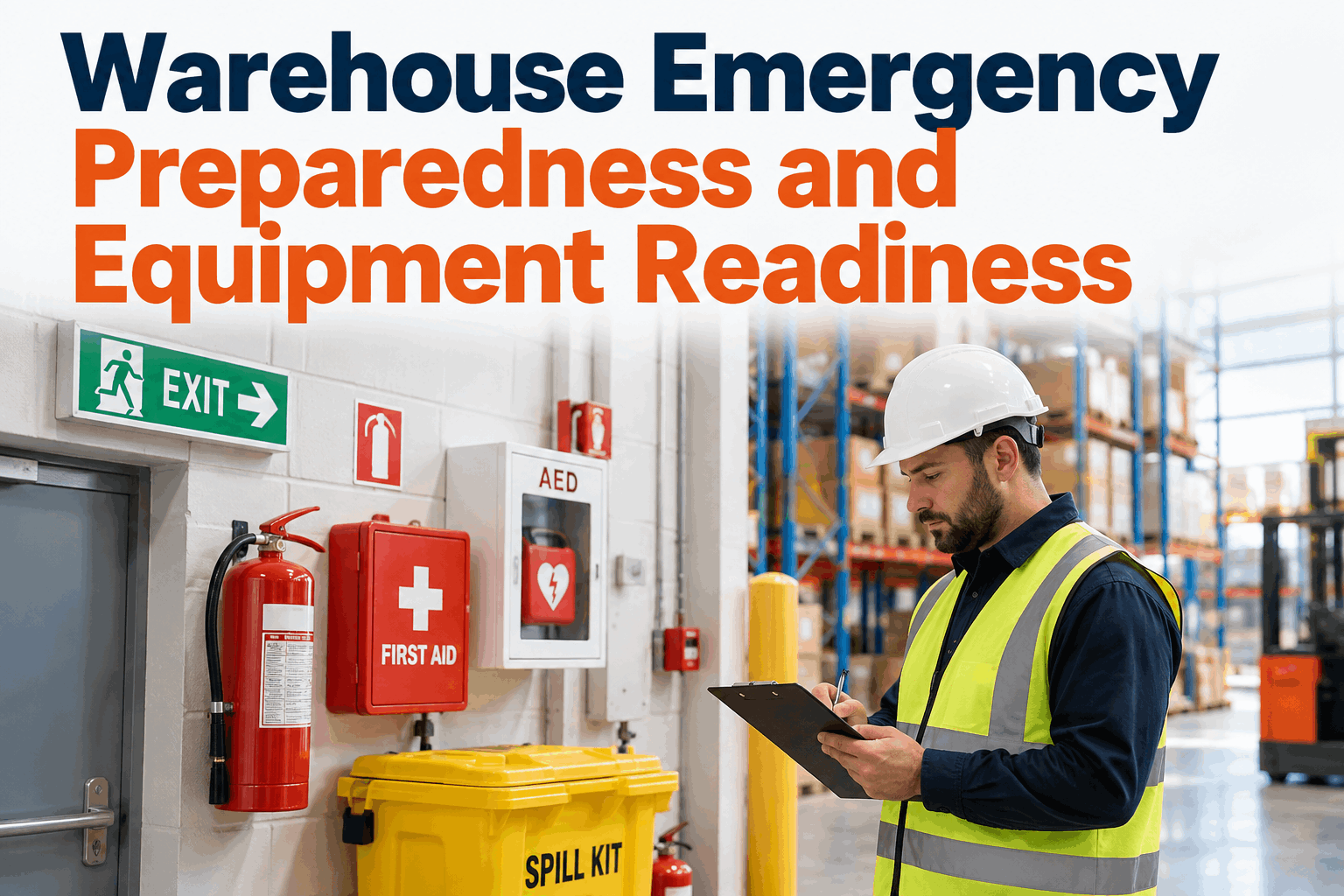
Warehouse emergency preparedness has a cruel quirk: the equipment that matters most is the equipment nobody touches. A fire extinguisher, an AED, an emergency light over an exit — they sit untouched for months, and their condition only becomes visible the one day someone reaches for them. An expired extinguisher or a dead backup light looks exactly like a working one until it's needed. Book a demo to see emergency equipment readiness tracked in HVI. Readiness is a thing you verify, not assume.
Warehouse Emergency Preparedness Is a Status You Verify
Every piece of emergency gear is in one of three states: ready, needs attention, or failed. The problem is they all look the same from across the floor. A readiness check turns "we have extinguishers" into "every extinguisher is charged, in date and in place."
A warehouse emergency preparedness plan is really three things kept current: the equipment is ready, the people know what to do, and the routes out are clear. Most sites have all three written down somewhere — the gap is proving they're true today, not on the day the plan was signed. That gap is where a drill reveals a blocked exit or a dead light nobody had checked.
Ready · Due · Failedemergency gear lives in three states, and they all look the same from the aisle
Every item of emergency equipment is in one of three conditions at any moment. The danger is that a failed extinguisher and a fully charged one look identical until the gauge is read — so "ready" is only real once it's been verified and dated.
Verified, in date, in its place and accessible. The only state you can actually rely on — and only because someone confirmed it recently.
Approaching an expiry, a service date or a restock. Still works today, but on a countdown — the window to act before it becomes a failure.
Expired, discharged, blocked or dead. Present but useless — the worst case, because it gives false confidence until the moment it's needed.
The whole job of warehouse emergency preparedness is moving every item into "ready" and keeping it there. Book a demo to see every item's readiness state at a glance.
The emergency equipment that needs checkingeach on its own interval — miss one and readiness is a guess
Emergency preparedness isn't one inspection — it's a set of items, each with its own failure mode and its own schedule. Here's the core kit a warehouse keeps ready, and what each check is really confirming.
Pressure gauge in the green, pin and seal intact, unobstructed, within its service date.
Pads in date, battery charged, status indicator green, unit accessible and signed.
Fully stocked, nothing expired, sealed, and located where the floor can reach it fast.
Passes its self-test, batteries hold charge, exit signs lit and visible on power loss.
Eyewash flushes clean, caps sealed; spill kit stocked, in date and at the risk point.
Alarm audible site-wide, pull stations clear, sprinkler heads unobstructed and inspected.
When each item carries its own check date and expiry, nothing slips through to the day it's needed. Book a demo to see each item scheduled and dated in HVI.
Expiry is the silent failuremost emergency gear doesn't break — it quietly runs out of date
Unlike a forklift, emergency equipment rarely fails from use — it fails from time. Pads expire, charges bleed down, kits get raided and never restocked. The fix isn't a bigger inspection; it's tracking the date on every item so "due" surfaces before "failed."
A tracked expiry date is the difference between replacing an AED pad on a Tuesday and discovering it's dead during a cardiac emergency. Sign up free and put expiry dates on a schedule.
Equipment is half of it — people and routes are the restthe plan only works if the exits are clear and the drill proves it
Ready equipment means nothing if the path to the exit is blocked by a pallet or nobody knows where to muster. Emergency preparedness is equipment plus procedure — and the procedure only counts if it's checked and practised, not just posted on a wall.
Exits unobstructed, aisles clear, signage lit and floor markings visible. The most common drill failure is a route blocked by stock.
Assembly points marked outside the hazard, with a way to account for everyone — the step that turns an evacuation into an all-clear.
Named fire wardens, first-aiders and a communication lead — with current training dates, so roles don't lapse when people move on.
Regular drills that are logged, timed and reviewed — because a drill is how you find the blocked exit or dead light before a real event does.
This pairs with staying audit-ready day to day — see OSHA inspection preparation for warehouses, part of the wider warehouse inspection and safety picture. Book a demo to see drills and training dates tracked too.
How a warehouse runs emergency preparedness in HVIscheduled checks to logged proof to a readiness record that's always current
The point isn't another binder on a shelf — it's that every emergency item has a next-check date, every result is logged with a photo, and the readiness of the whole site is something you can show an auditor or a manager in seconds.
Every extinguisher, AED, light and kit on its own interval with a next-due date — nothing waits to be remembered.
Each check recorded with a photo and date; a failure or expiry becomes an action routed to the right person.
A live view of what's ready, due and failed across the site — proof for an audit, a drill review or a manager, in seconds.
That's the difference between hoping you're prepared and being able to show it. Book a demo to see the full readiness record on your site.
From a warehouse safety manager
The thing that scared me wasn't a lack of equipment — we had extinguishers and lights everywhere. It was not knowing their state. During a drill we found two emergency lights that had failed their self-test months before and a first-aid cabinet that had been quietly emptied.
Putting every item on a scheduled check with an expiry date changed how I sleep. Now "are we ready" isn't a feeling, it's a screen. Due items surface two weeks out, failures become a work order, and when the auditor asks, I can show the record instead of walking the floor hoping.
TL Travis L.Safety Manager · Distribution warehouse
Warehouse emergency preparedness FAQs
What does warehouse emergency preparedness involve?
Three things kept current: emergency equipment that's verified and in date, people who know their roles and have practised them, and evacuation routes that are clear. That covers extinguishers, AEDs, first-aid, emergency and exit lighting, eyewash, spill kits and alarms, plus marked routes, muster points, a response team with roles, and regular drills.
What emergency equipment needs regular inspection?
Fire extinguishers (gauge, pin, service date), AEDs (pads and battery), first-aid kits (stocked, in date), emergency and exit lighting (self-test and batteries), eyewash stations, spill kits, alarms and sprinklers. Each has its own interval and expiry, so they're checked on separate schedules rather than all at once — which is how items slip to expired unnoticed.
Why is tracking expiry dates so important?
Most emergency gear fails from time, not use — AED pads expire, extinguisher charges lapse, kits get raided. An expired item looks identical to a ready one until it's needed. Tracking the date on every item surfaces "due soon" before it becomes "failed," so you replace or restock on a planned day instead of discovering it during an actual emergency.
How often should warehouses run emergency drills?
Run drills regularly and log each one — time the evacuation, check that routes were clear and that everyone reached the muster point and was accounted for. Follow your local regulations and site risk assessment for exact frequency. The value is in the review: a drill is how you find a blocked exit, a confused role or a dead light before a real event does.
How does HVI help with emergency preparedness?
HVI puts every emergency item on a scheduled check with its own expiry date, logs each result with a photo, turns a failure or lapse into a routed action, and gives a live readiness view for audits and drill reviews. It supports the inspection, scheduling and record-keeping workflow — it doesn't replace your site's emergency plan, fire-safety requirements or local regulations.
Make Warehouse Emergency Preparedness Something You Can Show
Put every piece of emergency equipment on a scheduled check with a tracked expiry, log drills and training dates, and keep a live readiness record — so warehouse emergency preparedness is proven on an ordinary day, not tested for the first time in a real one.