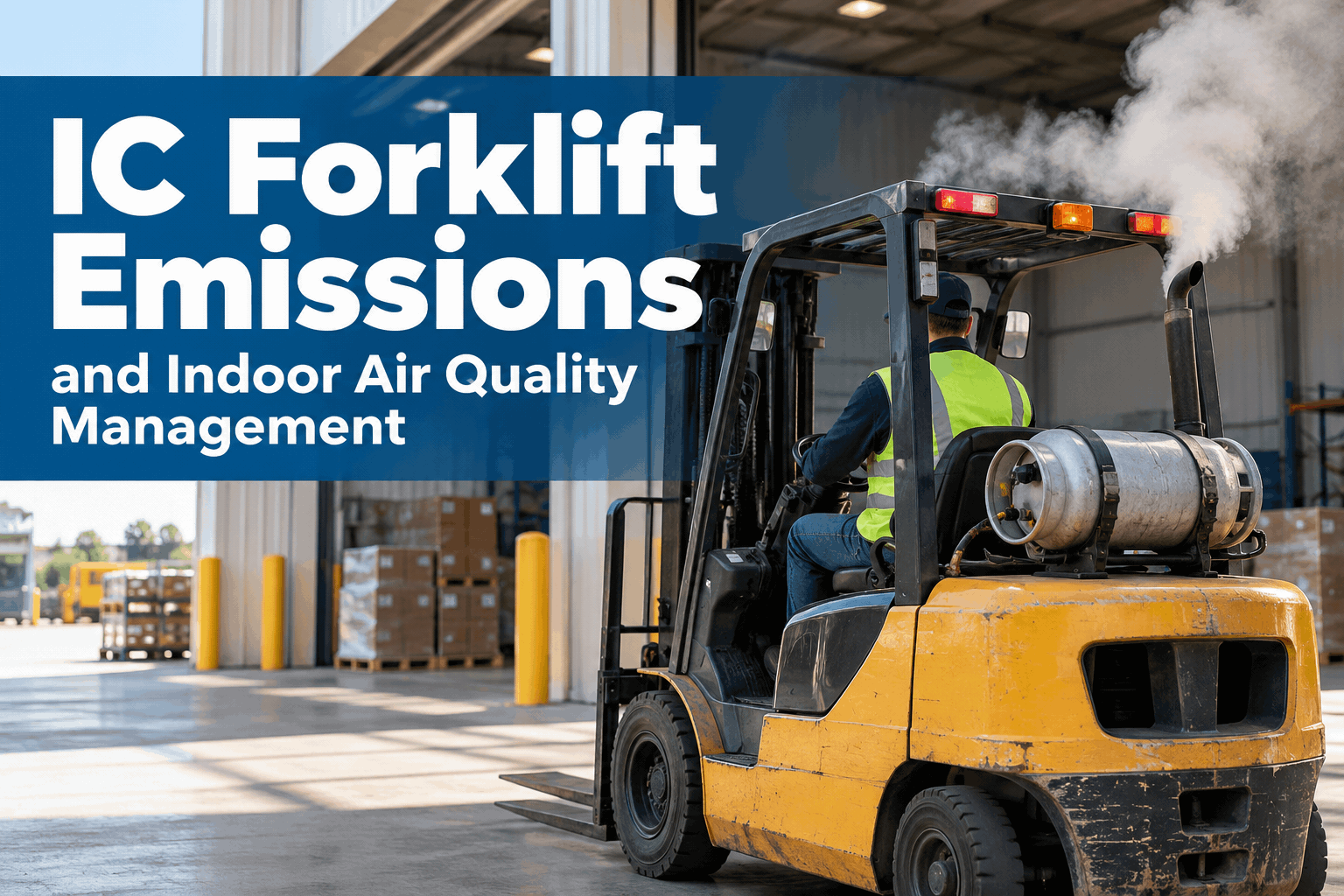
IC forklift emissions can make indoor warehouse air unsafe even when equipment appears to be running normally. Gasoline, LPG and diesel forklifts produce exhaust pollutants, and carbon monoxide (CO) is particularly dangerous because people cannot reliably detect it by smell. This guide explains how to inspect forklift exhaust systems, plan maintenance, evaluate ventilation and document corrective action before exposure becomes an emergency.
IC Forklift Emissions & Indoor Air Quality Management
Reduce preventable exhaust defects, strengthen warehouse inspection routines and connect equipment findings to timely maintenance.
Why IC forklift exhaust is a warehouse safety issue
Indoor air quality depends on the forklift, its operating pattern and the building—not on engine condition alone.
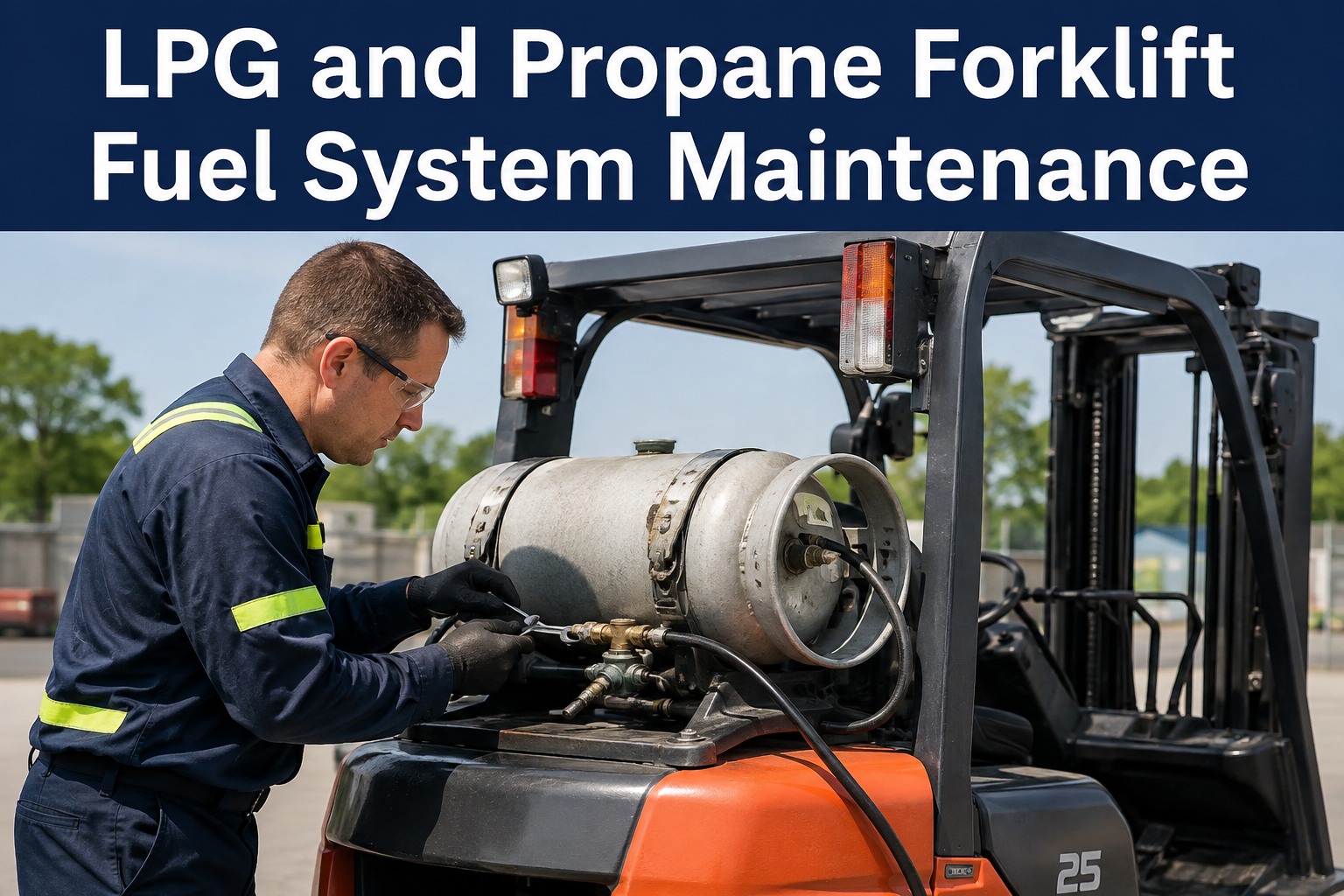
Internal combustion (IC) forklifts can emit carbon monoxide, nitrogen oxides, particulate matter and other combustion by-products. The mix varies with fuel, engine design, exhaust controls and maintenance condition. LPG forklifts are not emission-free; a poorly adjusted propane engine can still create a serious CO hazard.
CO binds to hemoglobin and can impair oxygen delivery. Headache, dizziness, nausea, confusion and unusual fatigue can be warning signs, but symptoms alone cannot establish whether the air is safe. High exposure can be life-threatening. If CO exposure is suspected, stop affected operations, move people to fresh air, seek emergency assistance and follow the site's emergency plan. Do not resume work until competent personnel establish that conditions are safe.
Closed loading doors, cold weather, congested aisles, blocked airflow and multiple trucks operating together can worsen exposure. Book a demo to see how HVI records forklift inspection defects and maintenance follow-up.
Three layers of protection
Inspect the forklift systems that influence emissions
Use manufacturer-specific procedures and qualified technicians for diagnostics, repairs and emissions testing.
Engine and fuel system
Record rough idle, hard starting, misfires, abnormal fuel consumption and manufacturer-specified fuel system or engine adjustment needs. Incorrect air–fuel mixtures can raise emissions.
Exhaust routing and leaks
Inspect accessible pipes, joints, mounting points and heat shields for leaks, damage and corrosion. Exhaust should discharge as designed, away from occupied areas.
Aftertreatment and filters
Check catalytic converters and other installed emissions controls per the OEM procedure. Verify air-filter condition and correct replacement intervals.
Maintenance evidence
Attach photos, record symptoms, identify corrective work and verify the result before closing the issue. Track repeated exhaust-related defects by forklift.
Match ventilation and monitoring to actual forklift activity
Airflow changes with operating conditions; a single seasonal check is not enough to characterize every shift.
| Control | What it answers | Maintenance team's role |
|---|---|---|
| Ventilation assessment | Does the building remove and dilute pollutants under representative operating conditions? | Report closed vents, blocked air paths, changed racking and loading-door patterns. |
| Fixed CO detectors | Are monitored locations reaching configured alarm conditions? | Track service, calibration and alarm follow-up according to manufacturer and site procedures. |
| Personal exposure monitoring | What exposure may an individual worker experience during tasks? | Coordinate with safety and industrial hygiene professionals; preserve investigation records. |
| Professional exposure assessment | Are work practices and exposures acceptable under applicable requirements? | Support equipment condition reviews and implement assigned corrective maintenance. |
Detector placement, alarm thresholds, calibration intervals and sampling methods should be established by competent specialists and applicable requirements—not guessed from a generic checklist. For maintenance documentation, sign up to organize forklift inspections and defect follow-up in HVI.
Turn forklift exhaust defects into documented maintenance work
See how HVI can help your team capture equipment findings, schedule preventive maintenance and review service history.
IC forklift emissions inspection checklist
Adapt this operational checklist to the forklift model, fuel type, site risk assessment and manufacturer instructions.
What changes when the warehouse environment changes?
Propane forklifts operate with doors closed
Three LPG forklifts run near enclosed docks during a cold shift. Workers report headaches and a CO alarm activates. The immediate priority is the site's emergency response, not a routine repair ticket. After competent personnel confirm conditions are safe, the investigation should examine ventilation performance, operating practices and individual forklift emissions condition. HVI can document assigned equipment inspections and corrective maintenance, while gas monitoring and exposure decisions remain with qualified safety personnel.
Rough-running forklift returns after service
A forklift repeatedly develops unstable idle and high fuel consumption. Rather than treating each complaint as an unrelated work order, the maintenance manager reviews its repair history, tests the underlying fault using OEM procedures and verifies corrective work. A linked inspection and maintenance history helps identify repeated defects and incomplete repairs.
Book a demo to explore equipment-specific service histories and inspection follow-up in HVI.
Build a maintenance schedule that supports indoor air quality
Combine routine operator checks, scheduled preventive maintenance and event-triggered investigation.
Inspect
Use model-specific checks for exhaust condition, running symptoms and reported concerns.
Escalate
Remove suspect equipment from use as required; involve safety specialists for possible exposure.
Repair
Assign qualified technicians and record diagnostics, parts and corrective work.
Verify
Confirm repair effectiveness and obtain any necessary emissions or exposure evaluation.
Review
Trend recurring faults, overdue tasks and findings across the forklift fleet.
Inspection frequency should reflect manufacturer recommendations, duty cycle, fuel type, site conditions and applicable requirements. Operating hours can guide engine servicing, while calendar-based checks may suit infrequently used forklifts or detector calibration schedules. Electric forklifts avoid combustion exhaust at the point of use, though charging and battery systems introduce separate safety considerations.
Use HVI to organize inspections and maintenance tasks; confirm the exact configuration for detector assets and service reminders during a product demo focused on your warehouse equipment program.
Keep forklift exhaust maintenance visible across the fleet
Connect inspections, defect documentation and preventive maintenance instead of relying on disconnected checklists.
IC forklift emissions and warehouse air quality FAQs
Do propane forklifts produce carbon monoxide indoors?
Yes. LPG forklifts can produce carbon monoxide and other combustion pollutants. Engine condition, combustion settings, exhaust controls and ventilation all influence risk. Only appropriate monitoring can establish actual CO concentrations or exposure.
How often should IC forklift exhaust systems be inspected?
Follow the equipment manufacturer's recommendations, operating conditions, risk assessment and applicable safety requirements. Combine operator checks with planned service and prompt investigation of abnormal symptoms; there is no universal quarterly interval for every forklift.
Can a carbon monoxide detector replace ventilation assessment?
No. Fixed detectors can warn of monitored concentrations at their locations, but they do not establish full-shift personal exposure or prove ventilation is adequate throughout a facility. A competent industrial hygiene assessment may be necessary.
What should a warehouse do if workers report CO exposure symptoms?
Stop affected operations, move people to fresh air, seek emergency assistance and follow the site emergency plan. Do not return to the affected area or restart equipment until qualified personnel determine it is safe.
How does HVI help manage forklift emissions-related maintenance?
HVI can support equipment inspection records, defect reporting, preventive maintenance scheduling and repair histories. It does not directly measure CO, perform exposure assessments or replace dedicated monitoring and ventilation controls.
Make IC forklift emissions management part of everyday maintenance
Reliable indoor air quality management requires coordinated equipment maintenance, suitable ventilation, professional exposure assessment and clear emergency response. Start with documented IC forklift exhaust inspections, act on defects, verify repairs and review recurring problems. For the equipment-maintenance side of that process, book an HVI demo to see inspection and preventive maintenance workflows or sign up to begin organizing forklift maintenance records.