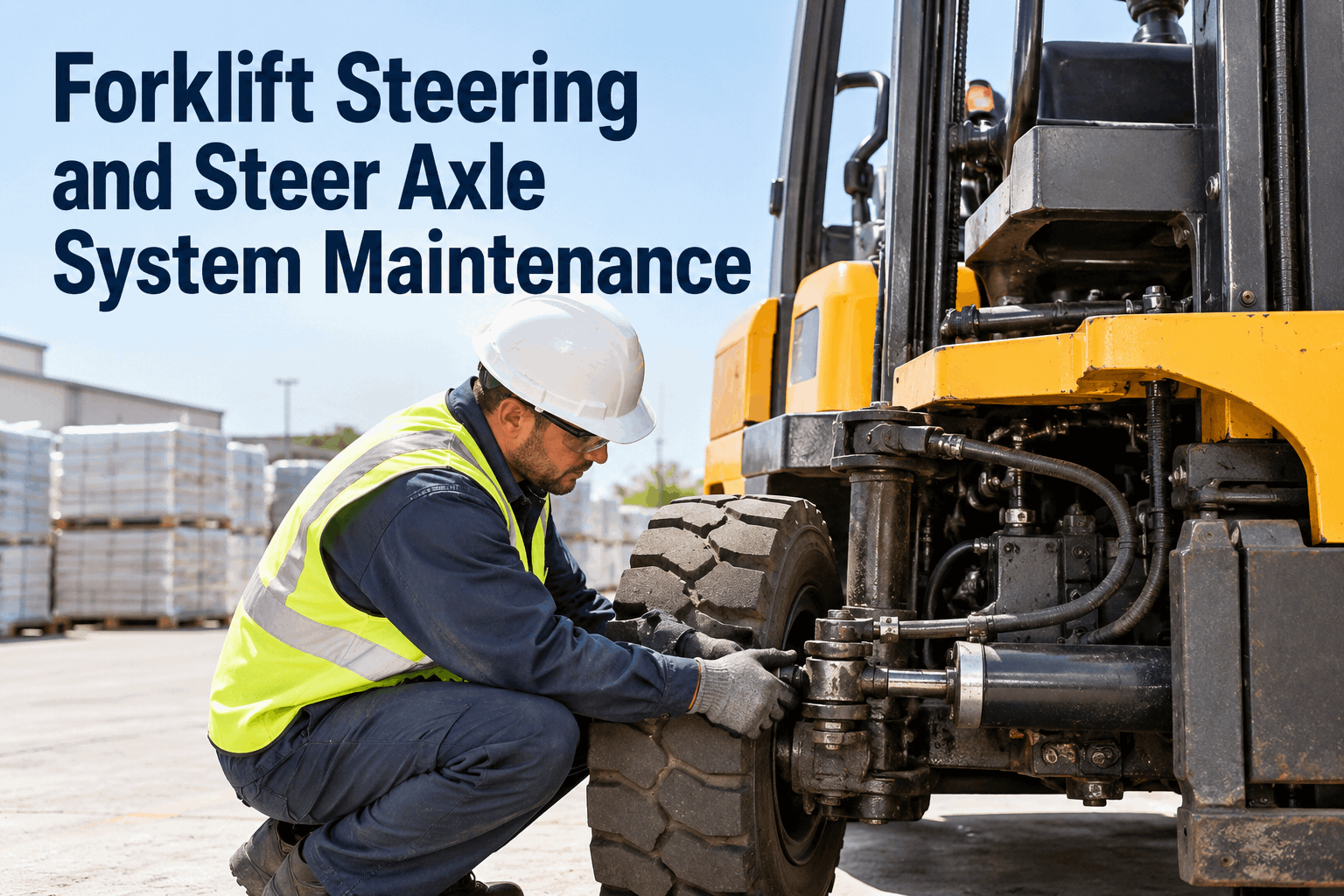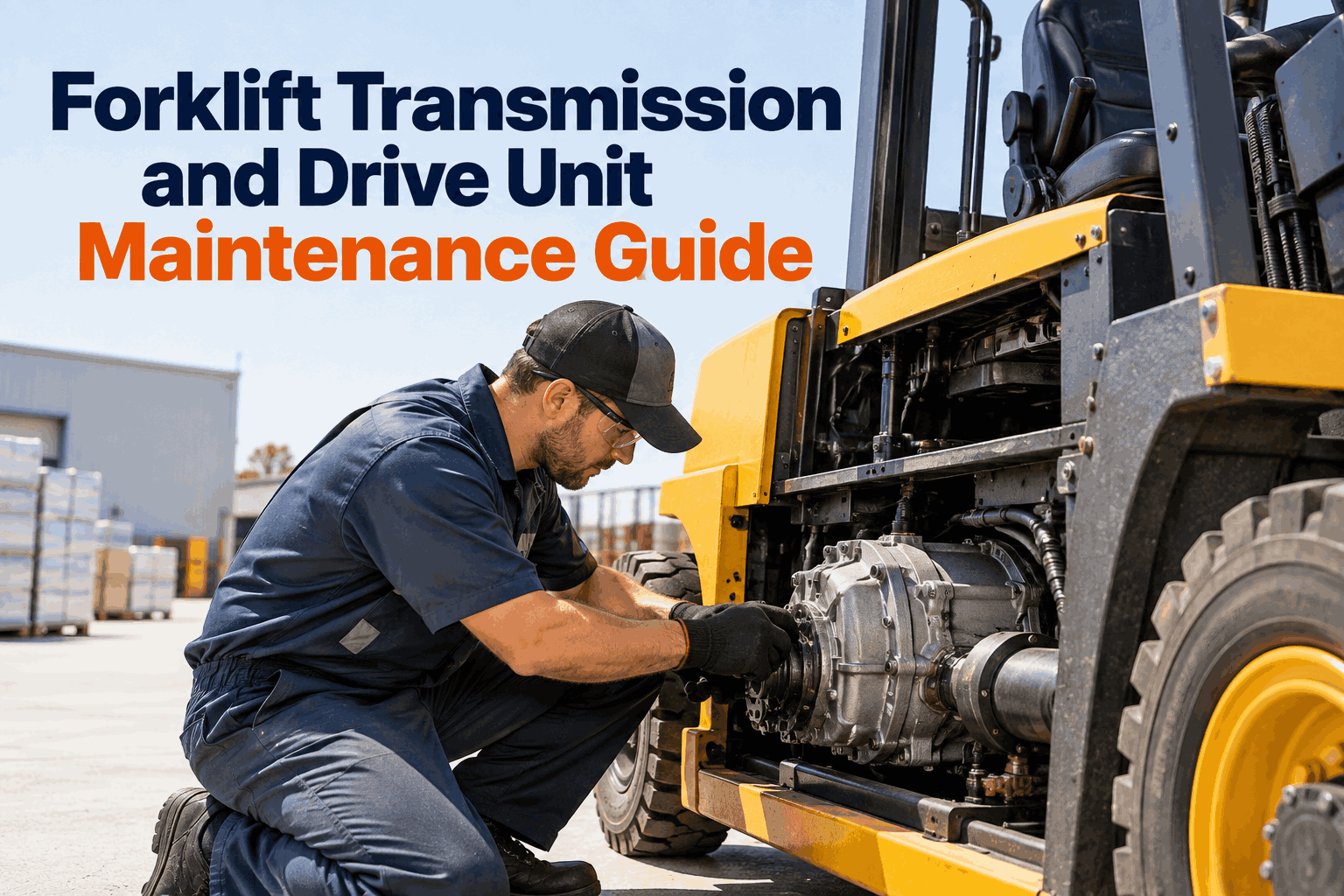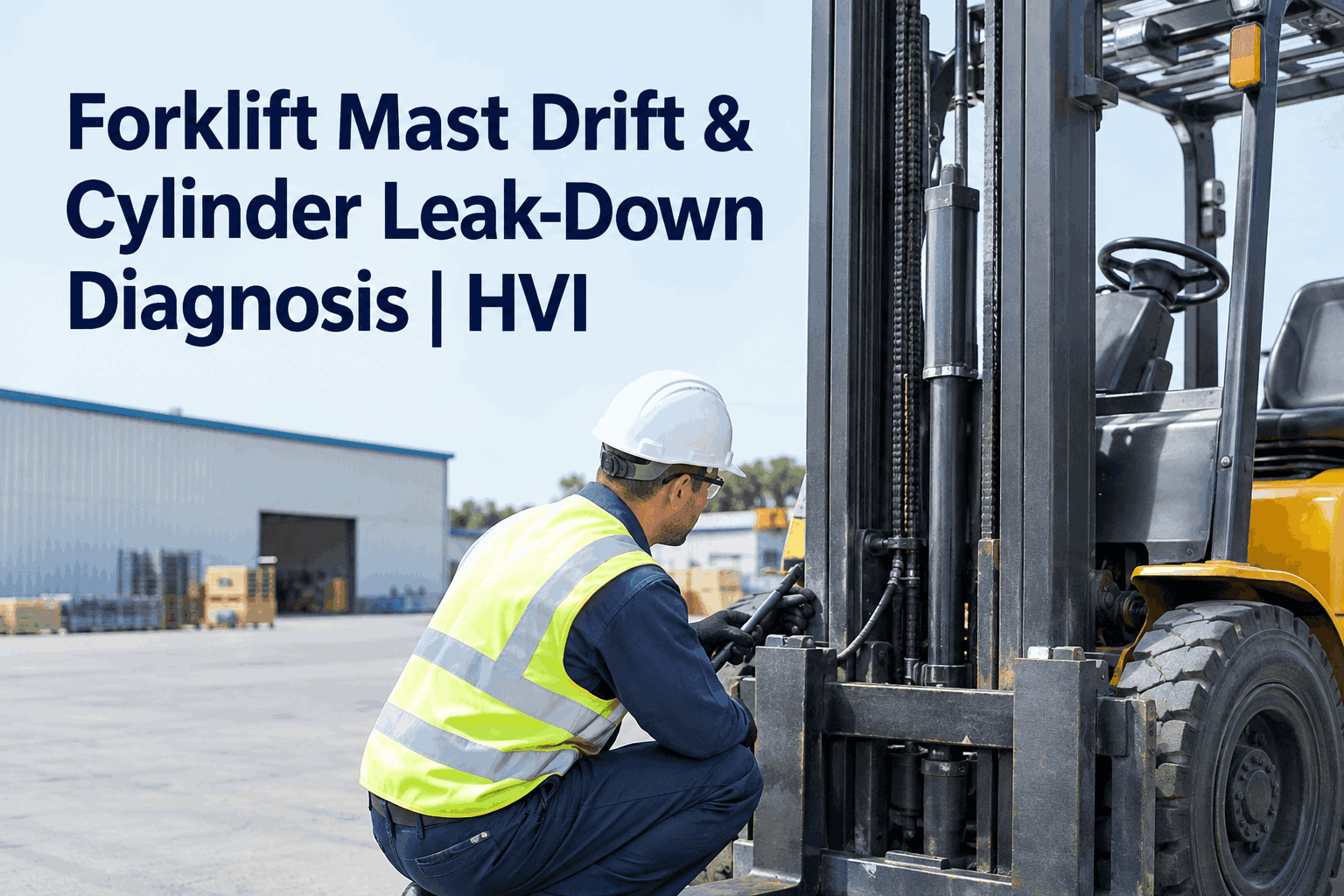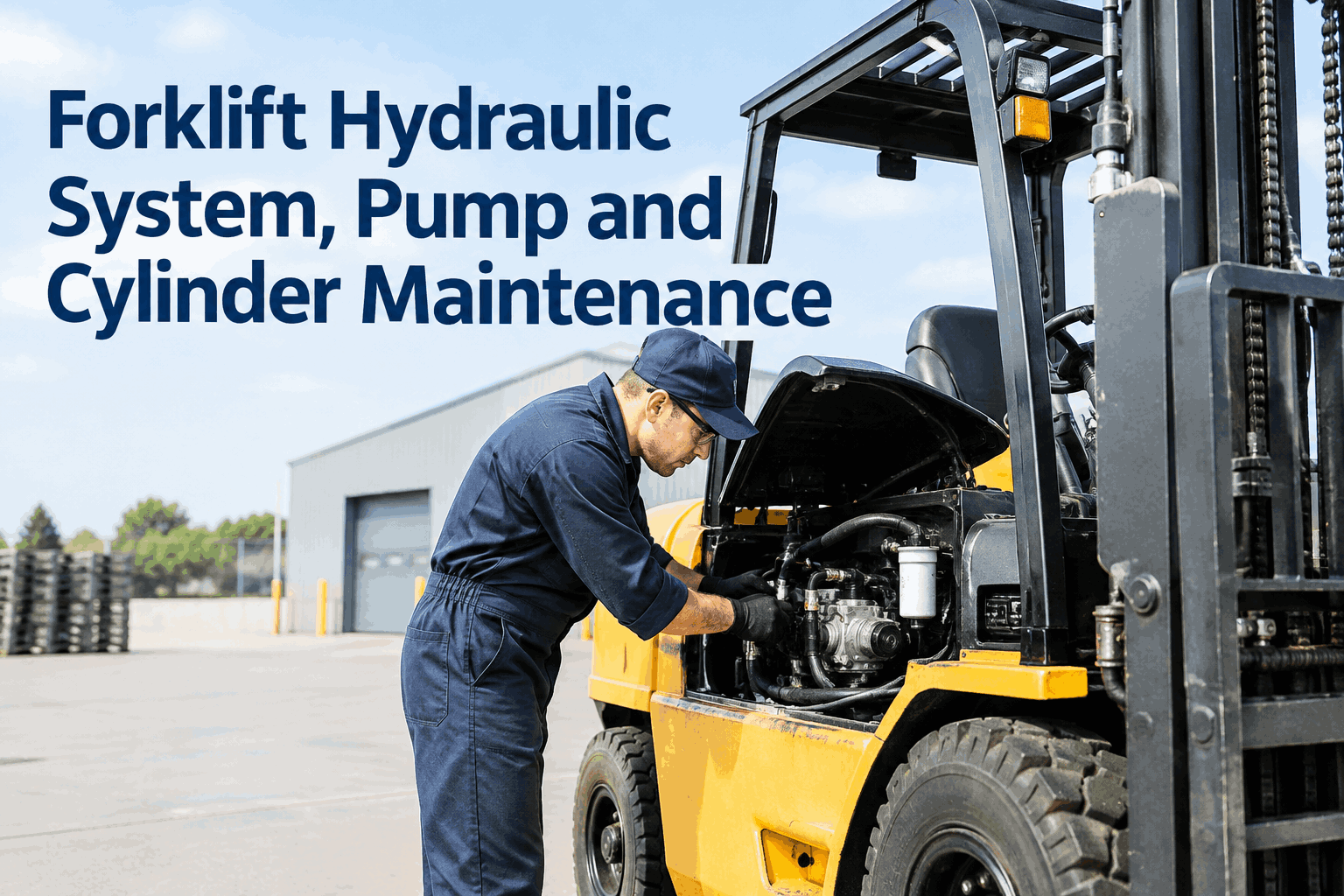
A forklift that lifts slow, or whose mast creeps down on its own while a load sits parked overhead, is rarely a worn-out truck. It is a forklift hydraulic system quietly losing pressure where nobody can see it. A drop of fluid on the floor, a filter nobody changed, a cylinder seal bypassing under load — small things that strand a truck mid-shift and put a raised load above someone's head at risk. If that sounds familiar, book a demo to see HVI flag it first.
The Forklift Hydraulic System Is a Sealed Loop That Tells You When It's Failing
Fluid, pump, valve and cylinders move as one closed circuit. When pressure leaks out of it, the truck doesn't throw a fault code — it just lifts slow, drifts, or shudders. Read the symptom and you find the part.
Ask a technician what killed a pump and they rarely say "the pump." They say the oil was filthy. You cannot see micron-sized grit in the oil, but it is already sanding the circuit every time the pump runs — so the part that fails is usually the second victim, not the cause.
- Gets inDirt, water and metal enter through a worn breather, a dusty top-up, or an open fitting during a repair.
- CirculatesUnder 2,000-plus psi it is pumped through every clearance in the loop, thousands of times a shift.
- GrindsIt scores pump gears, cylinder bores and valve spools — the expensive parts with the tightest tolerances.
- FailsWeeks later the symptom shows. The part gets replaced; the dirty oil that caused it often does not.
This is why a fluid and filter program beats a repair budget. You can book a demo to see fluid and filter intervals trigger by run-hours instead of living in a technician's memory.
The useful thing about hydraulics is that the failure mode points at the component. Before anyone pulls a pump, the symptom narrows it down — the core of real forklift hydraulic troubleshooting, and you can book a demo to see each symptom logged against the truck.
Turn "it feels slow" into a logged, routed hydraulic defect
HVI captures the operator's symptom, photos and meter reading, then opens a work order so a drifting mast or a weeping cylinder gets fixed before it strands the truck.
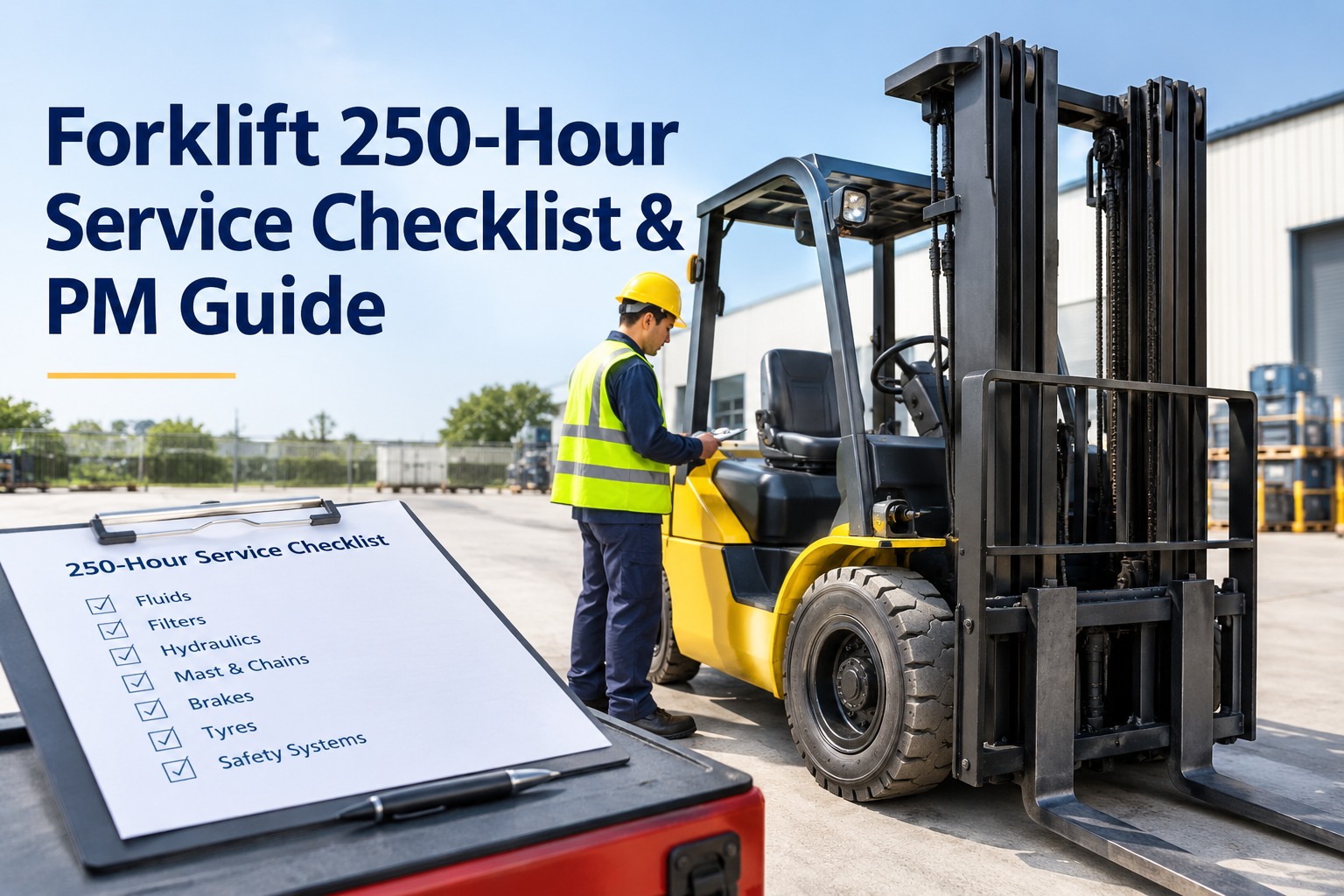
Strip the circuit down and there are five things to look after. Here is how they land on a real inspection — each one a pass, a due, or a defect the technician can act on.
Get these five onto a schedule and most unplanned hydraulic downtime disappears. You can sign up free and put your first trucks on a meter-based plan in an afternoon.
Good forklift hydraulic system maintenance runs on three clocks, and a cheap daily check protects the expensive scheduled one. Forklifts wear by hours, not weeks, so a two-shift truck reaches each one far sooner than a once-a-day one.
Operator walk-around: fluid level, a glance under the mast for fresh leaks, and a test lift to feel for slow or jerky movement.
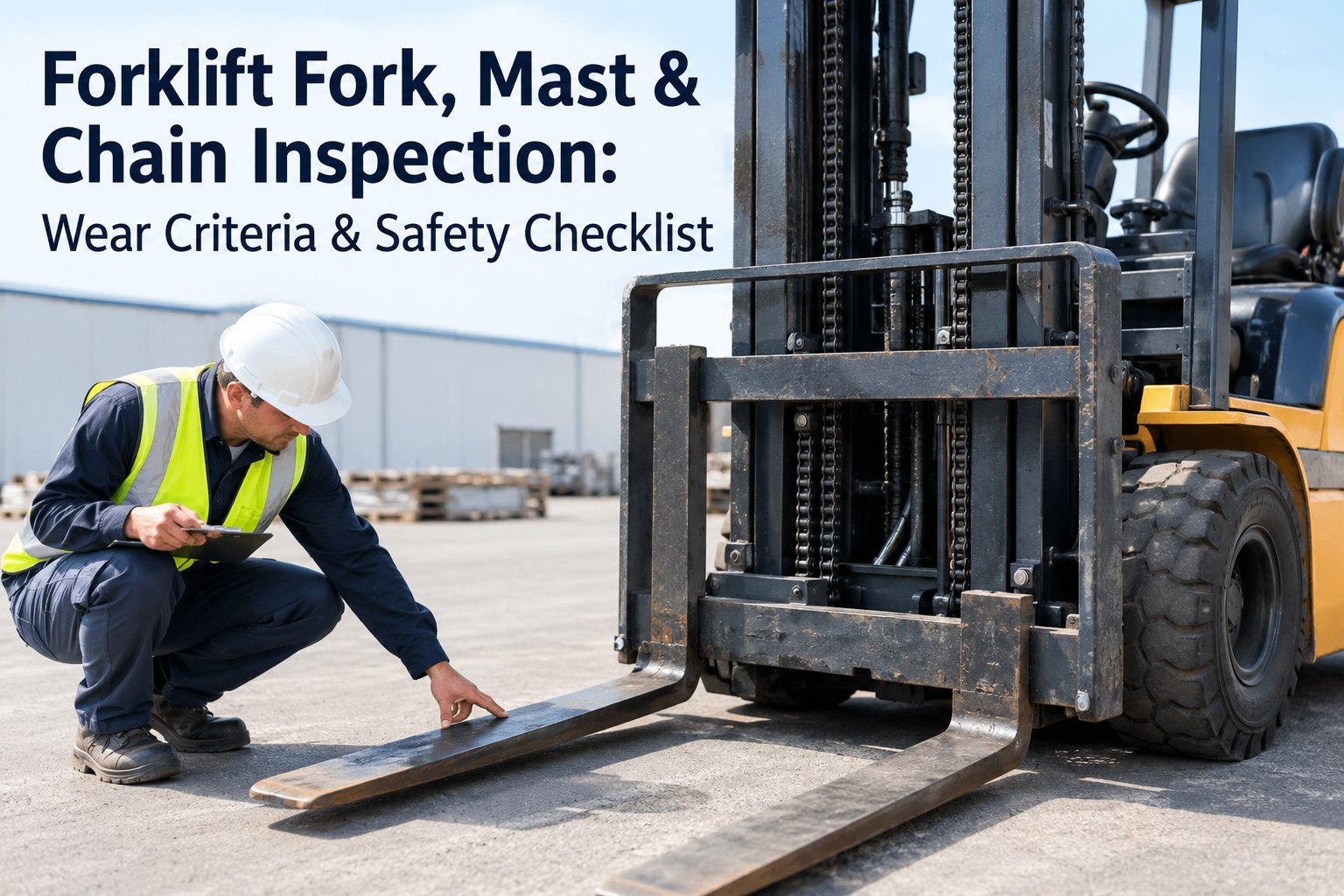
A closer look: hose routing and chafe points, fitting weep, cylinder rods for scoring, and fluid colour and clarity — not just level.
Scheduled fluid and filter changes to the OEM hour spec, plus a pressure test if anything feels off. Where contamination gets flushed before it bites.
For the wider truck beyond the hydraulics, the full counterbalance forklift PM schedule covers the other systems on the same meter.
The costly mistake in any forklift hydraulic repair is swapping a pump that was never the problem. A short test sequence tells you where the pressure is actually going — one gauge reading splits the whole diagnosis in two.
Confirm the basics — fluid level and condition, filter state, visible leaks. Rule out the cheap, common causes first.
Gauge pump output against the OEM pressure spec. This single reading tells you which half of the circuit to look in.
The pump isn't making spec — look at the pump itself or the relief valve. The problem is upstream.
The pump is fine but the load still drifts — a cylinder seal or valve is leaking internally. Look downstream.
Fix the real fault, record the pressure reading and parts, and the next truck with the same symptom is diagnosed in minutes.
The same symptom-to-cause logic runs across your whole yard — see how HVI handles hydraulic troubleshooting across heavy equipment, and book a demo to see a pressure reading logged against the asset.
The one that used to cost us was mast drift. An operator would mention a load settling an inch or two and nobody wrote it down, because the truck still worked. Then it would drop a pallet or fail a lift test on audit day. Now the symptom gets logged the shift it's noticed, it opens a work order, and we catch a cylinder seal before it lets go. Half the "pump" jobs we used to book turned out to be a seal or dirty oil — once we started pressure-testing instead of guessing, our hydraulic parts bill dropped and the trucks stopped surprising us.
A forklift hydraulic system is not complicated once you see it as one sealed loop that loses pressure in predictable ways. Keep the fluid clean, change it and the filter on run-hours, check for leaks and drift every shift, and read the symptom before pulling a part. Do that and the pump lasts, the mast holds, and a raised load stays where the operator put it.
The difference between a fleet that fights hydraulic breakdowns and one that doesn't is rarely better technicians — it's whether the small signs get logged and acted on before they become a dropped load or a dead truck.
Keep every forklift hydraulic system clean, sealed and logged
Digital inspections, meter-based fluid and filter schedules, and work orders from the first drift or leak — so hydraulic problems get caught while they're still cheap.
What are the main parts of a forklift hydraulic system?
Five things do the work: the fluid and its reservoir, a pump that makes flow, a control valve that directs it, the lift and tilt cylinders that turn pressure into movement, and the hoses, fittings and filter that connect and clean the circuit. They run as one sealed pressure loop, so a problem in one often shows up as a symptom somewhere else.
Why does my forklift mast drift down on its own?
Drift means the system is making pressure but not holding it. The usual cause is a lift-cylinder seal bypassing internally, letting fluid slip past the piston, or a control valve leaking. It is a safety issue — a load settling overhead can fail a lift test or drop — so it should be logged and repaired promptly, not run until it worsens.
How often should forklift hydraulic fluid and filters be changed?
Follow the OEM interval, which is set in run-hours rather than calendar time, because a two-shift truck ages twice as fast as a one-shift one. Check fluid level and condition every shift and inspect it weekly; change fluid and filter on the hour spec, and sooner if the oil turns milky, dark or gritty. Clean fluid is the cheapest hydraulic insurance there is.
Why is my forklift lifting slowly or not at all?
Slow or weak lift usually traces to low fluid, a clogged filter, a worn pump, or a relief valve set or stuck too low. Check fluid and filter first — they are cheap and the most common causes. If those are fine, a pressure test against the OEM spec separates a tired pump from a downstream leak before you replace anything.
How does HVI help with forklift hydraulic maintenance?
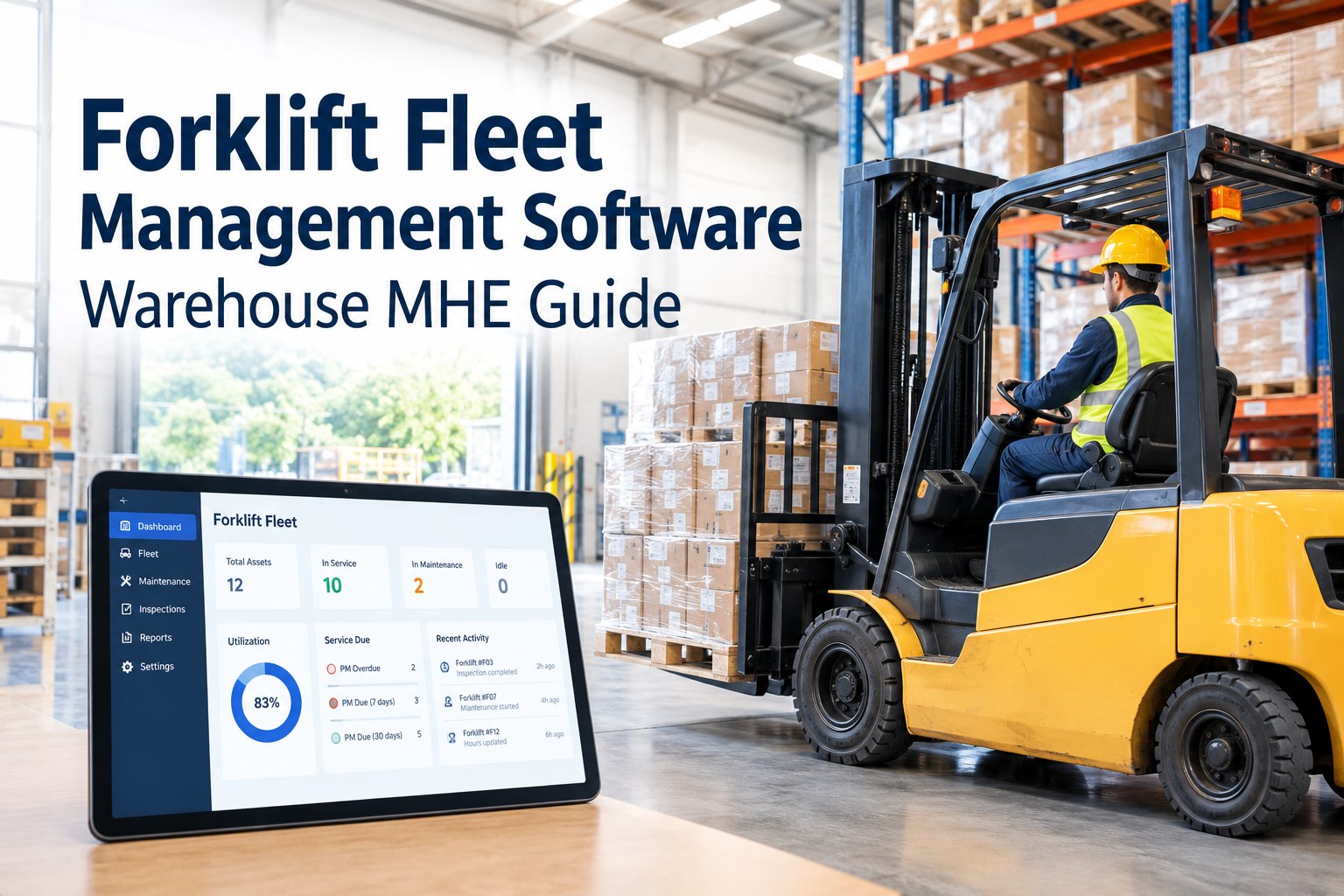
HVI gives each truck a mobile pre-shift inspection that captures hydraulic symptoms, photos and meter readings, turns a flagged leak or drift into a work order automatically, and schedules fluid and filter changes by run-hours. It is an inspection and maintenance platform — it does not perform the repair, but it makes sure the early sign is logged and routed instead of forgotten.