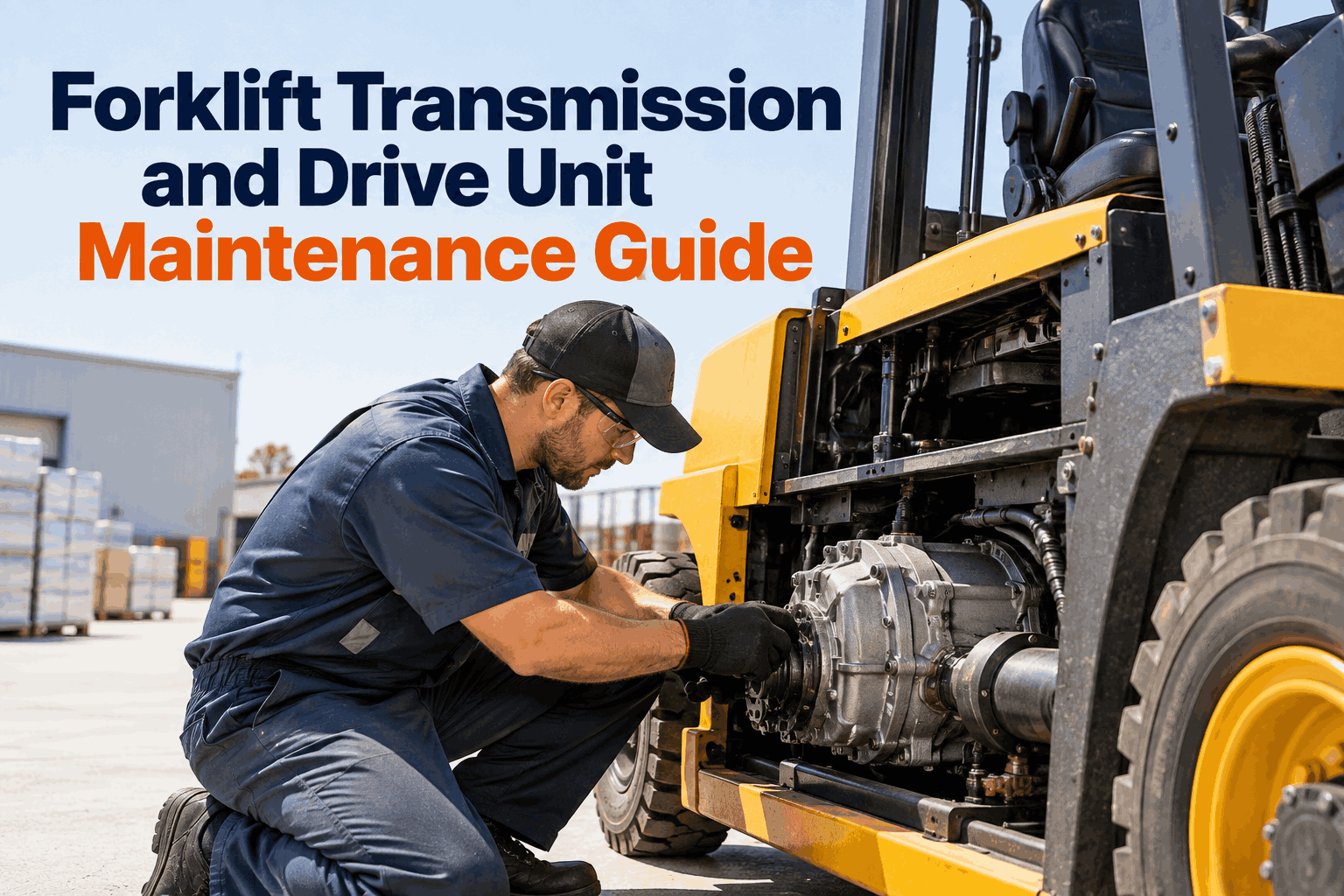
Forklift transmission maintenance trips people up for one reason: "transmission" means two different machines. On an IC forklift it's a powershift unit with fluid, a filter and clutches; on an electric truck it's a sealed drive unit with almost no fluid service. Service the wrong one on the wrong schedule and you either overspend or let a powershift burn itself up. The good news: both warn you before they fail, if someone's listening. Book a demo to see drive-fault checks tracked.
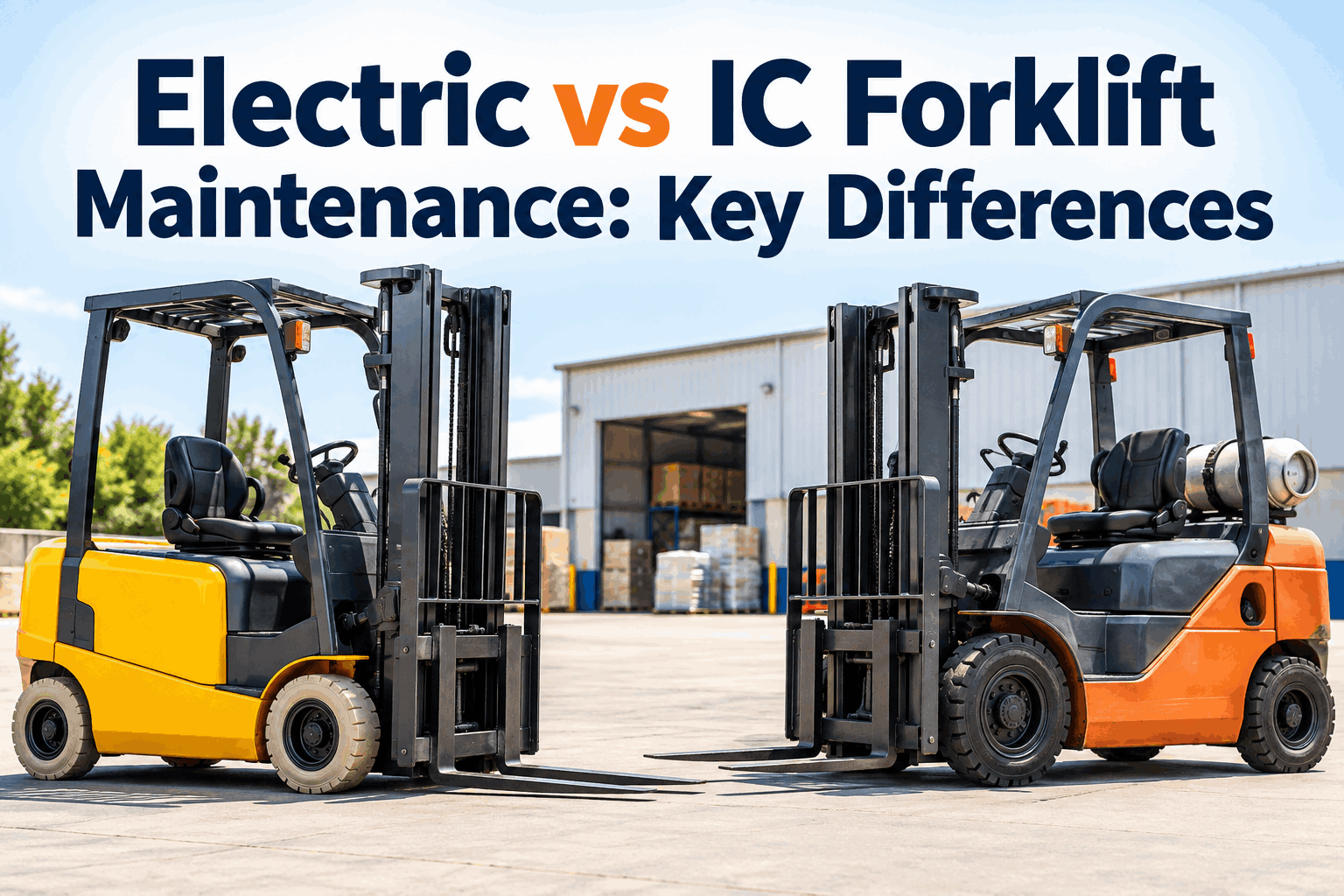
Two Trucks, Two Different Transmissions
An IC forklift's powershift needs fluid, a filter and shift checks. An electric truck's drive unit barely needs fluid at all. The maintenance plan has to know which one it's looking at.
- Transmission fluid & filter
- Clutch packs, torque converter
- Shift quality checks
- Sealed gearbox, minimal fluid
- Traction motor & bearings
- Controller & connections
A forklift's driveline takes more abuse than almost any part of the truck — constant direction changes, inching, loaded starts, hours of stop-and-go in a tight aisle. That's why it's one of the first systems to tell you something's wrong, with a slip, a shudder or a whine long before it strands the truck. The whole job of transmission maintenance is to keep the service on schedule and catch those symptoms while they're still cheap.
IC Powershift vs Electric Drive Unit
Before you schedule anything, you have to know which driveline you're maintaining. The two share a job and almost nothing else.
- Transmission fluid and filter on a change interval
- Clutch packs and torque converter wear with use
- Shift solenoids and linkage affect shift quality
- Fluid condition is the key health signal
- Sealed gearbox with long-interval or lifetime fluid
- Traction motor, bearings and brushes (if fitted)
- Controller, cabling and connections under load
- Noise, heat and current draw are the signals
Getting this split right is the difference between a plan that works and one that wastes money or misses failures. HVI lets you build a preventive maintenance schedule per truck type, so powershift fluid changes and drive-unit inspections each run on the right trigger. Book a demo to see per-type PM.
Forklift Transmission Fluid Service
On a powershift forklift, the transmission fluid does the work and tells the story. Keeping it on interval and reading its condition catches most problems before they become repairs.
Each of these is a line an operator or technician can check and record. Logging fluid condition on a digital inspection turns "looked fine" into a dated reading you can trend. Sign up free and put fluid checks on a schedule.
Transmission Problems: Symptom to Cause
A slipping forklift transmission rarely fails without warning. The trick is knowing what each symptom usually points to, so a driver's "it feels off" becomes an actionable flag instead of a shrug.
Every one of these shows up first as something a driver feels. Capturing it as a work order at that moment is what separates a cheap fix from a reman unit. Book a demo to see a slip report become a work order.
Why Ignoring a Slip Gets Expensive Fast
Drivetrain problems don't stay the same size. A cheap symptom left running becomes a major repair, and a major repair left running strands the truck mid-shift.
The same fault sits at all three stages — only the price changes with how long it ran. A scheduled check plus a logged symptom is what keeps a driveline on the left of that line, not the right.
A Fleet Maintenance Manager's Take
We lost a powershift unit on a counterbalance truck that a driver had been complaining about for two weeks — "shifts weird going into reverse." Nobody wrote it down, so nobody acted on it. By the time it quit, the fluid was black and the clutches were cooked. That's a reman and a day of downtime for what started as a fluid check.
Now a shift-quality line is on the pre-use check, and a "feels off" gets logged as a defect with the truck number. We've caught two slipping transmissions since on a fluid change. Same trucks, same drivers — we just stopped letting the warning disappear between shifts.
Sierra D.Fleet Maintenance Manager · multi-site warehouse operation
Forklift Transmission Maintenance FAQs
What does forklift transmission maintenance involve?
It depends on the drive type. An IC forklift's powershift transmission needs fluid and filter changes on an hour interval, shift-quality checks and leak inspection. An electric forklift's drive unit is largely sealed, so maintenance is inspection-based — listening for noise, checking heat and watching the traction motor and controller rather than changing fluid.
How often should forklift transmission fluid be changed?
Follow the OEM's hour-based interval for your specific truck, and change it sooner in dusty, high-heat or heavy-duty service. Just as important is reading the fluid's condition between changes — dark, burnt-smelling fluid signals overheated clutches and is a reason to act early, not wait for the next scheduled change.
Why is my forklift transmission slipping?
Slipping or delayed engagement usually points to low or degraded transmission fluid or worn clutch packs. A shudder on direction change can be clutch, torque-converter or linkage wear. Catch it early with a fluid level and condition check and a shift-quality check at shift start, before the clutches overheat and force a rebuild.
Do electric forklifts need transmission maintenance?
Yes, but different maintenance. Electric trucks use a sealed drive unit with long-interval or lifetime gearbox fluid, so there's little fluid service. The focus is inspection — listening for bearing or gear noise, checking for heat, and watching the traction motor, controller and connections under load. Problems show up as noise, heat and current draw.
How does HVI help with forklift drivetrain maintenance?
HVI schedules transmission fluid service and drive-unit inspections per truck type, captures a driver's slip or noise report as a dated defect, and turns it into a work order. The service history lets you trend fluid condition and repeat symptoms. It supports inspection, scheduling and records; it doesn't diagnose or repair the driveline itself.
Get Forklift Transmission Maintenance on the Right Schedule
Run powershift fluid service and electric drive-unit inspections on the trigger each truck actually needs, catch a slip or whine the moment a driver reports it, and keep the history that warns you before a driveline fails.
No credit card · See drive-fault tracking in a short demo