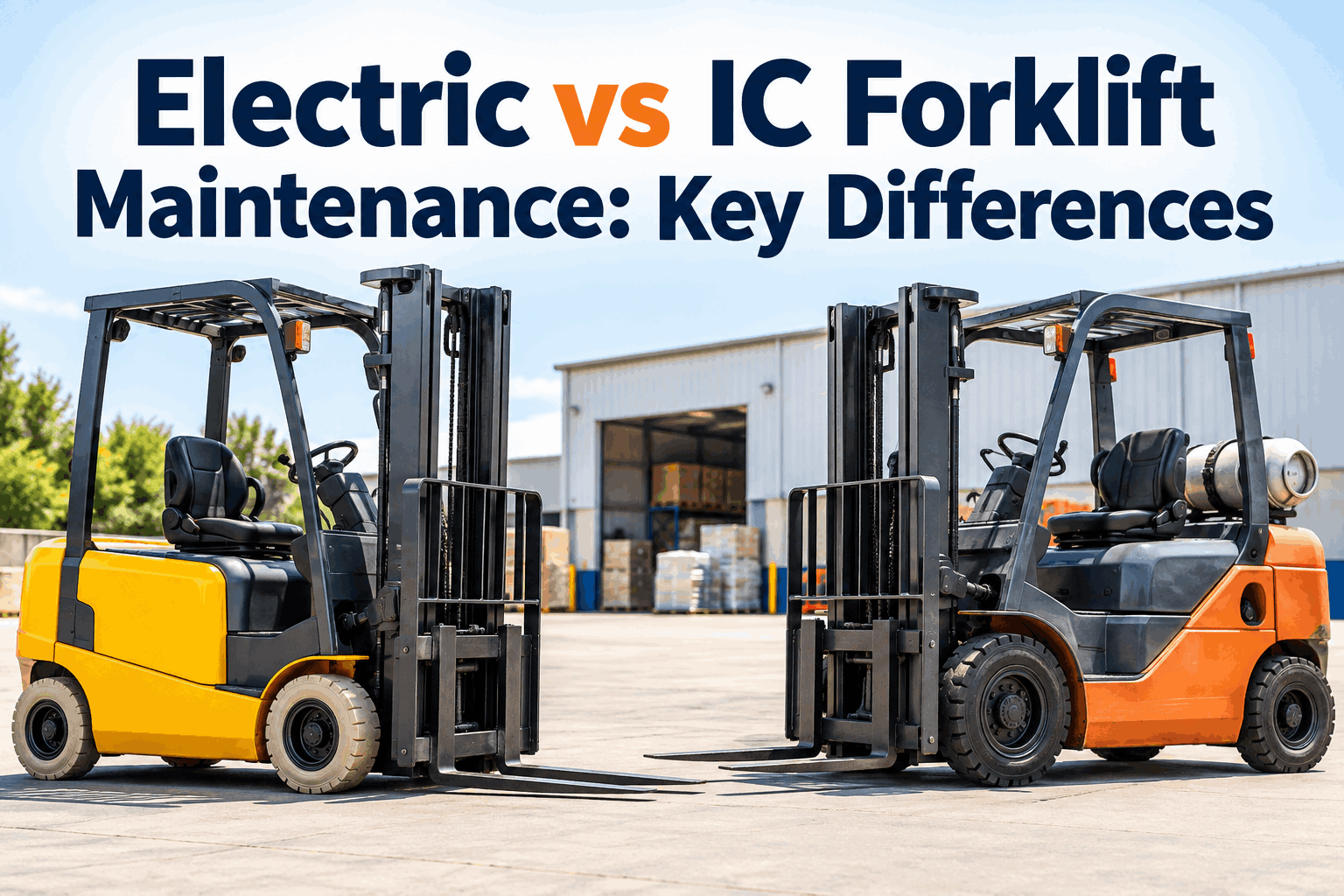
Electric vs IC forklift maintenance is not simply a choice between “less maintenance” and “more maintenance.” Electric trucks remove many engine, fuel and exhaust service items, but add battery and charging-system priorities, while both power types still depend on forks, mast components, hydraulics, brakes, steering, tires and safety systems.
Electric vs IC: Different Power, Different Maintenance Workload
Compare what disappears, what changes and what stays exactly the same — then use actual maintenance history to see which power strategy fits your operation.
The useful comparison is not whether one forklift “needs maintenance” and the other does not. It is where technician time, parts, consumables and downtime move when the power source changes — and whether your maintenance system can separate those costs clearly enough to support an equipment decision.
What Actually Changes When You Replace IC With Electric?the maintenance workload shifts rather than disappearing
Removing an internal-combustion engine eliminates a substantial group of routine service items. But electric forklifts introduce a different maintenance layer around motive power, especially batteries, chargers, cables, electrical connections and control components.
The Biggest Mistake: Forgetting What Both Forklifts Shareelectric does not remove the load-handling maintenance underneath the truck
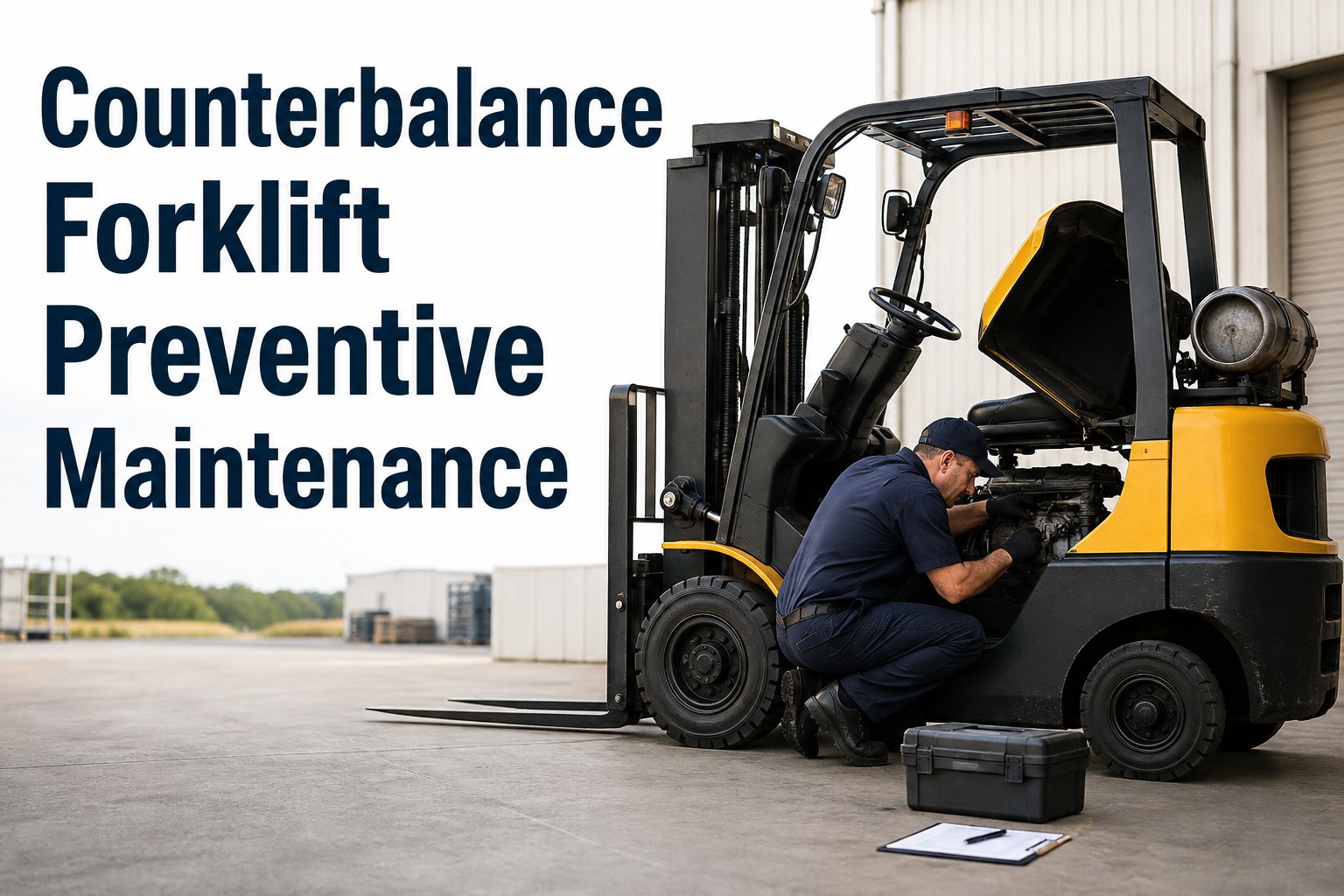
Electric and IC forklifts still perform the same core job: lift, carry, steer and stop a load. That leaves a large shared maintenance layer regardless of what provides the motive power.
Maintenance Power source does not remove these systems
This is why a maintenance comparison should separate power-source-specific work from shared chassis and load-handling work. HVI's custom inspection workflow can keep the common checks consistent while adding the correct electric or IC sections for each asset.
“Electric” Is Still Two Different Maintenance Conversationslead-acid and lithium-ion should not share the same battery checklist
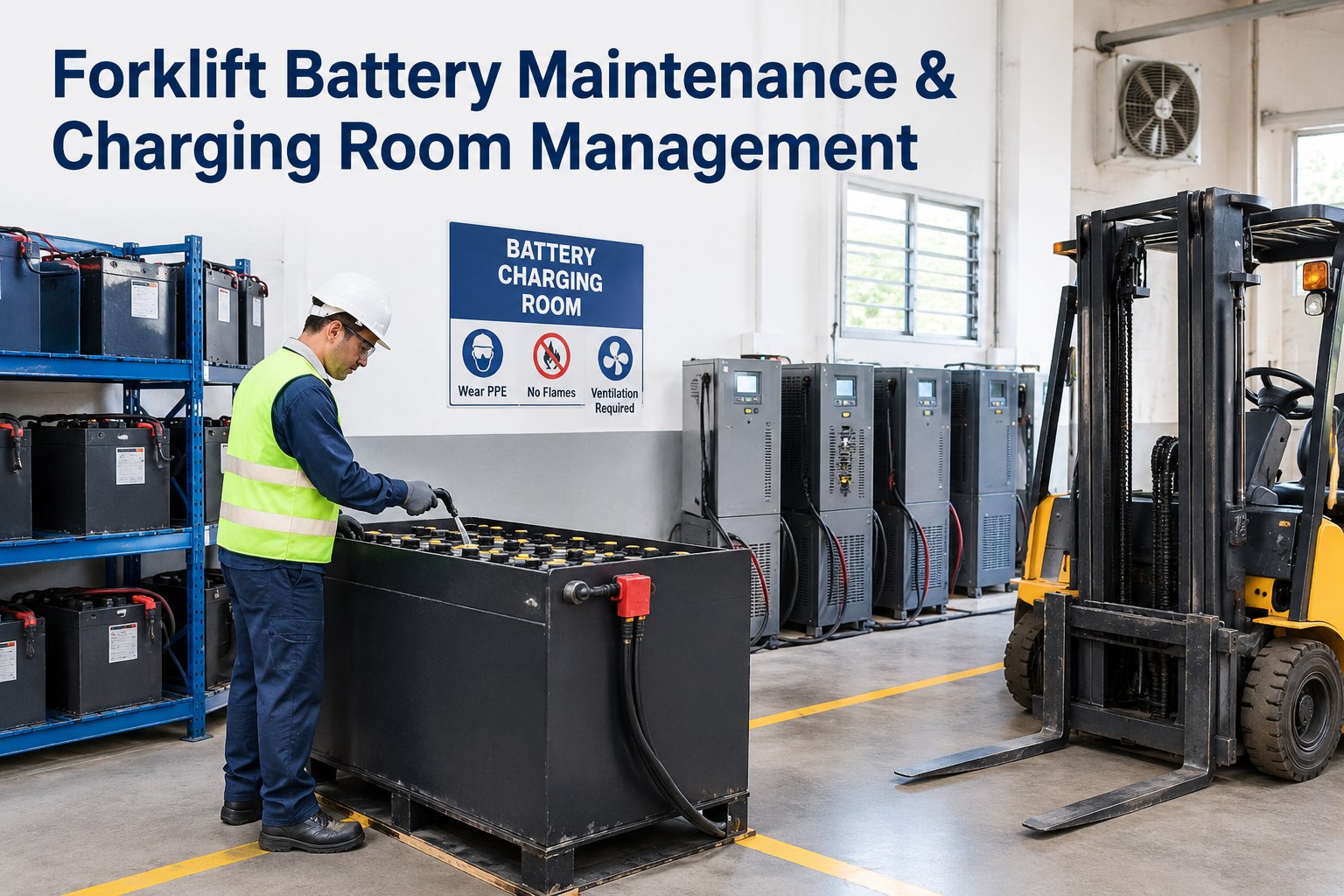
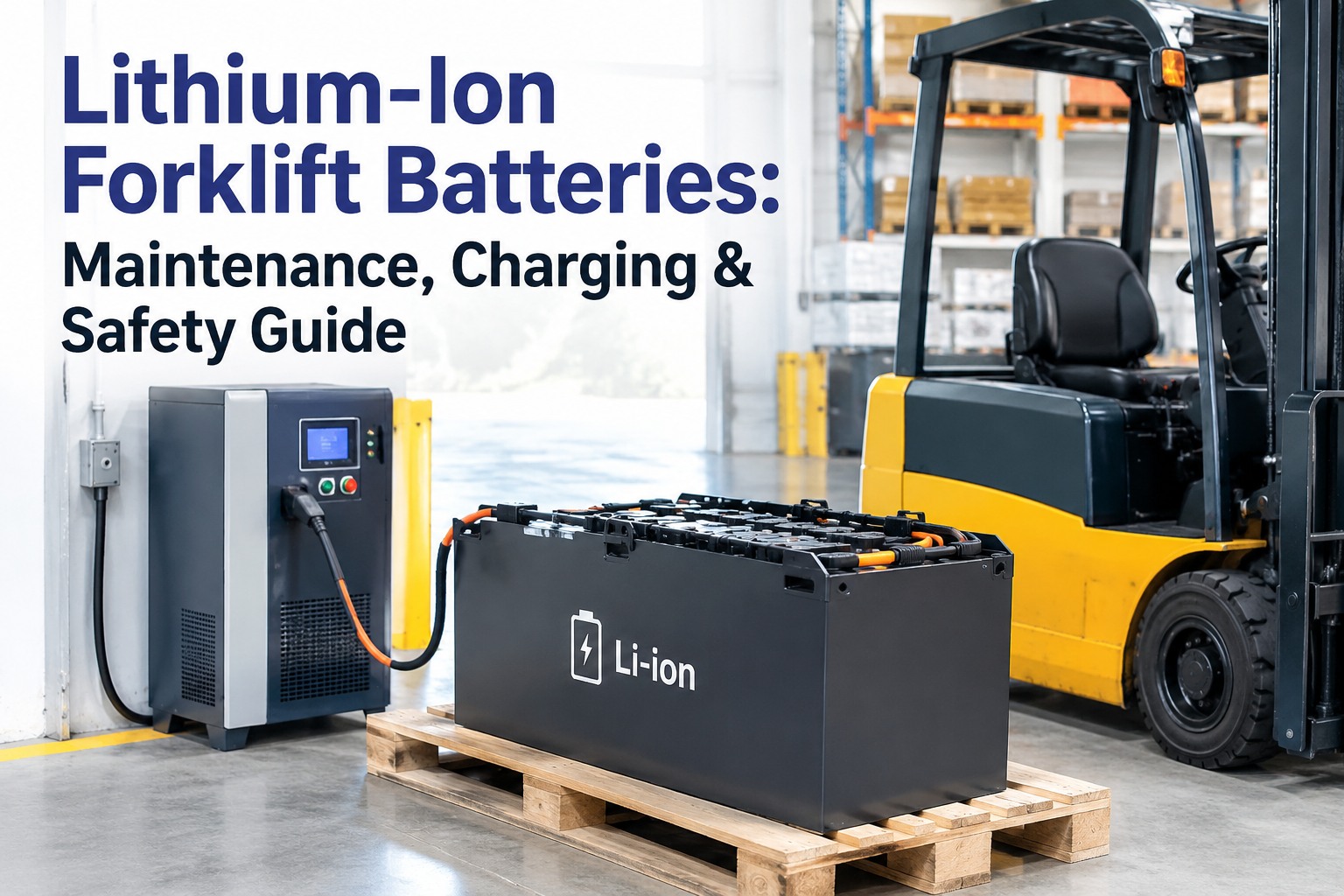
Battery chemistry matters. A flooded lead-acid routine can involve electrolyte and watering procedures, cleaning, charging practices and equalization according to manufacturer guidance. Lithium-ion removes many of those tasks, but charger compatibility, cable condition, battery-management warnings and temperature remain important.
SAME PM ↔
That distinction is particularly important in mixed electric fleets. The asset record should identify battery type so technicians receive the right tasks rather than relying on memory or a generic electric-forklift form.
Compare Maintenance Cost Per Operating Hour — Not Assumptionspurchase price alone cannot tell you what the truck costs to keep working
Electric forklifts often have a maintenance advantage because they eliminate many combustion-engine service items, but a fleet decision should not rely on a generic percentage. Truck age, application severity, utilization, battery strategy, technician labor and downtime can materially change the result.
Keep energy/fuel, battery replacement and capital costs visible as separate TCO categories when you want a full ownership comparison.
HVI can keep labor and material cost attached to work orders while preserving meter history per asset. That gives warehouse managers a much stronger comparison than “electric should be cheaper.” It lets you compare what your fleet is actually spending.
Build the PM Schedule Around the Truck, Not the Fuel Labelpower source is one variable — usage and application still matter
Two electric forklifts can need different maintenance attention if one runs three shifts in a demanding application while the other works intermittently. The same applies to IC equipment. Manufacturer requirements remain the baseline, while meter hours and operating conditions help determine when work becomes due.
HVI's preventive maintenance workflow supports meter- and calendar-based scheduling, giving mixed forklift fleets one place to manage different service profiles without pretending every unit has the same maintenance needs.
Make the Equipment Decision From Your Own Maintenance Historythe best comparison happens after the invoices become structured data
For procurement and operations teams, the final question is not simply “electric or IC?” It is which configuration delivers the best fit for the facility's duty cycle, infrastructure, operating environment and total ownership strategy.
That is where HVI fits into an electric forklift TCO discussion: not by declaring one power source the winner, but by giving managers consistent maintenance records for each asset. Book an HVI demo for warehouse equipment to see how those records can be compared across a mixed fleet.
Electric vs IC Forklift Maintenance: Quick Answers
Do electric forklifts require less maintenance than IC forklifts?
Electric forklifts generally remove many routine combustion-engine service items such as engine oil, engine filters, fuel-system work and exhaust-related maintenance. They still require regular attention to the battery and electrical system plus the same core forklift systems such as mast components, forks, hydraulics, brakes, steering and tires. Actual maintenance cost depends on the truck, application, utilization and maintenance program.
What maintenance does an electric forklift need?
Electric forklift maintenance can include battery and charger inspection, cables and connectors, electrical components and drive systems along with the common mechanical systems found on forklifts. Battery tasks depend heavily on chemistry, so flooded lead-acid and lithium-ion equipment should follow the applicable manufacturer procedures rather than one generic battery checklist.
What maintenance does an IC forklift need?
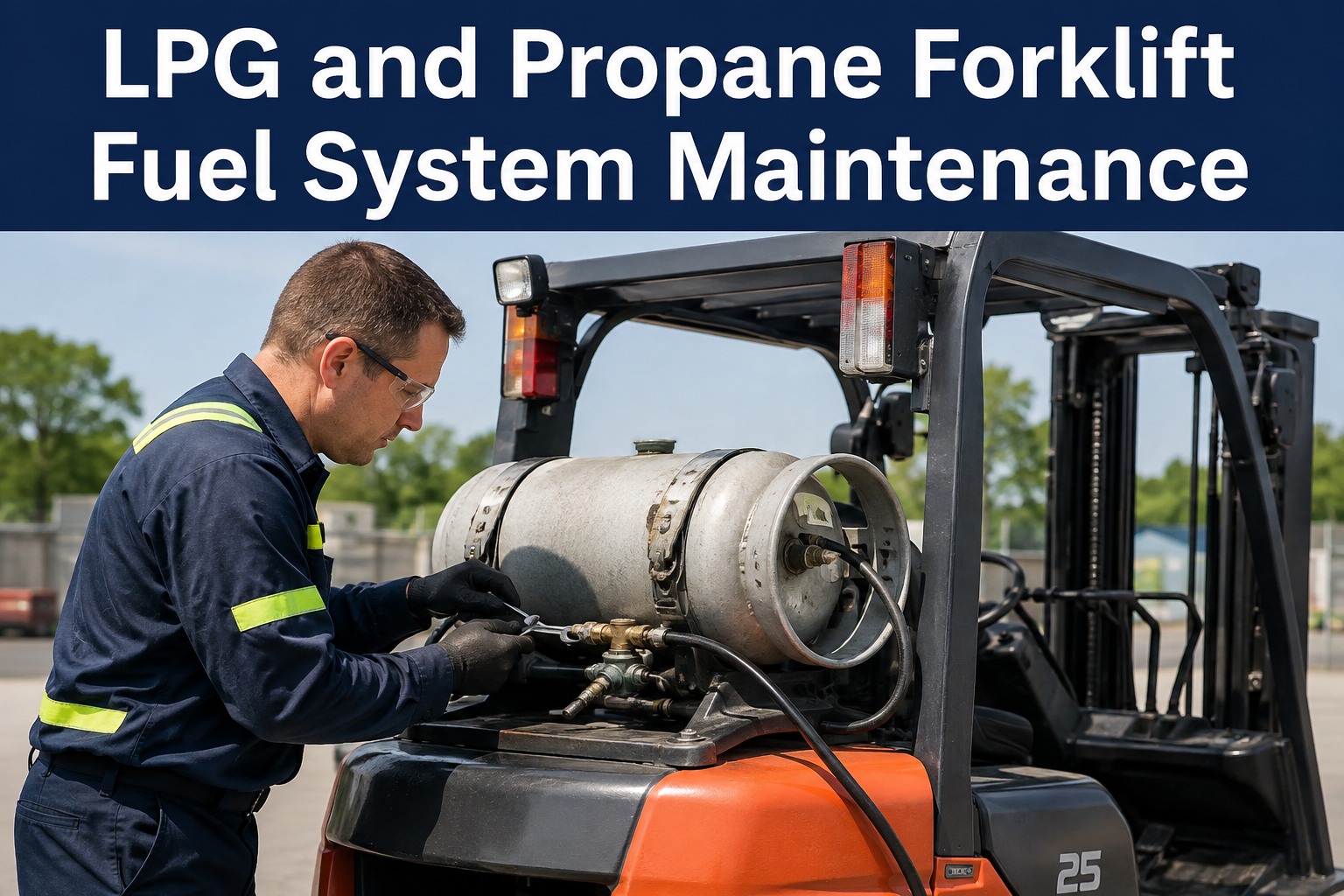
Internal-combustion forklift maintenance adds engine-related fluids, filters, cooling-system service and fuel- or ignition-system work where applicable. The exact requirements differ between LPG, gasoline and diesel equipment and between manufacturers, so the truck's service documentation should determine the actual maintenance schedule.
Is lithium-ion forklift maintenance the same as lead-acid maintenance?
No. Flooded lead-acid batteries can require electrolyte-level and watering procedures, cleaning and manufacturer-specified charging or equalization routines. Lithium-ion batteries do not use the same watering routine, but approved charging equipment, cables, connectors, battery-management warnings and battery condition still require attention. Always follow the battery and truck manufacturer's instructions.
How should a warehouse compare electric and IC forklift maintenance costs?
Track planned maintenance labor, corrective repairs, parts and consumables, downtime and operating hours by asset. Maintenance cost per operating hour can then be compared between similar electric and IC groups. For a complete TCO analysis, also account separately for energy or fuel, battery and charging infrastructure, acquisition cost and other ownership expenses.
Compare Forklift Maintenance With Fleet Data, Not Assumptions
Give every forklift the right inspection template, PM schedule and maintenance history — then compare labor, repairs, parts and cost per operating hour across power types.