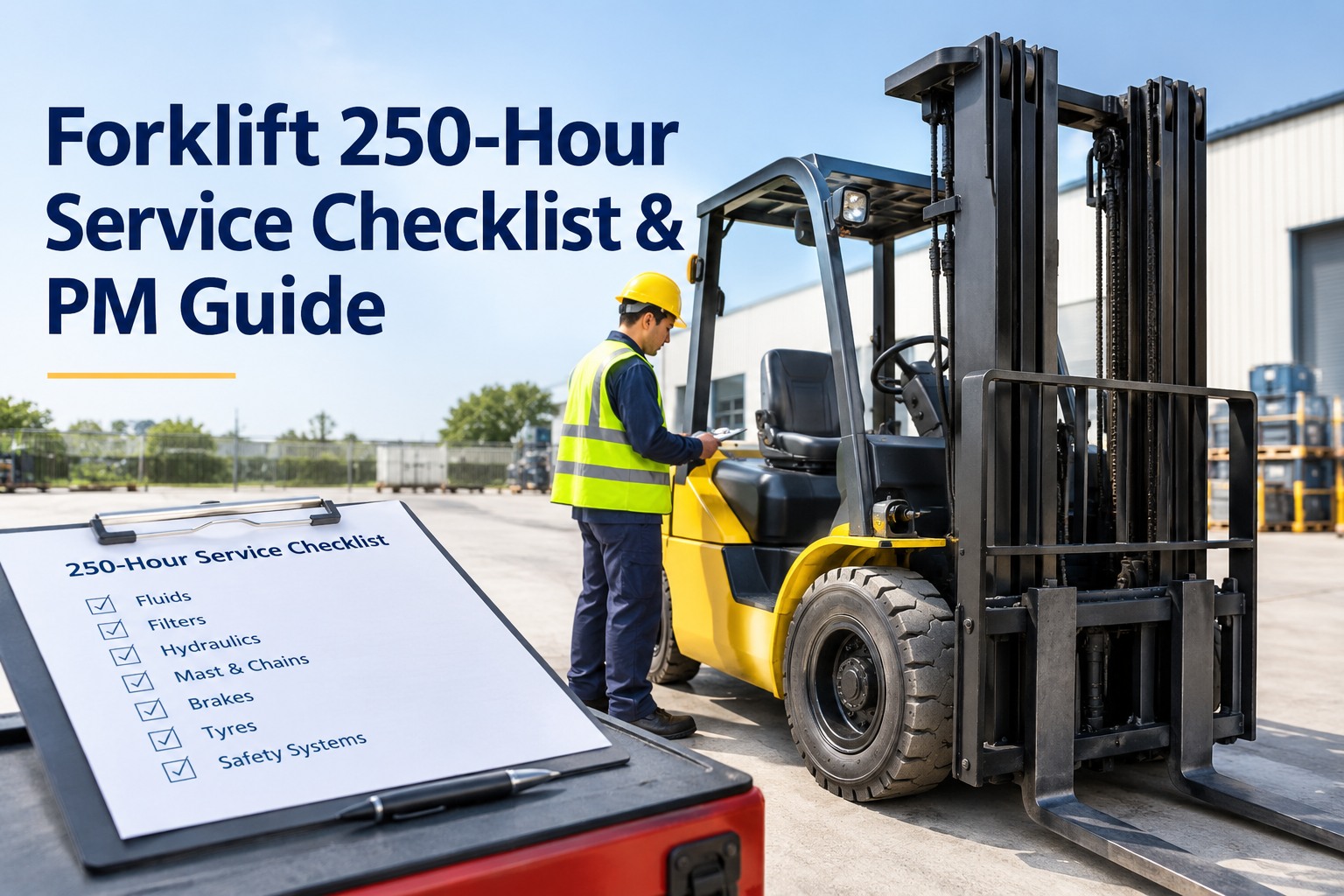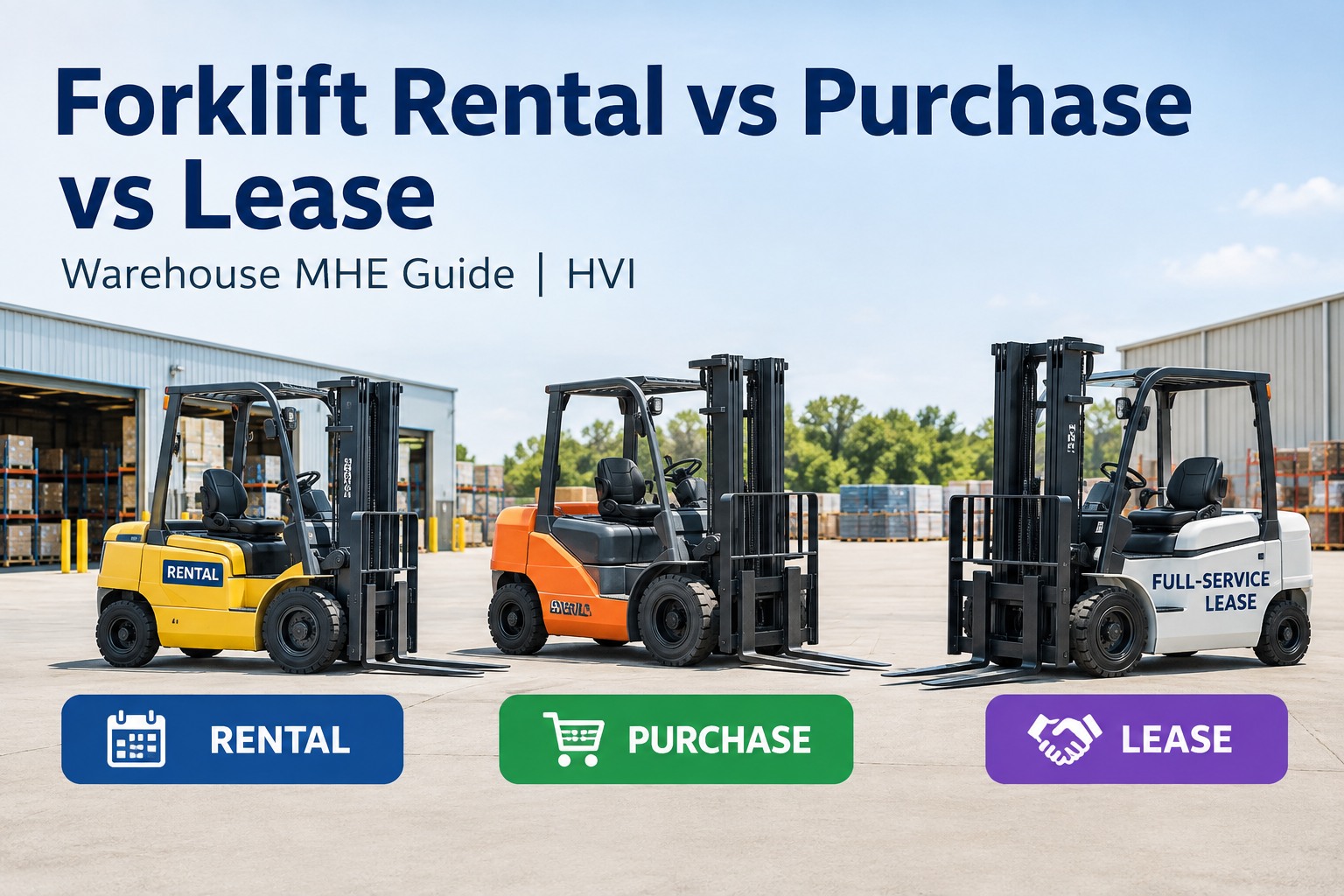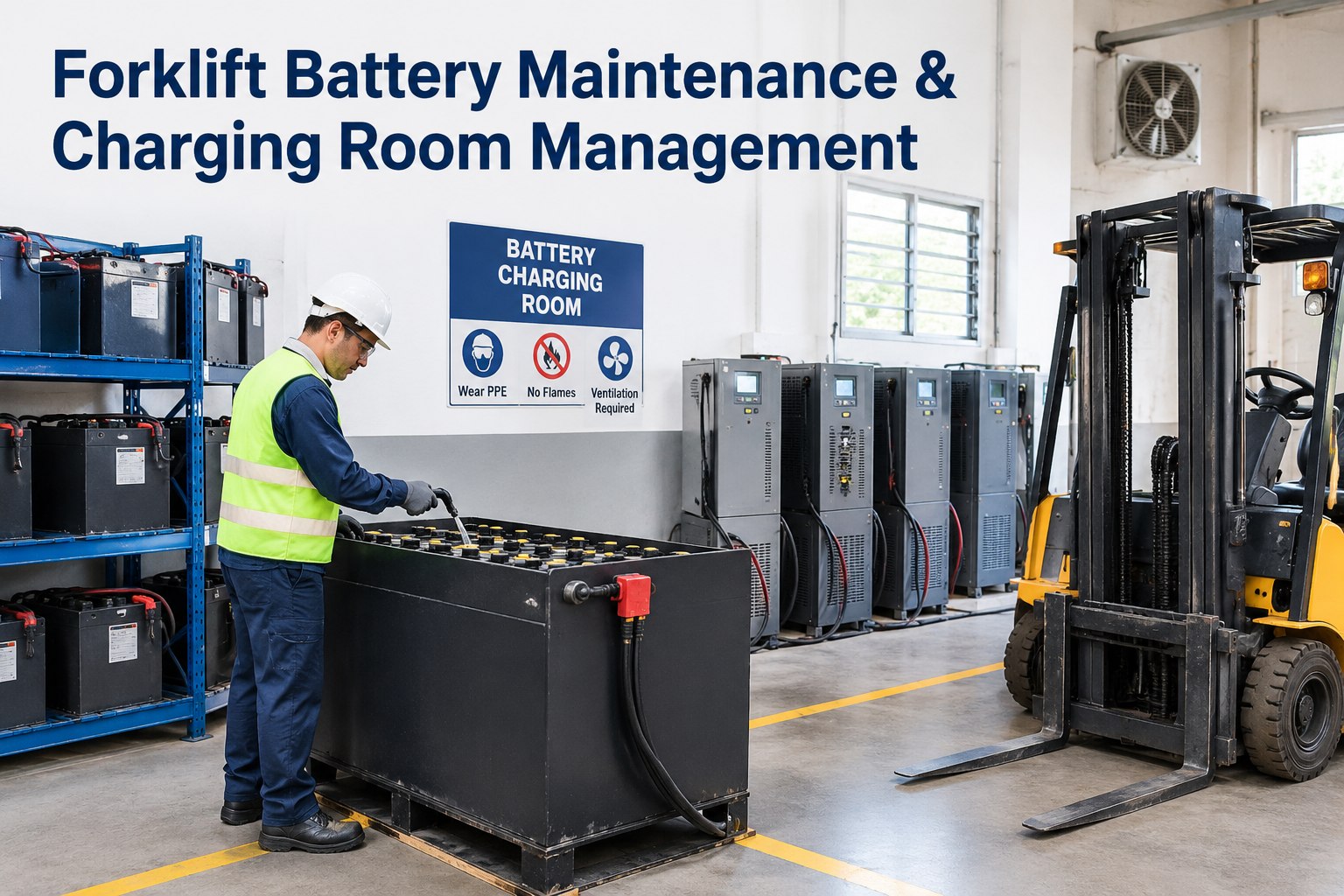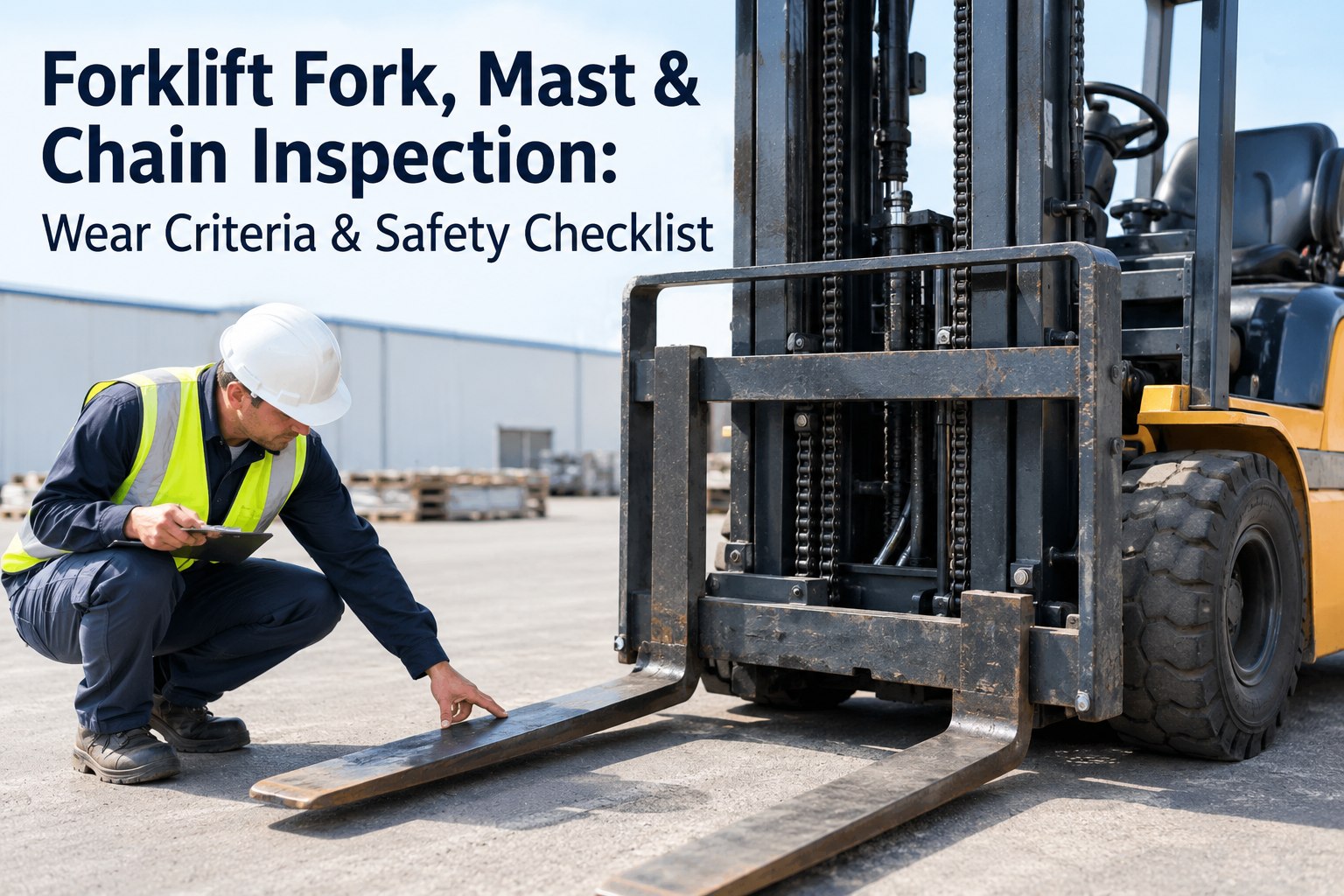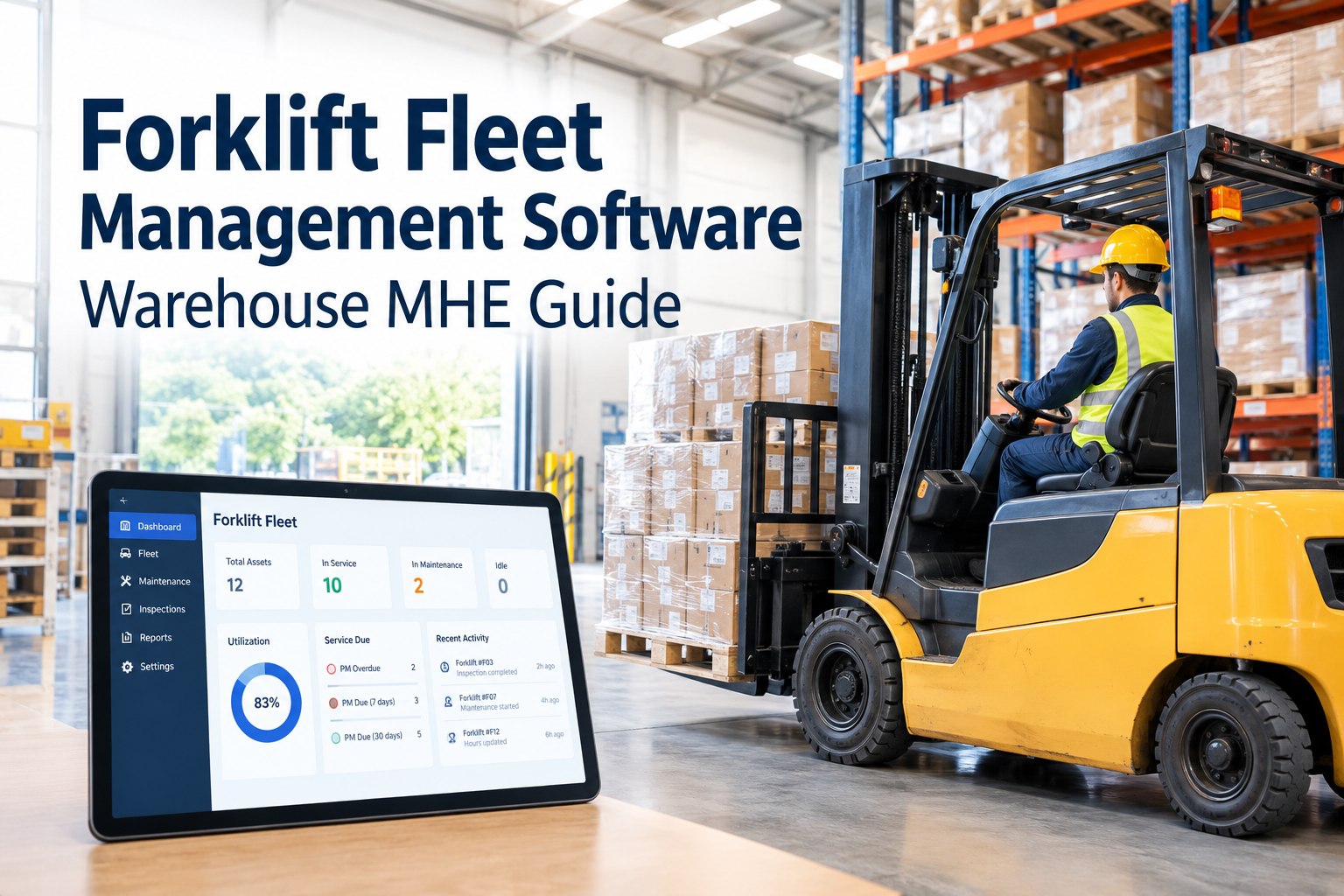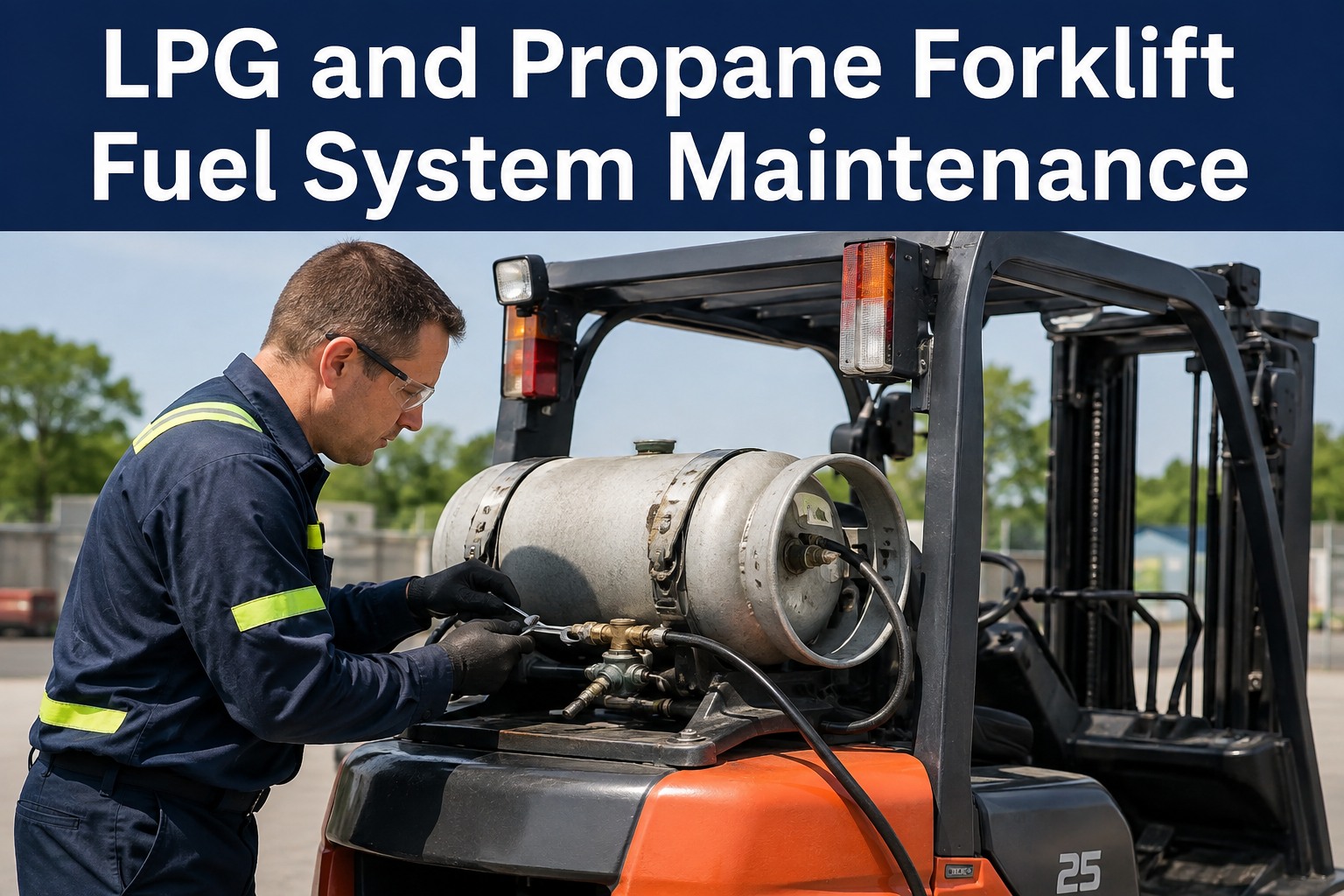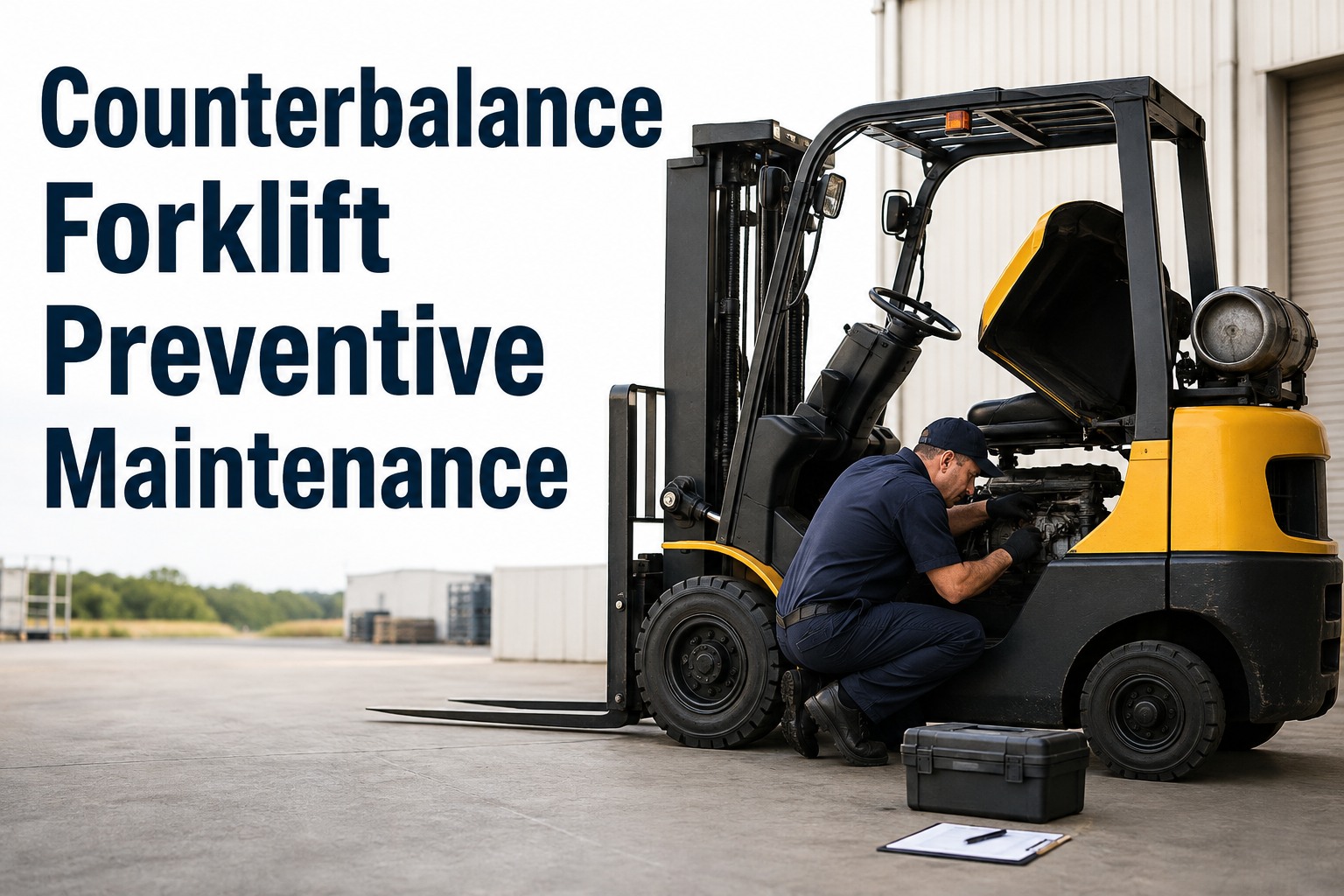
Your counterbalance forklift is the machine that never gets a day off: it runs dock-to-stock, loads trailers, feeds the pick path, and quietly racks up more operating hours than anything else in the building. That is exactly why counterbalance forklift maintenance has to run on a real hours clock, not on a wall calendar. A truck doing 90 hours a week hits its 200-hour service in just over two weeks, while the yard spare takes three months to get there — and treating them the same is how a routine service turns into a downed machine mid-shift. This guide breaks down the 200–250 hour service interval, what it should actually cover from engine or battery to forks and brakes, and how to fire every service off real meter readings. If you want to see that running on your own units, you can book a 30-minute walkthrough of hours-based PM any time.
Is your highest-hour truck still being serviced by the calendar?
The counterbalance truck is usually the highest-stakes asset in the warehouse. Miss one interval and a $400 service becomes a $4,000 emergency repair plus a lost shift. Here is the interval, the checklist and the economics — built for real operating hours.
The real numbers behind forklift preventive maintenance
Every figure below lands somewhere on your P&L — in downtime, parts, or a truck sitting dead at the dock door.
Service interval
The standard counterbalance truck service window. On a two-shift operation that is about every six weeks — not "sometime this quarter."
Emergency vs planned cost
A hydraulic pump or brake failure caught mid-shift costs several times the planned service that would have caught it early.
Down = pick path stalls
One downed counterbalance truck on a busy dock backs up receiving, put-away and loading within the hour.
Calendar ceiling
Even low-hour trucks need a time-based check — seals dry out, tyres flat-spot, batteries sulfate sitting idle.
Why 200–250 hours beats "every couple of months"
Utilisation varies enormously between trucks. Your dock-to-stock lead truck might burn 80 hours a week while the reserve unit does eight. Calendar-based servicing over-services one and under-services the other — and it is always the overworked truck that gets missed.
Calendar-only servicing
- Lead truck runs 320 hours between "quarterly" services — chains, brakes and hydraulic oil all past their useful life
- Spare truck gets a full service at 40 hours — filters and oil thrown away early
- Nobody notices the missed interval until the mast chain stretches or a brake line lets go
- Service history lives in a binder nobody can find during an audit
Hours-fired servicing
- Each truck triggers its own PM at its own 200–250 hour mark, based on real meter readings
- Operators log hours at the start of each shift inspection — no chasing, no guessing
- Due and overdue alerts land before the truck crosses the line, not after
- Every service is timestamped and photo-backed, ready for any safety or insurance audit
A practical middle ground many fleets use: fire the service at whichever comes first — 200–250 hours or six weeks. The hours catch your workhorses; the calendar catches your low-use trucks before seals, tyres and batteries degrade from sitting. You can see both triggers running side by side in a short demo if you want the mechanics.
What a 200–250 hour counterbalance service actually covers
Seven systems, one service. Skip any of them and you have not serviced the truck — you have just changed the oil.
Engine or Battery System
- IC trucks: engine oil and filter, air filter check, fuel filter, coolant level and condition, belts and hoses
- LPG trucks: inspect tank bracket, hoses and fittings for leaks and chafing
- Electric trucks: battery water levels, terminal corrosion, cable condition, charge cycle review
- Check for fault codes and abnormal idle or lift behaviour
Hydraulics
- Hydraulic oil level and condition; replace per OEM hours spec
- Return and suction filters at interval
- Inspect lift/tilt cylinders for weeping seals and rod scoring
- Pressure-test lift and tilt; check for drift under load
Mast, Chains & Carriage
- Lift chains: measure elongation, check for cracked links, corrosion and correct tension side-to-side
- Lubricate chains and mast channels; inspect rollers for flat spots
- Check carriage and mast welds for cracks; verify hose routing through the mast
- Confirm smooth staging — no binding, jerking or uneven lift
Forks
- Measure fork heel wear — replace at 10% blade thickness loss, no exceptions
- Check heel and hanger welds for cracks; check blade straightness and tip alignment
- Verify fork stops and positioning locks engage properly
- Confirm capacity plate matches the fitted forks and attachments
Brakes
- Service brake test under load; measure stopping performance, not just pedal feel
- Inspect lines, wheel cylinders or calipers for leaks and wear
- Parking brake: holds on a grade with rated load
- Brake fluid level and condition on hydraulic systems
Tyres & Wheels
- Cushion tyres: measure wear to the wear line, check for chunking and bond separation
- Pneumatic tyres: pressures, tread, sidewall damage, embedded debris
- Wheel nuts torqued to spec; check rims for cracks
- Uneven wear flags an alignment, brake-drag or steering issue — log it, don't just swap the tyre
Safety Systems & Calibration
- Seat belt, seat switch, overhead guard and load backrest integrity
- Horn, lights, beacon, reverse alarm and any pedestrian-warning systems
- Load moment indicators and scales: verify calibration against a known weight
- Steering free play, tilt function speeds, and a full function test under rated load before sign-off
The consumables that decide whether the truck makes the next interval
Most counterbalance failures that "came out of nowhere" were visible in a fluid or filter two services earlier. This is the table your technicians should work from — and your parts room should stock against.
| Item | Typical attention at 200–250h | What it prevents |
|---|---|---|
| Engine oil & filter (IC) | Replace every interval on hard-use trucks | Bearing wear, sludge, premature engine rebuild |
| Hydraulic oil & filters | Level and condition every service; replace per OEM hours | Pump cavitation, slow lift, valve block damage |
| Air filter | Inspect; replace more often in dusty yards and aggregates work | Dusted engine, power loss, fuel burn increase |
| Coolant | Level, strength and leaks; pressure-test cap | Overheat on a hot dock, head-gasket failure |
| Battery water (electric) | Check after charge, top up with distilled water, clean terminals | Sulfation, lost capacity, early battery replacement |
| Chain lubricant | Clean and re-lube lift chains every service | Chain elongation, stiff mast, chain failure under load |
| Load scale / indicator calibration | Verify against known weight; adjust or tag out | Overloaded racks, mis-declared freight weights |
Stocking these items is half the battle. When the oil filter for your lead truck is on back-order, the service slips a week — and that is how intervals die. Fleets that tie their PM schedule to a parts and inventory log they can start free stop discovering empty shelves mid-service.
The economics: what one missed interval really costs
A worked example from a typical two-shift distribution operation running eight counterbalance trucks.
Planned 250-hour service: oil, filters, chain lube, inspection labour — scheduled for a quiet Sunday.
Emergency pump, call-out rates, freight on parts, plus two days of a rental unit and overtime to clear the backlog.
The multiplier between the planned service and the unplanned repair — before you count the missed shipments.
Across an eight-truck fleet, skipping or stretching intervals on just two trucks a year can quietly burn $7,000–$8,000 in avoidable repair and downtime — more than the entire planned PM budget for the fleet. That is the gap a disciplined counterbalance PM program closes, and it is exactly the gap you can walk through with your own fleet numbers in a demo.
See HVI fire PM off real hours on your own trucks
Book a 30-minute demo and we will set up one of your counterbalance trucks live — hours-based service triggers, the full 200–250h checklist, and due alerts before anything goes overdue.
Four ways HVI keeps every counterbalance truck inside its interval
PM fired by real operating hours
Operators log meter hours in the daily inspection on any phone. HVI counts each truck toward its own 200–250h trigger and raises due and overdue alerts automatically — no spreadsheets, no guessing which truck is next.
Distinct checklists per truck type
Your IC counterbalance trucks get the engine-and-hydraulics checklist; your electrics get battery and charge-cycle items; your reach trucks get their own. One platform, the right checklist per asset, photo and defect capture built in.
Defect-to-work-order in one tap
A weeping tilt cylinder spotted at inspection becomes a work order with photos attached before the shift ends — not a text message that gets buried. Parts get reserved from inventory so the repair doesn't stall waiting on a seal kit.
Cost per hour, per asset
HVI tracks parts, labour and downtime against each truck's meter hours, so you can see which unit costs $4 per hour to run and which one costs $11 — and make keep-or-replace calls on evidence instead of gut feel. Many managers book a demo just to see this report on their own fleet.
Counterbalance forklift maintenance, in one screen
- Service at 200–250 operating hours or roughly six weeks, whichever comes first — hours for your workhorses, calendar for your low-use units.
- A real service covers seven systems: engine or battery, hydraulics, mast and chains, forks, brakes, tyres, and safety systems with calibration checks.
- Fork heel wear past 10% means replacement — it is the single most ignored safety item on the whole truck.
- A missed interval is a 10x cost multiplier — a few hundred dollars of planned service becomes thousands in emergency repair plus a downed truck mid-pick-path.
- Run it off meter hours, not memory. If your PM still lives in a binder or a spreadsheet, you can sign up free and set your first hours-based schedule today.
"I used to find out a truck was 150 hours overdue when the operator rang to say the mast was jerking. Now I check one number every Monday — hours to next service, per truck. My lead unit gets serviced at 240 hours like clockwork, and our unplanned breakdowns have basically become a non-event. The thing that sold me was the cost-per-hour report; it showed one truck was costing me double the fleet average, and we replaced it instead of feeding it."
Daniel Mercer — Maintenance Manager, regional 3PL distribution centre
Counterbalance forklift service questions, answered
How often should a counterbalance forklift be serviced?
What is included in a 250-hour forklift service?
Should forklift PM be scheduled by hours or by calendar?
When do forklift forks need to be replaced?
How much does forklift preventive maintenance cost compared to breakdown repairs?
Stop finding out about overdue trucks from a breakdown call
Put every counterbalance truck on its own hours clock with the right checklist, the right parts on the shelf, and alerts before anything crosses the line.
Free to start — Works on any phone — No card needed