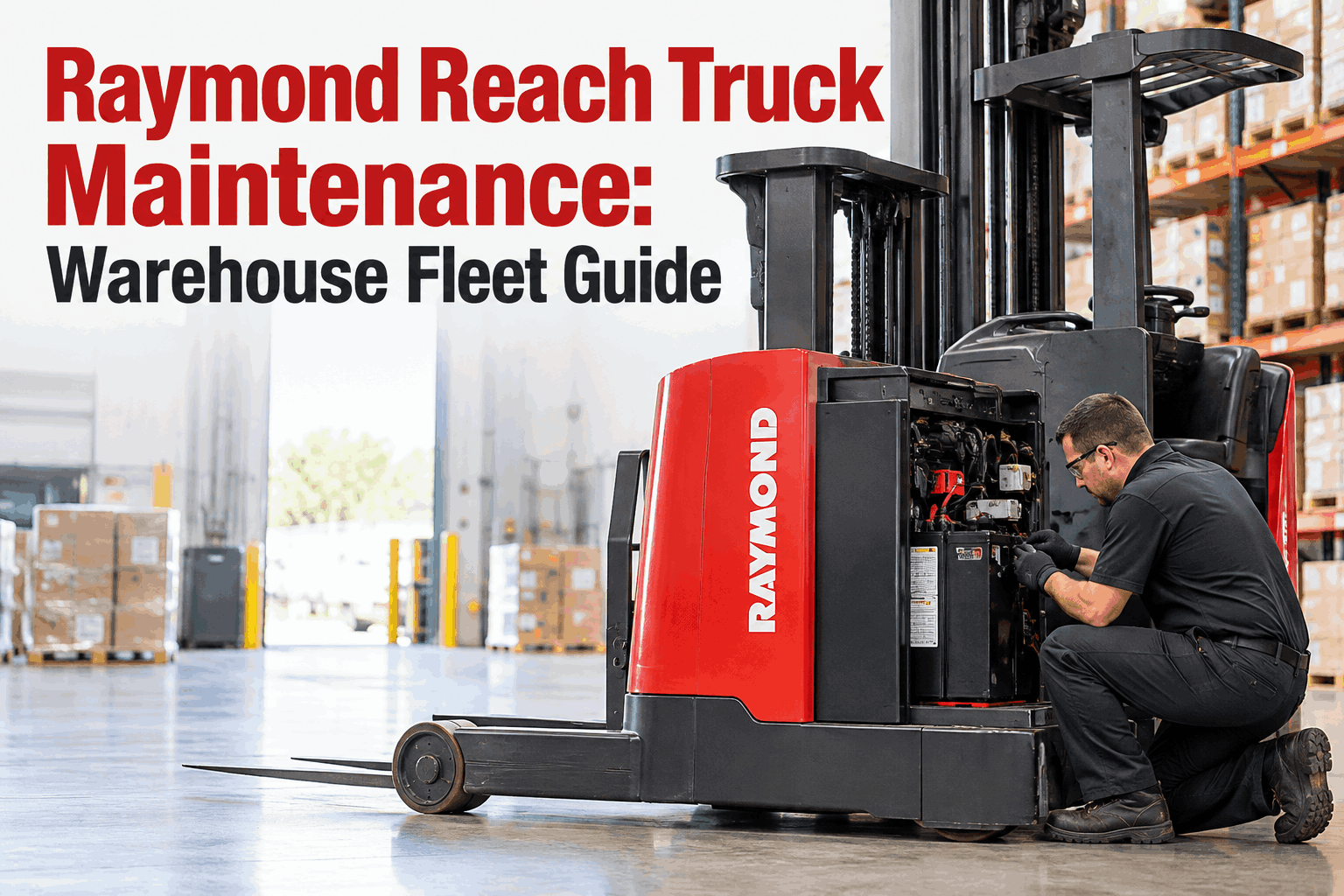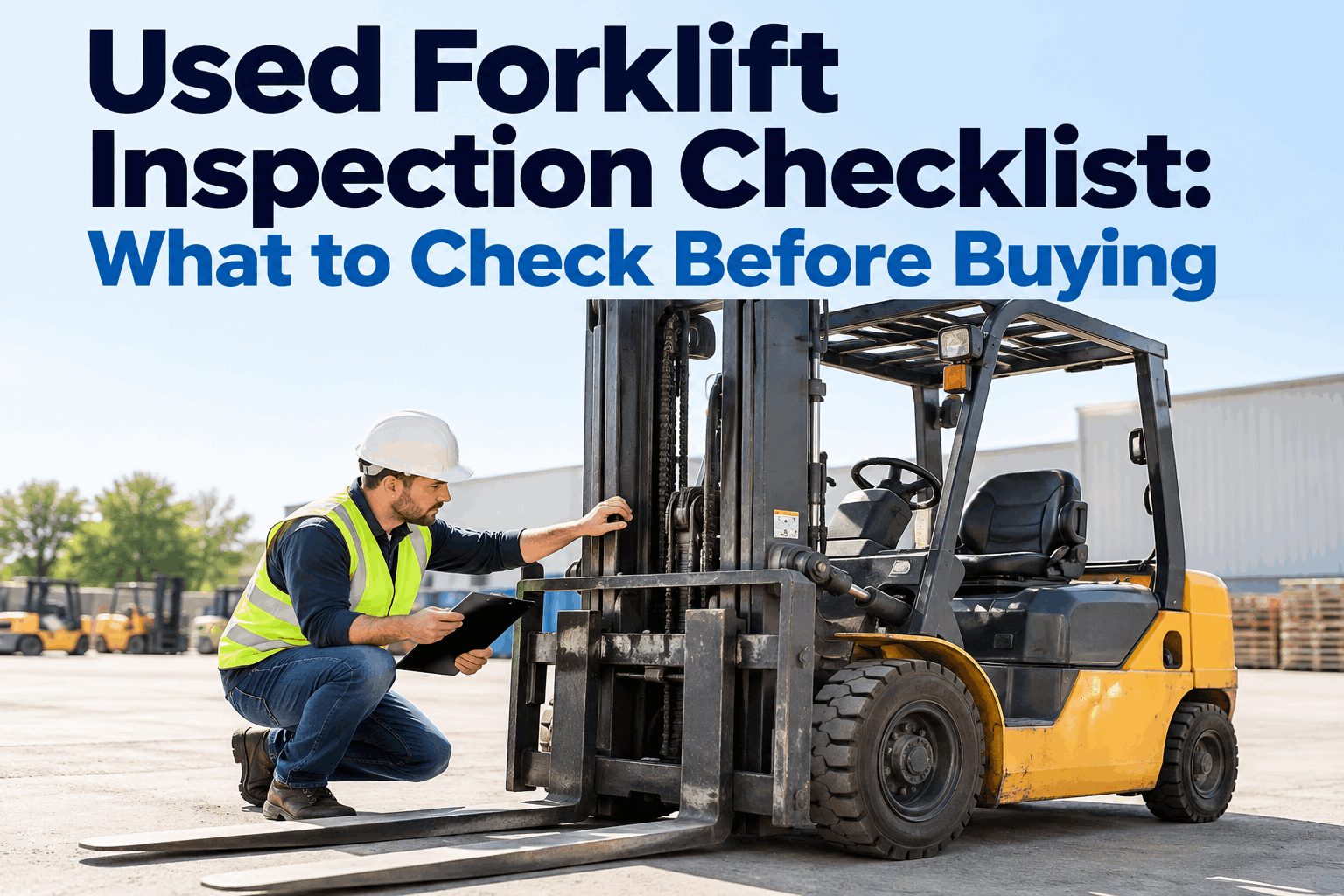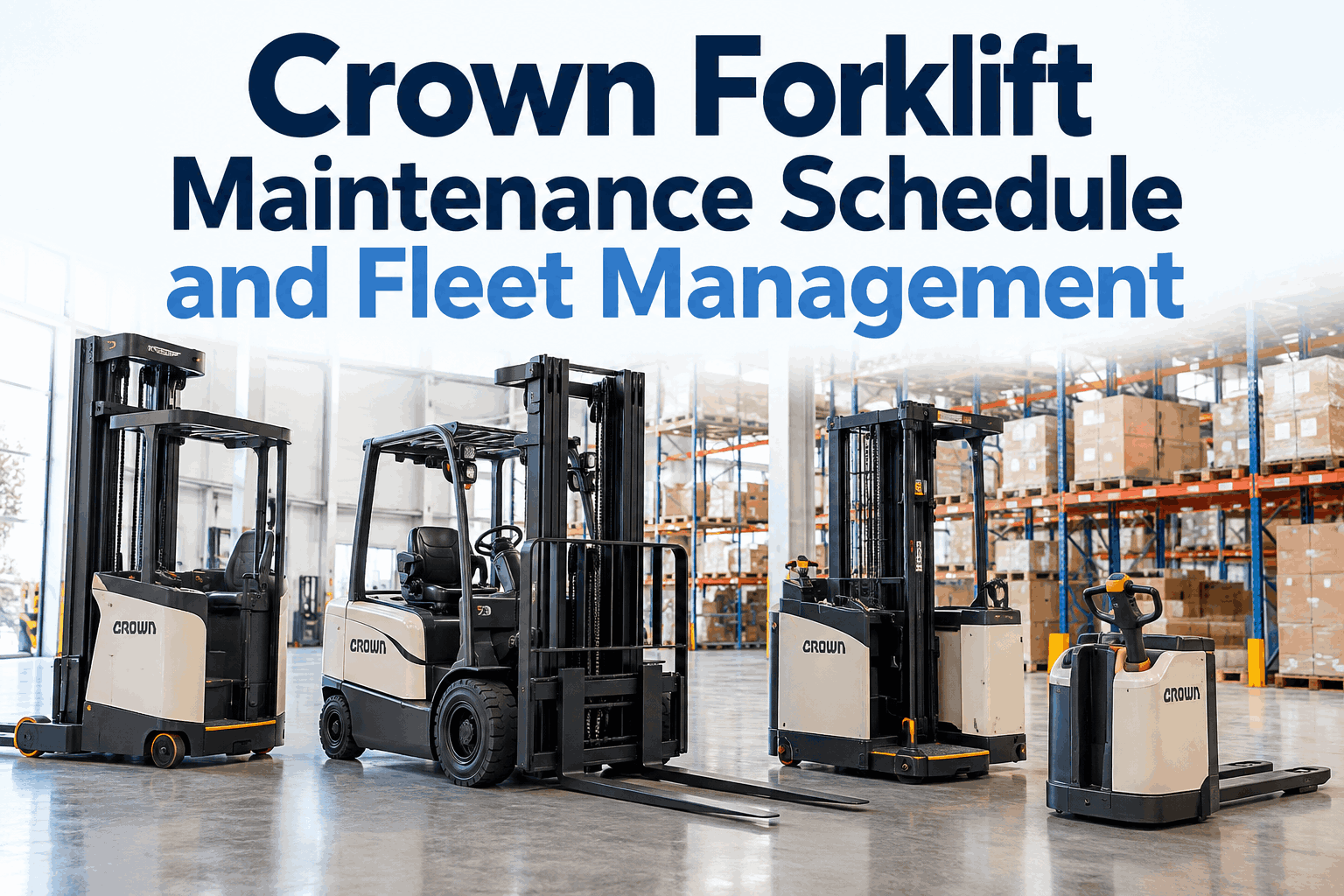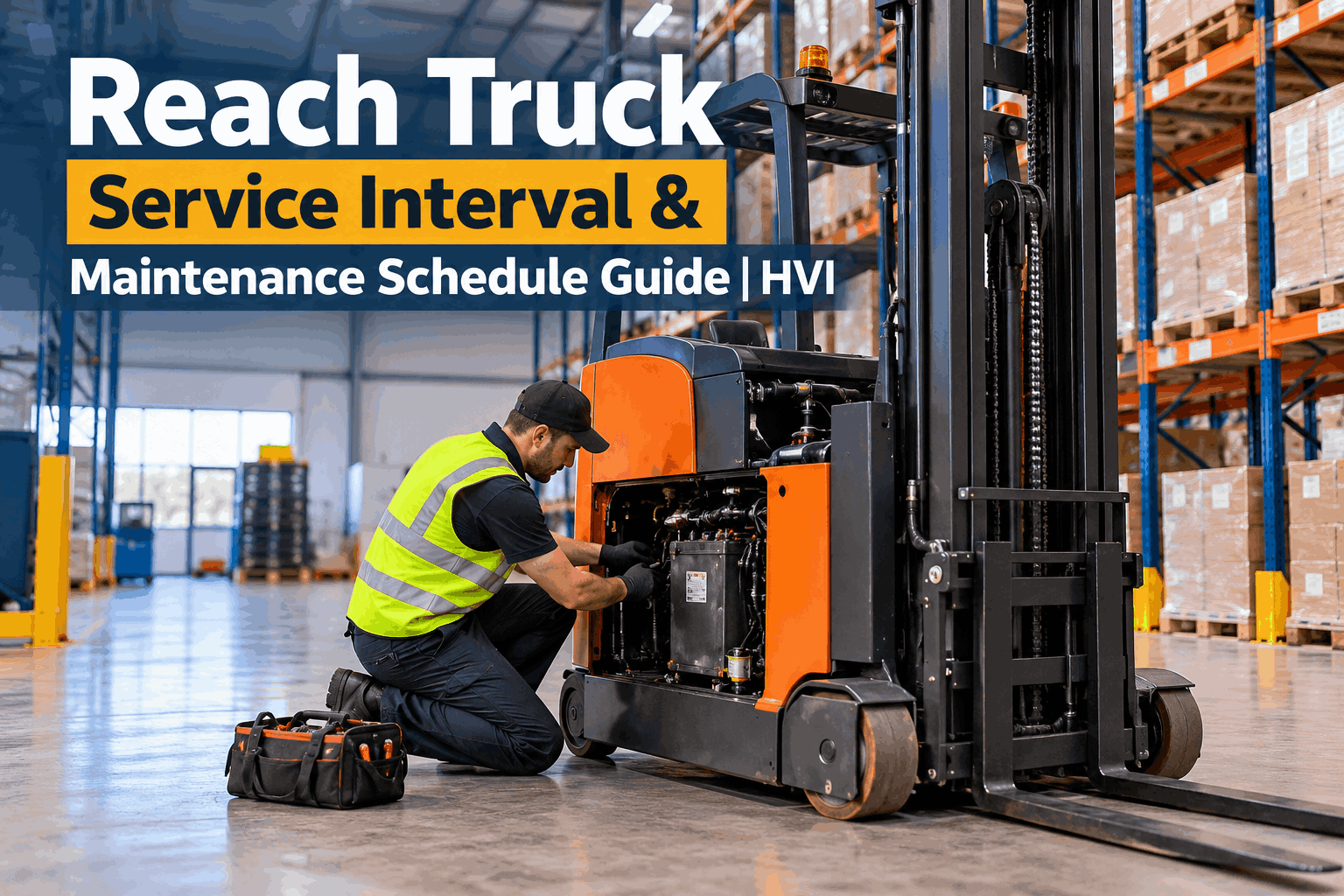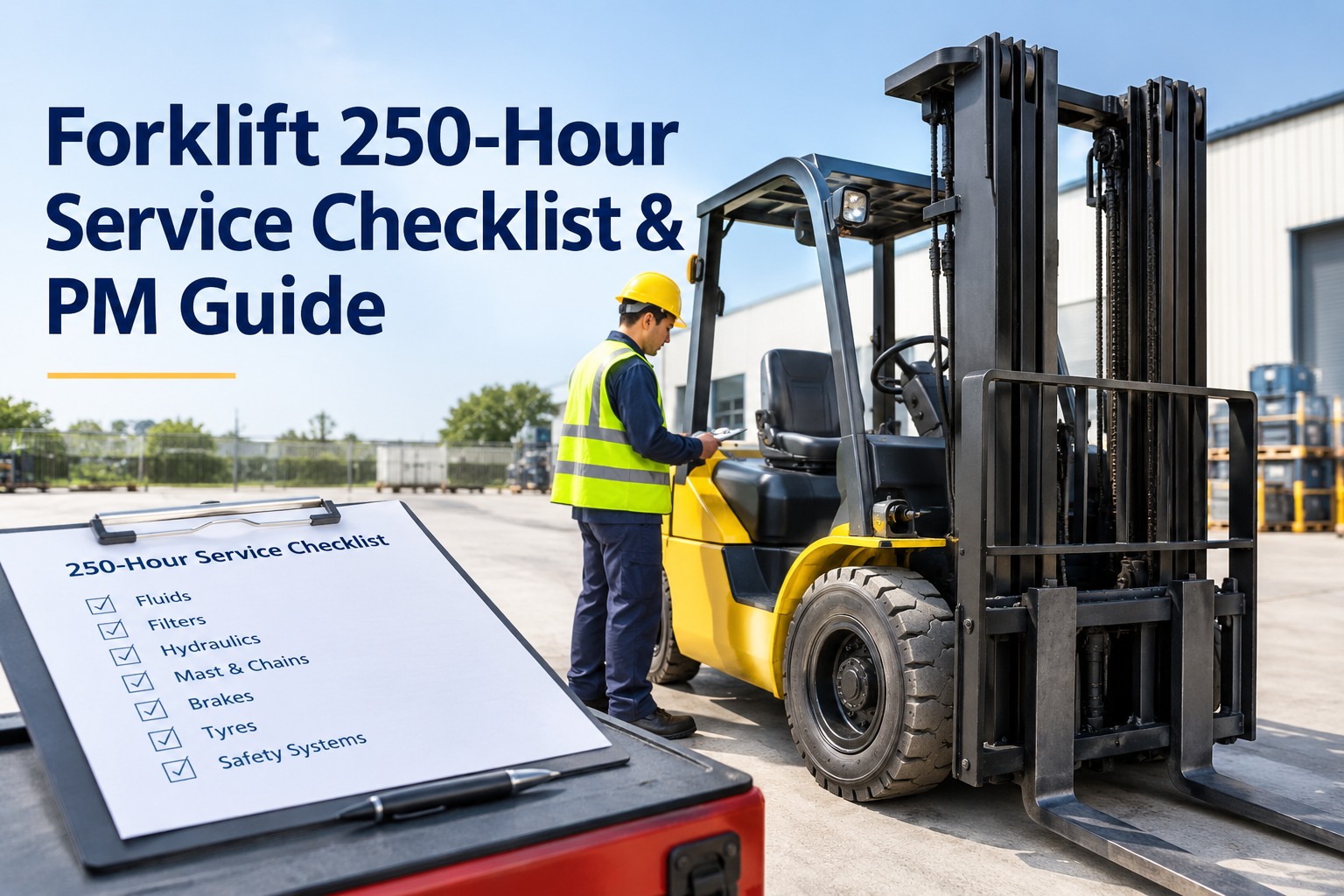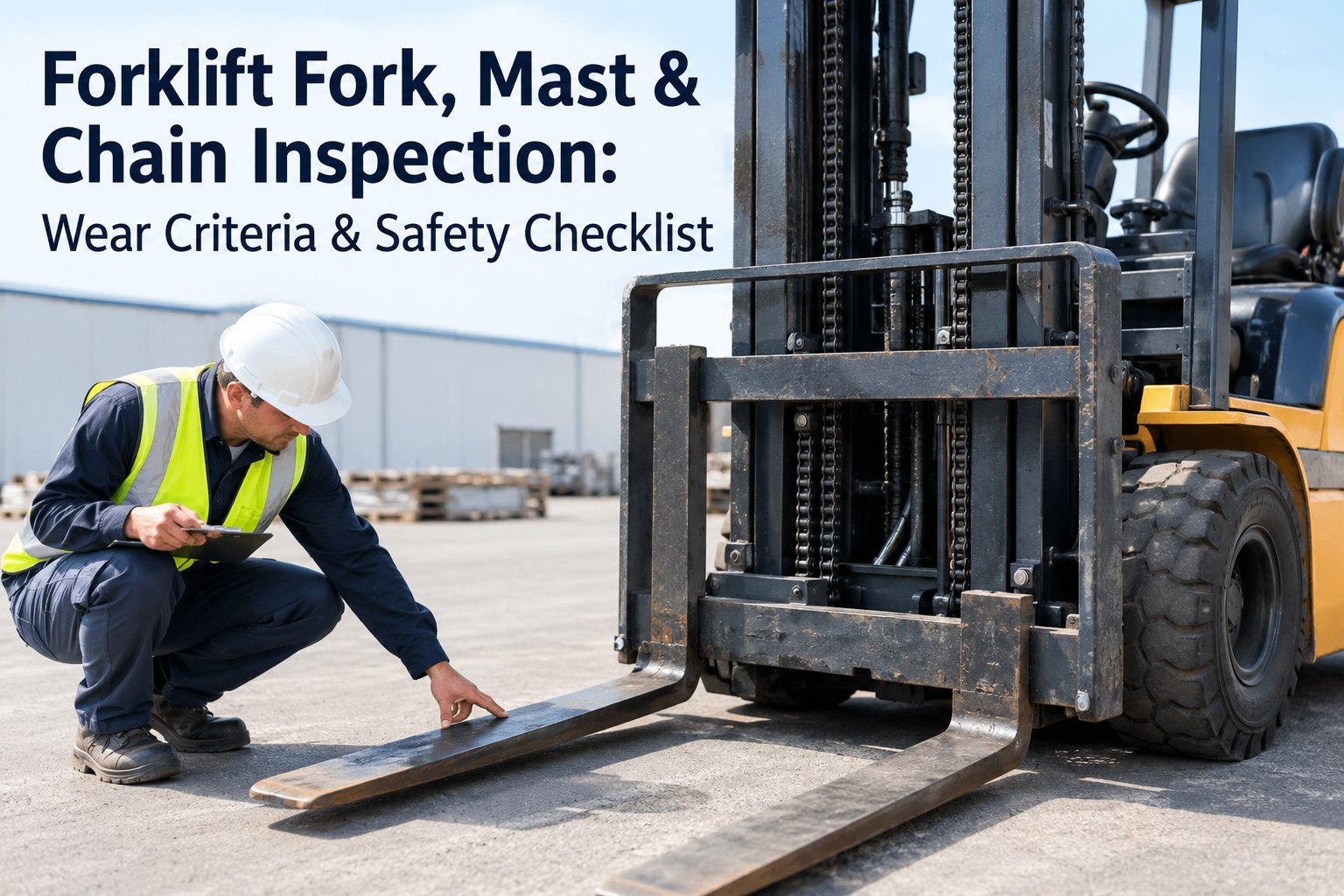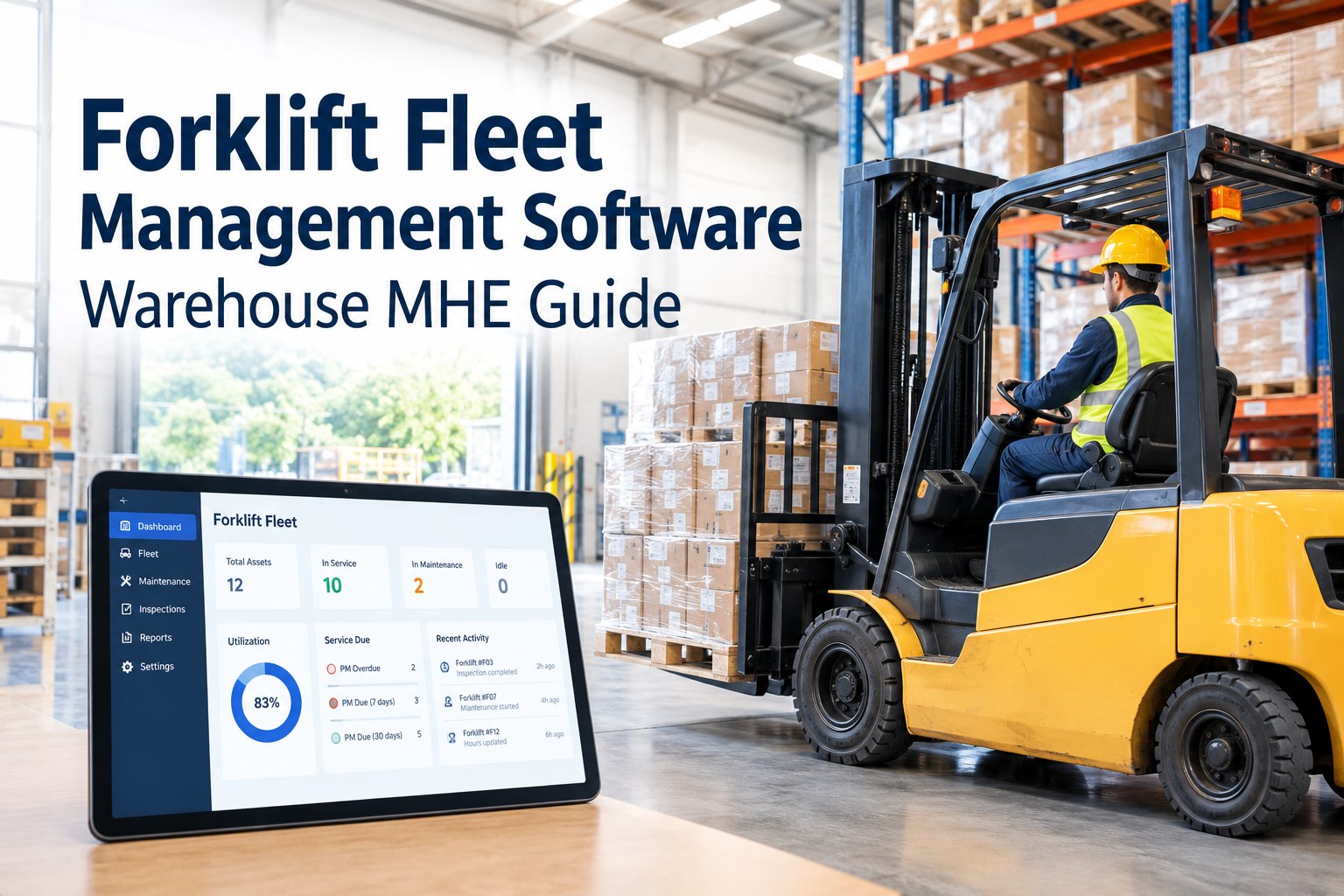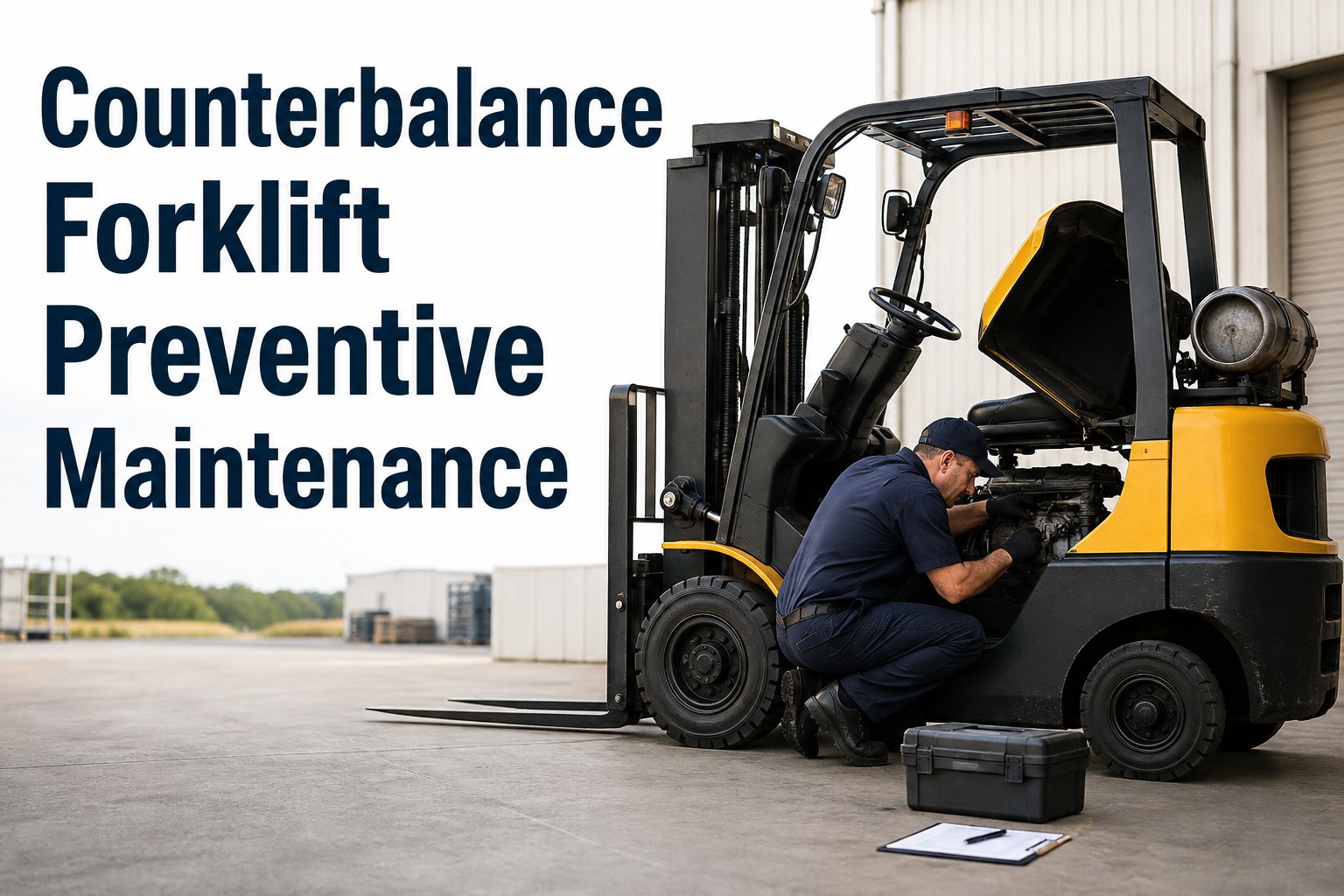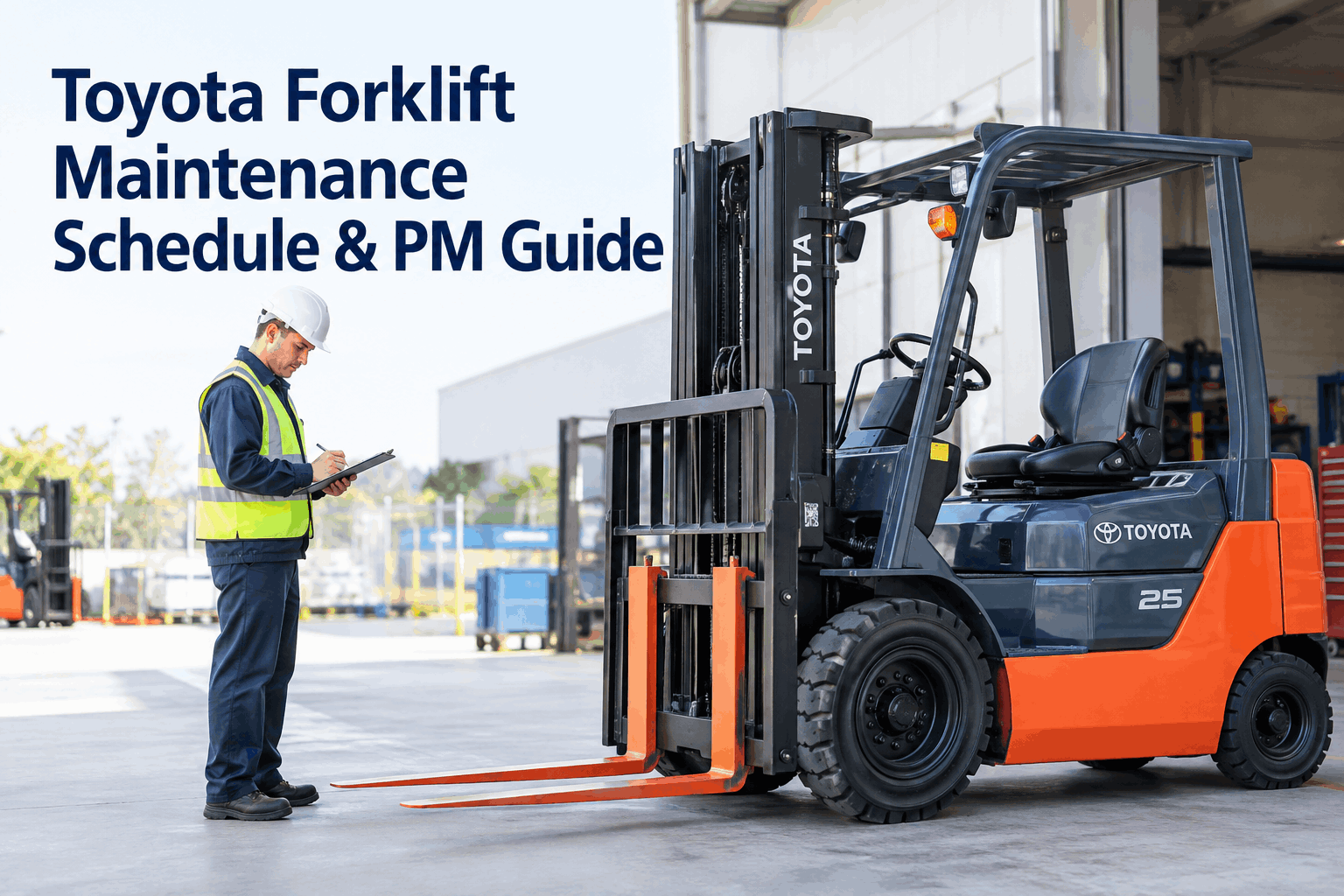
A Toyota forklift maintenance schedule isn't guesswork — Toyota builds its service intervals around engine hours, consistent enough to plan a whole fleet around. The catch is that exact specs shift by model, powertrain, and how hard the truck works, so your machine's own manual is always the final word. This page lays out the standard interval framework, what gets serviced at each mark, how electric and IC lifts differ, and how to run it across a mixed Toyota fleet. Book a demo to see per-model PM automated.
Toyota Forklift PM Runs on the Hour Meter
Toyota structures forklift servicing around operating hours, not the calendar. Hit each interval and the truck stays reliable and in warranty; miss them and small wear compounds into downtime. Here's the standard rhythm — your model manual sets the exact figures.
Toyota's schedule is refreshingly systematic: a light check often, a fluid-and-filter service quarterly, and deeper work at the longer marks. But the numbers below are the common framework, not gospel for your exact truck — a 7-Series electric and an 8-Series IC don't service identically, and neither matches a diesel big truck.
Your Model Manual Is the Authority — Always
This is the one rule that protects both your fleet and your warranty: the framework below is a planning tool, but the operator and service manual for your specific Toyota model sets the exact intervals, fluids, and torque specs. Build your program on the manual, not a generic table.
A 7FB electric, an 8FG IC, and a big-capacity diesel each carry their own hour marks and service items — the manual specifies yours.
Following the manufacturer's schedule with documented service keeps coverage intact. A generic schedule that skips a Toyota-specified item can void a claim.
Use the standard rhythm to schedule labor, budget parts, and forecast downtime — then load your model's exact specs into it as the source of truth.
The right way to use software here isn't to replace the manual — it's to encode each model's manual-specified intervals into automated triggers so nothing slips. That's the difference between a schedule on paper and one that actually fires. Book a demo to load your Toyota model's intervals.
The Toyota Forklift Service Intervals, Mark by Mark
Here's what a typical Toyota PM program covers at each hour interval. Treat it as the shape of the schedule; your manual fills in the exact items and figures for your model and powertrain.
Note the annual mark carries the OSHA-required load test and safety certification alongside Toyota's major service — two obligations that land together and both need documenting. Keeping the framework visible on one board is how a fleet stops discovering an overdue 2,000-hour service after a failure. This is the kind of scheduling our preventive maintenance feature is built to run. Start free and put every interval on one board.
Electric vs. IC Toyota Forklifts: Different PM Programs
The biggest split in a Toyota fleet is powertrain. Electric and internal-combustion lifts share the mast, brakes, and hydraulics, but their power systems need entirely different servicing — and often different base intervals.
- Battery service — water checks and equalization (lead-acid) or BMS checks (lithium)
- Drive-motor and controller inspection, cooling-fin cleaning
- Contactors, cables, and connectors — the top walkie/electric killer
- Often a ~500-hour base PM interval
- No engine oil, fuel, or emissions service
- Engine oil and filter changes on Toyota's engine schedule
- Fuel system service — LPG regulator or diesel filters and injectors
- Coolant, belts, air intake, and emissions components
- Often a shorter ~250-hour base PM interval
- Spark plugs and ignition (LPG) as specified
Both share the material-handling system — mast, chains, forks, hydraulics — on the same inspection rhythm, but the powertrain items diverge completely. That's why a single generic forklift checklist misses things on both: the electric checklist shouldn't ask about engine oil, and the IC one shouldn't skip the fuel system. Distinct templates per type keep each honest. Book a demo to see distinct electric and IC templates.
The Toyota Forklift Components That Need Regular Eyes
Whatever the powertrain, these are the areas every Toyota PM and daily inspection covers. Each is a common failure point and a safety-critical system on a truck that lifts loads over people.
Mast & lift chains
Chain stretch, wear, and lubrication; roller and channel condition; smooth lift and lower with no binding or drift under load.
Hydraulics
Cylinder and hose condition, leaks, fluid level and quality, filter service; lift, tilt, and side-shift operating cleanly.
Brakes
Service and parking brake function, pad and fluid condition, holding on a grade — a safety item checked daily and serviced on schedule.
Tires & wheels
Cushion or pneumatic tire wear, chunking, and flat spots; wheel and bearing condition — worn tires hurt stability and ride.
Forks & carriage
Heel wear, cracks, bend, and fork-tip alignment; carriage and backrest welds; a legible capacity plate that passes audit.
Operator restraints & safety
Seat belt and restraint, horn, lights, alarms, overhead guard, and the SAS or operator-presence systems Toyota is known for.
Every one of these belongs on both the scheduled PM and the daily operator check — the PM catches wear on a cycle, the daily check catches the sudden defect. Missing either is how a known issue becomes an incident. The daily side is exactly what mobile daily operator reporting captures. Start free and cover both the PM and the daily check.
How Hours and Conditions Shift the Schedule
The hour marks assume normal duty. Push a Toyota lift harder or into a rougher environment and the intervals need to tighten — the manual's numbers are a floor, not a ceiling, in tough conditions.
Heavy or multi-shift use
A lift running two or three shifts racks up hours fast and hits every interval sooner in calendar terms. Schedule by the meter, not the month, so the busy trucks don't slip.
Harsh environments
Dust, cold storage, heat, or corrosive product accelerate wear on filters, seals, and batteries. Toyota and dealers advise more frequent PM in harsh duty — tighten the intervals accordingly.
Load severity
Consistently heavy loads stress hydraulics, mast, chains, and brakes harder than the rated average. Watch these systems for early wear and service ahead of the standard mark.
The practical answer is hour-meter scheduling with condition awareness: the trigger fires on actual usage, and a manager tightens the interval on trucks working in tough duty. A calendar-only plan over-services the light units and under-services the hard-worked ones — the exact opposite of what you want. Start free and schedule by the hour meter, per truck.
The Toyota Forklift Inspection & Defect Checklist
Between scheduled services, the daily operator inspection is what catches the sudden defect. This is the shift-start check that keeps a Toyota lift safe and flags anything that needs a work order — run it before the truck moves.
- Mast lifts, lowers, and tilts smoothly with no drift
- Lift chains even, lubricated, no visible stretch or damage
- Forks free of cracks, heel wear, or bend; tips aligned
- Hydraulic hoses and cylinders dry, no leaks or seepage
- Service and parking brakes hold firmly, no fade
- Steering responds smoothly with no excess play
- Tires free of chunking, flat spots, or exposed cord
- Powertrain: fluid levels (IC) or charge and cables (electric)
- Seat belt, horn, lights, and alarms all functional
- Overhead guard and operator-presence system intact
- Capacity plate and data plate legible
- Any defect flagged, photographed, and routed to a work order
The last line is what turns an inspection into protection: a failed item can't just be noted and forgotten — it becomes a tracked defect and, if it's safety-critical, an out-of-service tag until repaired. That paper-to-work-order gap is where most fleets lose defects, and where a phone-based check closes it. Book a demo to see defect-to-work-order routing.
How HVI Standardizes PM Across a Mixed Toyota Fleet
Most warehouses don't run one Toyota model — they run several, often alongside other brands. The challenge is holding every model to its own manual while managing the whole fleet on one screen. Three capabilities do exactly that.
PM configured per model
Set each Toyota model's manual-specified intervals once. A 7FB and an 8FG carry their own schedules, and hour-meter entries fire the right alert for each.
Distinct templates by type
Electric and IC lifts get their own inspection checklists — battery items where they belong, engine items where they belong — so no check asks the wrong question.
One dashboard, every brand
Toyota, plus any other make in the fleet, on a single due/overdue board with full history and mobile defect capture — no separate silo per brand.
The manual stays the authority; HVI just makes sure its intervals actually fire and its records actually exist — timestamped, photo-backed, and audit-ready. It's the same per-model discipline HVI brings to the rest of your warehouse MHE. Book a demo to see your Toyota fleet on one board.
From a fleet manager running a mixed Toyota fleet
We run 7-Series electrics and 8-Series IC trucks side by side, and the old spreadsheet treated them the same — the electrics got over-serviced and the hard-worked IC lifts slipped their intervals. Now each model has its own schedule off the hour meter, the electric and IC checklists are different, and I see the whole fleet on one overdue board. The manufacturer's requirements finally get met on time.
Frequently asked questions
How often should a Toyota forklift be serviced?
Toyota structures servicing around operating hours, with a common framework of a basic service around every 250 hours (~6 weeks), a fluid-and-filter service around 500 hours (~3 months), and major service around 2,000 hours (~12 months), plus an annual OSHA load test. Internal-combustion lifts often run a shorter base interval than electric ones. These are typical figures — always confirm the exact intervals for your specific model in its operator or service manual.
Where do I find the exact maintenance schedule for my Toyota model?
In the operator and service manual for your specific model — the intervals, fluids, and torque specs differ between, say, a 7FB electric, an 8FG LPG, and a big-capacity diesel. Your Toyota dealer can supply the manual or a maintenance schedule for your unit. Treat that document as the authority; a generic schedule is only for planning, and following the manufacturer's specified service is also what protects your warranty.
Do electric and IC Toyota forklifts need different maintenance?
Yes. They share the mast, chains, forks, hydraulics, and brakes on the same inspection rhythm, but their power systems differ completely. Electric lifts need battery service, drive-motor and controller checks, and contactor and cable inspection. IC lifts need engine oil and filters, fuel-system service (LPG regulator or diesel filters), coolant, belts, and emissions components. IC trucks also often carry a shorter base PM interval. Using one generic checklist for both misses items on each.
Does harsh operating environment change the PM schedule?
Yes. The standard hour intervals assume normal duty. Dust, cold storage, heat, corrosive product, heavy loads, or multi-shift operation all accelerate wear on filters, seals, batteries, and hydraulics, so Toyota and dealers advise more frequent PM in harsh conditions. The best approach is hour-meter scheduling with condition awareness — the trigger fires on actual usage, and a manager tightens the interval on trucks working in tough duty.
How do I manage PM across several Toyota forklift models?
Configure each model's manual-specified intervals once, schedule them off the hour meter, and use distinct inspection templates for electric versus IC so each check asks the right questions. A CMMS like HVI holds every model to its own schedule while showing the whole fleet — Toyota and any other brand — on one due/overdue board with maintenance history and mobile defect capture. The manual stays the authority; the software makes sure its intervals actually fire and its records exist.
Run Every Toyota Forklift on Its Own Manufacturer Schedule
Per-model PM configured from the manual, hour-meter triggers for every interval, distinct electric and IC inspection templates, mobile defect capture, and full maintenance history — every Toyota and every other brand on one dashboard. The manual stays the authority; HVI makes sure it fires. Live in under two weeks.
No credit card · No hardware · Load your Toyota models in an afternoon