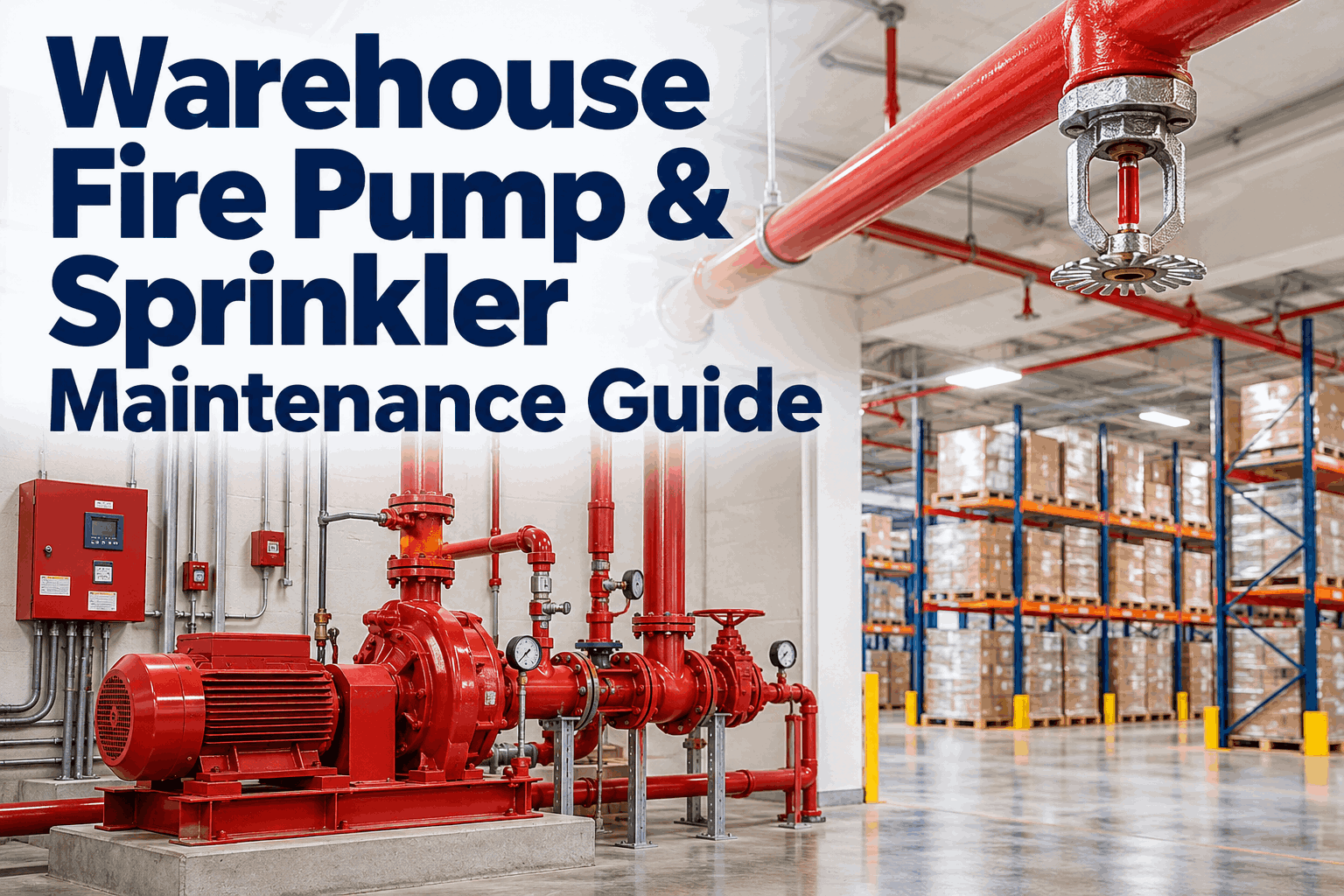
Warehouse sprinkler system maintenance is not only about checking whether sprinkler heads are present. Effective warehouse fire protection depends on keeping pumps, sprinkler components, water-supply equipment, alarms, supervisory devices and exposed protection assets visible and maintained while storage conditions remain consistent with the system's intended protection. Changes in commodities, storage height or rack configuration can also justify a qualified fire protection review.
Can Your Fire Protection System Still Protect the Warehouse You Operate Today?
Connect sprinkler condition checks, fire pump maintenance, storage clearance, impairments and service records—while routing system testing, design questions and technical assessments to qualified fire protection professionals.
Warehouse fire protection is a system, not a collection of isolated components. Sprinkler performance can depend on the protected commodity, storage arrangement, storage height, rack configuration, ceiling height and available water supply. Maintenance teams can keep routine asset condition, scheduled work and identified deficiencies visible, but technical inspection, testing, maintenance, modifications and design adequacy should follow applicable codes, adopted standards, manufacturer requirements and the authority having jurisdiction, using qualified fire protection professionals where required. See how HVI can organize fire protection maintenance records.
Warehouse Sprinkler System Maintenance Starts With the Protection Assumptions
A sprinkler system is designed around conditions in the protected space. If warehouse operations materially change, maintaining individual components does not by itself establish that the original protection remains appropriate.
Operational principle: when the warehouse changes the conditions around which protection was established, route the change for appropriate fire protection review rather than assuming the existing system remains suitable.
Keep the Discharge Area Around Sprinklers Visible
Routine warehouse observations can help identify obvious physical damage, storage encroachment and obstructions that should be escalated through the facility's fire protection process.
What Warehouse Teams Can Keep Visible Between Specialist Service Events
Operational condition checks do not replace required fire protection inspection, testing or maintenance. They help facility teams notice obvious changes and route concerns before they disappear into normal warehouse activity.
Look for obvious damage or interference
Material handling activity, storage movement or building work can expose fire protection components to impact or obstruction.
Watch for storage encroachment
Product height, temporary staging and changed rack use can alter the relationship between storage and installed protection.
Record the observation and response
When a concern is identified, create a traceable path from observation through assessment, action and closure.
Digital operational inspections can make recurring observations easier to assign and review. HVI can support safety and inspection workflows while specialist fire protection work remains with appropriately qualified parties.
Treat the Fire Pump as a Critical Protection Asset, Not a Background Utility
Where a warehouse fire protection system relies on a fire pump, its condition, scheduled inspection, testing, maintenance and service history need deliberate management.
PUMP
Inspection, testing and maintenance should follow the requirements applicable to the installed system and be performed by qualified parties where required.
Keep Critical Fire Protection Work From Disappearing Between Service Visits
Register assets, schedule recurring work, retain service records and route identified deficiencies into visible corrective actions.
Material Handling Activity Can Put Exposed Fire Protection Components at Risk
In-rack sprinklers and associated piping can sit closer to pallets, loads and material handling equipment than ceiling-level protection. That makes visible damage and interference an important operational concern.
Forklifts, pallets and shifting loads can create contact risks around exposed piping and sprinkler components.
If an in-rack sprinkler, pipe or other fire protection component appears damaged, do not treat a visual warehouse check as a technical determination of system condition. Escalate the issue through the site's fire protection process so the appropriate qualified professional can assess it. See how HVI can track identified deficiencies and follow-up.
Some Warehouse Changes Should Trigger a Fire Protection Review
A system that was appropriate for one storage configuration should not automatically be assumed appropriate after significant operational changes.
New products or materials alter what is stored in the protected area.
Storage heights increase beyond the previous operating arrangement.
Rack layout, configuration or storage arrangement changes substantially.
Building or operational changes affect the protected environment.
CONTROL
System design adequacy and required modifications should be evaluated under the applicable requirements by qualified fire protection professionals where required.
A Fire Protection Impairment Needs More Than a Maintenance Note
When fire protection is impaired or unavailable, the condition can require specific actions under the facility's applicable fire protection procedures, standards and authority requirements.
Build One Maintenance History Around Each Critical Protection Asset
Records become more useful when recurring work, specialist reports, deficiencies and corrective actions can be followed without searching separate folders and inboxes.
A centralized history can help maintenance and EHS teams understand what was scheduled, what work occurred, what was identified and how follow-up progressed. Start organizing recurring fire protection maintenance with HVI.
Connect Routine Observations to Qualified Service and Corrective Action
A clear workflow helps warehouse teams act on visible conditions without asking general operators to make technical fire protection determinations.
Observe
Use operational checks to identify visible damage, obstruction, storage encroachment or asset concerns.
Record
Capture the affected asset or location, condition, time and supporting information.
Escalate
Route technical concerns to the appropriate qualified fire protection resource.
Service
Complete applicable inspection, testing, maintenance or technical assessment.
Close
Update corrective actions and retain the relevant service or restoration record.
Keep Fire Protection Maintenance Connected to the Warehouse Around It
Warehouse sprinkler system maintenance is most effective when teams look beyond individual components and maintain visibility across the wider protection system. Sprinkler condition, storage clearance, in-rack protection, fire pumps, water supply, alarms, supervisory equipment, impairments and service records all contribute to the operational picture.
Warehouse conditions also evolve. New commodities, higher storage or significant rack and facility changes can affect assumptions behind existing protection. Those changes should be routed for appropriate review rather than answered through a general maintenance checklist.
HVI can help facility teams register fire protection assets, schedule recurring work, perform operational condition checks, retain service histories and track deficiencies through corrective action. Technical fire protection decisions remain subject to applicable codes, adopted standards, manufacturer requirements, the authority having jurisdiction and qualified professional assessment where required. Book a demo to see HVI for warehouse fire protection maintenance.
Warehouse Fire Pump & Sprinkler Maintenance FAQs
What should warehouse sprinkler system maintenance include?
The applicable program depends on the installed system and governing requirements. Warehouse operators should maintain visibility over sprinkler condition, relevant storage conditions, exposed components, fire pumps, water-supply equipment, alarms, supervisory systems, identified deficiencies and service records. Required inspection, testing and maintenance should follow applicable codes, adopted standards, manufacturer requirements and authority requirements.
Why does sprinkler clearance matter in a warehouse?
Storage and obstructions can affect the relationship between sprinklers and the area they are intended to protect. The required clearance should be determined from the requirements applicable to the particular system and storage arrangement rather than from a generic rule used for every warehouse.
When should storage changes trigger a fire protection review?
Changes such as introducing different commodities, increasing storage heights or substantially modifying rack or storage arrangements can justify review because sprinkler protection can depend on these conditions. Qualified fire protection professionals should evaluate design adequacy where required.
Why should in-rack sprinklers be monitored for physical damage?
In-rack sprinklers and associated piping can be exposed to pallets, loads and material handling activity. Warehouse personnel can report visible damage or interference, while technical assessment and required repair should be handled through the appropriate fire protection process.
How can HVI support warehouse fire protection maintenance?
HVI can help teams register fire protection assets, schedule preventive maintenance and recurring work, perform operational condition checks, track deficiencies and corrective actions, and retain service records. HVI does not replace qualified fire protection inspection, testing, engineering review or authority requirements.
Make Critical Protection Assets Visible Between Every Inspection and Service Event
Organize fire pumps, sprinkler-system assets, recurring maintenance, deficiencies, corrective actions and service histories in one operational workflow.