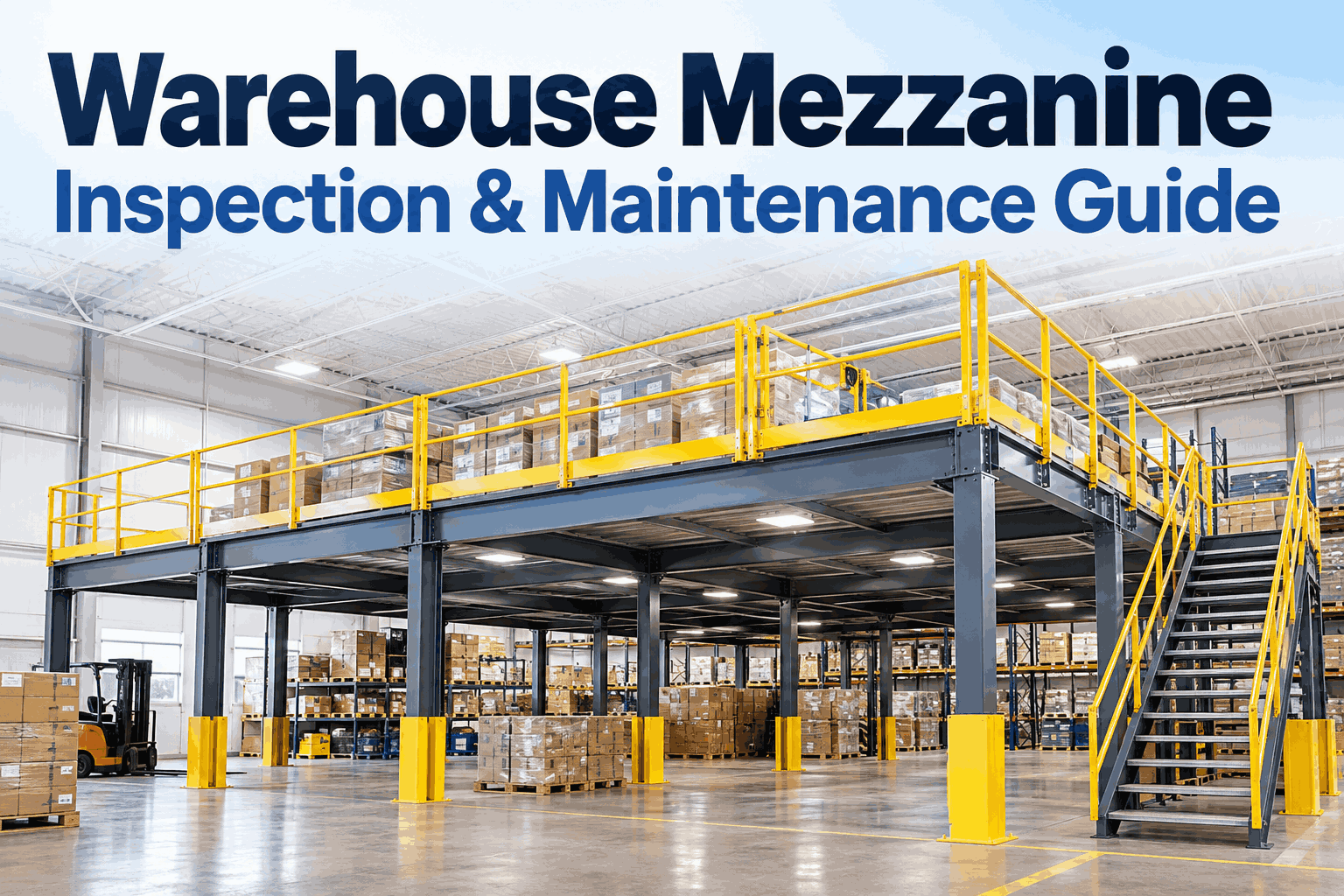
Warehouse mezzanine inspection should make structural conditions visible before damage, loading changes or undocumented modifications become harder to evaluate. Routine visual checks can help facility teams identify damaged columns, loose components, deck deterioration, guardrail problems and evidence of forklift impact, while questions involving structural capacity or integrity should be escalated to qualified professionals.
Know What Changed Above the Warehouse Floor
A practical mezzanine program connects visible-condition inspections, load information, impact damage, structural modifications and corrective actions—without treating a routine visual check as an engineering assessment.
Warehouse mezzanines can change long after installation. New equipment may be added, stored materials may become heavier, openings may be cut through a deck, edge protection may be damaged, or a forklift may strike a support. A useful mezzanine maintenance process preserves the history behind those changes instead of relying on what current staff remember. See how HVI can organize recurring structural inspection records.
Routine Mezzanine Inspection Is Not the Same as Structural Assessment
Warehouse personnel can identify and document visible conditions. Determining whether damage, loading or a modification affects structural capacity can require qualified engineering review.
Observe and document visible conditions
Evaluate structural questions
A completed warehouse checklist should not be interpreted as confirmation of structural capacity. Where damage, modifications or loading raise structural questions, use the appropriate qualified professional to determine the required assessment and response.
Inspect the Mezzanine as Connected Structural Zones
A useful inspection route follows how the structure carries loads and protects people rather than treating the mezzanine as one generic asset.
Look for visible deformation, impact marks, displaced components, deterioration or other changed conditions.
Identify visibly loose, missing, damaged or altered components and unusual connection conditions.
Check for damaged decking, openings, deterioration or areas that have been changed since installation.
Check edge protection, gates and related components for damage, missing parts or changed conditions.
Pay particular attention to locations exposed to forklifts, material handling equipment and repeated traffic.
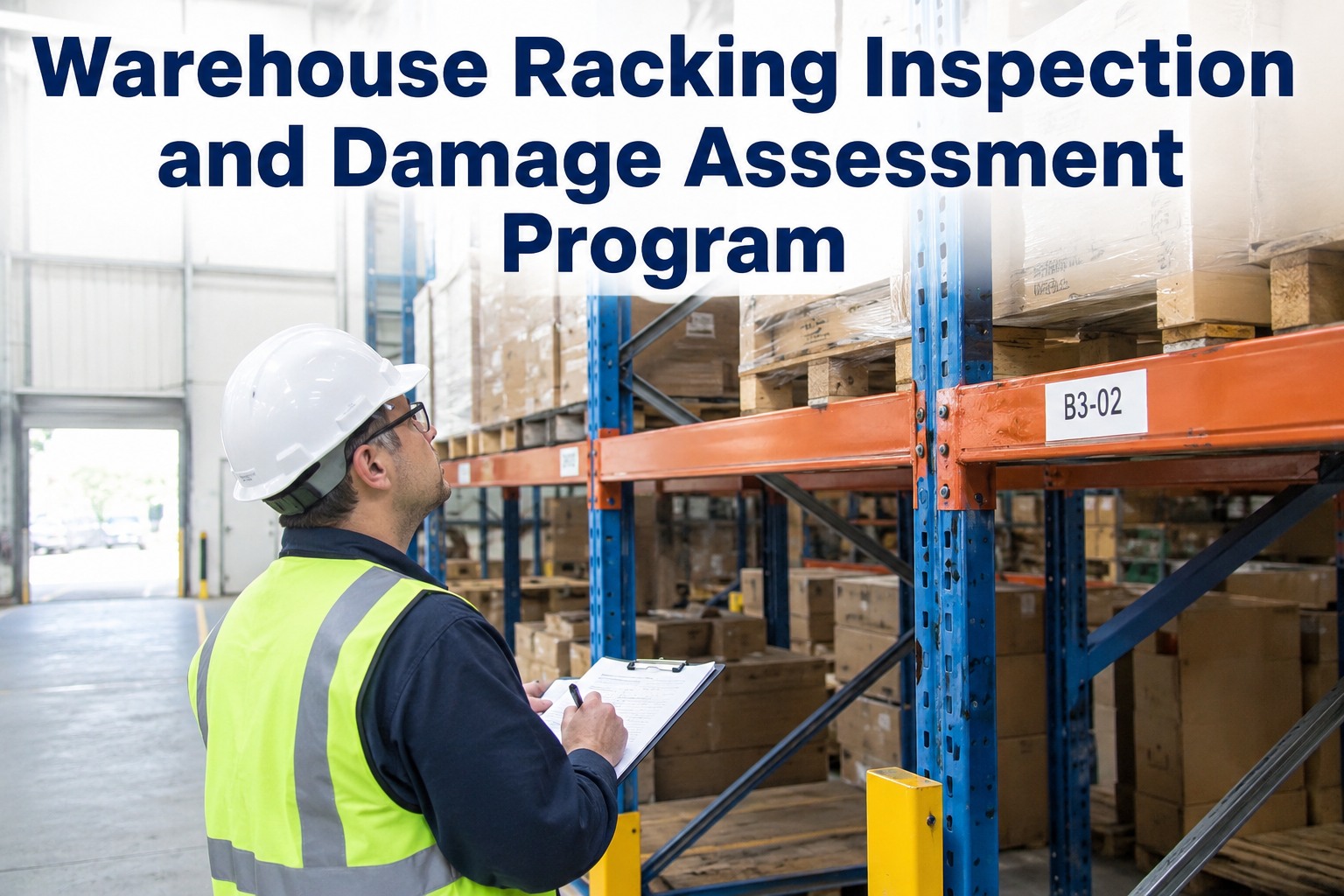
Photo evidence can make recurring mezzanine structural damage easier to compare over time, especially around columns, stairs, gates and equipment traffic areas. Explore HVI safety management workflows.
A Struck Column Should Trigger a Process, Not Just a Photo
Visible impact damage can be documented immediately, but deciding whether a support remains structurally acceptable is a different question. Build a clear route from discovery to appropriate evaluation and closure.
Identify the affected column, support or protective component.
Record location, asset reference, photos and visible condition.
Follow the facility's process for managing the affected area while the condition is reviewed.
Obtain qualified review where structural integrity or capacity may be affected.
Retain repair, review and corrective-action information with the asset record.
Warehouse Mezzanine Load Capacity Can Become Unclear as Operations Change
The structure may have been designed around a particular use, storage arrangement and loading condition. Operational changes should not silently become new structural assumptions.
Known use, stored materials and equipment configuration.
New equipment
Heavier storage
Layout change
Deck penetration
Does the existing structural information still match the current use?
Do not calculate structural capacity from a routine inspection. If allowable loading is uncertain, information is missing, or the use has materially changed, route the question to the appropriate qualified professional.
Five Warehouse Changes Deserve a Mezzanine Review
Maintenance records should capture not only damage but also operational changes that may alter how an elevated structure is used.
Machinery, conveyors, storage systems or other equipment is installed on the mezzanine.
Commodity, container, pallet or inventory characteristics change substantially.
Material placement, concentration or operating use differs from the previous arrangement.
New penetrations, cutouts or other physical changes are introduced into the structure.
Columns, beams, stairs, guards or other structural components are altered or relocated.
A modification register helps future facility teams understand why the structure differs from older drawings, photographs or asset information. See how HVI can connect structural assets with inspection and corrective-action histories.
Keep Damage, Photos, Modifications and Corrective Actions Together
Build a continuous mezzanine history instead of reconstructing what happened after the next impact or facility change.
Guardrails and Safety Gates Need Their Own Inspection Path
A mezzanine can have no obvious column damage while still having compromised edge protection. Guardrails, gates and access points are exposed to traffic, material movement and repeated use.
Identify rails, posts, gates or hardware that are visibly missing, loose or damaged.
Record evidence that material handling equipment or loads have contacted edge protection.
Include the visible and functional condition of access gates in the facility inspection route.
Document openings, relocated access or other changes that may require further review.
Make Damage Location Clear Enough for the Next Person to Find It
A useful structural damage record should answer where the condition is, what was observed and what happened next.
Consistent location identifiers are especially useful in larger warehouses with multiple mezzanines, levels and support lines. HVI can help teams attach inspection findings and photo evidence to the relevant asset record. Start organizing warehouse inspection records with HVI.
Do Not Let a Mezzanine Finding End as an Open Inspection Note
Inspection completion and corrective-action closure are different controls. A condition can be successfully reported while the underlying repair, restriction, review or modification is still unresolved.
Visible condition identified during inspection or after an impact.
Responsible person and required next action are identified.
Maintenance or qualified assessment is completed as appropriate.
Repair, assessment, photos or other supporting records are retained.
The corrective action reaches its documented completion state.
Build the Inspection Process Around the Asset's Full History
The objective is not a longer checklist. It is a repeatable record connecting the current condition of the structure with impacts, modifications and actions taken over time.
Identify mezzanines, elevated platforms and relevant structural zones as managed facility assets.
Include supports, deck condition, edge protection, access areas and visible impact zones.
Record location, description and photographs when impacts or other visible conditions are discovered.
Preserve information about new equipment, loading changes, openings and structural modifications.
Use qualified review where capacity, significant damage or structural integrity requires evaluation.
Keep repair, assessment and completion evidence connected to the structural asset history.
Mezzanine Safety Depends on Knowing What Has Changed
A useful warehouse mezzanine inspection program gives facility teams a repeatable way to identify visible damage, deterioration, missing components, damaged edge protection and evidence of equipment impact. It also preserves the information needed to understand how the structure has changed during its service life.
Load-capacity questions, significant structural damage and structural modifications require a different level of judgment than a routine facility inspection. When those questions arise, the inspection workflow should make escalation clear rather than treating checklist completion as evidence that structural capacity has been verified.
HVI can help warehouses maintain structural asset records, schedule recurring checks, capture photo evidence, document impacts and track corrective actions through closure. Book a demo to see how HVI can support warehouse structural inspection workflows.
Warehouse Mezzanine Inspection FAQs
What should a warehouse mezzanine inspection include?
A routine visual inspection can include columns and supports, beams and connections, deck or floor condition, guardrails, gates, access areas and visible evidence of equipment impact or deterioration. The exact inspection program should reflect the structure, facility procedures and applicable requirements.
What should happen after a forklift strikes a mezzanine column?
The affected location and visible condition should be documented and managed through the facility's damage-response process. Where the impact creates a question about structural integrity or capacity, the condition should be escalated for appropriate qualified assessment rather than resolved solely through a routine visual checklist.
When should mezzanine load capacity be reviewed?
Review may be appropriate when existing load information is uncertain or when the structure's use changes, such as through new equipment, different stored materials, altered loading arrangements or structural modifications. Structural capacity determinations should be handled by appropriately qualified professionals.
Why should mezzanine modifications be documented?
A modification history helps facility teams understand changes to the structure over time. Openings, equipment additions, altered access points or structural changes can otherwise become difficult to reconstruct later when questions about condition or capacity arise.
How can HVI support mezzanine inspection and maintenance?
HVI can help facility teams create recurring digital inspections, maintain structural asset records, capture photographs and locations of damage, document identified deficiencies and track corrective actions through closure. It supports recordkeeping and workflow visibility rather than replacing qualified structural assessment.
Build a Clear Maintenance History for Every Mezzanine and Elevated Platform
Connect inspections, impact reports, photographs, modifications and corrective actions in one operational record.