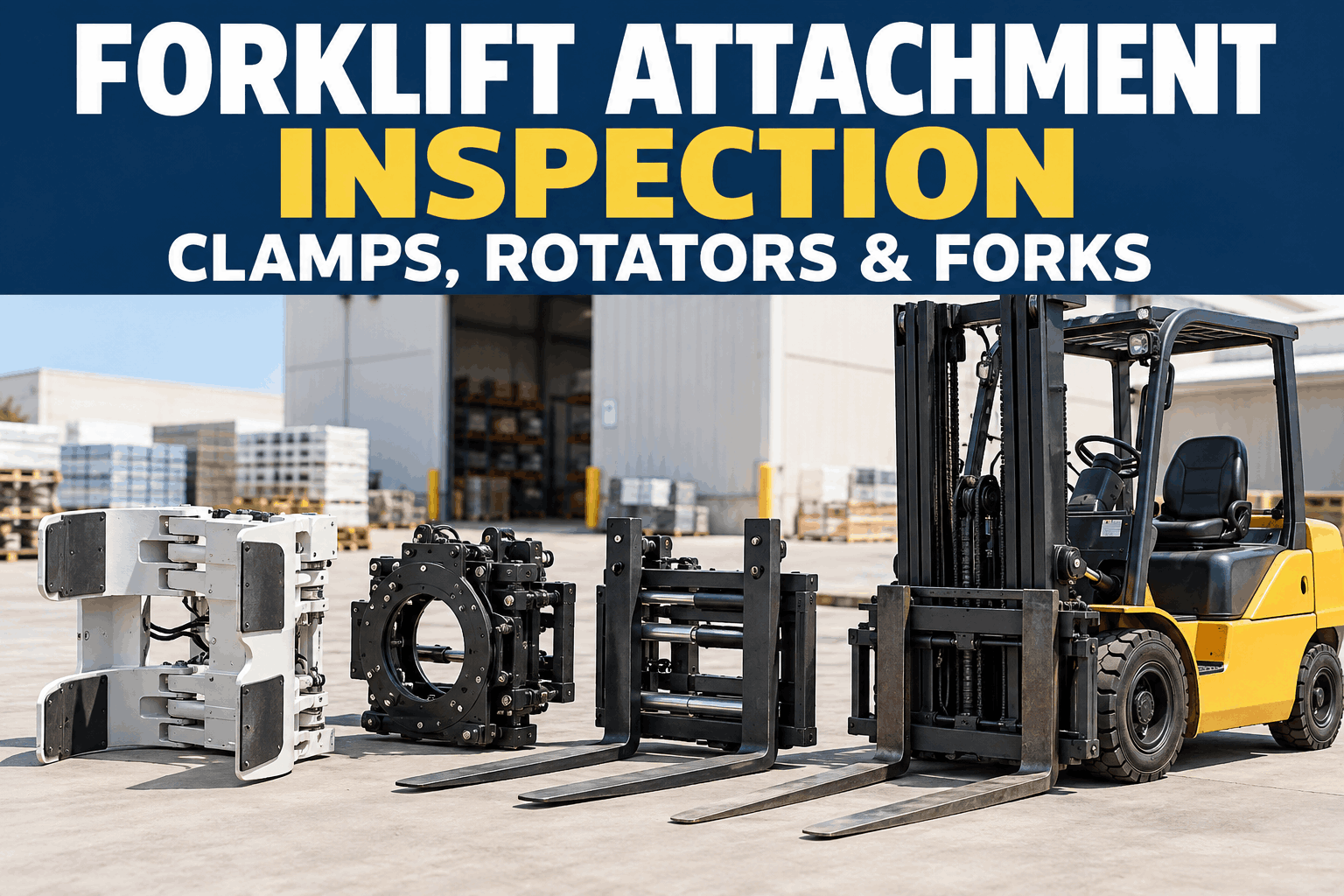
Forklift attachments should be inspected as part of the truck's complete load-handling system, not treated as accessories that only need attention after a failure. Clamps, rotators, side shifters, fork positioners and fork extensions can affect capacity, handling and visibility while adding their own mounting, wear and hydraulic inspection points. A structured forklift attachment inspection helps warehouse teams identify defects earlier, document maintenance and keep attachment records connected to the correct forklift configuration.
Forklift Attachment Inspection: Clamps, Rotators & Forks
Build a repeatable inspection path from attachment identity and truck markings to mounting points, hydraulics, wear surfaces and functional movement.
An attachment changes more than the end of the forks
Specialized attachments can change the truck's operating characteristics and introduce additional components that require inspection. OSHA's powered industrial truck guidance includes checking load-handling attachment operation as part of sample daily inspection procedures. The inspection should also account for the manufacturer's instructions and the actual attachment installed on the truck.
Capacity
Attachment weight, geometry and configuration can affect the truck's rated load-handling capability.
Load Position
The attachment can change how far the load sits from the truck and how the load is handled.
Visibility
Frames, clamp arms and other components can alter the operator's view of the load and travel path.
Movement
Clamping, rotating, side shifting and fork positioning add functions that need their own condition checks.
OSHA requires powered industrial trucks to be examined before being placed in service and at least daily. Trucks used continuously must be examined after each shift, and unsafe trucks must be removed from service until restored to safe operating condition.
Need different inspection templates for different forklift configurations? See how HVI manages equipment inspections
Start the inspection with the truck and attachment identity
Before checking wear or hydraulic condition, confirm what attachment is installed and whether the available truck information reflects the configuration. Under 29 CFR 1910.178(a)(4), modifications or additions affecting capacity or safe operation require prior written manufacturer approval, with affected capacity, operation and maintenance plates, tags or decals changed accordingly.
Identify the attachment
Record the type, model or other available identifier so inspection and maintenance history follows the correct equipment.
Review applicable markings
Check that required capacity, operation and maintenance information is present and legible for the configuration.
Keep approval records organized
Where a modification or addition affects capacity or safe operation, maintain the applicable approval and configuration documentation.
Capacity depends on the approved truck-and-attachment configuration. HVI can organize inspection, configuration and maintenance records; it does not determine or approve a forklift's safe operating capacity.
Keep attachment identification and maintenance records associated with the correct warehouse equipment. Book an HVI demo for warehouse equipment
What should you inspect on clamps, rotators and positioning attachments?
A generic forklift form can miss attachment-specific problems. Inspection criteria should follow the equipment manufacturer's instructions, but warehouse teams can build standardized templates around the mounting, structural, hydraulic and functional areas relevant to each attachment type.
Inspect fit, retention and visible condition
Fork extensions and fork-mounted accessories should be appropriate for the application and installed according to applicable manufacturer instructions.
- Check for bending, cracking or distortion
- Inspect retaining and securing components
- Check fit on the supporting forks
- Inspect tips, heels and contact areas
Replace one-size-fits-all forms with inspection templates designed around each attachment type. See HVI custom inspection workflows
Follow the hydraulic path from connection to movement
Hydraulic attachments add hoses, fittings, cylinders and moving components to the forklift inspection. OSHA's sample powered industrial truck checklist includes hydraulic cylinders and asks inspectors to look for issues such as excessive oil and hesitation during load-handling functions.
Look for abrasion, deterioration, damage or visible leakage.
Check visible fittings and connections for leakage or damage.
Inspect cylinders and exposed components for damage or leakage.
Watch for hesitation, binding, uneven motion or other abnormal operation.
Turn attachment defects into trackable maintenance actions instead of repeatedly recording the same problem on paper. Book an HVI demo
A practical forklift attachment inspection route
A useful checklist follows the equipment in a logical sequence. The exact questions and acceptance criteria should be adapted to the forklift, attachment, manufacturer instructions and your workplace procedures.
Confirm truck and attachment
Record the forklift, attachment type and available equipment identification before starting condition checks.
Inspect attachment security
Check mounting interfaces, retainers and visible attachment points for damage, looseness or missing components.
Check wear and damage
Inspect the arms, carriage, forks, frames, pads and working surfaces relevant to the attachment.
Inspect hoses and cylinders
Look for leakage, abrasion, damaged fittings and other visible hydraulic concerns.
Verify controlled operation
Where required by the inspection procedure, check movement for hesitation, binding, abnormal noise or excessive play.
Document and route findings
Record the condition clearly and follow the site's maintenance and out-of-service procedure for identified defects.
Turn this inspection route into a digital checklist tailored to each attachment in your warehouse. See an HVI inspection workflow
Finding a defect is only the first step
A strong inspection program makes it clear what happens after a problem is identified. Under OSHA's powered industrial truck standard, trucks found to be unsafe must not be placed in service until they have been restored to safe operating condition. Connecting inspection findings with maintenance records makes that follow-through easier to trace.
Example: visible leakage at a clamp hydraulic hose.
Evaluate equipment status and prevent unsafe operation.
Document the repair, parts and supporting maintenance information.
Complete the required verification before closing the maintenance issue.
Recurring leaks, damaged clamp pads or repeated looseness can indicate a maintenance pattern worth reviewing across the attachment's history.
Connect attachment defects with maintenance history so recurring problems are easier to identify. See HVI maintenance tracking
Separate pre-use checks from planned attachment maintenance
Condition inspections and preventive maintenance support different parts of attachment reliability. Routine checks help identify visible or functional problems before operation, while planned service provides deeper inspection, adjustment, lubrication and component maintenance according to manufacturer guidance.
- Visible attachment damage
- Mounting and retaining components
- Hydraulic leakage
- Load-handling attachment operation
- Required equipment information
- Detailed wear evaluation
- Adjustment where specified
- Lubrication requirements
- Hydraulic system maintenance
- Planned component replacement
Schedule attachment preventive maintenance while preserving completed work alongside inspection history. See HVI preventive maintenance workflows
Treat forklift attachments as maintainable equipment
Attachments may move between trucks, remain in storage between applications or develop recurring defects over time. A traceable equipment record helps maintenance teams understand what was inspected, what failed, what work was completed and which forklift configuration was involved.
Attachment type, model and asset reference
Associated forklift information
Condition findings and photos
Corrective maintenance and parts
Scheduled service history
Spot recurring problems
Review repeated leaks, wear or mounting defects instead of treating every inspection as an isolated event.
Preserve configuration context
Keep the attachment record connected with the relevant forklift information and maintenance history.
Improve follow-through
Connect inspection findings with repair activity so unresolved attachment defects remain visible to the team.
Build searchable inspection and maintenance histories for forklifts and their attachments. Book an HVI demo for warehouse equipment
Forklift attachment inspection FAQs
Inspection and maintenance requirements vary by forklift and attachment design. Manufacturer instructions and the requirements applicable to the workplace should remain part of the inspection program.
Should forklift attachments be included in daily inspections?
Powered industrial trucks must be examined before being placed in service and at least daily under OSHA's general-industry standard. OSHA's sample daily checklists specifically include checking the operation of load-handling attachments. The inspection should be adapted to the truck, attachment and manufacturer instructions.
Can a forklift attachment affect the truck's capacity?
Yes. Attachments and modifications can affect capacity and safe operation. OSHA 29 CFR 1910.178(a)(4) addresses manufacturer approval for modifications or additions affecting capacity or safe operation and requires affected capacity, operation and maintenance information to be changed accordingly.
What should be checked during a forklift clamp inspection?
Common inspection areas include clamp arms, pads, pivots, mounting and retaining components, hydraulic cylinders, hoses, fittings, visible leakage and functional movement. The attachment manufacturer's inspection and maintenance instructions should define the specific checks and acceptance criteria.
What should be checked on a rotator or side shifter?
Check the mounting interface, visible structural condition, wear areas, retaining components and hydraulic system. Functional inspection can also look for hesitation, binding, excessive play, unusual noise or other abnormal movement while following manufacturer procedures.
How can digital records improve forklift attachment maintenance?
Digital records can keep attachment identification, inspection findings, photos, corrective actions, preventive maintenance and repair history together. This can make recurring defects easier to identify and give warehouse teams a more traceable view of attachment condition and maintenance.
Standardize attachment-specific inspections while keeping defects and maintenance history connected. See HVI warehouse inspection workflows