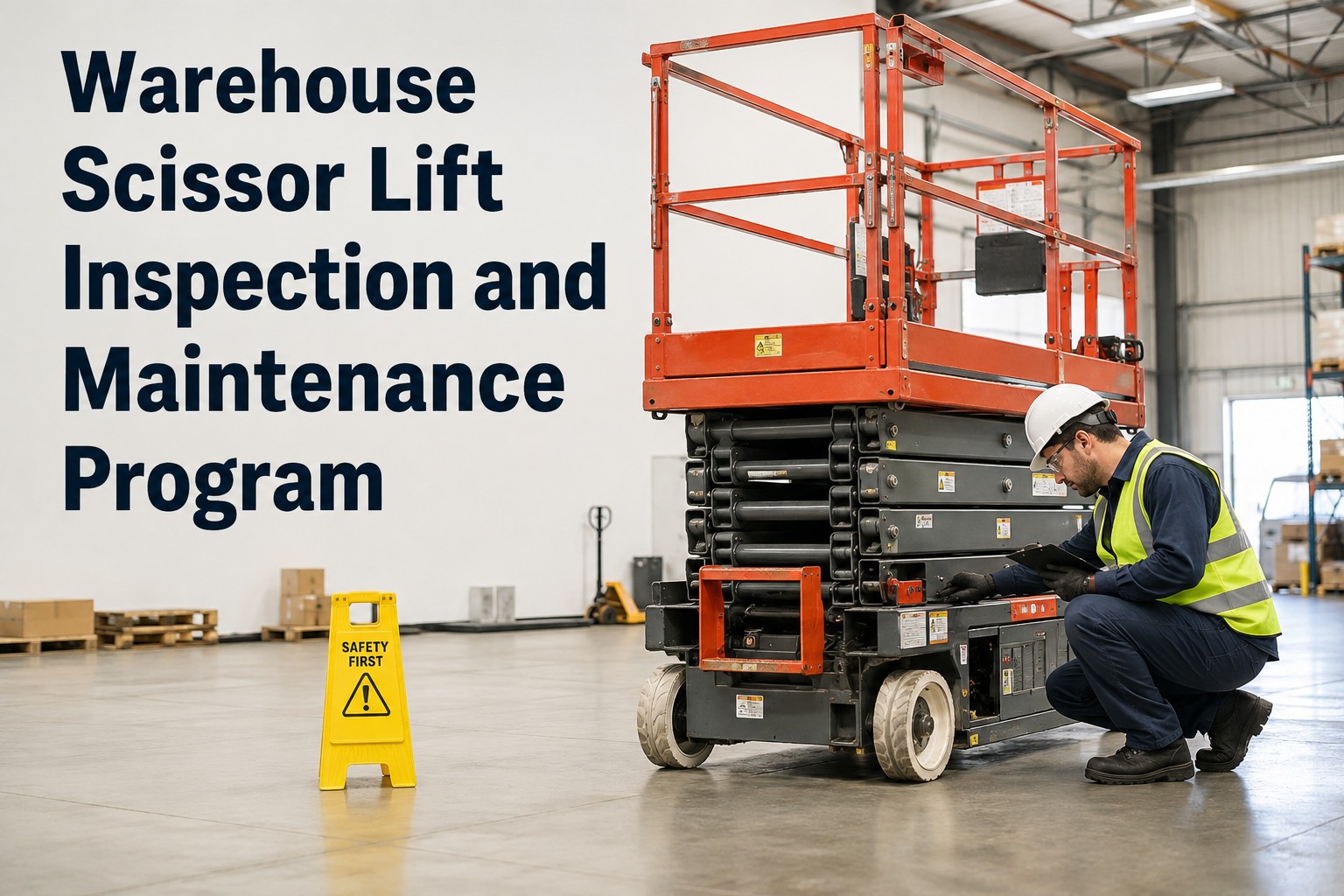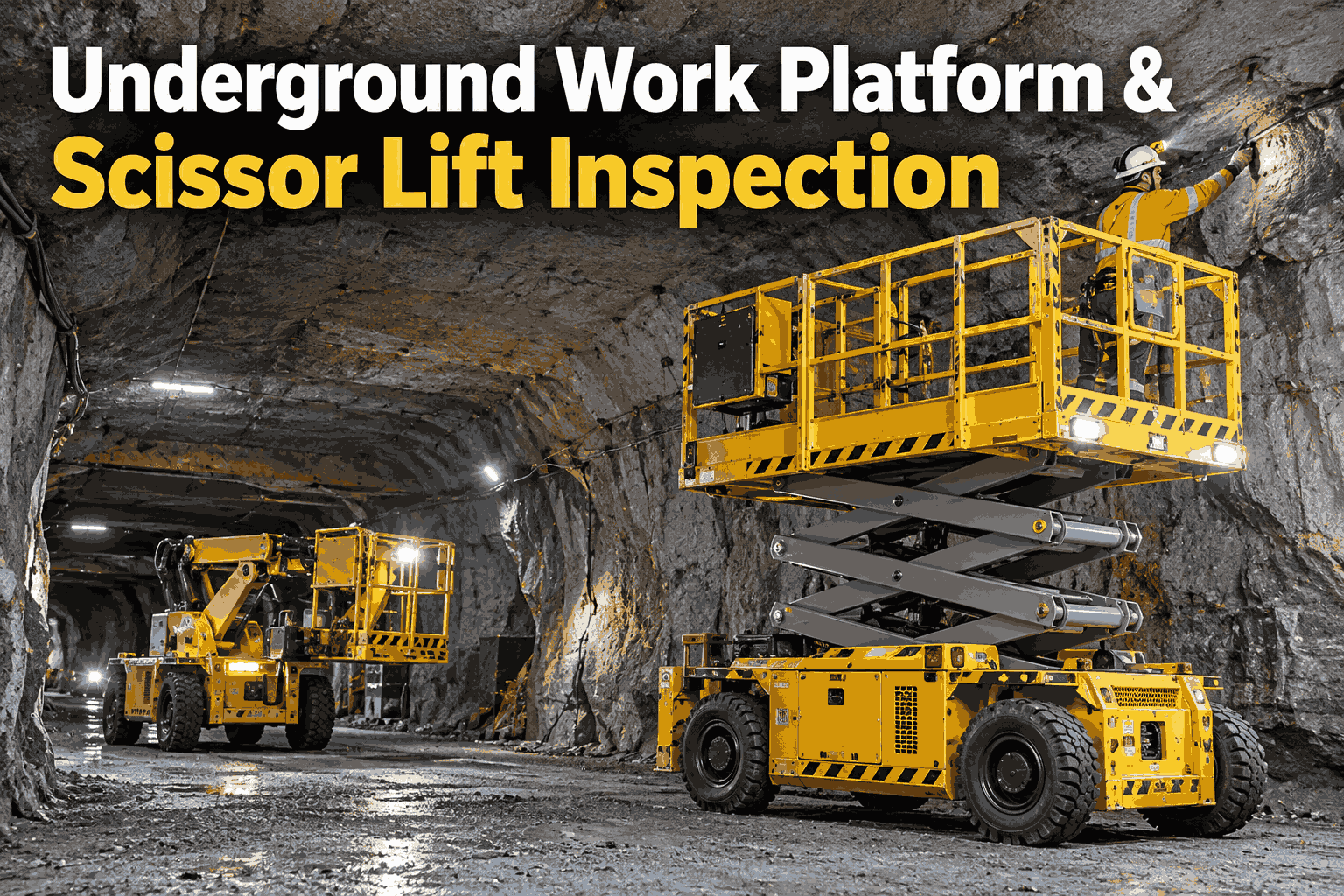
Underground work platform inspection has a twist the surface version doesn't: you check the machine and the ground it stands on. A scissor lift that passes every mechanical check can still tip on soft floor or get crushed against a low back. Book a demo to make both checks part of every lift.
Cleared to Elevate — Machine and Ground
Underground, a scissor lift or work platform is only safe to raise when two things check out: the machine itself, and the ground and space it's set up in. Inspect both, every time, before anyone goes up.
This is a practical guide to underground work platform inspection — why the machine and the ground are two separate checks, what to inspect on the platform itself, the underground hazards a surface checklist ignores, the inspection tiers that keep a lift legal, and how to make a flagged defect actually get fixed.
Two checks, not onewhy underground work platform inspection is different
Above ground, a scissor lift check is mostly about the machine — the assumption is a hard, level, open slab. Underground that's gone: the floor can be uneven, soft or heaving, the back lower than the machine's working height, the air and light not a given. So underground work platform inspection is two checks that both have to pass — the lift, and the spot you raise it in.
A perfect lift on a bad spot is still a bad lift. Most underground platform incidents aren't a failed brake or control — they're a tip-over on soft or sloping ground, or a crush against a low back the operator didn't clock. That's why the ground and overhead check belongs alongside the machine check, not as an afterthought once the lift is already positioned.
Inspecting the machine itselfthe platform's own systems
The machine side of underground work platform inspection covers the systems that keep the platform controllable and the operator protected. These are the pre-use checks any scissor lift needs, done before it's trammed to the face.
Base, drive & brakes
Chassis, tires or tracks, steering, and the brakes that hold the machine still while it's raised. No drift, no play.
Controls & e-stop
Platform and ground controls, the emergency stop, and that controls return to neutral. Both control stations must work.
Guardrails & gates
Rails, mid-rails, toe boards and the entry gate secure and undamaged — the fall protection that keeps the operator on the platform.
Hydraulics & lift
Cylinders, hoses and the scissor mechanism for leaks, damage and smooth, even travel — no creep down under load.
Emergency lowering
The manual/emergency lowering system tested to work — the way a stranded operator gets down if power or hydraulics fail.
Plus decals & capacity
Load and capacity plates legible, warning decals in place — the limits the operator has to work within.
The emergency lowering check is the one crews skip because it's never needed on a good day — but underground, a platform stranded at height with a low back overhead is exactly the situation it exists for. Building that into a repeatable scissor and boom lift inspection checklist means it never gets left off. Book a demo to build a platform check
The underground difference: the ground and the spacewhat a surface work platform checklist ignores
This is where underground work platform inspection earns its name. A surface scissor lift checklist assumes a stable slab, open sky and good light. Underground, none of that is given — and these five conditions are what actually put a platform on its side or into the back.
The two that catch crews out most are floor stability and overhead clearance — a lift fine on the level tips as it extends on soft ground, and one raised under a low back leaves the operator nowhere to go. Both belong in the underground pre-shift inspection a competent person already signs off. Start free and add the ground checks to every lift.
The inspection tiers that keep a lift legalpre-use, periodic and annual
Work platform inspection runs in tiers, and each catches what the one below can't. The pre-use check happens every shift before the lift goes up; the periodic and annual inspections are deeper, competent-person examinations on a set interval. None replaces another.
The pre-use check is the one that catches the fast-moving hazards — a leak that started this shift, a gate that won't latch, ground that's turned soft since yesterday — before anyone leaves the floor. Keeping the periodic and annual exams on schedule alongside it is exactly what a preventive maintenance schedule is for. Book a demo to schedule platform inspections
A found defect only matters if it gets fixedtracking every platform fault to closure
Finding a fault on a work platform is only half the job. The failure that hurts someone is the defect that got noticed, noted on a sheet, and then quietly forgotten while the lift kept working. Underground work platform inspection has to end in a defect that's tracked from the moment it's flagged to the moment it's cleared.
That out-of-service step is the one that saves people — a failed control, damaged rail or hydraulic leak has to pull the lift from use, not just get logged. When every defect is a tracked work order with a tag-out, the platform can't keep running on a fault, and you can start free. Book a demo to track platform defects to closure
From a mine safety manager
Our scissor lifts always passed their checks — the machines were fine. The near-miss that changed how we work was a lift set up in a heading where the floor looked solid but was soft under one side; as the crew raised it to bolt, it started to lean, and they got it down fast but it was close. The machine was faultless. What we'd never formally inspected was the ground it was standing on. Now the pre-use check on the tablet has the machine and the setup spot as two halves — floor, grade, the height of the back, the air — and a lift can't be marked ready until both pass. Any defect tags the unit out and becomes a work order there and then. Nobody goes up until the spot's been checked, not just the lift.
How HVI runs underground work platform inspectioncheck both, schedule the service, chase the defect
Underground work platform inspection works when the machine and the ground are both checked, the periodic services stay on schedule, and every defect is tracked to closure. HVI's fleet inspection/DVIR, preventive maintenance and defect tracking do exactly that for a mine's platforms.
Check machine & ground
A pre-use DVIR covering the platform's systems and the five underground setup conditions.
Schedule the services
Frequent and annual inspections triggered on time, with the daily check captured every shift.
Chase every defect
A flagged fault tags the lift out and becomes a tracked work order, closed with a record.
See it running on your own platforms — machine and ground both checked — on the same mining inspection and maintenance program the rest of your underground fleet uses. Walk through your scissor lifts and work platforms in a quick demo
Underground work platform inspection: quick answers
What is underground work platform inspection?
It's the structured pre-use and periodic inspection of an elevating work platform — a scissor lift or similar — used underground. Unlike a surface check, it's really two inspections that both have to pass: the machine itself (base, drive and brakes, platform and ground controls, the emergency stop, guardrails and gates, hydraulics and the scissor mechanism, emergency lowering, and load decals) and the setup location (floor stability, gradient, overhead clearance under the back, atmosphere and ventilation, and lighting). A perfect machine on a soft, sloping or low-clearance spot is still unsafe to raise, so the ground and space are inspected alongside the lift.
Why does the ground matter as much as the machine?
Because most underground platform incidents aren't a mechanical failure — they're a tip-over on soft, wet, uneven or sloping ground, or a crush against a low back the operator didn't account for. A surface scissor lift checklist assumes a hard, level slab, open sky and good light; underground none of that is guaranteed. So floor stability, the floor's slope against the machine's rated limit, the height of the back and services overhead, the air quality, and the lighting are all checks that decide whether a mechanically sound lift is actually safe to raise in that particular spot.
How often should a scissor lift or work platform be inspected?
In tiers. A pre-use inspection happens every shift before the lift is raised, covering the machine and the setup ground. A deeper frequent or periodic inspection of hydraulics, structure, scissor pins and safety systems is done by a competent person on a set interval. An annual or thorough examination covers the full structure and function to the manufacturer's schedule, usually with a certificate. And any recorded defect, impact or repair triggers an out-of-cycle re-inspection before the platform returns to service. Confirm the exact intervals against the manufacturer's schedule and your site's mining regulations, which vary by jurisdiction.
What should happen when an inspection finds a defect?
A found defect only matters if it gets fixed, so it has to be tracked from flagged to cleared. The inspection captures the fault with a photo; a safety-critical defect — a failed control, damaged guardrail or hydraulic leak — tags the lift out of service on the spot rather than being logged for later; the defect becomes an assigned work order with a due date; and once fixed, it's re-checked and signed back into service with a record. The dangerous gap is between a fault being noticed and being fixed, and defect tracking with an out-of-service tag closes it so no platform keeps running on an open fault.
Can software manage underground work platform inspection?
Yes. HVI runs the platform inspection as a guided pre-use DVIR covering both the machine's systems and the five underground setup conditions, with photos of any fault. Its preventive maintenance scheduling triggers the frequent and annual inspections on time, and its defect tracking turns any flagged fault into a tagged, tracked work order that takes the lift out of service until it's cleared — with the whole inspection and defect history stored per machine, ready to produce. So a scissor lift or work platform is never raised on an open fault, and you can prove every check and repair was done.
Never raise a platform on an unchecked spot or an open fault
HVI turns underground work platform inspection into a program you can stand behind — the machine and the setup ground both checked before every lift, the frequent and annual services scheduled, and every defect tagged out and tracked to closure so no scissor lift is ever raised on a fault.
No credit card · Built for underground mining operations
- Machine: brakes, controls, guards, hydraulics
- Emergency lowering tested to work
- Ground: floor, gradient, clearance, air, light
- Pre-use, frequent & annual tiers on schedule
- Every defect tagged out & tracked to closure