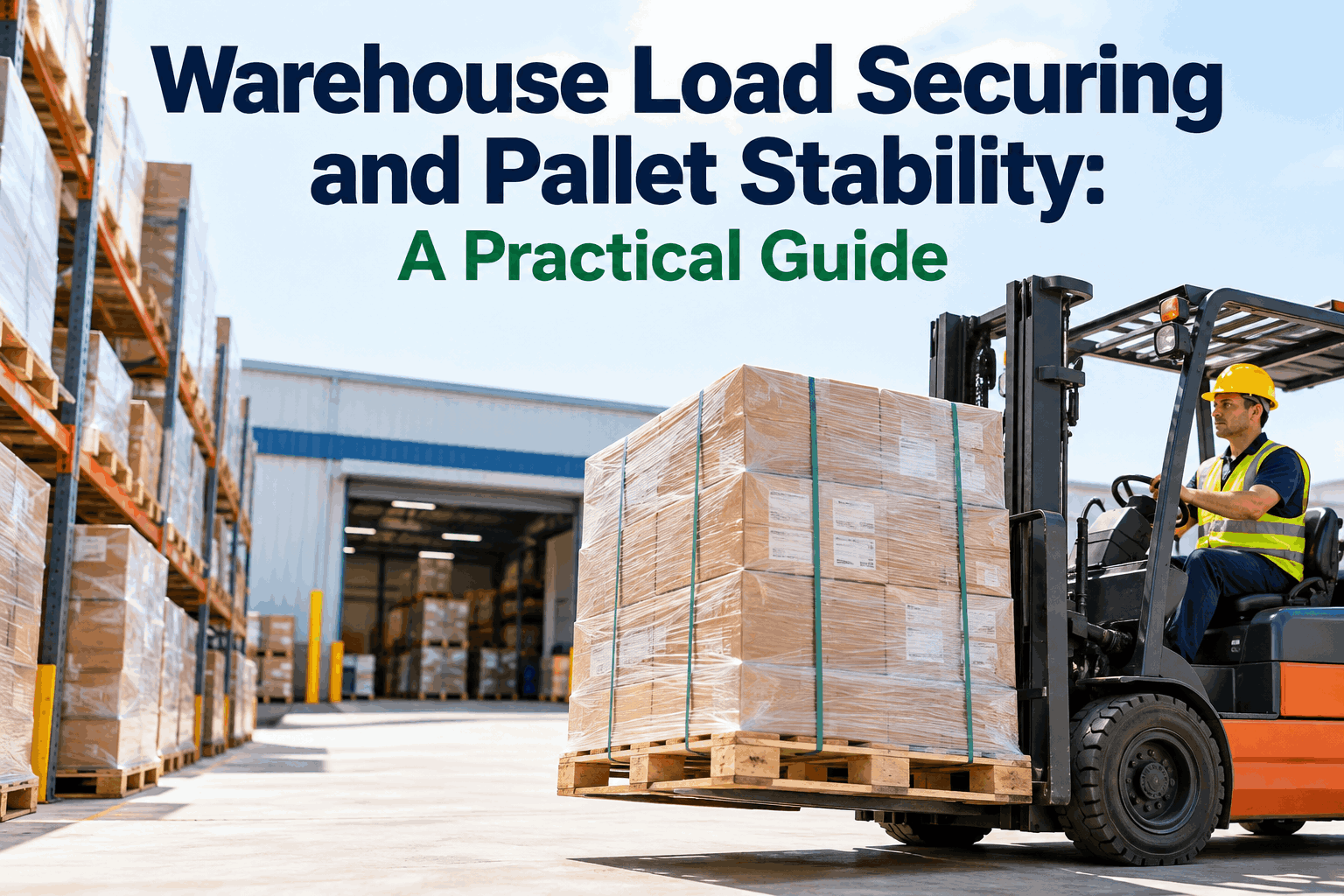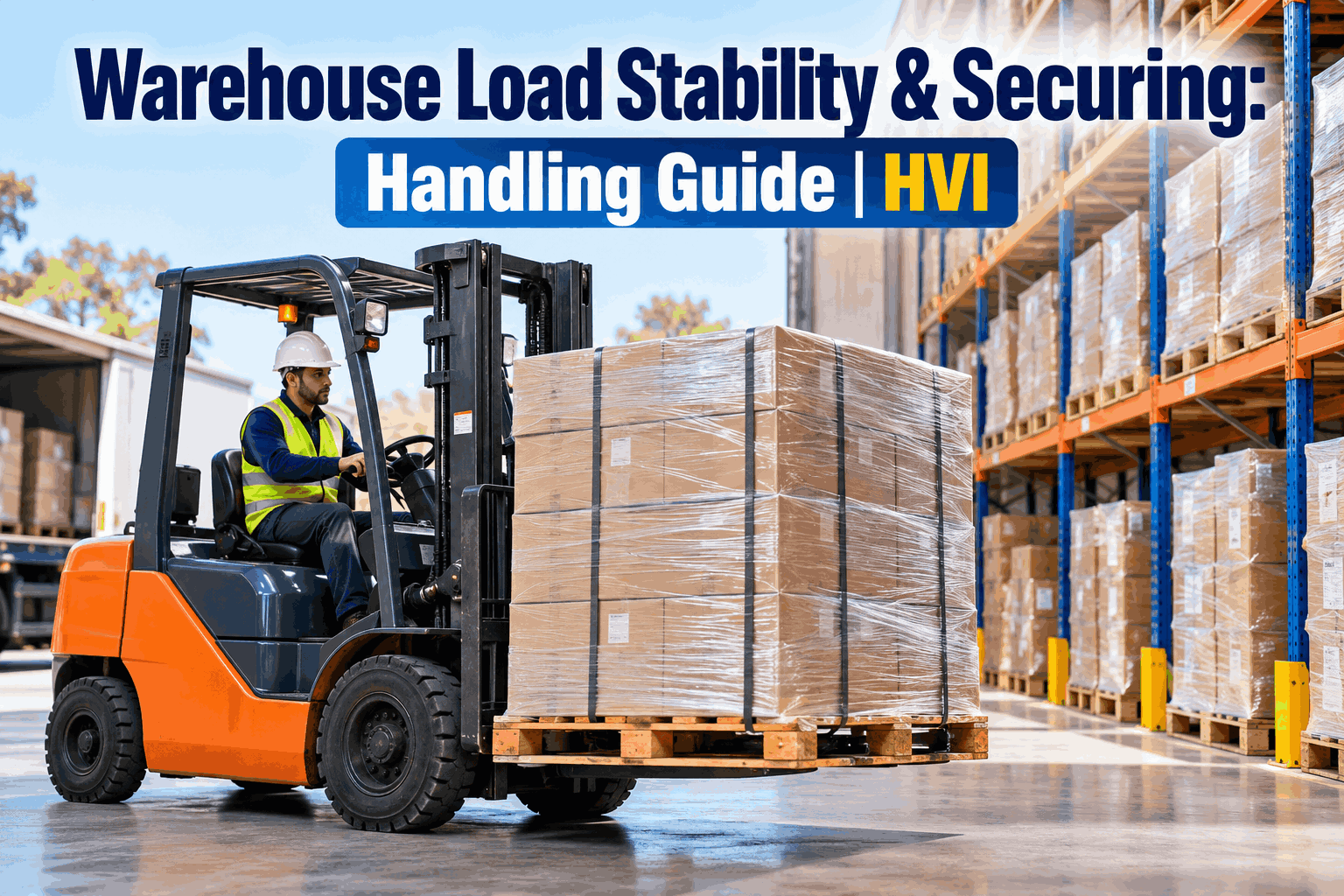
Warehouse load stability is a chain, and a load only stays together when every link holds — the pallet, the wrap, the stack pattern, the handling and the way it's stored. When a load hits the floor, it's almost never a freak event: it traces back to a cracked pallet board, a wrap that was too light, or a stack that was built wrong, and every one of those is something an inspection would have caught before the forklift ever picked it up. Book a demo to see load and pallet condition tracked with photos and trended per source, so the dropped loads stop repeating.
A Load Is Only as Stable as Its Weakest Link
Warehouse load stability runs through five stages, and a failure at any one drops the load. Catch the weak link on inspection — the pallet, the wrap, the stack — before it becomes product on the floor.
Here's the practical picture — why stability is built rather than hoped for, pallet condition as the foundation, the five points where loads fail, stretch wrap done right, stacking patterns, handling practices, and why reporting an unstable load beats letting an operator improvise.
Stability is built, not hoped forevery stable load is the result of decisions upstream
A stable load doesn't happen by luck — it's the product of a sound pallet, the right wrap, a proper stack pattern and careful handling. Each of those is a decision someone made, and each is a point where a documented check either catches a problem or lets it through.
Damage compounds up the chain. A cracked pallet board makes a load sit unevenly; an uneven load wraps poorly; a poorly wrapped load stacks unstably; an unstable stack tips under handling. The failures aren't independent — they build on each other, which is why catching the first weak link matters more than any single downstream fix.
Pallet condition: the foundationwhere most load-stability failures actually start
The pallet carries everything, so a damaged one undermines the whole load before it's even wrapped. Pallet defects are also the most overlooked cause of dropped loads because a bad pallet often looks fine until it's under weight. These are the checks that belong on every load inspection.
Because pallets cycle endlessly through a facility, the reliable way to keep bad ones out of loads is a condition check built into the workflow, not left to eyeballing. Building pallet condition into a warehouse inspection program catches the broken board before it drops a pallet of product. Book a demo to add pallet condition to inspections
The five points where loads failthe weak links to catch on inspection
Nearly every dropped or damaged load traces back to one of five points in the chain. Naming them makes the inspection targeted — you're not checking everything vaguely, you're checking the five things that actually cause failures.
The value of naming the five is that a defect report can point at the actual cause, so the fix lands where the problem is instead of blaming whoever was driving. A drop logged as "pallet — cracked stringer" tells you something a drop logged as "operator error" never will, and it's the difference between fixing a supplier and disciplining a driver who did nothing wrong.
Stretch wrap & containment done rightthe link most often under-done
Stretch wrap is where corners get cut most, because it's easy to use too little film and call it wrapped. But containment is what holds a stack together once it moves, so under-wrapping is one of the biggest hidden causes of loads shifting and collapsing.
The tell is simple: if you can rock the top of a wrapped load by hand, it isn't contained, and it belongs back at the wrapper before it goes anywhere. Recording wrap defects by source shows whether a station or a shift is consistently under-wrapping. Book a demo to trend wrap quality by source
Stacking & palletising patternshow the load is built decides how it behaves
How product is arranged on the pallet is as important as the pallet itself. A good pattern spreads weight, ties layers together and keeps the load within the footprint; a bad one builds in a tip waiting to happen. These are the pattern checks worth standardising.
Overhang is the quiet one: product hanging past the pallet edge loses wrap grip and gets clipped by racking and other loads, so even a well-wrapped overhanging load is compromised. Standardising the pattern is what makes the stack repeatable instead of down to who built it.
Handling practices that keep loads togetherthe last chance to keep a good load stable
Even a well-built load can be shaken apart by rough handling. How the forklift operator picks, carries and sets down a load is the final link in the chain, and it's where a marginal load either survives or fails.
Handling ties back to the equipment too: a forklift with worn tyres or a drifting mast makes even careful handling rough, which is why load stability and the daily forklift inspection are two halves of the same safety picture.
Report the unstable load — don't improvisethe behaviour that turns a near-miss into a record
The most dangerous response to an unstable or damaged load is an operator quietly fixing it their own way and carrying on. A leaning load, a broken pallet or a collapsed stack needs to be isolated, reported and corrected through a defined procedure — not improvised on the floor.
- Operator re-stacks or re-wraps their own way
- No record the load was ever unstable
- The upstream cause is never found
- The same failure repeats next week
- Unstable load isolated, not moved as-is
- Defect logged with a photo against the source
- Corrected through a defined procedure
- Trend data fixes the cause, not just the load
The documented route is also what gives fleet, warehouse and safety managers the evidence they need for internal decisions — which supplier's pallets keep failing, which station under-wraps, which shift has the incidents. Start free and give operators a report route instead of a workaround.
From a warehouse safety manager
We kept losing loads at the same transfer point and everyone assumed it was rough driving. Once we started logging every dropped or damaged load with a photo and a cause, the trend was obvious — it wasn't the drivers, it was a batch of pallets from one supplier with cracked stringers that only showed under weight. We'd never have seen it without the records, because each drop on its own looked like a one-off. Now pallet and load condition is a logged inspection item, and the trend data settles arguments instead of starting them.
How HVI tracks load stabilityconfigurable items, photo defects and trend analysis
Load stability holds up when pallet and load condition are inspected consistently and the defects are trended to their source instead of treated as one-offs. HVI's configurable inspection items, photo defect reporting and asset-level records make the recurring causes visible.
Inspect pallet & load condition
Configurable items for pallet, wrap, stack and handling on every check.
Report defects with photos
Every unstable or damaged load logged with a photo against its source.
Trend the recurring source
Records surface the supplier, station or shift behind repeat damage.
See how pallet and load-condition inspections, photo defects and trend analysis live inside HVI's inspection and maintenance platform. Walk through it in a quick demo
Warehouse load stability: quick answers
What affects warehouse load stability?
Load stability depends on a chain of factors: the pallet condition (broken boards, damaged stringers, protruding nails, contamination or deflection), the stretch wrap and containment, the palletising and stacking pattern (weight distribution, interlocking, overhang, height and load centre), the handling practices (fork positioning, travel speed, load height and visibility), and the storage conditions. A failure at any one point can drop or damage a load, so all of them belong on a load inspection.
Why do warehouse pallets cause dropped loads?
Because the pallet is the foundation of the load, and its defects are the most overlooked — a cracked deck board, a split stringer or a sagging pallet often looks fine until it's under weight, then fails. Pallets also cycle endlessly through a facility and accumulate damage, so without a condition check built into the workflow, bad pallets keep getting loaded. Broken boards and damaged stringers are among the most common single causes of a load hitting the floor.
How can you tell if a load is wrapped adequately?
The simplest test is whether you can rock the top of the load by hand — if it moves, it isn't contained and needs re-wrapping. Look for the right film gauge for the load weight, enough wraps for full coverage from top to base, consistent tension that pulls the load together, and the bottom layer wrapped low enough to lock it to the pallet. Loose film, tears, or product leaning against the wrap are all signs of inadequate restraint.
What should happen when an operator finds an unstable load?
The load should be isolated and reported through a defined procedure, not improvised. An operator quietly re-stacking or re-wrapping a load their own way leaves no record that it was ever unstable, so the upstream cause is never found and the failure repeats. Isolating the load, logging the defect with a photo against its source, and correcting it through a set process both keeps people safe and builds the trend data that fixes the real cause.
How does HVI help with load stability and pallet inspections?
HVI lets you build configurable inspection items for pallet and load condition, report defects with photos against the specific pallet, load or station, and keep asset-level records. The trend analysis then identifies the recurring sources of load damage or handling issues — the pallet supplier, the wrapping station or the shift behind repeat failures — so you can fix the cause instead of the symptom, with documented evidence for internal decisions.
Stop the same load failures repeating
HVI tracks warehouse load stability end to end — configurable pallet and load-condition items, photo-based defect reporting against the source, and trend analysis that surfaces the recurring cause so you can act on evidence instead of assumptions.
No credit card · Configurable load inspection items on day one
- Pallet boards, stringers & nails
- Wrap film, coverage & tension
- Stack pattern, overhang & height
- Handling & set-down control
- Report & isolate unstable loads