Fleet management software represents the backbone of modern construction operations, yet 68% of contractors still struggle with outdated tracking systems that fail to deliver essential visibility into equipment performance, driver behavior, and operational costs. Industry data reveals that companies lacking comprehensive FMS features experience 45% higher operational expenses, 35% more equipment downtime, and $180,000 annually in preventable costs per 25-vehicle fleet. Strategic implementation of key FMS features can reduce fleet operational costs by 40%, improve equipment utilization by 55%, and generate $275,000+ annual savings through systematic optimization of fuel consumption, maintenance scheduling, and route efficiency while ensuring regulatory compliance and enhanced safety performance across challenging work environments.
The Hidden Crisis: Fleet Management Inefficiencies in Modern Construction
Contemporary construction operations depend on sophisticated fleet coordination and equipment optimization, where inadequate management systems create cascading inefficiencies that threaten project profitability, regulatory compliance, and competitive positioning. Fleet management system deficiencies compound throughout organizations, affecting equipment availability, operational costs, and total project delivery capabilities.
Fuel Consumption Monitoring Gaps
82% of construction fleets lack real-time fuel monitoring, resulting in 25-35% higher fuel costs, theft detection delays, and $45,000+ annual losses per fleet due to inefficient routing and unauthorized usage patterns.
Driver Behavior Oversight Limitations
Driver performance monitoring deficiencies contribute to 40% higher accident rates, increased insurance premiums, and $85,000+ annual costs through unsafe driving practices, excessive idling, and equipment misuse incidents.
Route Optimization Inefficiencies
Manual route planning creates 30% longer travel times, excessive fuel consumption, and $35,000+ annual waste through suboptimal dispatching and poor coordination between job sites and equipment locations.
Maintenance Scheduling Gaps
Reactive maintenance approaches result in 60% higher repair costs, unexpected breakdowns, and $125,000+ annual expenses through emergency repairs, extended downtime, and shortened equipment lifecycles.
Compliance Documentation Failures
Inadequate regulatory tracking systems expose companies to DOT violations, OSHA penalties, and $75,000+ annual fines while creating liability risks and operational restrictions through compliance failures.
Real-Time Visibility Limitations
Lack of equipment location awareness causes 45% productivity losses, coordination delays, and $55,000+ annual costs through inefficient asset utilization and poor project scheduling coordination.
The Financial Impact of Inadequate Fleet Management Systems
Before implementing comprehensive FMS features, construction fleet operations experience significant inefficiencies that impact both operational performance and financial results:
- Uncontrolled fuel expenses consuming 35-45% of operational budgets without visibility into consumption patterns or optimization opportunities
- Equipment underutilization averaging 65% of available capacity due to poor coordination and inadequate location tracking systems
- Maintenance cost unpredictability making budget planning difficult and causing project delays through unexpected equipment failures
- Regulatory compliance risks with 35% of fleets experiencing violations that result in $25,000+ penalties and operational restrictions
- Safety incident exposures from unmonitored driver behavior creating $150,000+ liability risks and insurance premium increases
Transform your fleet operations with comprehensive FMS features and advanced monitoring capabilities
Getting Started Book a DemoFoundation Elements: Essential FMS Features Framework
Professional fleet management systems provide the technological infrastructure necessary for comprehensive fleet optimization, incorporating real-time monitoring, predictive analytics, and automated reporting into unified platforms that maximize operational efficiency while ensuring regulatory compliance and safety performance.
Core FMS Features and Operational Architecture
Effective fleet management platforms integrate multiple operational streams and monitoring capabilities to create comprehensive oversight systems that balance functionality with user accessibility and scalability requirements.
Real-Time GPS Tracking and Location Intelligence
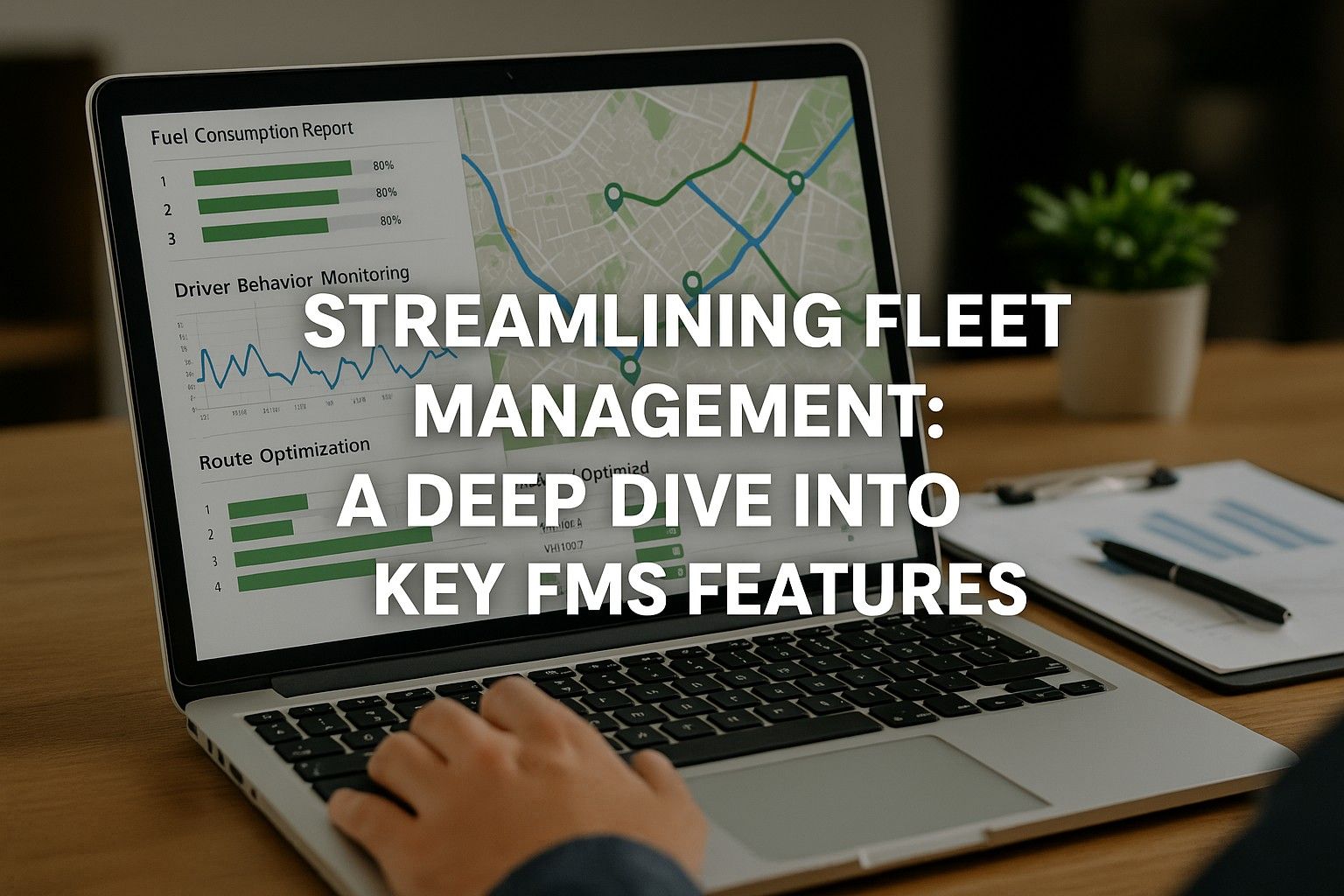
Advanced positioning systems providing precise equipment location data, geofencing capabilities, route monitoring, and arrival/departure tracking that enable optimal coordination and security oversight.
Comprehensive Fuel Management and Consumption Analytics
Detailed fuel monitoring including consumption rates, efficiency analysis, theft detection, and optimization recommendations based on operational patterns and equipment performance data.
Driver Behavior Monitoring and Safety Scoring
Complete driver performance assessment covering speed monitoring, harsh acceleration detection, idling analysis, and safety score calculation that improves performance and reduces risks.
Predictive Maintenance Scheduling and Alert Systems
Automated maintenance management including service scheduling, diagnostic monitoring, parts tracking, and preventive maintenance alerts that optimize equipment reliability and lifecycle costs.
Advanced Digital Integration and Automation Capabilities
Smart Fleet Analytics and Predictive Intelligence Integration
Modern fleet management systems transcend basic tracking to incorporate artificial intelligence, machine learning analytics, and automated decision-making capabilities that optimize fleet performance and predict operational requirements before issues develop.
Intelligent Route Optimization and Dynamic Planning
AI-powered routing systems automatically optimize travel paths based on traffic conditions, job site requirements, and equipment specifications while adapting to real-time changes and constraints.
Automated Compliance Monitoring and Reporting
Integrated regulatory tracking systems monitor DOT requirements, OSHA standards, and environmental regulations with automatic documentation and violation prevention capabilities.
Predictive Analytics and Performance Forecasting
Advanced algorithms analyze historical data and operational patterns to predict equipment failures, optimize scheduling, and recommend strategic improvements for enhanced performance.
Mobile Integration and Field Connectivity
Comprehensive mobile applications enabling field teams to access fleet data, update statuses, and coordinate activities while maintaining real-time connectivity and operational awareness.
Implementation Methodology and Strategic Deployment
Phased Implementation Strategy for FMS Features Integration
Successful FMS implementation requires systematic deployment approaches that minimize operational disruption while maximizing feature adoption and performance benefits across diverse equipment fleets and operational environments.
Phase 1: Core Infrastructure Deployment
GPS tracking installation, basic monitoring setup, user account configuration, and essential feature activation with initial training and system familiarization for operational teams.
Phase 2: Advanced Feature Integration
Fuel monitoring activation, driver behavior tracking implementation, maintenance scheduling setup, and analytics platform configuration with expanded training and workflow integration.
Phase 3: Automation and Optimization
Route optimization activation, predictive analytics deployment, compliance automation setup, and performance dashboard configuration with advanced training and optimization protocols.
Phase 4: Strategic Enhancement and Scaling
Custom feature development, integration expansion, performance optimization, and strategic planning support with ongoing optimization and continuous improvement protocols.
Change Management and User Adoption Excellence
FMS implementation success depends heavily on user adoption and operational integration, requiring comprehensive training programs and change management strategies that encourage systematic feature utilization and performance optimization.
Comprehensive Training Program Development
Role-specific training for drivers, dispatchers, maintenance teams, and managers covering feature utilization, system navigation, and performance optimization techniques.
Performance Incentive Structure Creation
Reward programs and KPI frameworks that recognize fuel efficiency achievements, safety improvements, and operational excellence through systematic FMS feature utilization.
Communication and Support Systems
Regular communication channels for system updates, feature enhancements, and user feedback integration to ensure continuous optimization and user satisfaction.
Champion Network and Peer Support
Identification and development of FMS champions who facilitate adoption, provide peer support, and drive continuous improvement initiatives across operational teams.
Accelerate your FMS implementation with expert deployment support and proven methodologies
Getting Started Book a DemoAnalytics and Performance Monitoring Excellence
Advanced Fleet Analytics and KPI Optimization
Fleet management analytics transform operational data into strategic insights that enable continuous improvement, cost optimization, and performance enhancement across equipment fleets and operational environments.
Real-Time Operational Dashboards
Executive and operational dashboards providing immediate visibility into fleet performance, cost metrics, and operational efficiency across all equipment segments and geographical locations.
Predictive Performance Analysis
Advanced analytics identifying optimization opportunities, performance trends, and strategic improvements based on historical data and predictive modeling capabilities.
Cost Analysis and Budget Optimization
Comprehensive cost tracking covering fuel expenses, maintenance costs, and operational overhead that enables accurate budgeting and strategic cost management.
Compliance and Safety Monitoring
Automated compliance tracking ensuring regulatory adherence, safety performance monitoring, and risk management with automated reporting and exception management capabilities.
ROI and Operational Excellence Outcomes
Quantifiable Financial Benefits and Performance Enhancement
Comprehensive FMS implementation delivers measurable financial returns through multiple value streams that extend beyond direct cost savings to encompass operational efficiency, safety improvement, and competitive advantage benefits.
Strategic Competitive Advantages and Market Positioning
Advanced FMS capabilities create sustainable competitive advantages that enhance market positioning through improved operational efficiency, enhanced safety performance, and superior project delivery capabilities.
- Enhanced project delivery reliability with predictable equipment availability and optimized resource allocation that improves bid competitiveness
- Improved safety performance averaging 75% reduction in incidents through systematic driver monitoring and risk prevention protocols
- Reduced insurance premiums through documented safety programs and improved operational risk management resulting in 25-35% cost savings
- Enhanced equipment lifecycle management with predictive maintenance extending equipment life by 30-40% and improving resale values
- Superior operational agility enabling rapid response to changing project requirements and market opportunities through real-time coordination
Compliance and Regulatory Excellence
Regulatory compliance requirements make comprehensive FMS features essential for construction operations, with DOT regulations, OSHA standards, and environmental requirements demanding systematic monitoring and documentation capabilities.
DOT and FMCSA Compliance Management
Automated Hours of Service tracking, driver qualification monitoring, vehicle inspection compliance, and regulatory reporting that ensures adherence to federal transportation requirements and prevents violations.
OSHA Safety Standard Adherence
Systematic safety monitoring, incident tracking, training compliance, and hazard identification that supports workplace safety requirements and reduces violation risks and liability exposure.
Environmental Regulation Compliance
Emissions monitoring, fuel efficiency tracking, and environmental impact assessment that supports EPA requirements and sustainability initiatives while reducing regulatory risks.
Insurance and Risk Management Support
Comprehensive safety documentation, incident tracking, and performance monitoring that supports insurance requirements while reducing premiums and liability exposure through proven risk management.
Future Outlook and Innovation Roadmap
The fleet management software landscape continues evolving with emerging technologies that promise enhanced automation, predictive capabilities, and integration possibilities that will further transform construction fleet operations and optimization strategies.
Artificial Intelligence and Machine Learning Integration
Advanced AI algorithms providing enhanced predictive capabilities, automated decision-making, and intelligent optimization based on complex operational data analysis and pattern recognition.
Internet of Things (IoT) Sensor Integration
Comprehensive IoT networks enabling detailed equipment monitoring, environmental sensing, and operational data collection that enhances FMS capabilities and decision-making accuracy.
Autonomous Vehicle Integration
Preparation for autonomous equipment integration including communication protocols, coordination systems, and operational frameworks that support next-generation construction technologies.
Blockchain Documentation and Verification
Immutable record-keeping systems providing enhanced audit trails, compliance verification, and operational documentation that improves accountability and regulatory compliance.
Frequently Asked Questions
Ready to implement comprehensive FMS features for your construction fleet?
Getting Started Book a Demo