Your fleet is already generating the data that AI needs to predict breakdowns, optimize routes, and cut maintenance costs by double digits. The problem isn't a lack of data — it's the gap between the telematics hardware collecting it and the intelligence layer that can actually interpret it. In 2026, machine learning models achieve 85–95% accuracy predicting major component failures, surfacing risk 20–45 days before traditional diagnostics raise alarms. The City of Long Beach deployed AI across 1,600 fleet assets and saw unscheduled breakdowns drop 20% while vehicle availability climbed to 93%. A national logistics carrier caught simultaneous coolant temperature spikes across three trucks on the same corridor — a compound signal no human analyst would have spotted — and prevented $187,000 in projected losses with a $2,400 preventive repair. The technology is proven. The ROI is documented. And the integration doesn't require replacing your existing tech stack. AI layers on top of the telematics, CMMS, and fleet management tools you already run — turning raw vehicle data into decisions that save money, prevent downtime, and extend equipment life.
What AI Vehicle Analysis Actually Does (Beyond the Buzzwords)
AI in fleet management isn't one feature — it's a set of capabilities that layer intelligence on top of every data point your vehicles generate. Each capability solves a specific problem that manual management or traditional software cannot address at scale. Here are the five core AI functions and the measurable outcomes they produce.
Predictive Maintenance
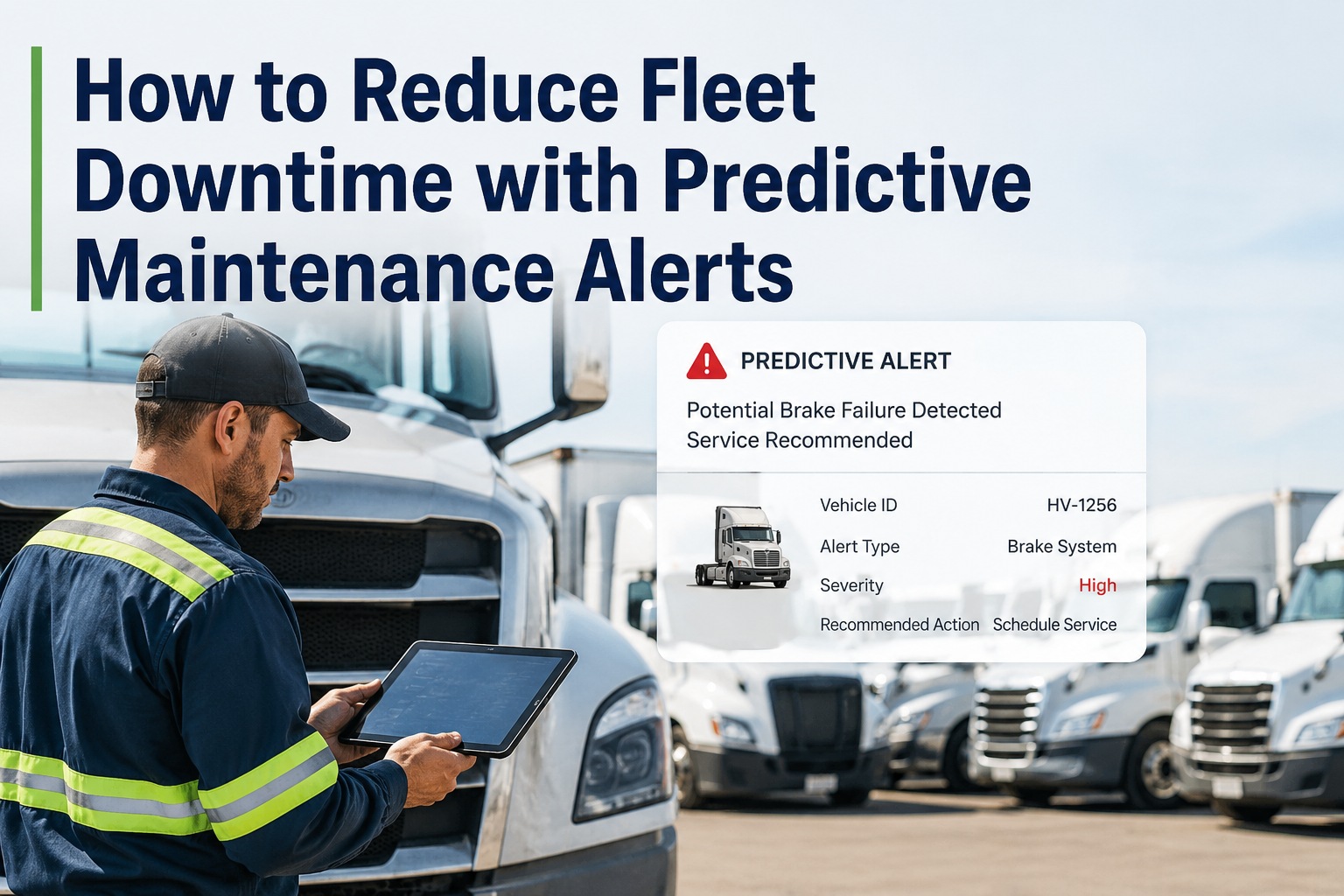
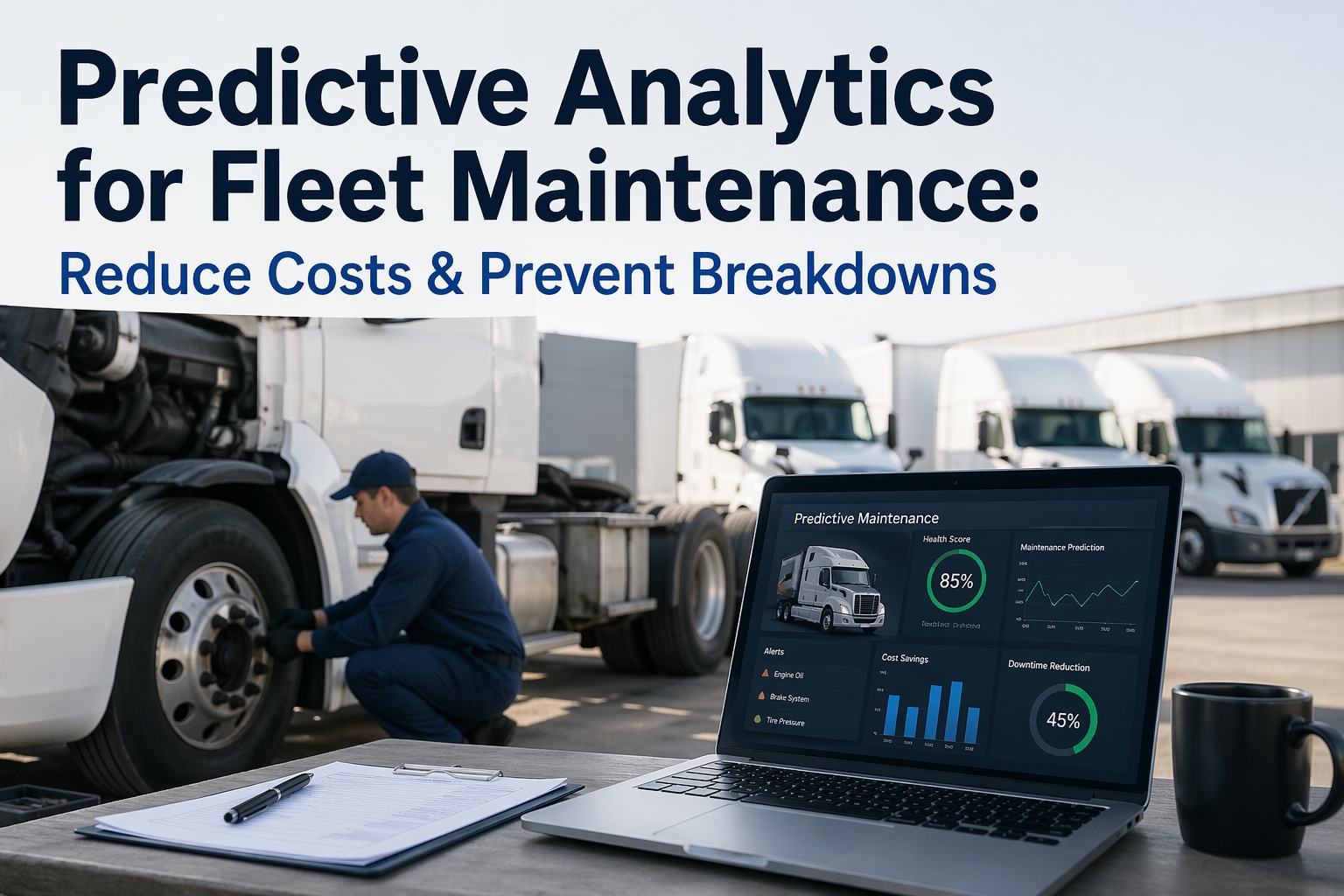
ML models analyze engine temperature, oil pressure, brake system data, battery voltage, and dozens of other sensor readings to calculate failure probability per component. Predictions surface 20–45 days before breakdowns — not after fault codes trigger.
Vehicle Health Scoring
Each vehicle receives a dynamic health score updated in real time — not based on age or mileage, but on actual sensor data against that specific vehicle's learned baseline. Fleet managers see at a glance which vehicles need attention and which are healthy.
Driver Behavior Intelligence
AI goes beyond simple speeding alerts to score drivers on a composite of behaviors — hard braking patterns, acceleration profiles, cornering force, idle time, and seatbelt compliance — correlated against accident risk and fuel efficiency impact.
Route & Fuel Optimization
AI analyzes traffic patterns, weather, delivery windows, vehicle capacity, and terrain to calculate optimal routes in real time. Combines route data with fuel consumption patterns to identify where fuel waste is route-driven vs. behavior-driven vs. maintenance-driven.
Automated Work Order Intelligence
When risk thresholds are exceeded, AI auto-generates prioritized work orders — assigned to the right technician, with parts pre-checked against inventory, scheduled during low-impact windows. No manual triage required. The truck gets fixed before it breaks down.
Layer AI intelligence onto your existing fleet tools. Start your free trial of HVI's AI-powered fleet analysis — predictive alerts, health scoring, and automated work orders from day one. Or book a demo to see AI integration with your current stack.
The Integration Timeline: From Connection to ROI
One of the biggest misconceptions about AI fleet integration is that it requires a year-long IT project. In reality, modern platforms connect to your existing telematics in hours, begin learning your fleet's patterns within days, and deliver measurable predictions within weeks. Here's the actual timeline.
Connect & Ingest
API integration with your existing telematics (Geotab, Samsara, Verizon Connect, or factory OEM telematics). Vehicle sensor data begins flowing. Zero new hardware. Setup takes under an hour.
First Predictions Go Live
AI applies fleet-wide pattern data from industry training models immediately. Early predictions benefit from pre-trained intelligence even before your fleet-specific models are fully calibrated.
Fleet-Specific Baselines Established
ML models learn each vehicle's unique operating patterns — not manufacturer assumptions. Baseline calibration per vehicle accounts for duty cycle, route profile, and driver behavior. Prediction accuracy begins climbing toward 90%+.
Full Accuracy & Measurable ROI
Predictive models hit 90%+ accuracy. Auto-generated work orders replace manual triage. First prevented breakdowns typically pay for the entire annual platform cost within this window. Maintenance cost reductions become measurable.
Compounding Intelligence
Models improve with every mile, every repair, every sensor reading. Historical analysis surfaces fleet-wide patterns: which specs are most reliable, which routes accelerate wear, which technicians achieve highest first-time-fix rates. The system gets smarter every day.
What AI Sees That Humans Can't
The real power of AI vehicle analysis isn't doing what fleet managers already do faster — it's finding correlations that are invisible to human analysis. A fleet manager can review one vehicle's fault codes. AI can analyze 50,000 vehicles' sensor patterns and find that a specific combination of coolant temperature drift + alternator voltage drop + increased idle time predicts water pump failure 23 days out with 91% accuracy. Here are the pattern types that only AI can detect at scale.
Individual sensor readings that look normal in isolation but, when combined, predict failure. Example: three trucks on the same corridor showing simultaneous coolant spikes + alternator drops + idle increases = imminent water pump failure on all three.
Gradual performance decline that happens too slowly for humans to notice in daily checks. Fuel efficiency slipping 0.3% per week. Brake temperatures drifting 2 degrees higher each month. Small but compounding signals that predict failures weeks before fault codes trigger.
Patterns across vehicles that reveal systemic issues: a batch of fuel injectors from the same supplier failing at similar hours across multiple trucks. A specific route causing accelerated brake wear across every vehicle assigned to it. Root causes, not just symptoms.
Let AI find what you're missing. Start free with HVI's AI-powered vehicle analysis — compound signal detection, degradation tracking, and fleet-wide pattern recognition. Or schedule a demo to see how AI interprets your fleet's data.
Your Fleet Data Is Already Talking. AI Helps You Listen.
Every sensor reading, every fault code, every fuel fill-up, and every repair record your fleet generates is a data point. Without AI, those data points sit in separate systems, reviewed manually (if at all), and analyzed retrospectively. With AI, they become a continuous stream of actionable intelligence — predicting failures before they happen, optimizing routes before fuel is wasted, scoring drivers before accidents occur, and generating work orders before mechanics are needed. The integration doesn't require new hardware, new vehicles, or a new tech stack. It requires connecting the data you already have to intelligence that can interpret it. That's the gap AI closes — and the fleets that close it first gain an advantage that compounds with every mile driven.
Connect AI to Your Fleet. See Results in Days.
HVI's AI analysis engine integrates with your existing telematics, builds per-vehicle baselines, and delivers predictive maintenance alerts, health scores, and automated work orders — without replacing a single piece of hardware.