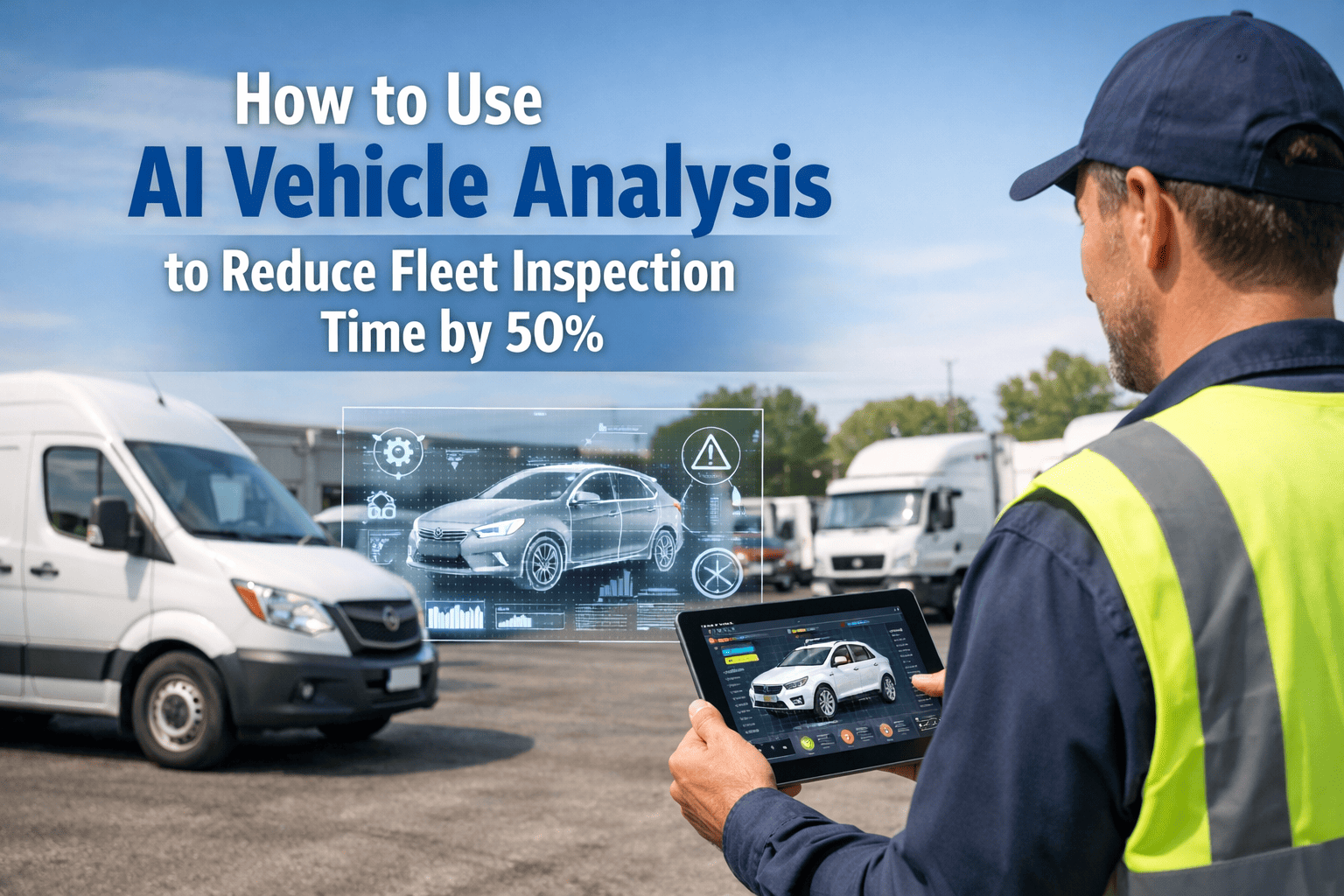
Your drivers spend 45 minutes per truck on manual inspections. They check tires, brakes, lights, fluids — the same 47 inspection points, every morning, every truck. And they still miss 20-30% of defects. Not because they're careless. Because human eyes fatigue after the third truck. Because 5:30 AM lighting hides hairline cracks. Because pressure to hit departure windows turns walk-arounds into jog-arounds. Now imagine the same inspection — completed in 6 minutes, catching 95-99% of defects, with photo-verified documentation that survives any DOT audit. That's what AI vehicle analysis delivers in 2026. Not someday. Right now. And fleets that adopt it are cutting inspection time by 50%, saving $3,650 per driver annually, and reducing preventable breakdowns by 89%. The question isn't whether AI inspection works. It's how long you can afford to inspect the old way.
What Is AI Vehicle Analysis (And Why It Changes Everything)
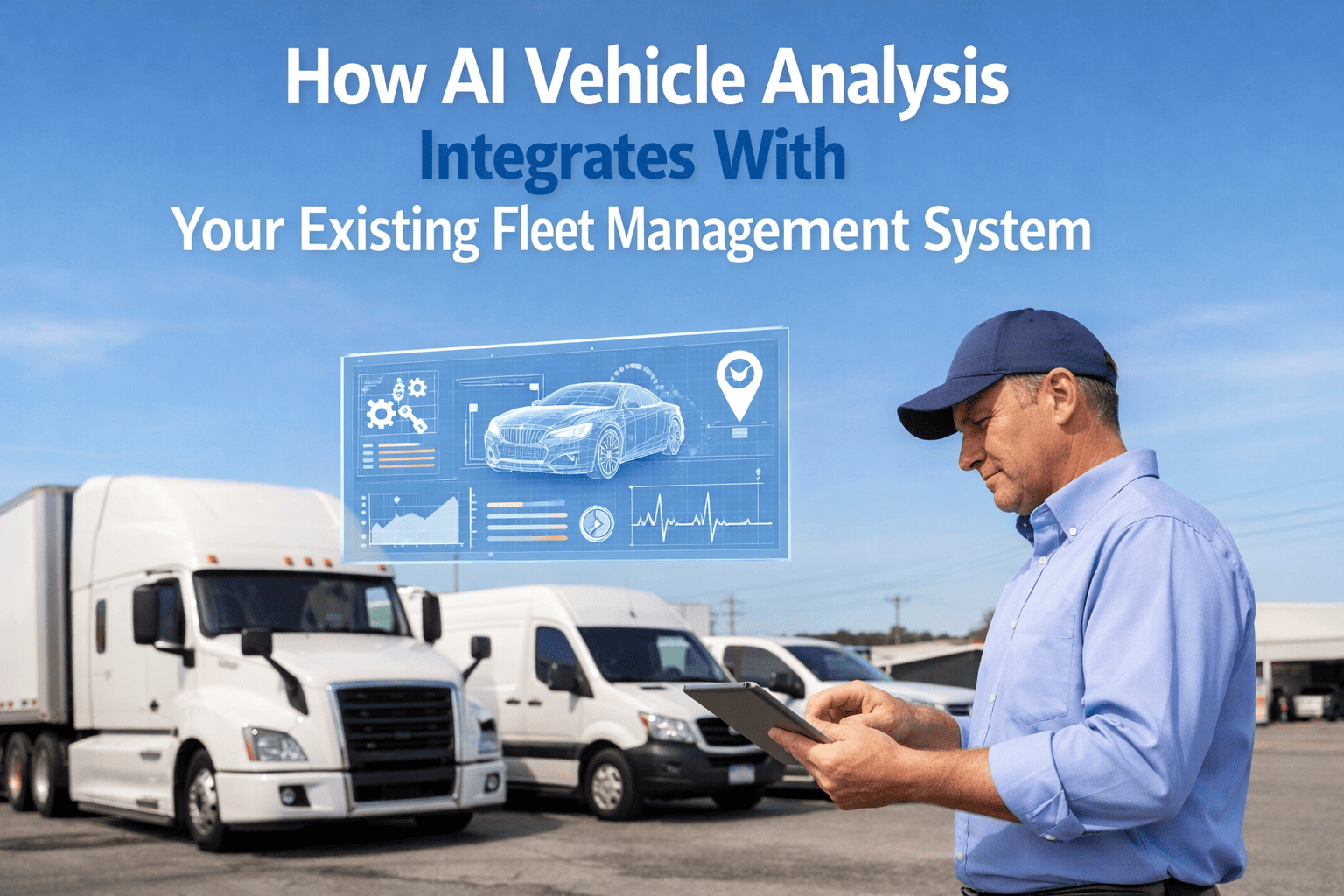
AI vehicle analysis uses computer vision — the same technology behind autonomous driving — trained on millions of real-world vehicle images. When a driver photographs their truck during a walk-around, AI algorithms analyze each image in real-time, comparing it against trained models of normal versus defective conditions. The system detects scratches, cracks, tire wear, fluid leaks, brake pad degradation, and structural damage that experienced human inspectors routinely miss. It classifies each finding by severity, flags safety-critical items for immediate action, and generates a DOT-compliant DVIR automatically. All from photos taken with a smartphone. No special hardware. No expensive installation. No weeks of training — drivers become proficient in 25-30 minutes.
Computer Vision Capture
Drivers follow guided on-screen prompts to photograph each inspection area. The app ensures complete coverage — every angle, every component, every time. No more skipped checkpoints. No more "I looked at it" without evidence. AI even flags when dirt covers key areas or lighting is insufficient for accurate analysis.
Real-Time AI Analysis
Deep learning algorithms process images instantly — detecting tire tread depth from photos, identifying brake wear patterns, spotting fluid leaks invisible to the human eye under poor lighting. The AI doesn't get tired, rushed, or distracted. Inspection #200 gets the same attention as inspection #1.
Automated Work Orders
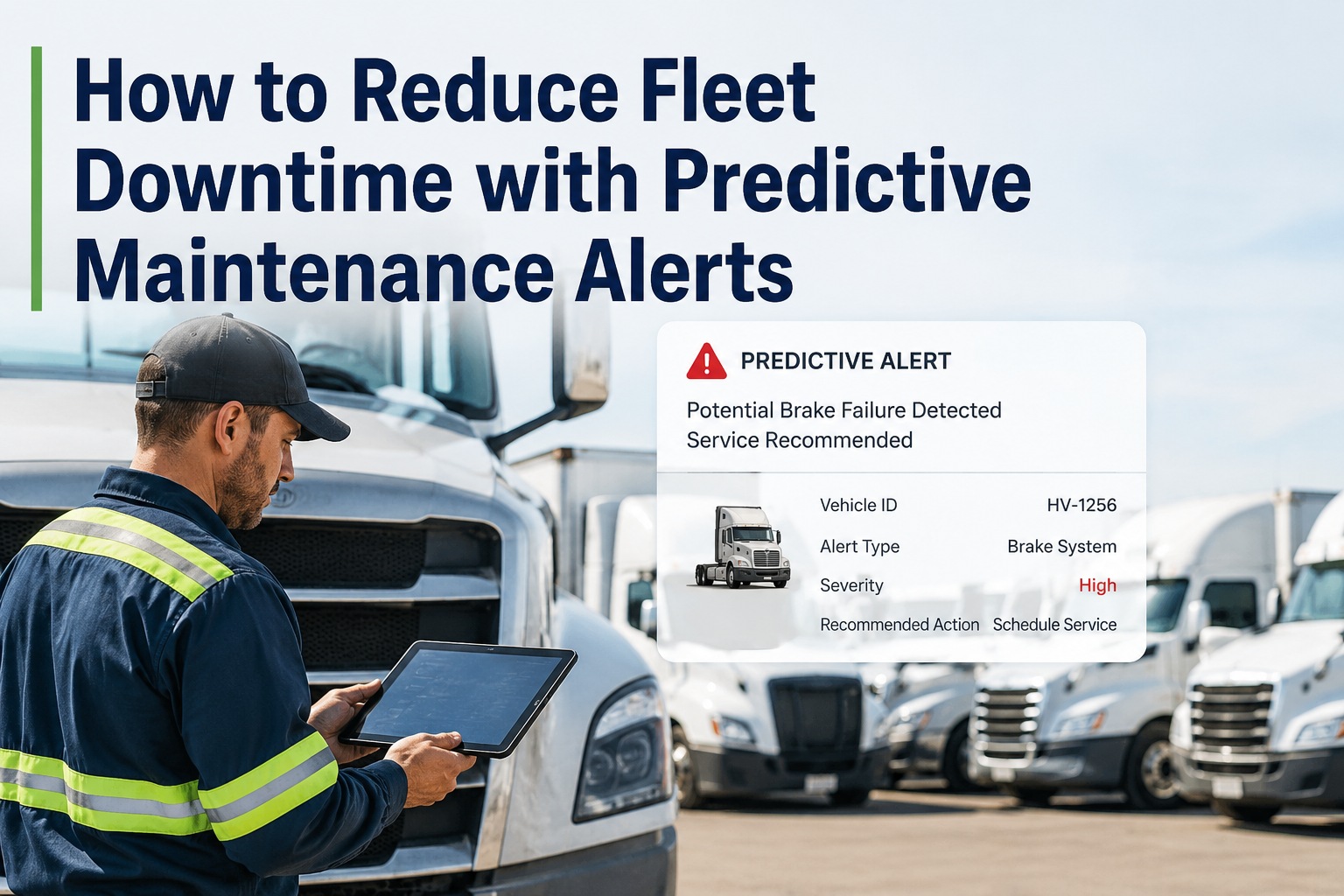
When AI detects a defect, it automatically generates a prioritized work order — complete with defect photo, severity classification, vehicle ID, and recommended repair. The work order routes to the assigned mechanic instantly. No handoff delays. No lost paper. No communication gaps.
Predictive Intelligence
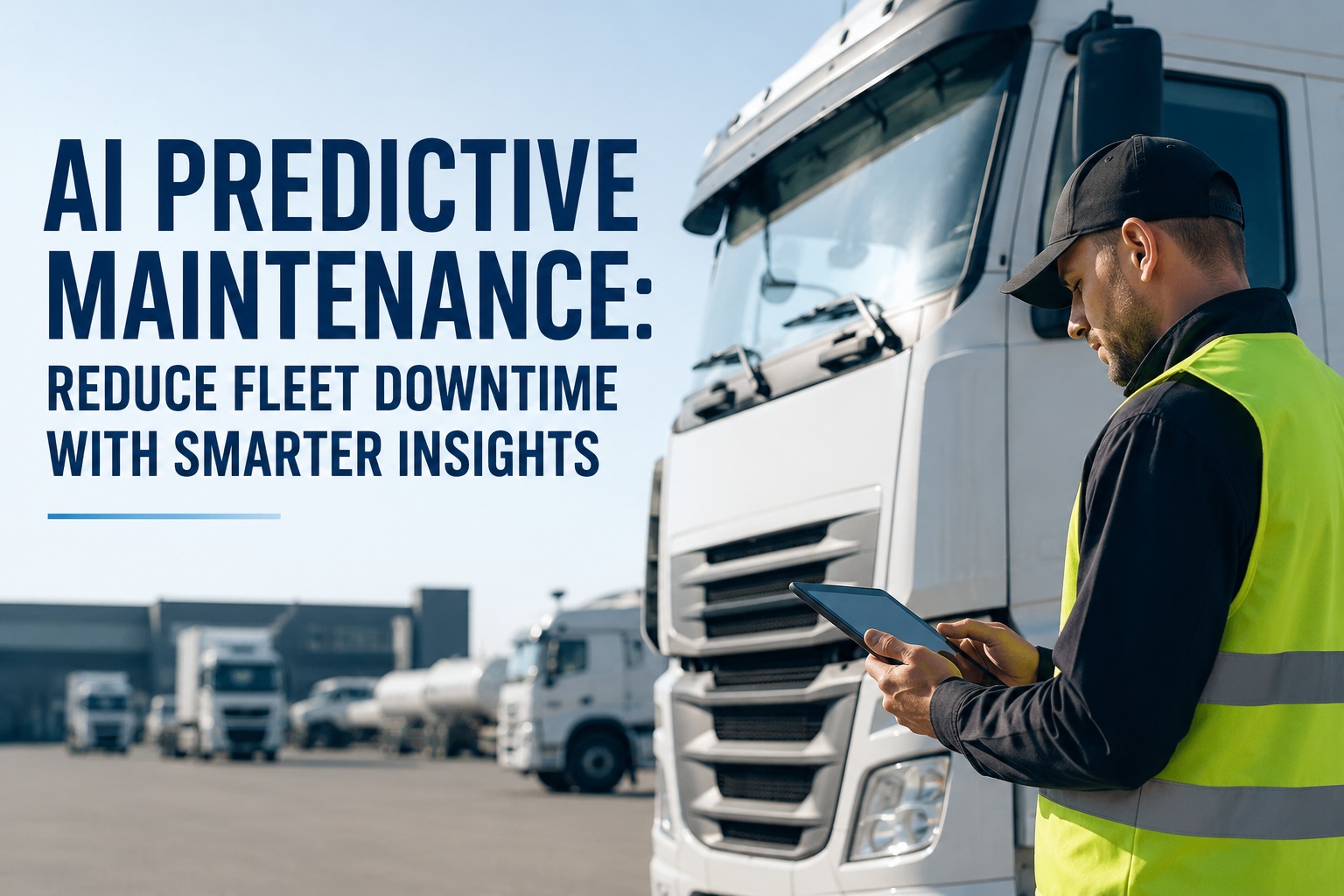
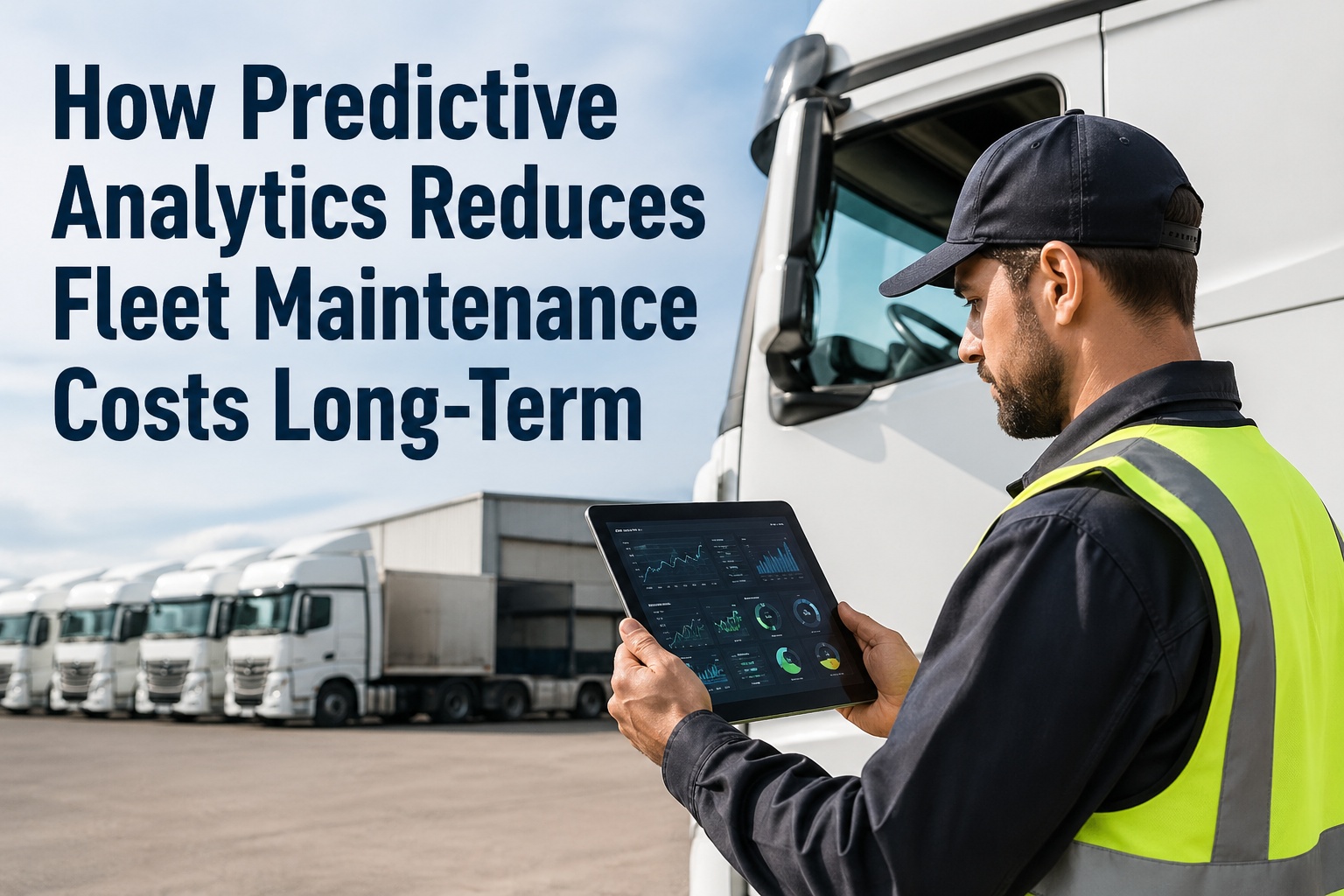
AI doesn't just find today's problems — it predicts tomorrow's failures. By analyzing inspection patterns across your fleet, the system identifies recurring defects, component degradation trends, and vehicles approaching maintenance thresholds 2-4 weeks before failure occurs.
See AI vehicle analysis in action on your fleet. Start your free trial — setup takes under 10 minutes, no hardware required. Or book a demo to see exactly how much time your fleet could save.
The 50% Time Reduction: Where the Minutes Go
Cutting inspection time in half isn't about cutting corners — it's about eliminating wasted effort while increasing thoroughness. Here's exactly where AI reclaims time that manual processes burn through every single day.
Eliminate Manual Data Entry (Save 8-10 min/inspection)
Manual DVIRs require handwriting vehicle info, driver details, odometer readings, and component status across dozens of fields. AI automatically identifies the vehicle, pulls stored data, and pre-populates every field. The driver's job is to take photos and confirm — not transcribe.
Replace Subjective Judgment with AI Detection (Save 5-8 min/inspection)
Manually evaluating tire tread depth, brake pad thickness, and fluid levels requires experience and time. AI analyzes photos and delivers instant assessments — flagging tires approaching DOT minimum thresholds, estimating brake wear percentages, and identifying leak patterns. Faster and more accurate than human judgment.
Automate Documentation and Reporting (Save 5-7 min/inspection)
Paper DVIRs require completing forms, filing copies, and communicating defects to maintenance — often through phone calls, sticky notes, or walking to the shop. AI generates the DVIR instantly, timestamps every photo with GPS location, and routes defect alerts automatically. Zero paperwork. Zero communication delays.
Guided Workflows Prevent Re-Inspections (Save 3-5 min/inspection)
Manual inspections often miss areas, requiring drivers to go back and re-check. AI-guided workflows ensure every checkpoint is covered in sequence — the app won't let you skip a step. First-time-right means no wasted passes around the vehicle.
Net Result: 50%+ Time Reduction Per Inspection
Combined across all five areas, AI analysis takes total inspection time from 30-45 minutes down to 5-7 minutes — while actually increasing defect detection by 40%. That's 500+ hours per driver per year returned to productive driving. For a 50-truck fleet, that's 25,000+ reclaimed hours annually.
The ROI That Pays for Itself in 60 Days
AI vehicle analysis isn't a cost — it's the fastest-payback investment most fleet managers will ever make. Here are the five financial impacts that add up to ROI within the first 60 days for most fleets.
$8,500/Truck/Year in Repair Cost Reduction
$3,650/Driver/Year in Inspection Time Recovery
15% Insurance Premium Reduction
96% Audit Pass Rate
89% Fewer Preventable Breakdowns
Calculate your fleet's AI inspection ROI. Start free — most fleets see payback within 60 days. Or book a demo to see real savings projections for your fleet size.
What AI Catches That Your Drivers Can't
In a real-world test across 50 fleet vehicles that had just passed manual driver walk-arounds, AI-powered inspection identified 127 defects that human inspectors missed entirely — including 12 vehicles with issues severe enough for out-of-service orders. Here's where the gap between human and AI inspection is widest.
How to Get Started in 4 Steps (Under 10 Minutes)
Implementing AI vehicle analysis doesn't require ripping out your existing systems, buying new hardware, or weeks of training. Most fleets go from signup to first AI-powered inspection in the time it takes to finish a cup of coffee.
Sign Up & Configure (2 Minutes)
Create your HVI account — no credit card required. Enter your vehicles manually or import from your existing system. Configure inspection templates for your specific vehicle types: Class 3-8 trucks, trailers, buses, or mixed fleet.
Driver Training (25-30 Minutes)
Drivers download the mobile app on their existing smartphones. AI-guided workflows show exactly what to photograph and from which angles. No classroom sessions needed — most drivers complete their first inspection independently after one walkthrough.
First AI Inspection (5-7 Minutes)
Run your first AI-powered inspection. Watch the system identify defects, generate a compliant DVIR, and route any findings to your maintenance team automatically. Most fleet managers run parallel manual + AI inspections on the same vehicles during week one — and discover defects they never knew existed.
Scale & Optimize (Ongoing)
Expand to your full fleet. Connect to your CMMS for automated work orders. As inspection data accumulates, AI begins predicting failures and optimizing maintenance schedules. The system gets smarter about your specific fleet every week.
Ready to cut your inspection time in half? Start your free trial now — first AI-powered inspection in under 10 minutes. Or book a demo to see AI analysis running on actual fleet vehicles.
The Fleets That Win Are the Fleets That Inspect Smarter
The AI vehicle inspection market is projected to reach $6.9 billion by 2033 — and it's growing at 15.8% annually for a reason. Fleets using AI analysis aren't just inspecting faster. They're catching defects that humans miss, predicting failures before they happen, generating audit-proof documentation automatically, and turning daily inspections from a compliance burden into a strategic advantage. Right now, only 27% of fleets use AI-powered inspection. But 65% plan to adopt by end of 2026. The early-adopter window is closing. Every day you inspect the old way is a day you're losing time, missing defects, and paying more than you need to.
Cut Your Fleet Inspection Time by 50% — Starting Today
HVI's AI-powered inspection platform gives your drivers smartphone-based AI analysis, guided photo capture, automatic DVIR generation, and predictive maintenance alerts — all from the devices they already carry.