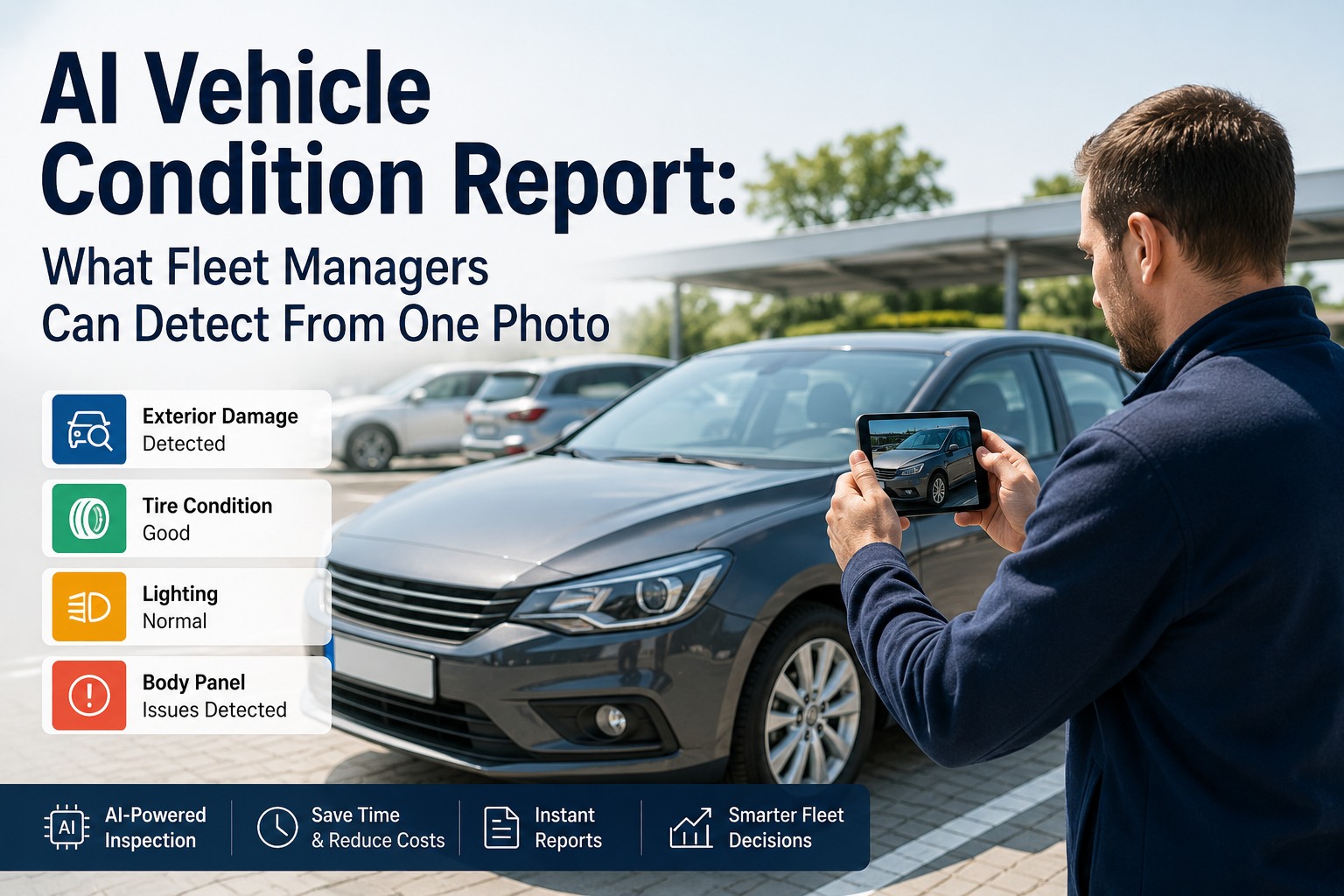
Point a phone at a vehicle, tap the shutter, and thirty seconds later you're not looking at a photo — you're looking at a report. Not "there's some damage," but a structured document: a 2-inch scratch located 18 inches from the bottom edge of the driver-side front door, rated minor, cosmetic; a front-left tire at 4/32" tread flagged as approaching DOT minimum, replace within two weeks; an oil trace under the bellhousing, moderate, monitor. That is the leap AI vehicle analysis makes — it turns a single image into a precise, itemized, defensible condition report, the kind that used to take a trained inspector a walkaround, a clipboard, and a lot of hope that nothing got missed. This article opens up that report: what a single photo actually yields, what goes into each line, why the standardized language matters as much as the detection, and how that document protects a fleet in the shop, at the roadside, and in a courtroom. HVI's AI inspection & maintenance software generates that condition report from the photos your drivers already take. Book a 30-minute walkthrough to see one built from your own vehicle.
One photo in. A precise, itemized, audit-ready condition report out — in about thirty seconds.
AI vehicle analysis turns a single smartphone photo into a full condition report: every defect located, sized, rated for severity, and paired with a repair recommendation — plus timestamp, GPS, and vehicle ID. HVI's AI inspection & maintenance software produces that report automatically, routes defects to work orders, and keeps a VIN-linked record ready for a DOT audit or a dispute.
What a single photo actually yields
A person looking at a vehicle photo sees a vehicle. The AI breaks it into millions of pixels, compares them against a database of tens of millions of real damage images, and returns something a glance never could.
The difference isn't just that AI sees more — it's that it renders what it sees into structured data. A human note says "scuff on the door." The AI report says "scratch, driver-side front door, 2 inches, 18 inches from bottom edge, minor, cosmetic." One is a memory; the other is a repairable, disputable, auditable fact.
Anatomy of an AI condition report
Every report is built from the same components, whether it flags one defect or twenty. This is what lands on the screen seconds after the shutter clicks — read line by line.
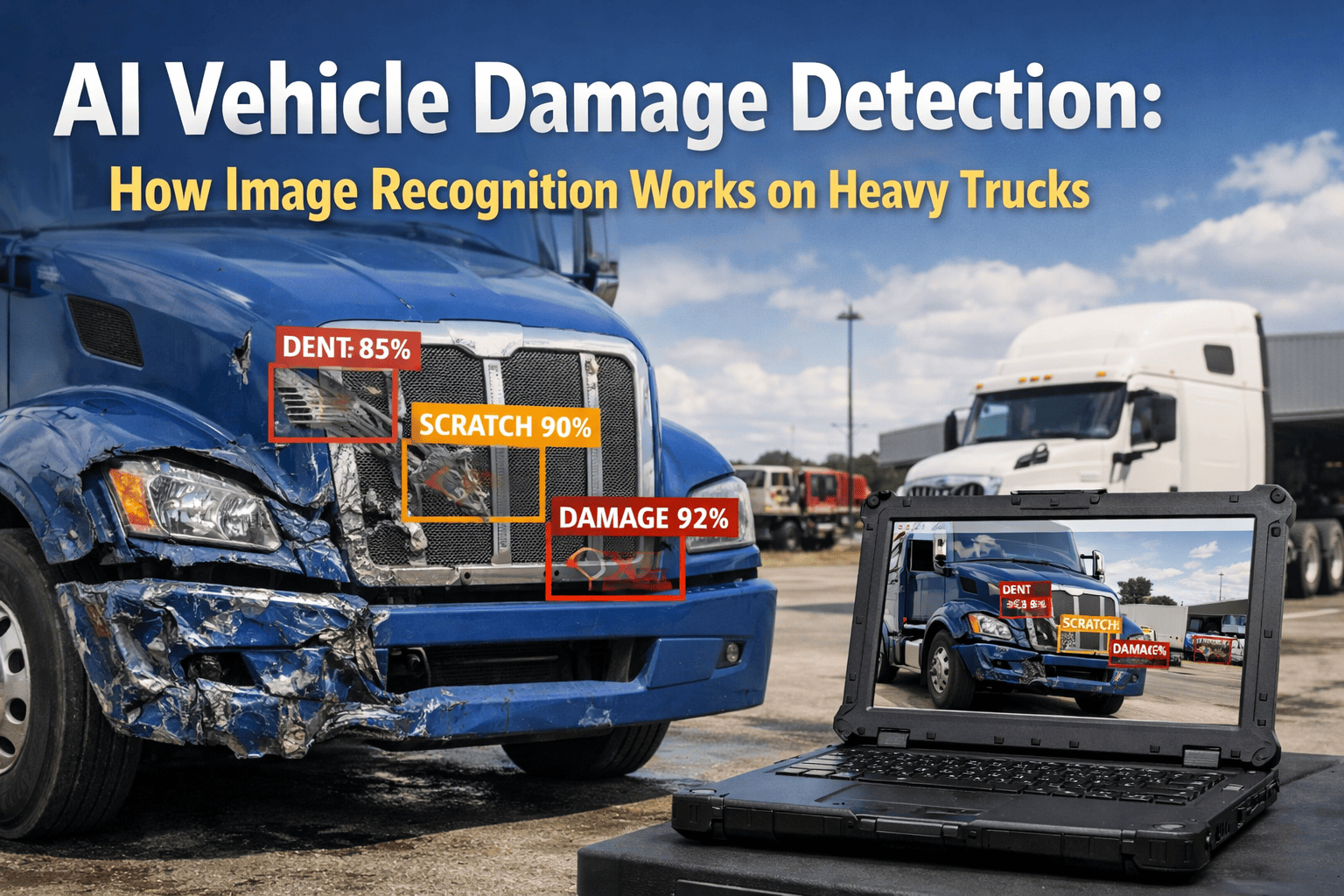
The original photo with each defect boxed or marked directly on the vehicle, so the finding is visible, not just described — a technician sees exactly where to look before touching the vehicle.
Each issue named by type and pinpointed to the component and position — "2-inch scratch, driver-side front door, 18 inches from bottom edge." No hunting around the vehicle.
Every defect rated — minor, moderate, or critical — with a priority flag running from "monitor at next inspection" to "out of service, do not operate," so the fleet fixes what actually matters first.
A concrete next step, not just a finding — "replace left rear tire," "align front wheels," "bodywork on left door" — often with a repair-cost estimate scaled to the damage.
Timestamp, GPS location, inspector/driver ID, and VIN linkage on every report — the metadata that makes it a legal record, ready for a DOT audit the instant it's generated.
That's a full inspection report, generated from a photo, before the driver leaves the yard — no forms, no filing, no defect lost between the walkaround and the shop. sign up free and generate a condition report from a photo of your own vehicle, or book a demo to see the annotated report and work order appear in seconds.
What the report can spot in one frame
A single well-framed photo carries more than one defect, and the AI reads them all at once. These are the categories that show up most often in the report.
Dents & body damage
Dents, scratches, rubs, panel damage, and corrosion — each sized and located, distinguishing a cosmetic scuff from structural harm.
Tire condition
Tread depth estimated from the image, plus sidewall cracks, bulges, and uneven wear — flagging tires nearing DOT minimums before they blow.
Fluid leaks
Oil saturation, coolant residue, power-steering seepage, and differential traces — slow leaks that are invisible in a quick, poorly-lit stop.
Cracked lights & glass
Broken headlights and taillights, cracked lenses, and damaged glass — frequent, easily-missed roadside violations, caught in the frame.
Brake components
Worn pads, cracked drums, damaged air lines, and slack-adjuster issues — the faults behind out-of-service orders at roadside checks.
Frame & structure
Frame cracks, weld fatigue, corrosion patterns, and undercarriage deformation — identified with severity so the serious is separated from the surface.
Why standardized language changes everything
The detection gets the attention, but the quiet superpower of an AI report is that it says the same thing every time. Consistency is where the operational value actually lives.
No more "he said, she said"
Two inspectors looking at the same vehicle can disagree on defects up to 50% of the time. The AI uses uniform terms every time, so a mechanic gets the same crystal-clear intel regardless of who held the phone.
Precise repair intel
A work order that reads "2-inch scratch, driver-side door, 18 inches from bottom edge" tells the tech exactly what to fix and where — no guesswork, no second trip around the vehicle, no misdiagnosed repair.
Trend-ready data
Because every report is structured the same way, findings become data — the same defect measured across inspections reveals a growth rate, and patterns across vehicles surface a fleet-wide issue.
Customer & claims clarity
Clear, annotated documentation gives customers, insurers, and legal teams a transparent record — turning "trust us" into "here's the photo, the location, and the severity."
The report as your defense
Beyond finding damage, the condition report exists to be produced — later, by someone asking whether the vehicle was really inspected. That's where its metadata earns its keep.
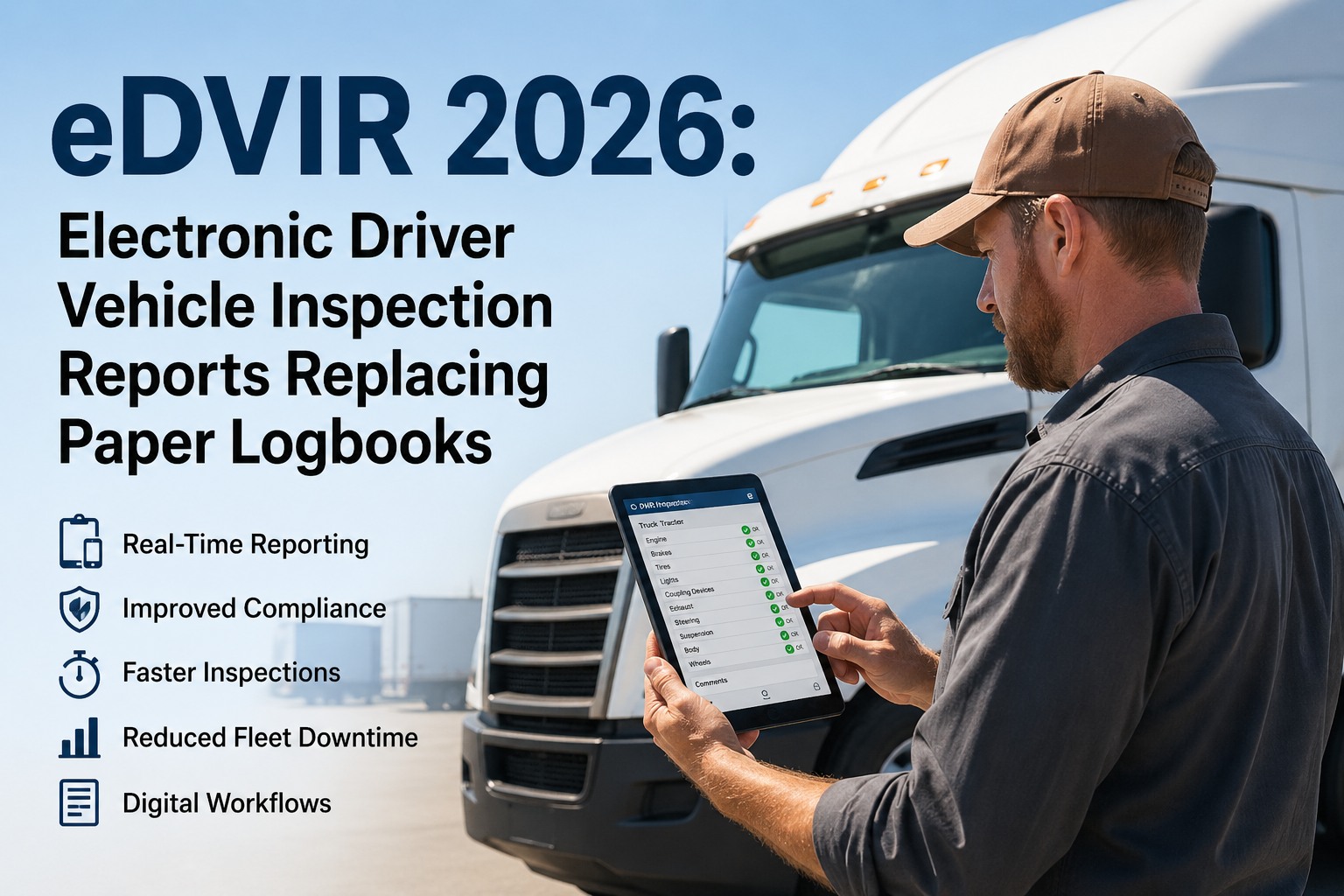
Only a small share of carriers pass DOT audits without a violation. An AI report — timestamped photos, GPS proof, digital signature, full defect history with repair verification — is retrieved in seconds, not days of filing-cabinet searches, and the 2026 FMCSA eDVIR rule explicitly authorizes it.
Multi-million-dollar awards are increasingly common in trucking litigation. A paper form with "OK" checked for brakes invites the question "how do we know the driver actually looked?" A photo-verified report answers it for every component, every day — the evidence trail that proves due diligence.
A VIN-linked report with annotated photos and timestamps documents exactly what condition a vehicle was in and when — cutting the "it was already like that" disputes on rentals, handoffs, and insurance claims to a shared, objective record.
The AI also protects the record itself — validating photo quality and flagging altered images, duplicates, and "photo of a photo" submissions — so the report you produce as evidence is one no one can pick apart.
Frequently asked questions
What is an AI vehicle condition report?
It's the structured output an AI inspection system generates from vehicle photos — a complete, itemized assessment produced in roughly thirty seconds from a single upload. Rather than a vague "there's damage," the report lists each defect by type, pinpoints it to a specific component and position, rates its severity (minor, moderate, or critical) with a priority flag, and pairs it with a repair recommendation and often a cost estimate. It includes the original photo annotated so each finding is marked directly on the vehicle, plus the compliance metadata — timestamp, GPS location, inspector or driver ID, and VIN linkage — that makes it a legal record ready for a DOT audit or a dispute. In short, it turns a photo into a repairable, disputable, auditable document. HVI generates this report automatically from the photos drivers take during a normal walkaround.
What can AI detect from a single photo?
A surprising amount, and several things at once, because the AI reads every pixel of the frame. From one well-framed image it can identify dents, scratches, rubs, and body-panel damage; estimate tire tread depth and flag sidewall cracks, bulges, and uneven wear approaching DOT minimums; spot fluid leaks like oil saturation, coolant residue, and power-steering seepage that are invisible in a quick stop; catch cracked or broken headlights, taillights, and glass; flag worn brake pads, cracked drums, and slack-adjuster issues; and detect frame cracks, weld fatigue, and corrosion. Modern systems recognize 21+ damage types across 163+ components with 95–99% accuracy, and because they're trained on tens of millions of images, they routinely catch micro-damage — cracks as small as a fraction of a millimeter — that human inspectors miss around 40% of the time. Each finding lands in the report sized, located, and severity-rated.
How accurate is an AI condition report compared to a manual one?
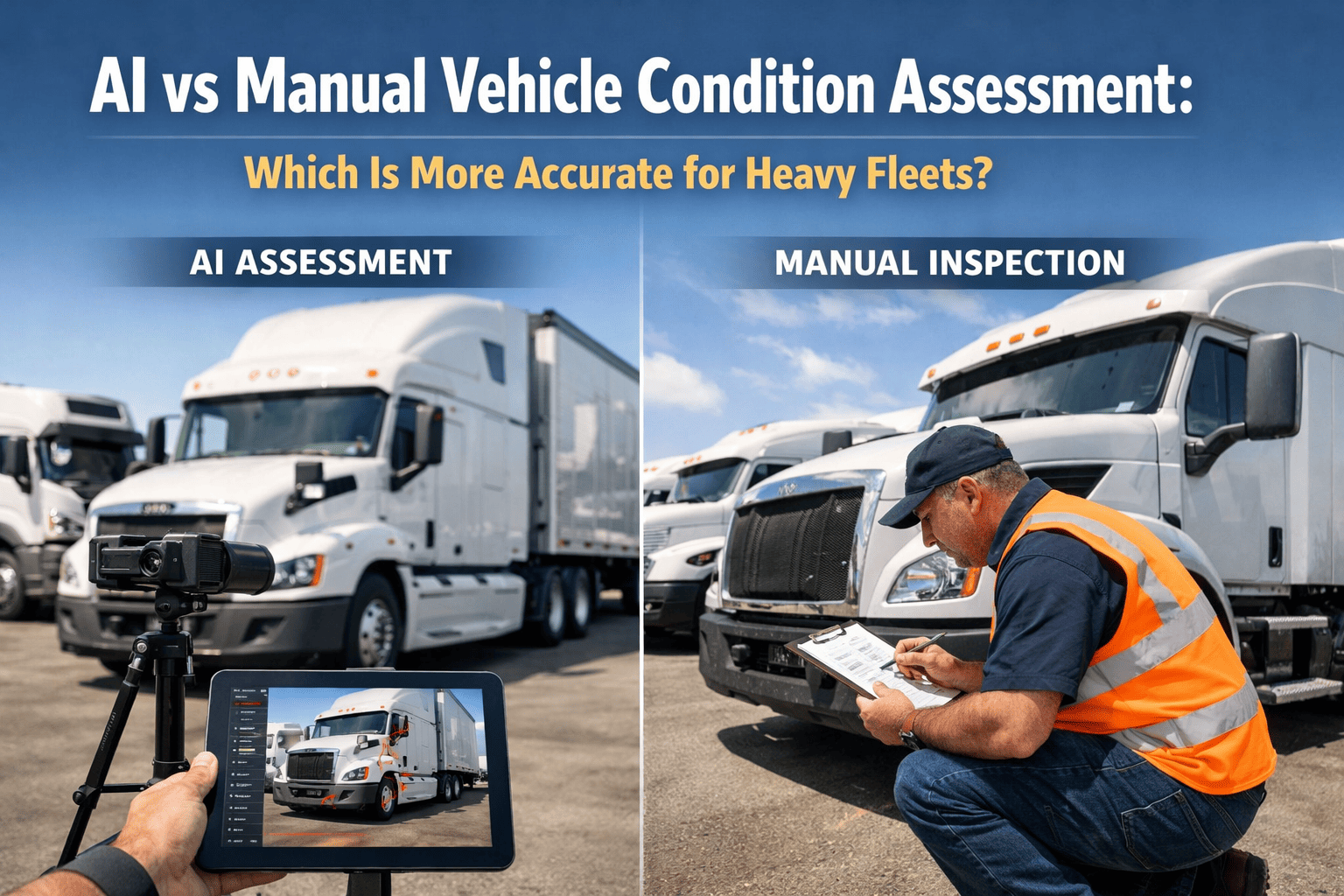
AI photo analysis reaches 95–99% defect-detection accuracy, against 70–80% for a trained human inspector, and in head-to-head testing it identifies around 35–40% more defects — including micro-damage and subtle wear the eye misses. The gap comes from consistency rather than raw intelligence: a person's accuracy drops through fatigue, time pressure, and poor lighting, and by the twentieth inspection of the day accuracy falls off, whereas the AI applies the identical standard to inspection number 200 as to number one. It also removes subjectivity — different human inspectors disagree on the same vehicle up to 50% of the time, while the AI uses uniform terms every scan. The best results come from combining the two: AI for consistent daily detection and documentation, human expertise for complex diagnosis and repair verification. HVI is built to augment inspectors, not replace their judgment.
Are AI condition reports accepted for DOT compliance?
Yes. As of March 23, 2026, FMCSA's final rule explicitly authorizes electronic DVIRs under 49 CFR 396.11 and 396.13, with digital signatures fully replacing wet ink — and an AI-generated report with timestamped photos, GPS verification, and a digital signature exceeds the minimum compliance standard and is often preferred during audits. Because only a small fraction of carriers pass DOT audits without a violation, the ability to retrieve complete, photo-verified records in seconds is a real advantage over hours of searching paper files. The same report is valuable beyond the audit: in litigation, where paper "OK" checks invite doubt, a photo-verified condition report proves the vehicle was actually inspected, component by component. And the AI validates photo integrity — flagging altered, duplicate, or "photo of a photo" submissions — so the record holds up. HVI produces DOT-compliant eDVIRs automatically from every inspection.
How does HVI generate a condition report from a photo?
A driver opens the HVI app, which guides them through exactly what to photograph and refuses blurry or badly framed shots so coverage is complete. The moment a photo is captured, computer vision trained on tens of millions of images analyzes it — identifying which of 163+ components it shows, mapping any damage at the pixel level across 21+ defect types, and rating each finding by severity and urgency. Within seconds the system assembles the condition report: the annotated photo, each defect named and located, severity and priority flags, a repair recommendation, and the timestamp, GPS, driver ID, and VIN that make it audit-ready. Any actionable defect automatically becomes a prioritized work order — with the photo, precise location, and severity attached — routed to a mechanic, so nothing is lost between finding the problem and fixing it. Every report is stored VIN-linked to build the vehicle's condition history, and it all works offline in the field, syncing when back in range. book a demo and we'll generate a report from your own fleet on the call.
Turn a photo into a report you can act on, audit with, and defend.
HVI's AI inspection & maintenance software builds a complete condition report from every photo — defects located and sized, severity rated, repairs recommended, and the whole thing timestamped, GPS-tagged, and VIN-linked. Auto-generated work orders, a full condition history per vehicle, and audit-ready records — all offline, on the phones your drivers already carry.
No credit card required · Setup in minutes · Photo-to-report in seconds + auto work orders + VIN-linked history + audit-ready records, fully offline