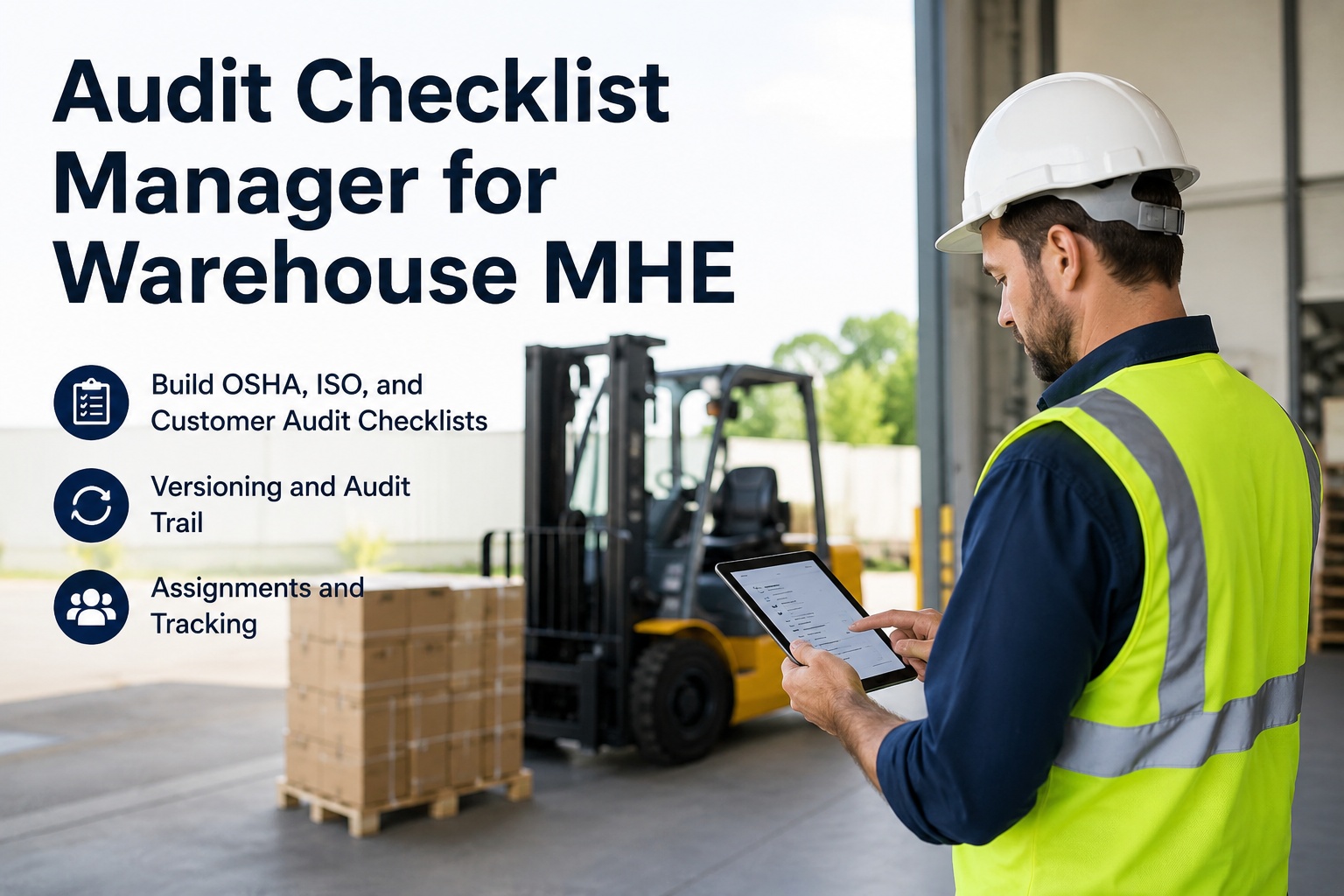
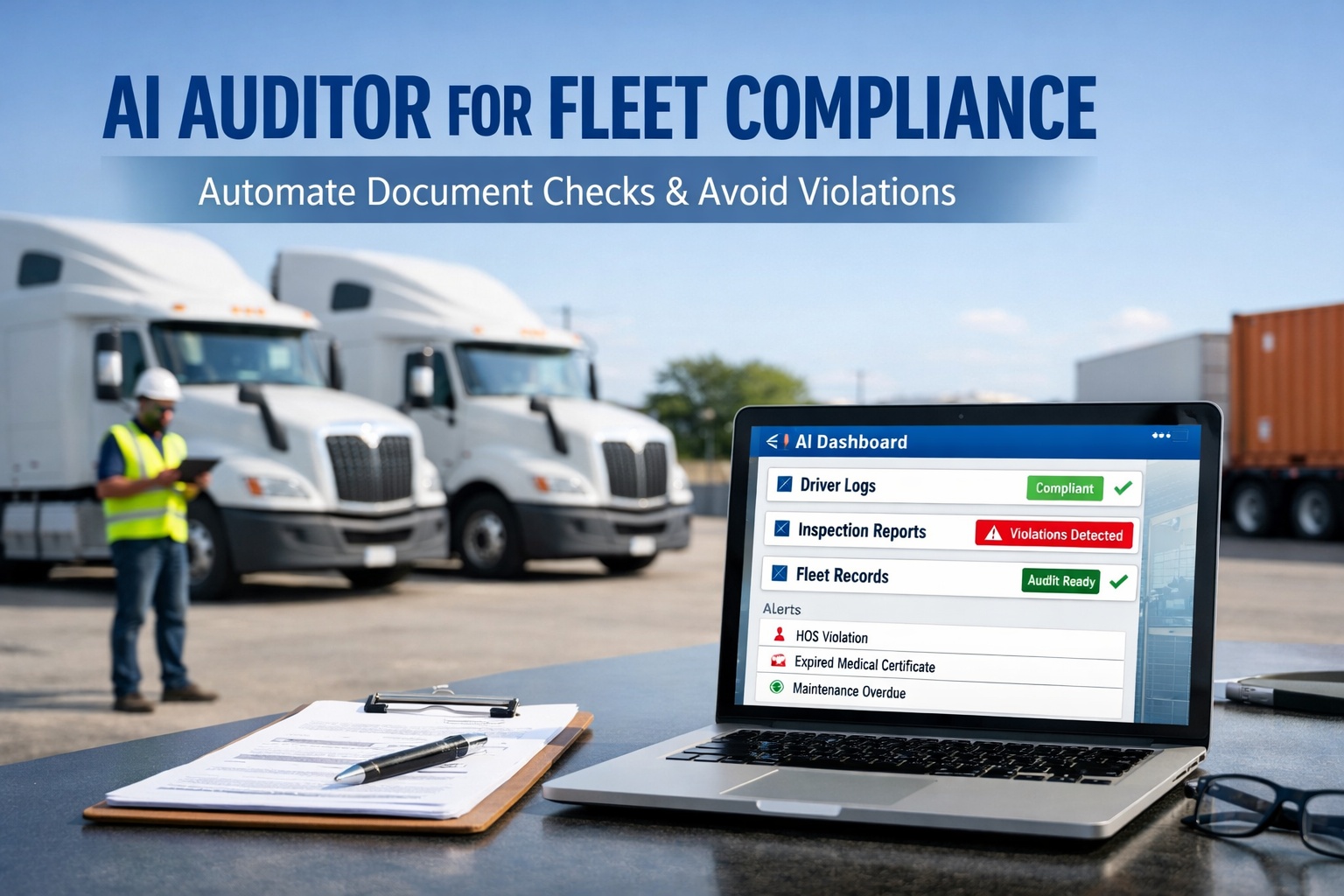
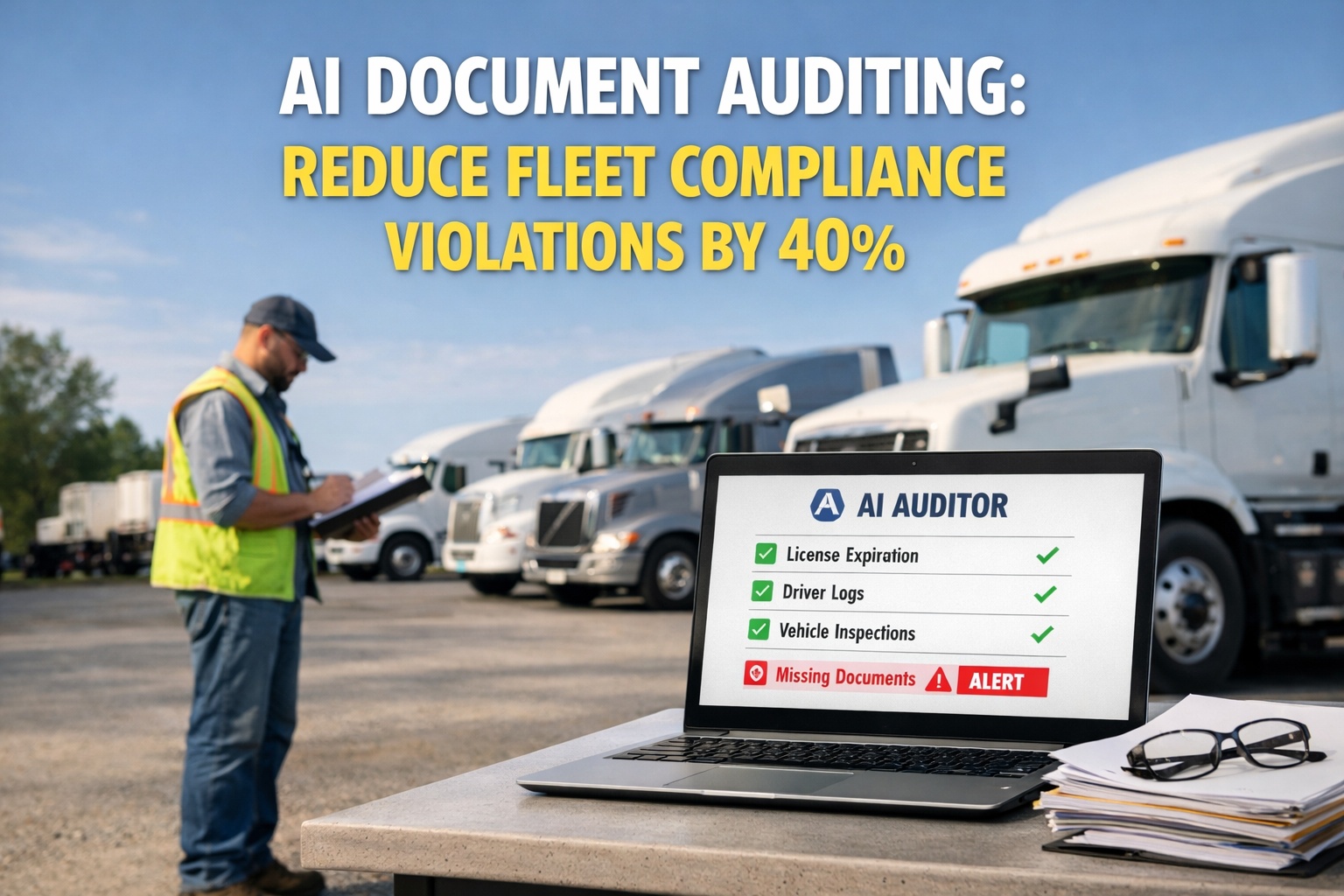
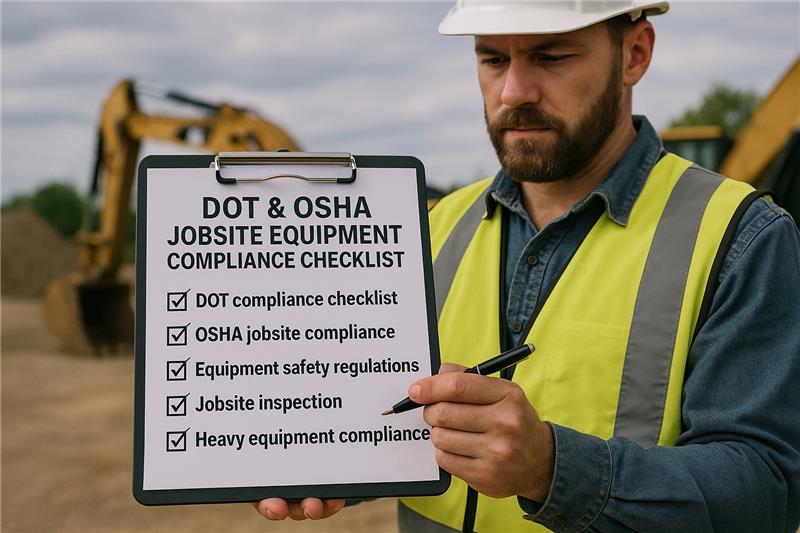
A warehouse running material handling equipment doesn't face one audit — it faces three kinds at once, on different schedules, against different standards. OSHA wants powered-industrial-truck compliance under 1910.178. ISO 9001 or 45001 certification bodies want documented, controlled processes with evidence of conformance. And customers — the retailers and manufacturers whose goods move through the building — run their own supplier audits with their own checklists, often as a condition of the contract. Most warehouses manage these the hard way: separate binders, separate spreadsheets, checklists copied and tweaked until nobody knows which version is current, and a frantic scramble each time an auditor schedules a visit. The result is inconsistency — one shift uses last year's form, a required item gets dropped in an edit, and the audit trail has holes. The fix is an audit checklist manager: one system that holds every checklist for every framework, controls versions so everyone uses the current one, assigns checks to the right people, and builds the audit trail automatically. A checklist manager for warehouse MHE audits turns audit prep from a scramble into a standing state of readiness. This page covers the three audit types, what a checklist manager does, and how versioning and assignments keep a warehouse audit-ready.
Three Audit Frameworks. A Dozen Checklists. One Version Everyone Should Be Using.
HVI manages every warehouse MHE audit checklist in one place — OSHA, ISO, and customer audits — with version control so the current checklist is the only one in use, assignments to the right people, and an audit trail that builds itself. Audit-ready by default, not by scramble.
The Three Audits a Warehouse Faces
MHE compliance isn't one standard — it's three audiences, each with its own checklist and cadence. A checklist manager has to serve all three from one source of truth.
REGULATORY
OSHA
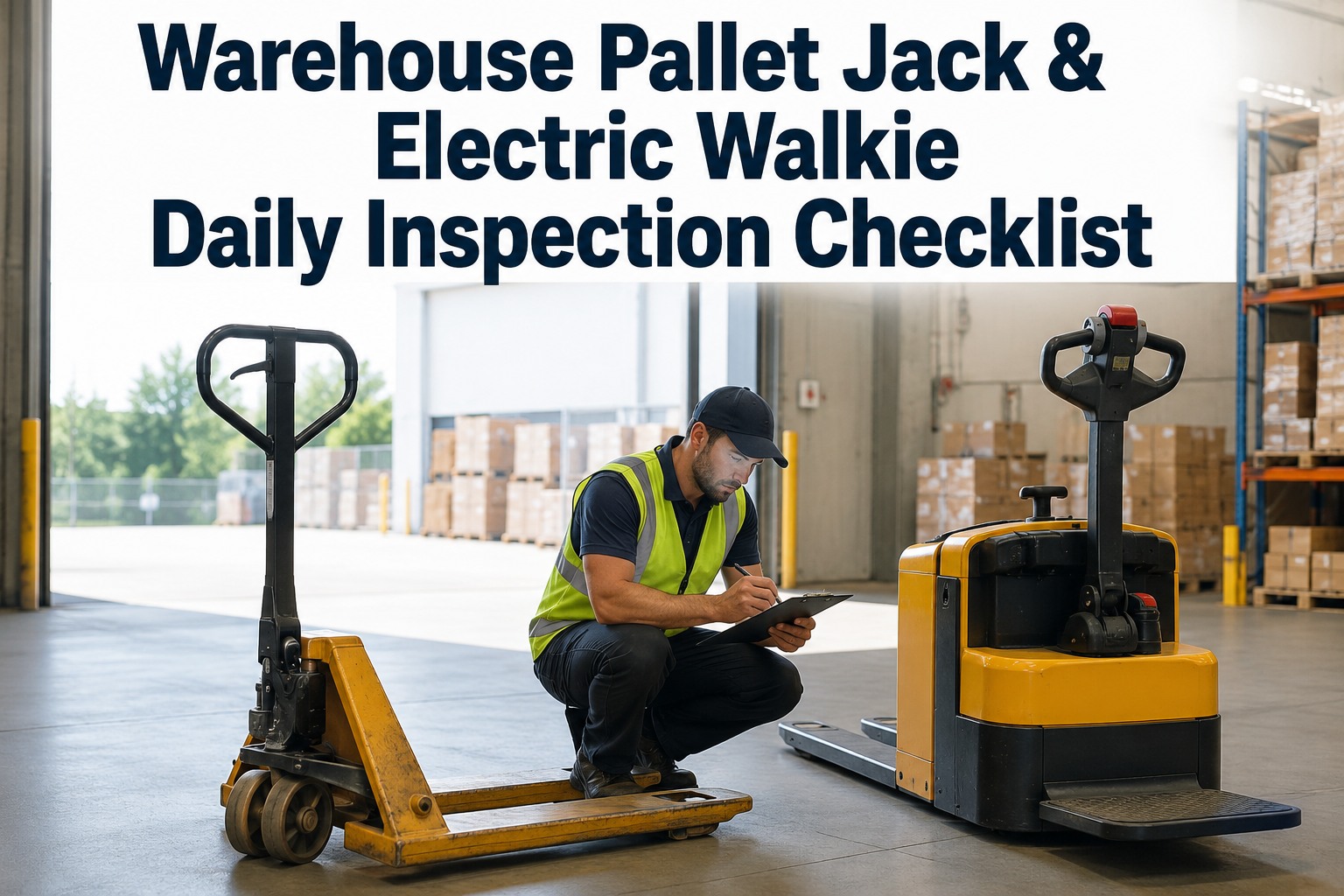
Powered-industrial-truck compliance under 29 CFR 1910.178 — daily inspections, operator training and certification, three-year evaluations, defect records. Can arrive unannounced, with steep penalties for documentation gaps.
Needs: inspection logs, training records, defect trail
CERTIFICATION
ISO 9001 / 45001
Quality and safety management certification requires documented, controlled processes and objective evidence of conformance — including version-controlled checklists and proof that procedures are actually followed and recorded.
Needs: controlled documents, conformance evidence
COMMERCIAL
Customer / Supplier
Retailers and manufacturers audit the warehouses that handle their goods, often against their own bespoke checklists, as a condition of the contract. A failed customer audit can cost the business directly.
Needs: custom checklists, fast evidence retrieval
What an Audit Checklist Manager Does
A checklist manager replaces the binders and scattered spreadsheets with one controlled system. Four capabilities turn audit chaos into a standing state of readiness.
Build & Standardize
Create a checklist for any framework — OSHA, ISO, or a customer's spec — from a common library, so every audit type lives in one place and shares standardized items where they overlap.
Version Control
Every edit creates a new controlled version, the current one is the only one in use, and superseded versions are archived — never again a shift running last year's form or a dropped item.
Assign & Schedule
Assign each checklist to the right person or team on the right cadence — daily, monthly, pre-audit — so nothing depends on someone remembering. Completion is tracked, overdue items flagged.
Automatic Audit Trail
Every completed check is timestamped, signed, and stored — who did it, when, what they found, with photos. The evidence an auditor wants assembles itself, retrievable in seconds.
Why Version Control Is the Quiet Essential
Of all the capabilities, version control is the one that silently prevents the most failures — and the one binders and spreadsheets can't do. Here's the difference it makes.
WITHOUT VERSION CONTROL
Multiple checklist copies floating around
Shifts unknowingly use an outdated form
An edit drops a required item, unnoticed
No record of what changed or when
ISO auditors flag uncontrolled documents
WITH VERSION CONTROL
One current version, everywhere, always
Outdated forms are retired automatically
Required items protected; changes reviewed
Full change history with dates and authors
Controlled documents satisfy ISO directly
ISO standards explicitly require controlled documents — proof that the checklist in use is the approved, current one and that changes are managed. Version control isn't just convenient; for ISO certification it's a direct requirement that paper and loose spreadsheets routinely fail.
From Scramble to Standing Readiness
The payoff of a checklist manager is that audit prep stops being an event. Instead of assembling evidence under deadline, the warehouse is continuously ready — here's the shift.
AUDIT AS A SCRAMBLE
Auditor schedules; the panic begins
Hunt through binders for the right records
Discover gaps too late to fix properly
Hope the version on file is the right one
STANDING READINESS WITH HVI
Checklists run on schedule, all year
Evidence assembled automatically as you go
Overdue items flagged early, fixed in time
The current version is always the one in use
How the Checklist Manager Works
From setup to audit day, the manager keeps every framework controlled and every check accounted for. Three steps that turn many audits into one repeatable system.
1
Build & Version
Create each framework's checklist in one library; every edit is a controlled version, so the current one is always live and the rest archived.
2
Assign & Run
Assign checklists to people and schedules; they complete them on a phone with photos, and completion is tracked, overdue items flagged.
3
Produce on Demand
When any auditor arrives, pull the current checklist and its complete, timestamped evidence trail in seconds — no scramble, no gaps.
Be Ready for Every Audit, All the Time
One audit checklist manager for OSHA, ISO, and customer audits — build and standardize checklists, control every version, assign and schedule checks to the right people, and build a timestamped audit trail automatically. Turn warehouse MHE audit prep from a scramble into standing readiness. Trusted by 25,000+ users worldwide.
Frequently Asked Questions
What audits does a warehouse with MHE need to prepare for?
Three kinds, each with its own standard and cadence. OSHA regulatory audits check powered-industrial-truck compliance under 29 CFR 1910.178 — daily inspections, operator training and certification, three-year evaluations, and defect records — and can arrive unannounced. ISO certification audits (9001 for quality, 45001 for safety) require documented, controlled processes and objective evidence of conformance. And customer or supplier audits, run by the retailers and manufacturers whose goods move through the warehouse, use their own bespoke checklists as a condition of the contract. A checklist manager serves all three from one source of truth.
Sign up for a free HVI trial to manage all three.
What is an audit checklist manager?
It's a single system that holds and controls every audit checklist a warehouse uses, replacing scattered binders and spreadsheets. Its core jobs are to build and standardize checklists for any framework, control versions so only the current approved checklist is in use, assign checks to the right people on the right schedule, and build a timestamped, signed audit trail automatically as checks are completed. The result is that the warehouse is continuously audit-ready rather than scrambling to assemble evidence each time an auditor schedules a visit.
Schedule a demo to see it.
Why does checklist version control matter for audits?
Because using the wrong version is one of the most common — and most preventable — audit failures. Without version control, multiple copies of a checklist circulate, shifts unknowingly use outdated forms, an edit can quietly drop a required item, and there's no record of what changed. Version control ensures one current version is in use everywhere, retires superseded forms automatically, protects required items, and keeps a full change history. For ISO certification this is a direct requirement: standards mandate controlled documents, meaning proof that the checklist in use is the approved current one — something loose paper and spreadsheets routinely fail.
Sign up for a free HVI trial for controlled checklists.
How do assignments improve audit readiness?
Assignments remove the dependence on memory. Instead of hoping someone remembers to run a monthly safety check or complete pre-audit prep, each checklist is assigned to a specific person or team on a defined cadence — daily, weekly, monthly, or triggered before a scheduled audit. The system tracks completion and flags overdue items early, so gaps are caught and closed while there's still time, not discovered by the auditor. This is what turns audit readiness from a periodic scramble into a continuous, managed state.
Schedule a demo to see assignments and scheduling.
How does a checklist manager build the audit trail?
Automatically, as a byproduct of doing the checks. Every time someone completes an assigned checklist, the system records who did it, when, what they found, and any photos — timestamped and signed — and stores it against the relevant asset and framework. There's no separate step to "assemble evidence," because the evidence accumulates continuously. When an OSHA, ISO, or customer auditor arrives, you pull the current checklist and its complete history in seconds rather than hunting through binders, and because nothing is lost or illegible, the trail holds up to scrutiny.
Sign up for a free HVI trial for an automatic audit trail.