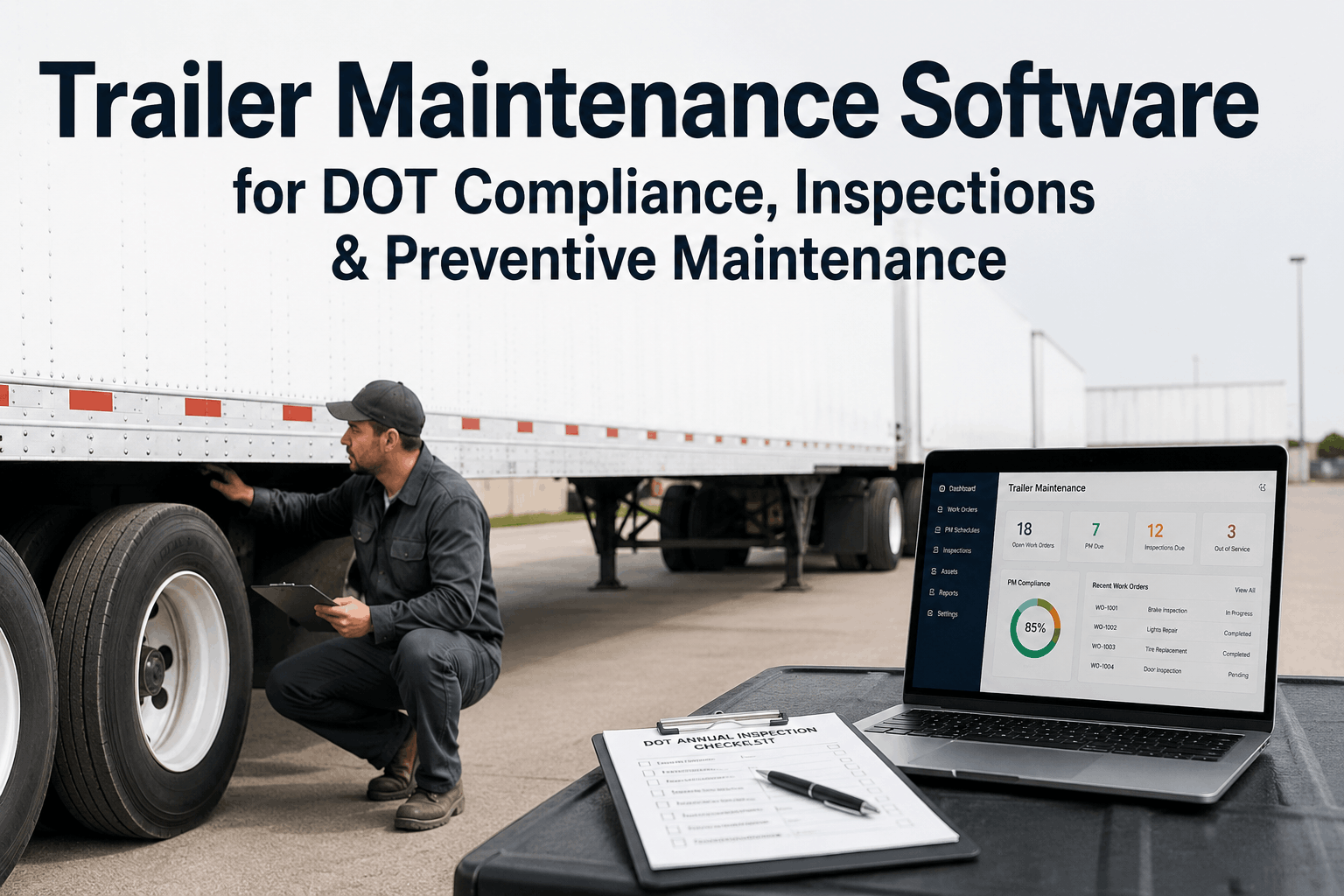
The tractor gets all the attention. It has the engine, the cab, the driver, the telematics — so it gets the inspections, the service intervals, and the clean compliance file. The trailer behind it hauls the load, sits in a yard between runs, gets dropped and hooked by drivers who never own it, and quietly accumulates the exact defects that end runs at a scale house. That imbalance shows up in the data: trailers account for roughly 25% of all out-of-service orders at roadside inspections, with brakes and tires the usual culprits — and a single OOS violation can cost $5,000 to $15,000 in downtime, repairs, and fines before you even count the hit to your CSA score. The federal rule is blunt about it. Under 49 CFR 396.17, every trailer over 10,001 lbs GVWR needs the same annual periodic inspection as the power unit, the report must be kept for 14 months, and a state sticker does not satisfy the federal requirement. HVI's inspection & maintenance software is built to make the equipment behind the tractor as inspection-ready as the equipment in front of it — automating preventive maintenance, tracking every repair to closure, and keeping the compliance paperwork audit-proof. This page breaks down where trailers fail, what the rule actually demands, and how HVI keeps you inspection-ready all year instead of scrambling at renewal.
Why Trailers Fail Inspections More Than Tractors
Trailers carry a structural disadvantage: nobody owns them day to day. They're shared, dropped, and forgotten between loads — so the defects pile up where no one is looking. Here's the scale of the trailer compliance problem.
The Three Assumptions That Park Trailers
Safety managers trip over the same misunderstandings, and every one of them ends with equipment grounded at the worst possible moment. Know these before an officer does.
"The tractor's inspection covers the trailer."
It doesn't. The trailer is a separate commercial motor vehicle with its own annual inspection requirement and its own 14-month record.
"The state sticker satisfies the federal rule."
It doesn't. A state inspection sticker does not automatically meet 49 CFR 396.17. The federal periodic inspection is its own requirement.
"The inspection report fixes the defect."
It doesn't. A unit with a disqualifying condition stays non-compliant until the repair is made and documented. The sticker doesn't cure the brake.
Where the Defects Actually Hide: The 49 CFR 396.17 Hot Zones
The annual inspection covers 17 vehicle systems, but trailer failures cluster in a handful. These are the categories that ground equipment — HVI's inspection & maintenance software guides operators to measure them, not eyeball them, with pass/fail gates on every check.
Brake Systems
30–40% of all OOS. Pushrod stroke must stay within the manufacturer's readjustment limit; linings measured, not glanced at.
Tires & Wheels
Min 2/32" tread on trailer axles. No tire below 50% of max inflation (immediate OOS). All lug nuts present and torqued.
Coupling & Running Gear
Fifth wheel / pintle hook properly engaged and secured; kingpin, landing gear, and related components free of damaging wear.
Lighting & Suspension
All required lamps functional; suspension, frame, and load-securement components sound and within rejection criteria.
Two Clocks You Can't Afford to Miss
Trailer compliance runs on two separate retention clocks under Part 396. Mixing them up is how a clean shop fails an audit. Here's the rule, plainly.
Annual Periodic Inspection
Keep the §396.17 annual inspection report for 14 months from the inspection date. Required every 12 months — and stricter in some states (NY: every 6 months over 10,000 lb).
Driver Vehicle Inspection Report
If a driver notes a defect on a DVIR, keep that report and the signed repair certification for 3 months. Different clock, different rule — both auditable.
Inspection-Ready All Year, Not Just at Renewal
The annual inspection tests condition at a single moment — but components fail gradually over months. HVI's inspection & maintenance software turns that one-day test into a year-round readiness program. Here's the loop.
Schedule PM
Usage- and time-based preventive maintenance per trailer, so brakes, tires, and couplers get attention before they fail.
Inspect Digitally
Guided §396.17 checks on a phone with pass/fail gates and photo capture — generating a compliant report automatically.
Track Repairs
Every flagged defect becomes a work order tracked to documented closure — the proof that the defect was actually cured.
Keep Records
Inspections, repairs, and certifications retained on the right clock and exportable as an audit package in minutes.
Make Every Trailer as Ready as the Tractor Pulling It
Automated preventive maintenance, guided 49 CFR 396.17 digital inspections, repair tracking to closure, and 14-month compliant records — for the whole trailer fleet, in one system. Stop losing equipment to a paperwork miss. Trusted by 25,000+ users worldwide.